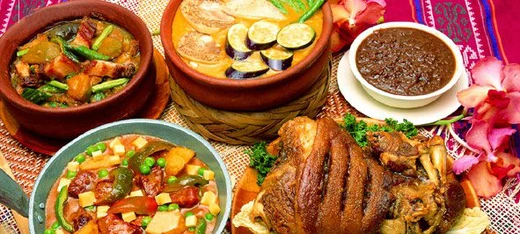
Adobo
A marinade and cooking method from Iberia with global variations.

Wikimedia Commons · CC BY-SA 4.0
Adobo (from the Spanish *adobar*, meaning 'marinade, sauce, or seasoning') is a method of preserving and flavoring food by soaking it in a stock or sauce that typically includes vinegar, garlic, bay leaves, and peppercorns. This technique originated in Iberia (Spanish and Portuguese cuisine) and spread widely through Latin America, as well as Spanish and Portuguese colonies in Africa and Asia. In the Philippines, Spanish colonizers applied the name *adobo* to a local cooking method that also relies on vinegar, but this Filipino version developed on its own, independent of Spanish influence.
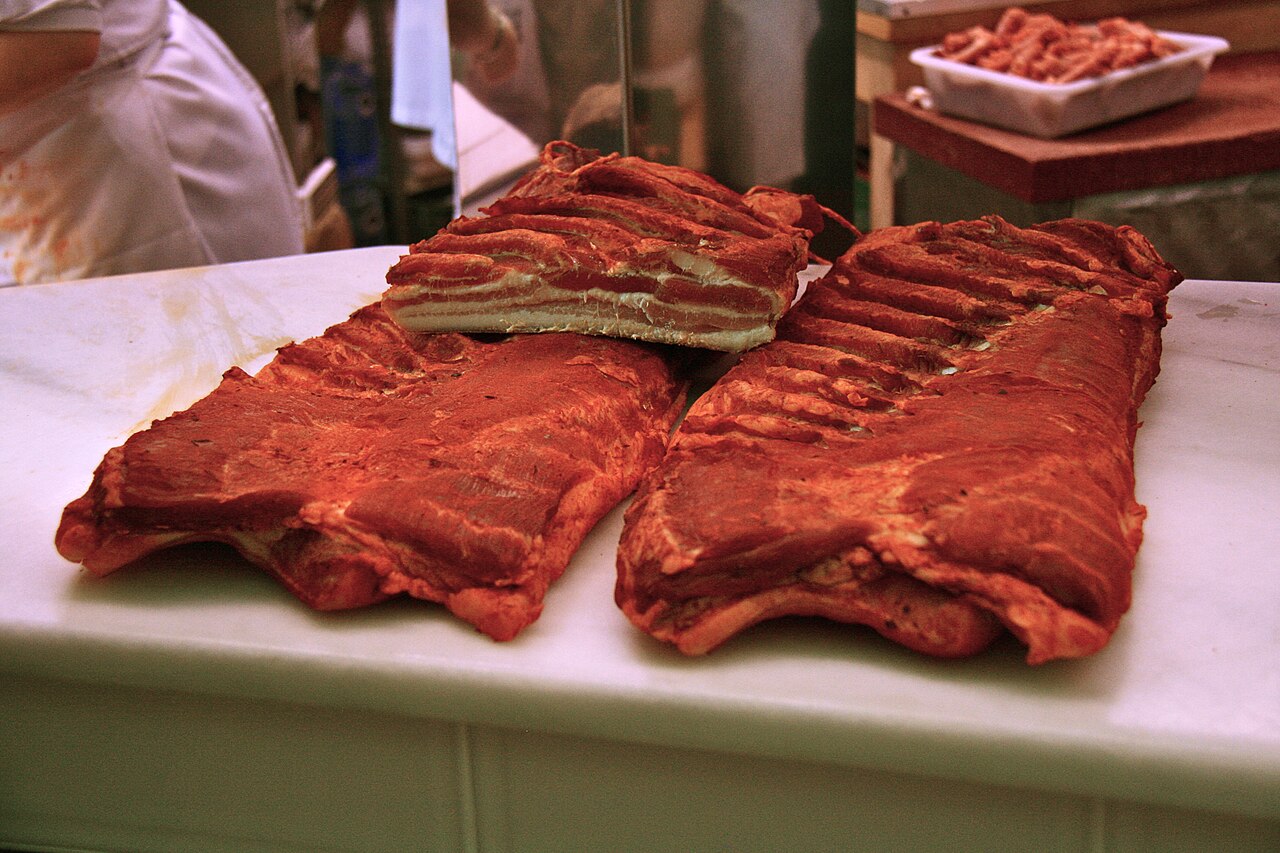
**Characteristics** After Europeans arrived in the Americas, new preservation methods became necessary for meat and fish. Cold temperatures help preserve food, but in warmer climates, techniques like adobo were essential. Animals were usually slaughtered in winter, so surplus meat needed to be kept during hotter months. Adobos (marinades) helped with this, often using paprika, which may have antimicrobial properties due to capsaicin. Paprika also gives adobos a reddish color, and its capsaicins dissolve in fats, allowing the flavor to penetrate beyond the surface of the meat.
**Applications** Adobo was first used to preserve food, but as refrigeration became common, it shifted to a way of adding flavor before cooking. Traditional dishes made for flavor include *cazón en adobo* (dogfish in adobo, made from school shark and originating from Cádiz, Spain), *berenjenas de Almagro* (pickled aubergines from Almagro in the Ciudad Real province of Spain, typical of Manchega cuisine), and *lomo en adobo* (beef or pork tenderloin in adobo).
**Variations** The noun *adobo* refers to a marinade or seasoning mix, and recipes differ widely by region. For example, Puerto Rican adobo—a rub used mainly on meats—is very different from Mexican adobo. Meat marinated or seasoned with adobo is called *adobado* or *adobada*.
**Mexico** In Mexico, adobo is a condiment or cooking sauce based on chilies, especially chipotle and ancho peppers. (An ancho pepper is a dried poblano chili that has turned red.) These sauces are used as marinades and to give a smoky, spicy flavor.
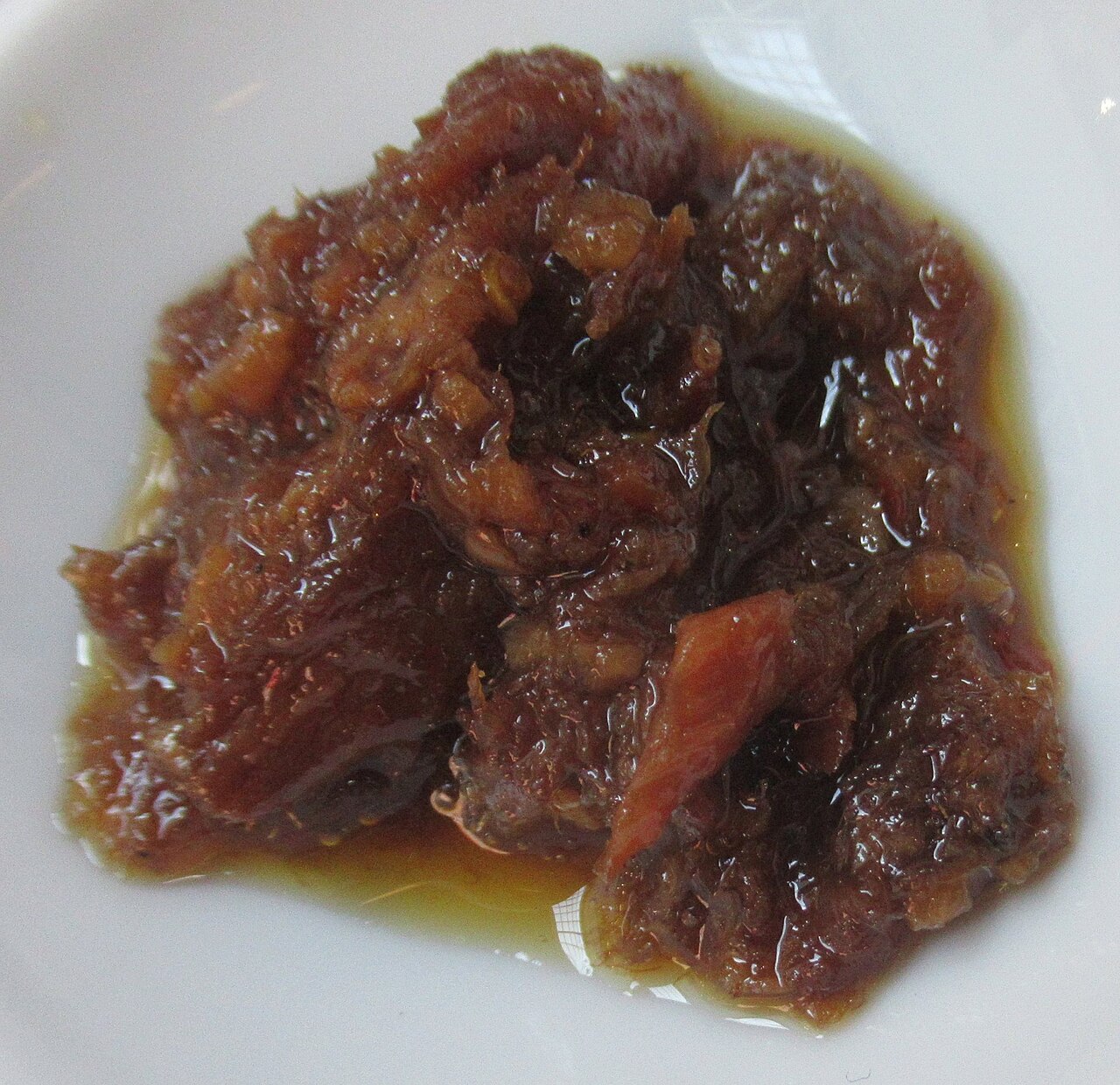
**Chipotles en adobo** Adobo is also used in dishes like *chipotles en adobo*, where smoked ripe jalapeño peppers (chipotles) are stewed in a sauce with tomatoes, garlic, vinegar, salt, and spices.
Quick Facts
- Country
- Spain, Portugal
- Main Ingredient
- Paprika, salt, garlic / and vinegar
- Cookbook
- Adobo Sauce
Facts from the source article.
Lore & Background
Adobo was employed initially as a method of food preservation, particularly in warmer months when surplus meat from winter slaughter had to be kept. The use of paprika, which may have antimicrobial properties due to capsaicin, helped preserve meat and gave adobos a reddish color. With the advent of refrigeration, adobo came to be used primarily as a method of flavoring foods before cooking. Traditional preparations include cazón en adobo (dogfish in adobo from Cádiz, Spain), berenjenas de Almagro (pickled aubergine from Castile-La Mancha), and lomo en adobo (tenderloin of beef or pork).
Reader's Guide
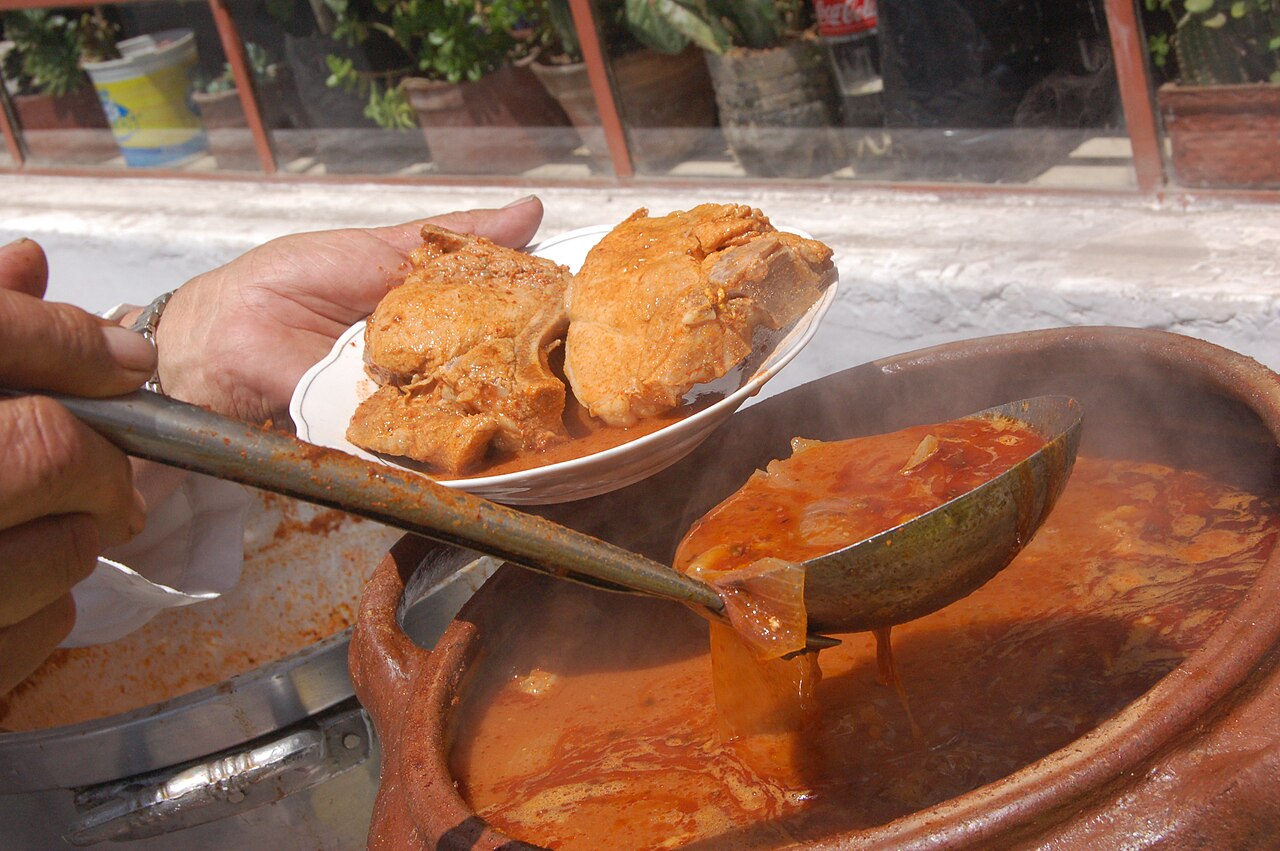
Adobo's significance lies in its evolution from a practical preservation technique to a foundational flavoring method across multiple continents. In Mexico, adobo refers to a condiment or cooking sauce based on chillies, particularly chipotle and ancho peppers, used as a marinade to add a smoky, spicy flavor. Puerto Rican adobo comes in two forms: a wet rub (adobo mojado) of crushed garlic, olive oil, salt, turmeric, black pepper, false oregano, citrus juice, and vinegar; and a dry mix (adobo seco) with garlic powder, onion powder, turmeric, salt, black pepper, false oregano, and sometimes dried citrus zest. In Peru, adobo is a dish of pork marinated in spices and vegetables, cooked in a clay pot until tender, served with bread. The Philippine adobo is an indigenous cooking method using vinegar, soy sauce or fish sauce, peppercorns, garlic, and bay leaves, characteristically salty and sour, and often sweet. In Uruguay, adobo is a spice mix used as a condiment, and a sauce of adobo, salt, and water is called mojo. The first known reference to adobo appears in a manual from 1850.
Did You Know?
- The Portuguese variant of adobo is known as carne de vinha d'alhos.
- In the Philippines, adobo was named by colonial-era Spaniards for a different indigenous cooking method that also uses vinegar, developed independently of Spanish influence.
- Puerto Rican adobo comes in two types: a wet rub (adobo mojado) and a dry mix (adobo seco).
- Mexican adobo sauces are based on chillies, particularly chipotle and ancho peppers.
Precolonial Roots and the Question of a Name
The technique behind adobo predates any foreign contact with the Philippine archipelago. Long before Spanish ships reached the islands, the various indigenous peoples of the archipelago relied on vinegar and salt as primary means of preserving food against the relentless tropical heat. The vinegars they employed—drawn from coconut sap, sugarcane, nipa palm, and kaong palm—were themselves products of fermentation traditions that also fed into local alcohol production, creating a deep web of flavor complexity in precolonial kitchens. Within this tradition, four principal vinegar-based preparations emerged: kiniláw, paksíw, sangkutsá, and what would later be called adobo. Food historian Raymond Sokolov argued that the Spanish simply borrowed their own word and stamped it onto a dish that already existed. Anthropologist Doreen Fernandez entertained the possibility of a Mexican connection but stressed how fundamentally different the two preparations are. Some scholars suspect the original indigenous name was simply lost, with paksiw offered as a candidate. The term first appears in writing in the 1613 Vocabulario de la lengua tagala, where Pedro de San Buenaventura labeled it "adobo de los naturales," a phrase that underscores the dish's native origins even as it carried a foreign label.
A Distinct Culinary Identity
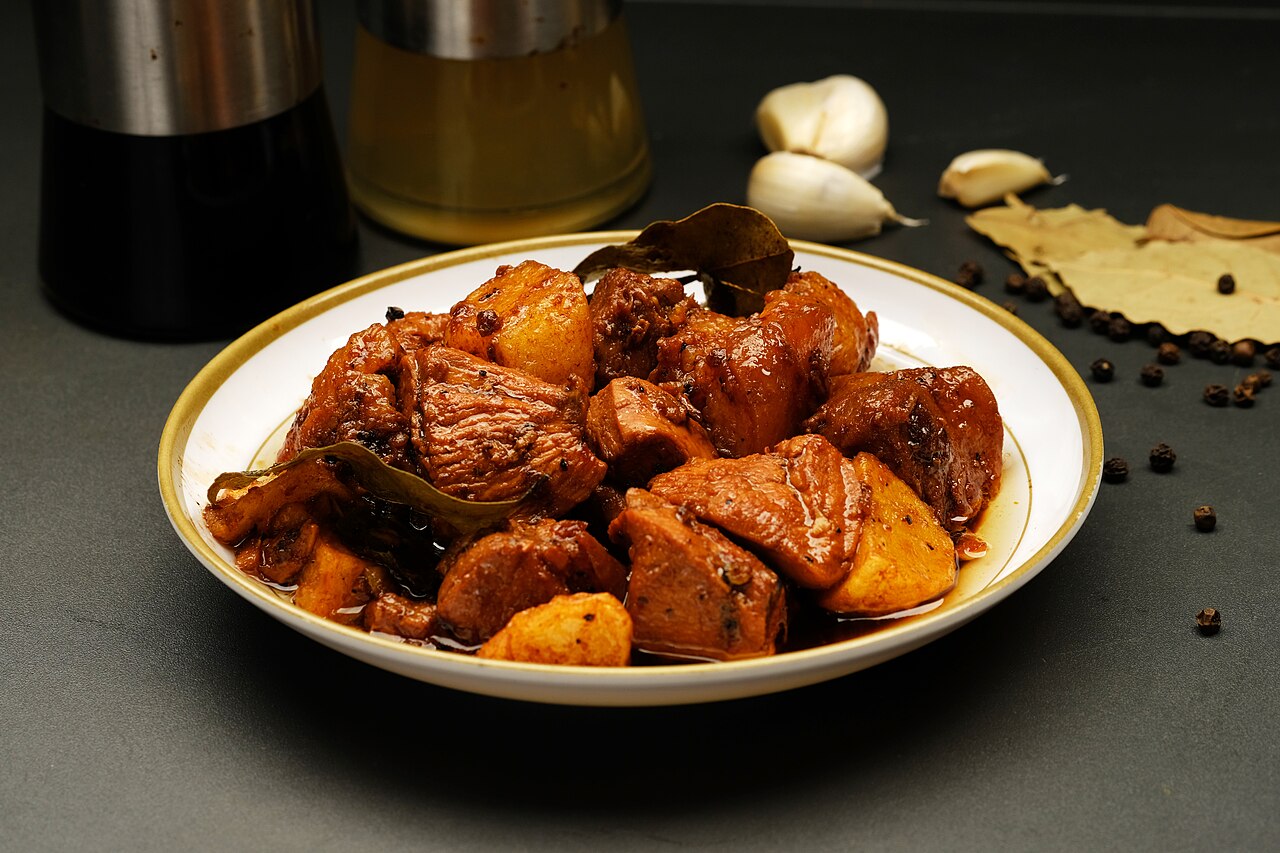
Although it shares its name with marinades found across Spain and Latin America, Philippine adobo is a fundamentally different preparation. Where its Iberian and Mexican cousins lean on chilis, paprika, oregano, and tomatoes, the Filipino version draws on flavors native to Southeast Asia: vinegar from palm sap or sugarcane, soy sauce (a seasoning whose presence reflects Chinese culinary influence on the islands), black peppercorns, and bay leaves—traditionally Cinnamomum species, though modern cooks often substitute Laurus nobilis. The resulting flavor is defined by a balance of saltiness and acidity, frequently rounded with a touch of sweetness, rather than the heat or herbal notes of the Spanish and Mexican versions. More than a fixed recipe, adobo is best understood as a cooking process: proteins or vegetables are first browned in oil, then slowly braised in a vinegar-and-seasoning liquid. Historically this was done in small clay pots called palayok or kulon; today most households have shifted to metal woks known as kawali. Journalist Jose Antonio Vargas described his personal approach as marinating chicken and pork overnight in vinegar, soy sauce, and garlic, with brown sugar added at the cook's discretion.
A Spectrum of Regional and Personal Variations
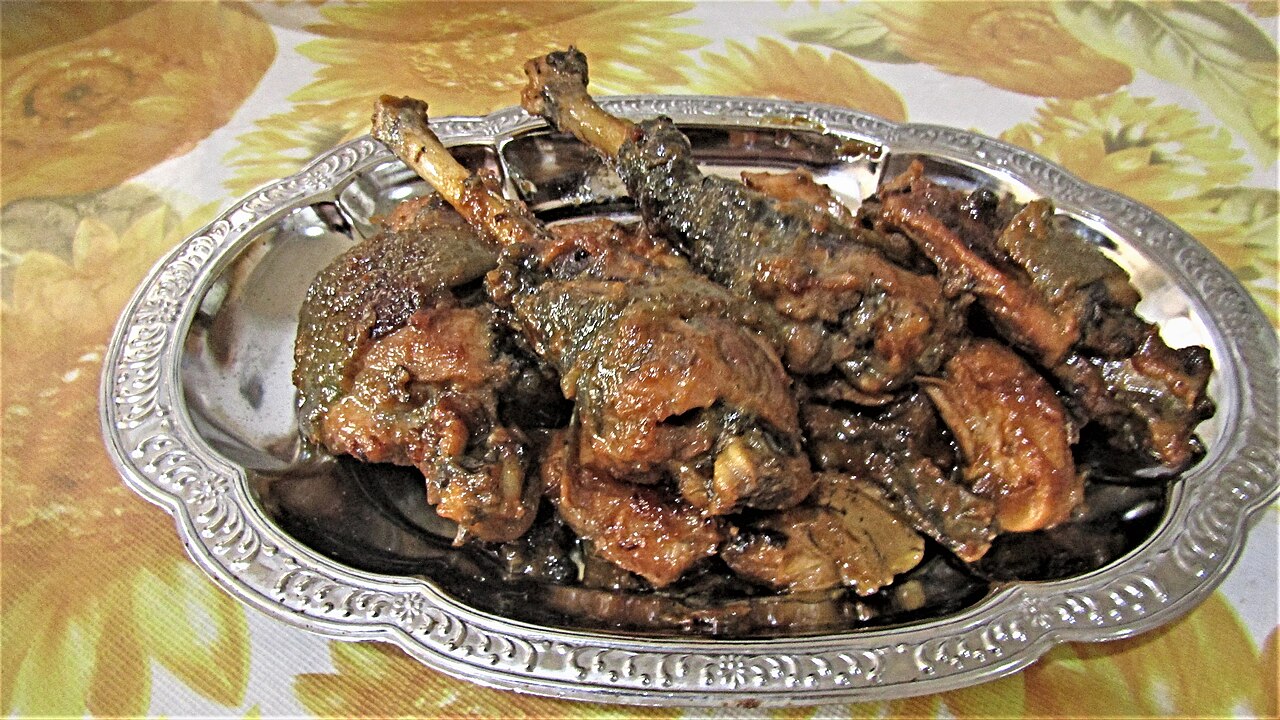
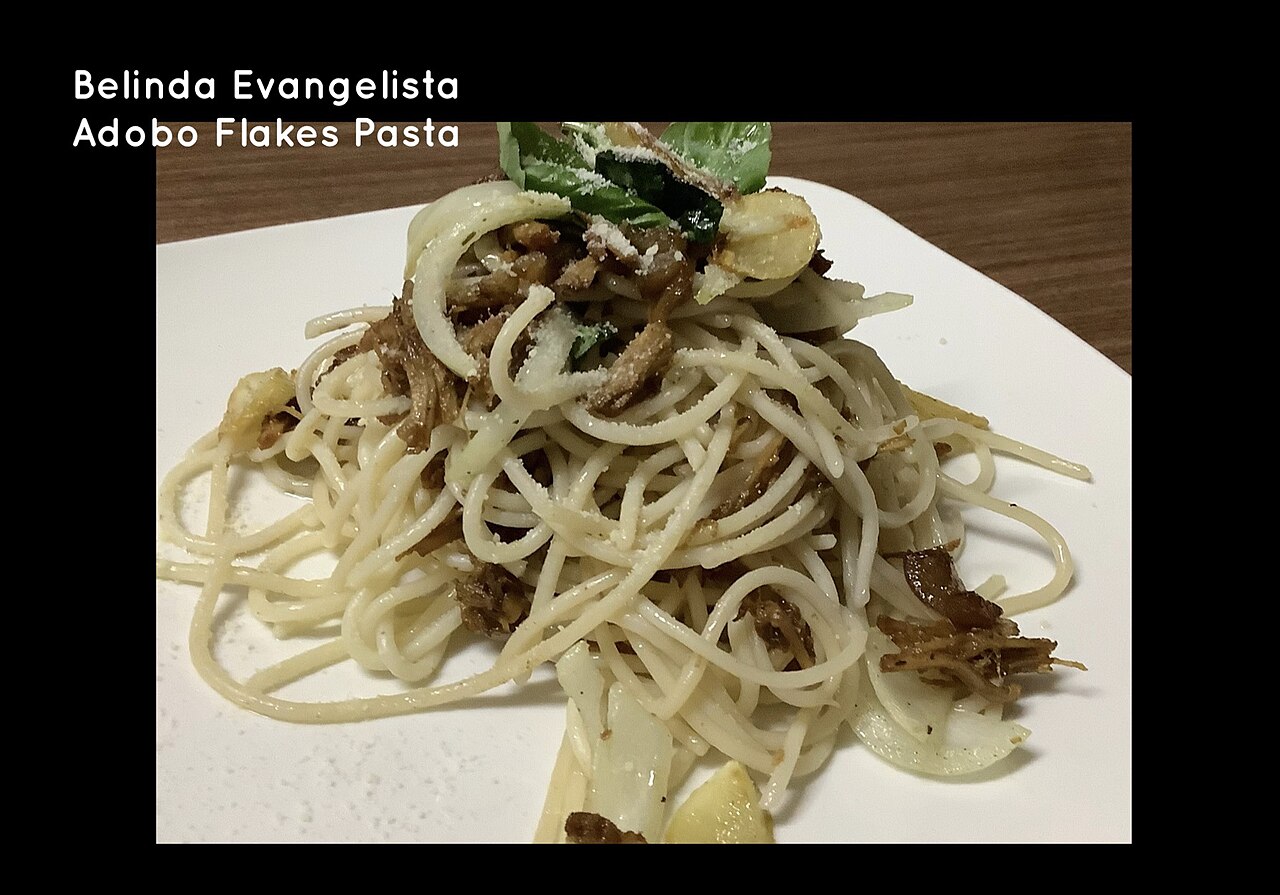
The sheer number of adobo preparations across the Philippines reflects a dish that resists a single canonical recipe. At the most basic level, the division falls between adobong puti, or "white adobo," which relies on salt for seasoning, and adobong itim, or "black adobo," the more widespread soy-sauce version. The protein chosen shapes the next layer of variation: adobong manok for chicken, adobong baboy for pork, and adobong baka for beef, alongside less common preparations featuring quail, duck, venison, catfish, shrimp, squid, and cuttlefish. The technique extends well beyond meat, encompassing water spinach, bamboo shoots, eggplant, banana flowers, and okra, as well as offal such as liver, gizzard, heart, and neck. In the provinces of Batangas and Laguna, cooks add turmeric to produce adobong dilaw, a yellow-hued variant seasoned with vinegar, garlic, sugar, and onions but deliberately excluding soy sauce, while a red version in the same region incorporates achuete seeds. Even rarer preparations have been documented, including Kapampangan adobong kamaru made with mole cricket, and dishes featuring snake, monitor lizard, and frog. The vinegar itself varies by household, ranging from coconut sap and rice vinegar to white wine or cider vinegar.
The Unofficial National Dish and Its Practical Legacy
Adobo occupies a singular position in Philippine food culture, widely regarded as the country's unofficial national dish and frequently described as the quintessential Philippine stew. It appears on the table at everyday family meals as readily as at grand feasts, always accompanied by rice, and its presence signals a sense of home and continuity. Beyond the dining table, the dish has a remarkable practical dimension: it is commonly packed by Filipino mountaineers and long-distance travelers precisely because it keeps well without refrigeration. This shelf-stability is a direct consequence of vinegar, one of adobo's defining ingredients, which inhibits bacterial growth and allows the prepared dish to remain safe for extended periods. The cooking method itself—browning meat, seafood, or vegetables in oil before simmering them in a liquid of vinegar, salt or soy sauce, and garlic—produces a result that is both deeply flavorful and inherently preservative. In this way, adobo embodies a convergence of culinary tradition, nutritional practicality, and cultural identity, making it far more than a recipe; it is a daily practice and a shared heritage passed through households across the archipelago.
Gallery
Frequently Asked Questions
What is Adobo?
Adobo is a cooking and preservation technique that involves soaking ingredients in a seasoned liquid before they hit the heat. The name derives from the Spanish verb *adobar*, meaning to marinate or apply a sauce.
Where did Adobo come from?
The technique originated in Iberia, rooted in Spanish and Portuguese culinary traditions. It later spread widely through Latin America, African colonies, and Asian territories connected to those empires.
What are Adobo's signature ingredients?
The classic lineup centers on vinegar, garlic, bay leaves, and peppercorns, with soy sauce frequently layered in for extra savory depth. Together these elements both preserve the food and build its distinctive tangy, aromatic profile.
Is Filipino Adobo just a copy of the Spanish original?
No — while Spanish colonizers simply applied the label *adobo* to a local vinegar-based method, the Filipino version developed on its own, independent of Iberian technique. It is its own tradition that merely shares a name.
When did Adobo first appear in a written record?
The earliest known reference is in Doña Teodora de la Cruz's 1913 cookbook, *The Culinary Arts*. Before that publication, the dish lived entirely in kitchen practice and oral tradition.
More in Filipino cuisine 1-24
Spotted an error? Know more?
Reader corrections go straight into our review queue. Suggest an edit · How this site is sourced