Banana fritter
Deep-fried battered banana or plantain, a common snack across multiple regions.

Mack Male from Edmonton, AB, Canada · CC BY-SA 2.0
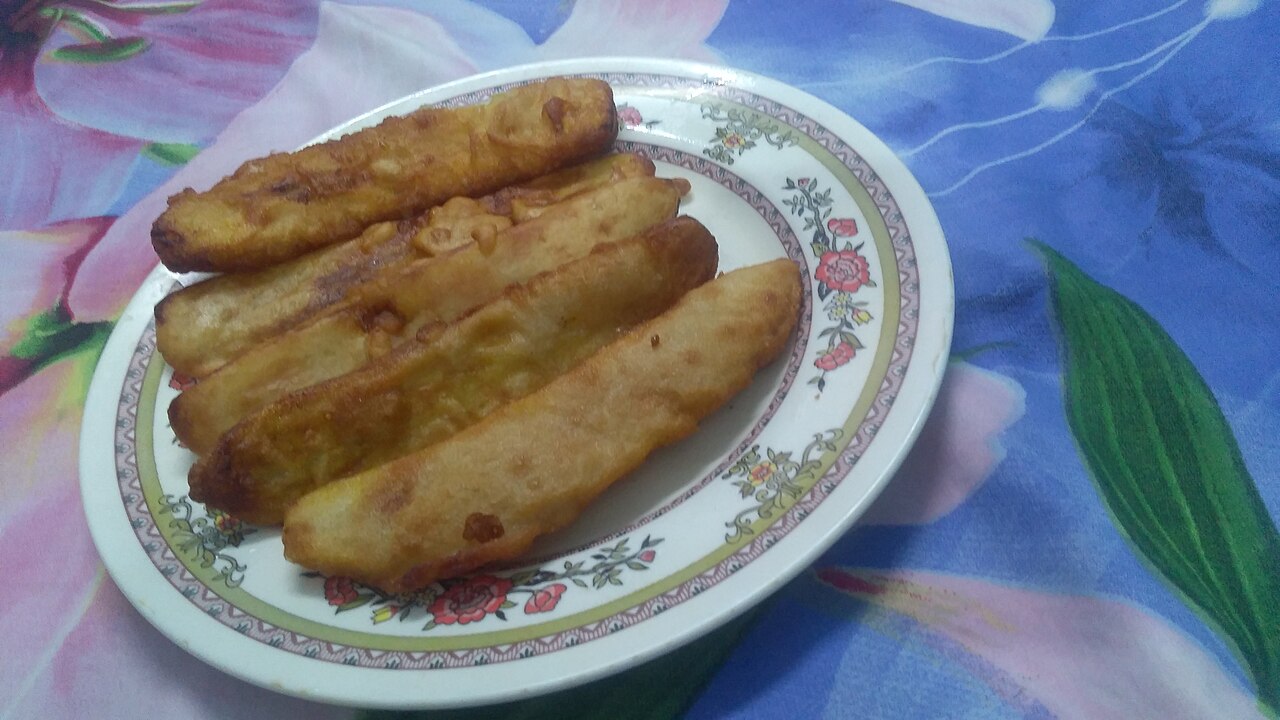
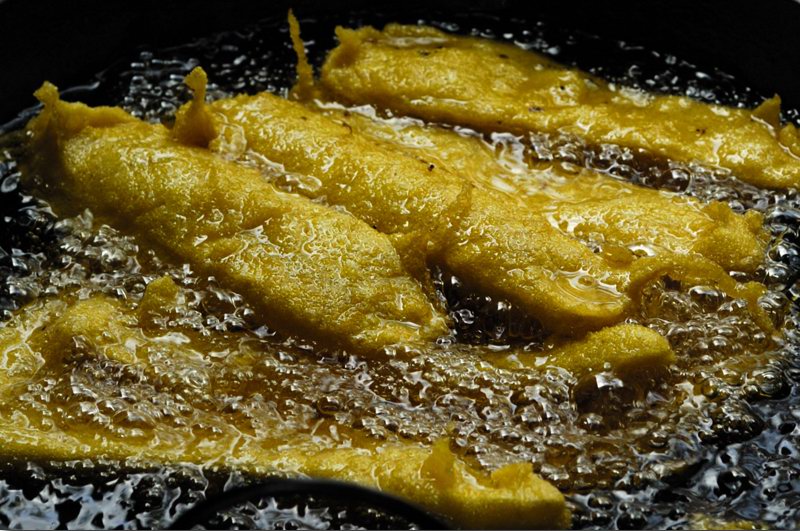
Banana fritters are made by coating banana or plantain in batter and deep-frying it in hot oil. This dish is widespread across Southeast Asia, Madagascar, and South India, with many regional variations in name and preparation.
In Brunei, they are called cucur pisang and are a traditional snack, similar to Indonesian and Malaysian pisang goreng. A honey-sweetened version, cucur pisang madu, is often eaten as a light afternoon meal.
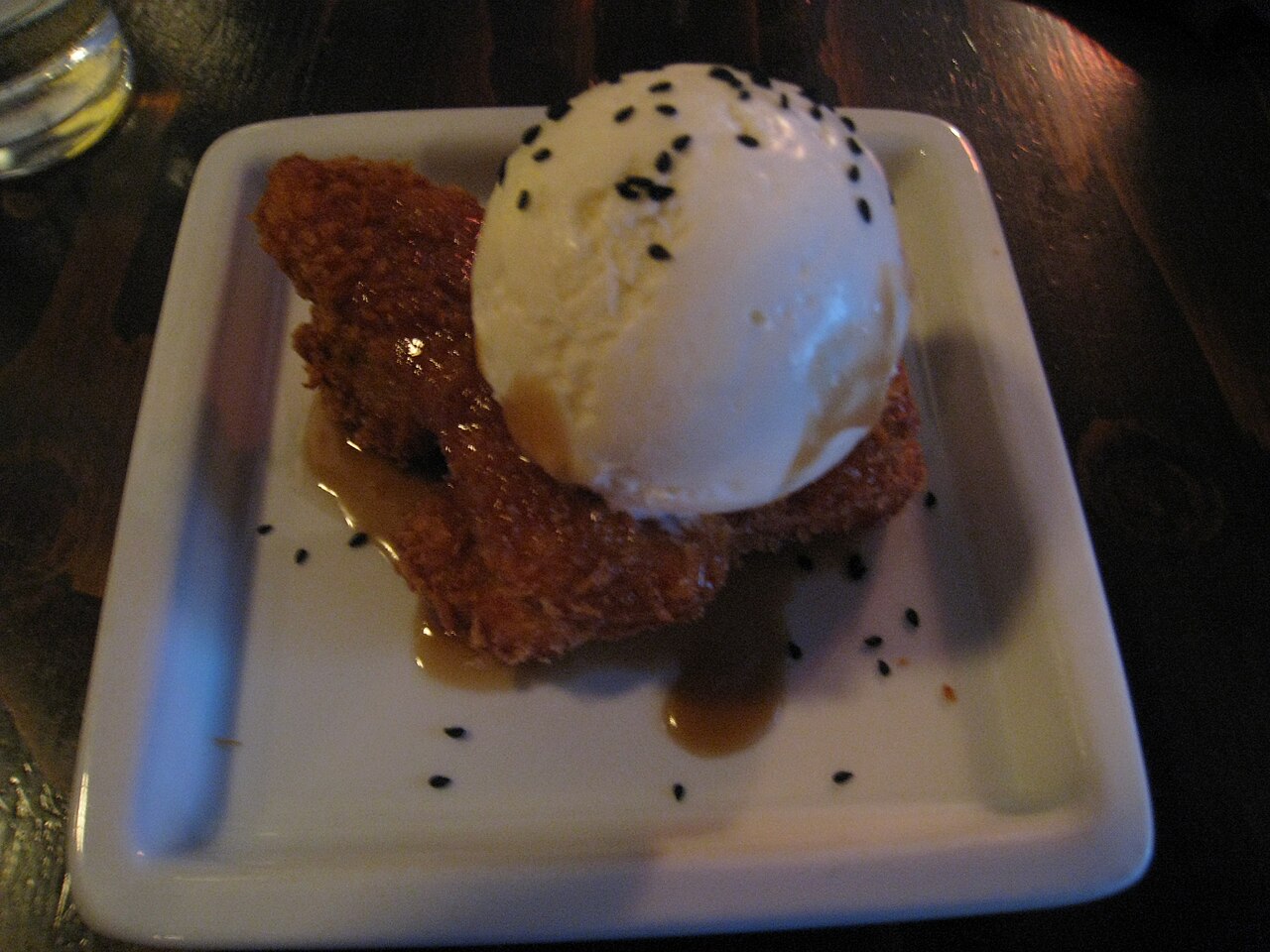
Cambodian banana fritters, known as num chek chien, use flattened bananas dipped in a thick batter of rice flour, sesame seeds, egg whites, and coconut milk, seasoned with salt and sugar. They are more savory than sweet and are commonly paired with coconut ice cream. A well-known shop, Chek Chean Pises, has operated in Phnom Penh since 2000.
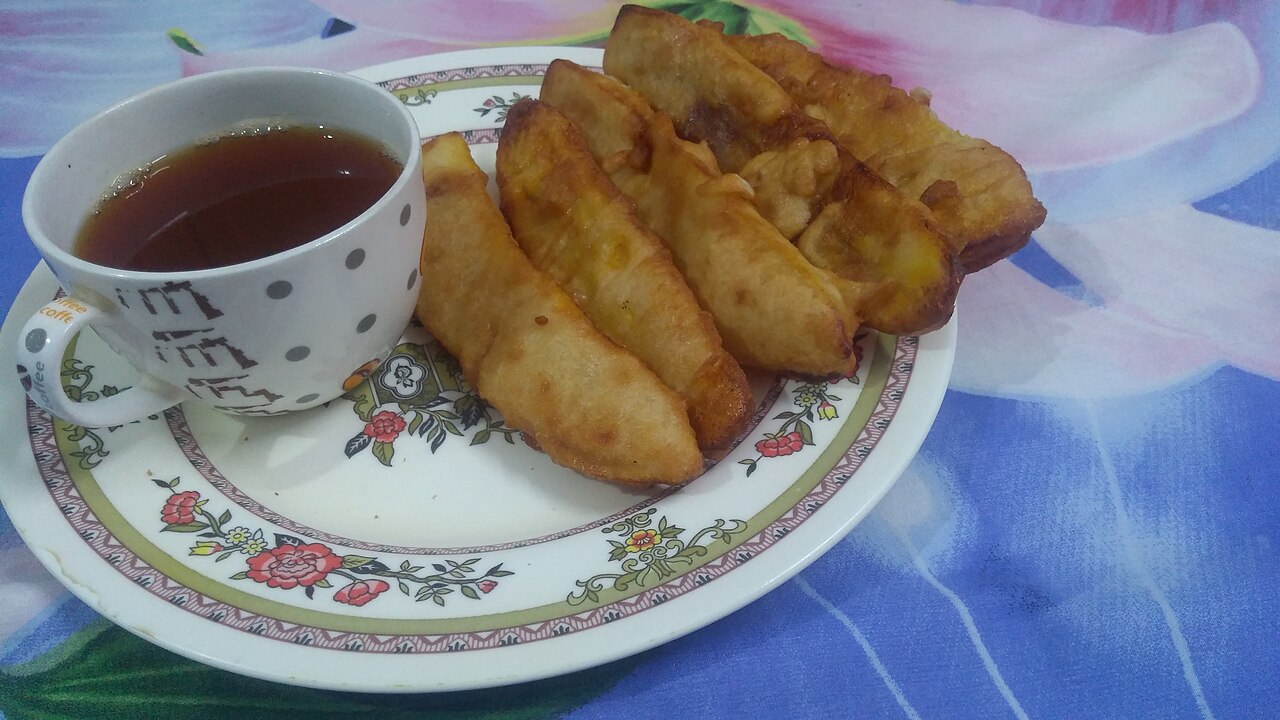
In South India, especially Kerala, banana fritters are called pazham pori or ethakka appam. They are made by slitting ripe plantains lengthwise, dipping them in a batter of all-purpose flour, turmeric, salt, and sugar, then deep-frying until golden. In Karnataka and Tamil Nadu, besan flour is used instead. In Kerala, ripe nendran bananas are preferred, and the fritters are typically eaten alone as an evening snack with tea, though some restaurants serve them with beef.
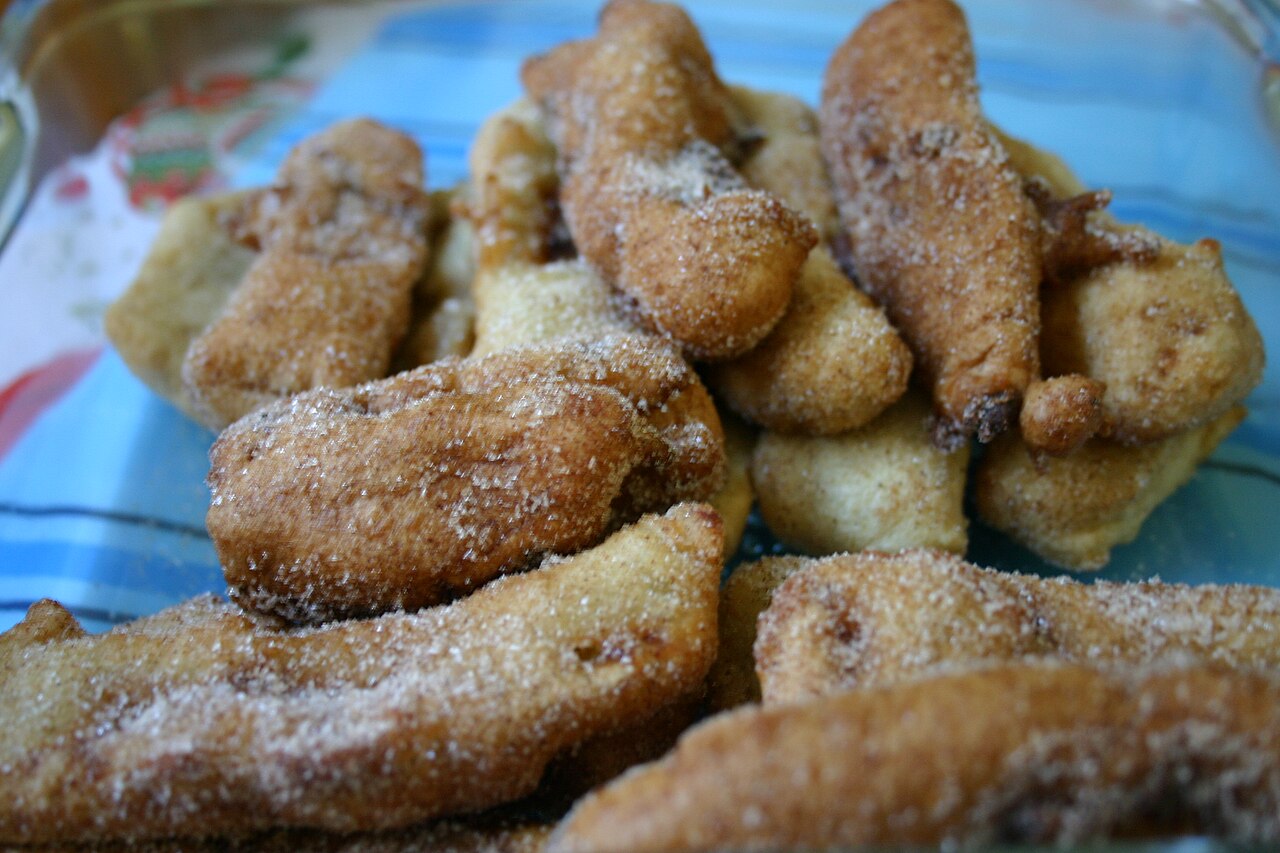
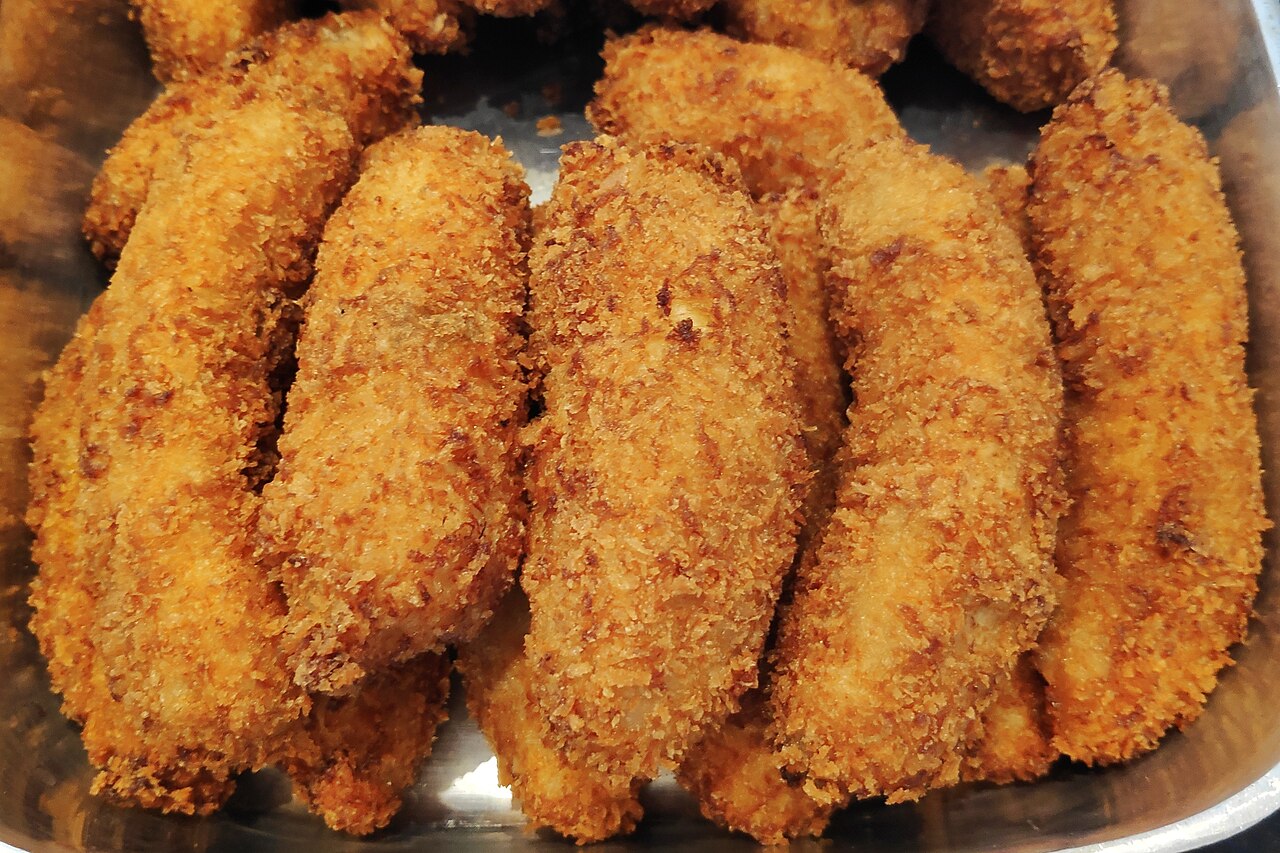
In Indonesia, banana fritters are known as pisang goreng. They are sold by street vendors and can be battered or plain-fried. Popular banana cultivars include pisang raja, pisang tanduk, and pisang kepok, chosen for their firm texture. The batter often uses wheat, rice, or tapioca flour, sometimes with coconut milk or vanilla. Street vendors serve them plain, while cafes may add toppings like powdered sugar, cheese, or ice cream. They are eaten as a snack with tea or coffee. Regional names include godoh biu in Bali, cau goreng in West Java, and pisang kipas in Pontianak. Variants include pisang goreng kipas (fan-shaped, sometimes filled with kaya jam), pisang goreng pasir (with breadcrumbs for a crispy coating), pisang goreng kremes (with rice flour and coconut milk for crunchy granules), and pisang goreng madu (with honey in the batter and drizzled on top).
Quick Facts
- Region
- Southeast Asia, Madagascar, the Caribbean and the Indian subcontinent
- Main Ingredient
- Banana or plantain, batter
Facts from the source article.
Lore & Background
In Indonesia, banana fritters are commonly known as pisang goreng and are often sold by street vendors. They may be coated with batter or not, and plantain is often used instead of banana. Traditional cultivars such as pisang raja, pisang tanduk, and pisang kepok are popular for their firm texture. The batter may include wheat flour, rice flour, tapioca, or bread crumbs, sometimes with coconut milk or vanilla. In Indonesia, it is consumed as a snack to accompany tea or coffee, either in the morning or late afternoon. Every region has developed various recipes; for example, in Bali it is called godoh biu, in West Java cau goreng, and in Pontianak pisang kipas.
Reader's Guide
Banana fritters hold cultural and culinary significance across multiple regions. In South India, particularly Kerala, pazham pori is typically prepared using ripe nendran bananas and served as an evening snack with tea, sometimes with beef in some restaurants. In Cambodia, num chek chien is made with flattened bananas dipped in a thick mixture of rice flour, sesame seeds, egg whites, and coconut milk, and is often eaten with coconut ice cream. In Madagascar, mofo akondro is sold as street food, made with a batter of wheat or rice flour, eggs, and water or milk. In Malaysia and Singapore, pisang goreng is commonly consumed as a snack in the morning and afternoon, and in Johor it is served with sambal kicap. The dish appears in many variants, such as pisang goreng kipas (fan-shaped), pisang goreng pasir (with bread crumbs), and pisang molen (wrapped in pastry dough). Banana fritters are a versatile and widespread snack, often sold by street vendors and in local eateries.
Did You Know?
- In Cambodia, banana fritters are called num chek chien and are often eaten with coconut ice cream.
- In Indonesia, pisang goreng may be fried without any batter, known as pisang goreng telanjang.
- In Kerala, pazham pori is traditionally served on its own as an evening snack with tea, not with curries or side dishes.
- In Madagascar, banana fritters are called mofo akondro and are sold as street food.
A Pan-Asian Staple with Local Identities
The banana fritter is a deep-fried, battered preparation found across Southeast Asia, Madagascar, and South India, yet each region has stamped it with its own identity. In Brunei it goes by cucur pisang, closely resembling the pisang goreng of Indonesia and Malaysia. Cambodia knows it as num chek chien, literally translating to fried banana cake, while South India calls it pazham pori or vazhakkappam in Malayalam, balekayi bajji in Kannada, and aratikaya bajji in Telugu. Indonesia alone has spawned a constellation of regional names: godoh biu in Bali, cau goreng in West Java, gedhang goreng in Java, pisang rakit in Sibolga, and pisang kipas in Pontianak. Despite this linguistic diversity, the core technique remains remarkably consistent—banana or plantain is coated in some form of batter and submerged in hot oil until golden. The result is a snack that transcends borders while remaining deeply local in flavor, texture, and the moment of the day it is enjoyed.
Batters, Bananas, and the Art of the Fry
The preparation of banana fritters reveals a surprising depth of technical variation. In South India, plantains are slit lengthwise and dipped in a batter of all-purpose flour, salt, turmeric, and sugar before frying; in Karnataka and Tamil Nadu, besan flour takes the place of maida. Cambodia's approach is distinctly different: flattened bananas are coated in a thick mixture of rice flour, sesame seeds, egg whites, and coconut milk seasoned with salt and sugar, yielding a savourier result. Indonesian vendors select specific cultivars—pisang raja for its fragrant softness, pisang tanduk and pisang kepok for their firm, mildly sweet-sour flesh that resists crumbling in the oil. Batters range from simple wheat or rice flour to combinations with tapioca, bread crumbs, coconut milk, and vanilla extract. Some Indonesian fritters skip batter entirely, while others, like pisang molen, wrap the banana in thin tape-shaped pastry dough before frying, producing a crunchy exterior that keeps the fruit moist within.
From Street Carts to Afternoon Rituals
The banana fritter occupies a unique social position across its range of cultures. In Indonesia, it is a quintessential street-vendor snack, sold from travelling carts alongside fried tofu, tempeh, and cassava fritters, and serves as the go-to companion for morning tea or late-afternoon coffee at local warung kopi. Brunei's cucur pisang madu, a honey-laden variant, anchors the afternoon tea ritual known as minum petang. In Kerala, pazham pori carries particular cultural weight: traditionally prepared with ripe nendran bananas, it is served on its own as an evening snack with chai, rather than paired with curries or side dishes, though some restaurants do offer it alongside beef. Cambodia's num chek chien is typically enjoyed as a savoury snack, often with coconut ice cream as a sweet counterpoint. The fritter thus functions less as a meal and more as a social pause—a reason to sit, sip, and share.
A Family of Specialized Variants
Indonesia in particular has cultivated an extraordinary taxonomy of banana fritter styles. Pisang goreng kipas, also called pisang goreng Pontianak, features banana cut into a fan shape, sometimes filled or topped with kaya jam, and is so popular that dedicated retail outlets sell nothing else. Pisang goreng pasir achieves a grainy, croquette-like crust by folding bread crumbs into the batter. The Javanese kremes variant uses rice flour, vanilla, and coconut milk in a batter that, when fried in ample oil, produces crunchy granules and a sweet, fragrant coating. Pisang goreng madu incorporates honey into the batter and drizzles more over the finished product, giving it a dark, caramelised appearance. Pisang molen, a nod to Dutch colonial influence, wraps banana in thin pastry dough for a flaky, moist interior. Even the Cambodian tradition distinguishes itself by leaning savoury with sesame and coconut milk, while Brunei adds honey for a distinctly sweet profile.
Gallery
Frequently Asked Questions
Who is Banana fritter?
Banana fritter is a deep-fried snack created by coating sliced banana or plantain in a batter of flour, egg, and other mix-ins, then submerging it in hot oil until golden and crisp. It is one of the most recognizable fried treats across Southeast Asia, Madagascar, and South India.
What are Banana fritter's powers/role?
Its primary role is as a casual, portable snack that pairs naturally with a cup of tea or coffee. It is most often enjoyed as a light afternoon treat or a quick energy boost rather than as a full meal.
Why is Banana fritter important?
It holds cultural significance as a shared culinary tradition spanning multiple countries, appearing under names like pisang goreng, pazham pori, cucur pisang, mofo akondro, and num chek chien. Its widespread presence makes it a unifying comfort food across very different regional food cultures.
What are Banana fritter's main ingredients?
At its core, the dish requires banana or plantain slices and a simple batter typically built from flour, egg, and sometimes coconut milk or sesame seeds. The exact batter recipe shifts by region, but the sweet, crispy, fried result stays consistent everywhere.
More in Filipino cuisine 1-24
Spotted an error? Know more?
Reader corrections go straight into our review queue. Suggest an edit · How this site is sourced