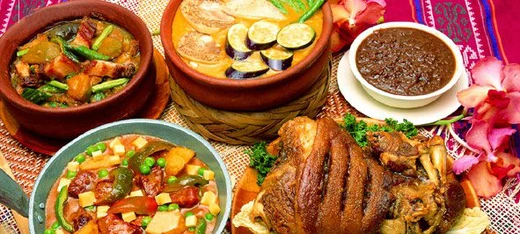
Adobo (Filipino dish)
Filipino cooking process using vinegar, salt, and garlic.

C7capybara29 · CC BY-SA 4.0
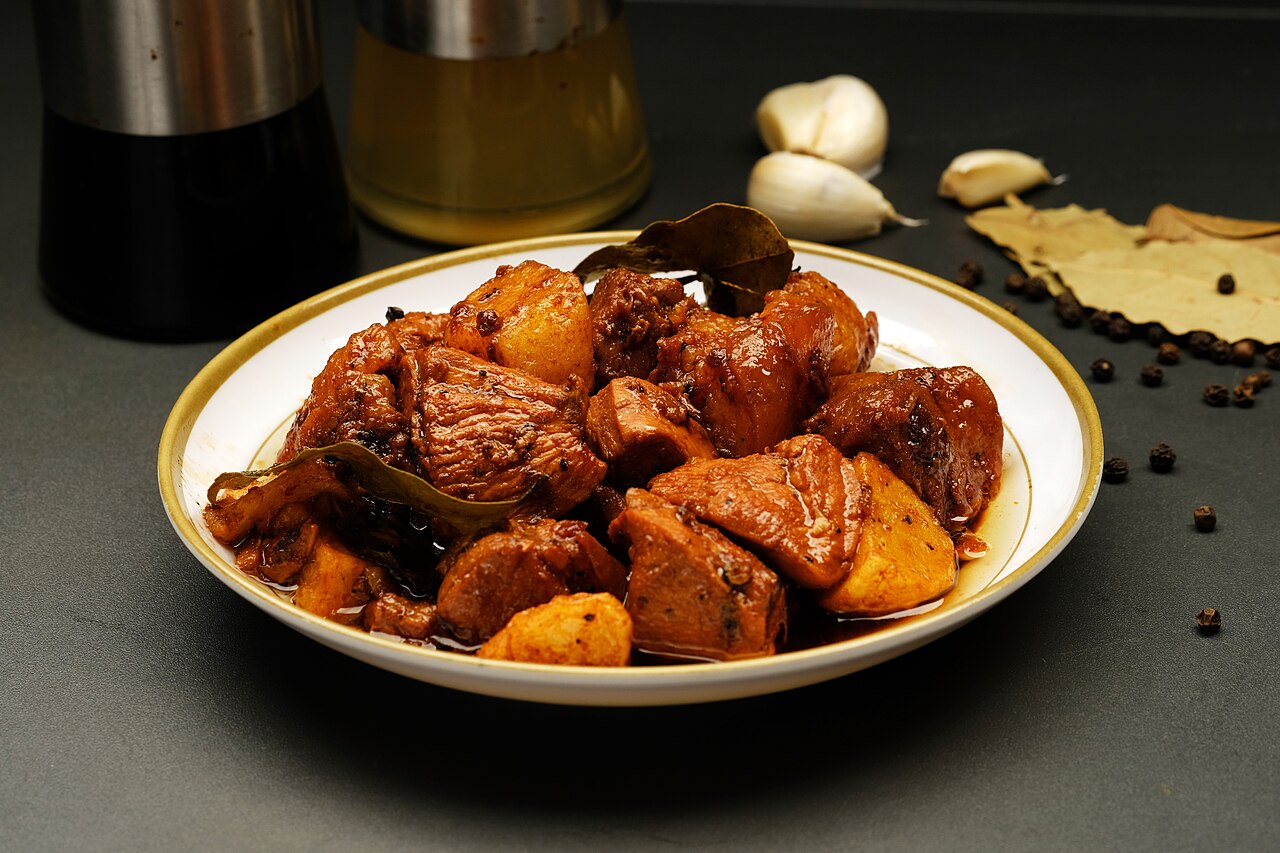
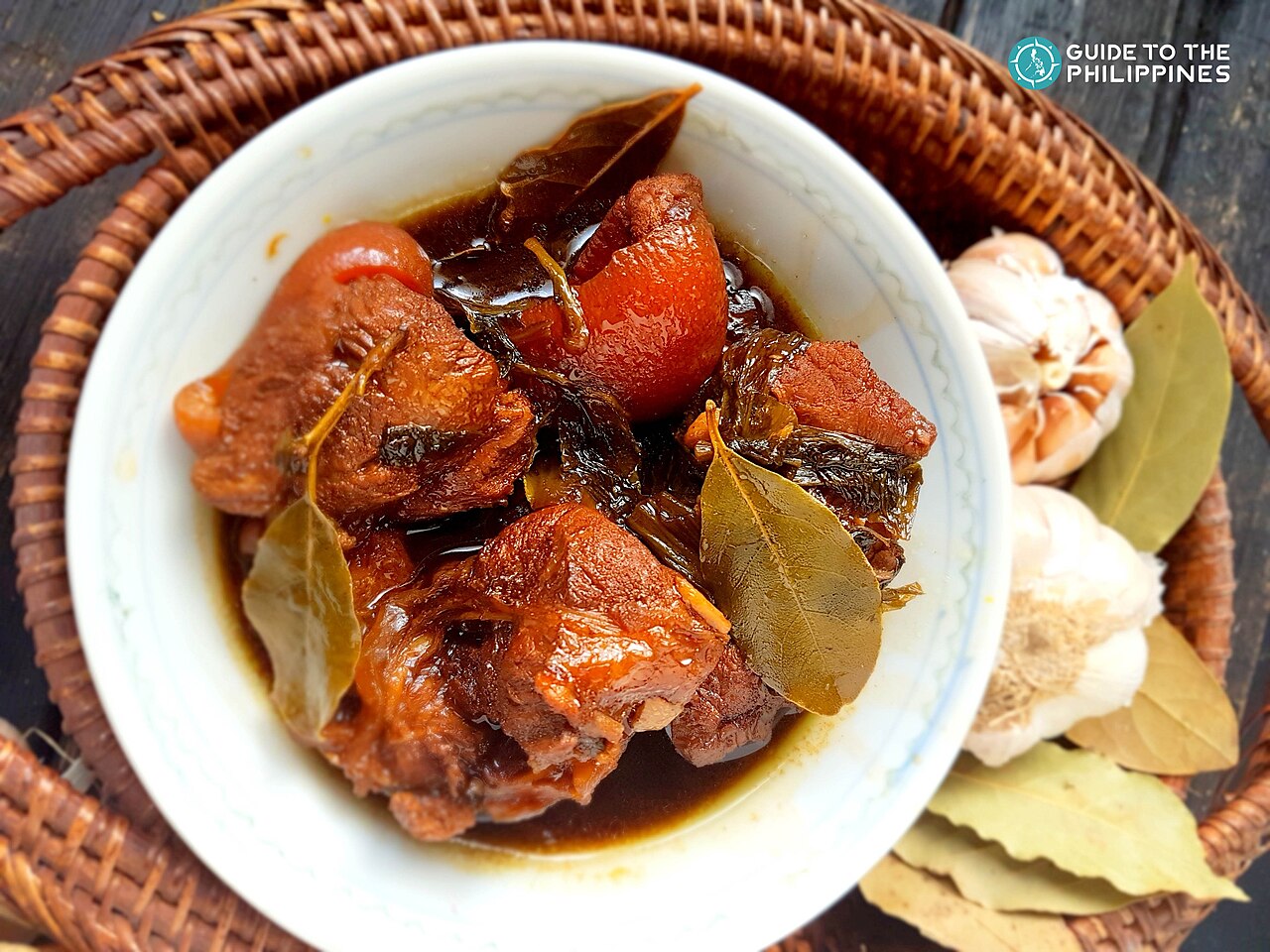
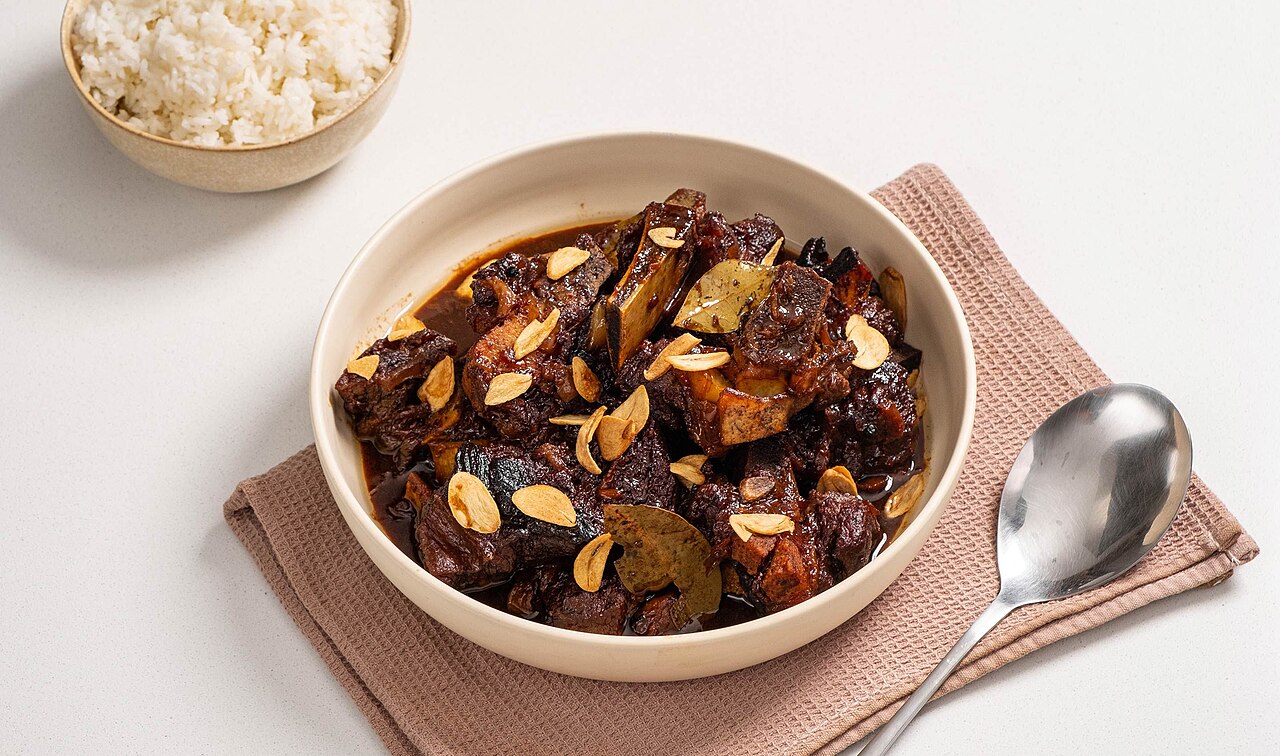
Adobo is a popular Filipino dish and cooking process in Philippine cuisine. It involves browning meat, seafood, or vegetables in oil, then marinating and simmering them in vinegar, salt and/or soy sauce, and garlic. It is often considered the unofficial national dish in the Philippines.
Quick Facts
- Country
- Philippines
- National Cuisine
- Filipino cuisine
- Course
- Main course
- Served
- Hot
- Main Ingredient
- Meat (beef, chicken, pork), seafood, or vegetables; soy sauce, vinegar, cooking oil, garlic, black peppercorn, bay leaf
- Variations
- Some sugar for a sweet-salty taste; dry versions with little or no sauce
- Calories
- Chicken: 107 kcal / Pork: 342 kcal / Beef: 349
- Cookbook
- Adobo
- Similar Dish
- Paksiw, kinilaw, estofadong baboy
Facts from the source article.
Lore & Background
The cooking method for Philippine adobo is indigenous to the Philippines. Precolonial peoples often cooked food with vinegar and salt to preserve it in the tropical climate. The Spanish applied the term 'adobo' to native dishes marinated before consumption, first recorded in 1613. Food historian Raymond Sokolov believed the name was applied to a pre-existing native dish, while Doreen Fernandez argued it may have been indigenized from Mexican adobo, though the dishes are significantly different. The original indigenous name is unknown, with 'paksiw' proposed as a possible native term.
Reader's Guide
Philippine adobo is distinct from Spanish and Latin American adobos in ingredients and process, using Southeast Asian native ingredients like palm or sugarcane vinegar, soy sauce, black peppercorns, and bay leaves. It does not traditionally use chilis, paprika, oregano, or tomatoes. Its characteristic flavor is salty and sour, often sweet. Adobo is generally understood as a cooking process rather than a single recipe, with numerous regional and personal variations. It is traditionally cooked in small clay pots but now often in metal pots or woks. Adobo keeps well without refrigeration due to vinegar inhibiting bacterial growth. In 2021, the Bureau of Philippine Standards unveiled plans to standardize the dish to promote it internationally, though the definition is not mandatory.
Did You Know?
- The term 'adobo' was first recorded in a 1613 dictionary by Spanish missionary Pedro de San Buenaventura as 'adobo de los naturales'.
- A rarer version without soy sauce is called 'adobong puti' (white adobo), using salt instead.
- In Batangas and Laguna, turmeric is added to adobo, giving it a distinct yellowish color known as 'adobong dilaw'.
- On March 15, 2023, Google Doodles released a Philippine Adobo doodle.
Precolonial Roots & the Mystery of the Name
The adobo cooking method predates Spanish colonization, rooted in the practical need of precolonial Filipino peoples to preserve food in the tropical climate using vinegar and salt. Vinegar—drawn from coconut, cane, nipa palm, and kaong palm—was central to a broader fermentation tradition that produced complex flavors across Filipino cooking. Four distinct vinegar-based methods existed before the Spanish arrived: kiniláw (raw seafood in vinegar), paksíw (meat broth with vinegar), sangkutsá (braised meat in vinegar), and what we now call adobo (a stew combining vinegar, garlic, salt or soy sauce, and spices). Food historian Raymond Sokolov argued the Spanish simply borrowed the word "adobo" to label a dish that already existed. Doreen Fernandez offered an alternative, suggesting indigenization from Mexican adobo, though she acknowledged the two dishes differ substantially. Some scholars propose the original indigenous name was lost entirely, with paksiw possibly being the pre-Spanish term. The 1613 Vocabulario de la lengua tagala by Pedro de San Buenaventura recorded it as "adobo de los naturales," confirming the Spanish were naming a native practice.
A Distinct Culinary Identity
Despite sharing a name, Philippine adobo is fundamentally different from its Spanish and Latin American counterparts in both ingredients and technique. Where Spanish and Mexican adobos lean on chilis, paprika, oregano, and tomatoes for a spicier, herb-forward profile, the Filipino version draws on ingredients native to Southeast Asia: palm-sap or sugarcane vinegar, soy sauce (often replacing salt), black peppercorns, and bay leaves—traditionally Cinnamomum species, though modern cooks more commonly use Laurus nobilis. The resulting flavor is distinctly salty, sour, and often sweet, rather than hot or aromatic. The inclusion of soy sauce in many versions reflects Chinese culinary influence on Philippine food culture. Jose Antonio Vargas described his personal approach as marinating chicken and pork overnight in vinegar, soy sauce, and garlic, sometimes adding brown sugar depending on his audience. The dish is best understood not as a fixed recipe but as a flexible cooking process—braising protein or vegetables in a vinegar-based liquid—making it a framework rather than a formula.
A Spectrum of Variations
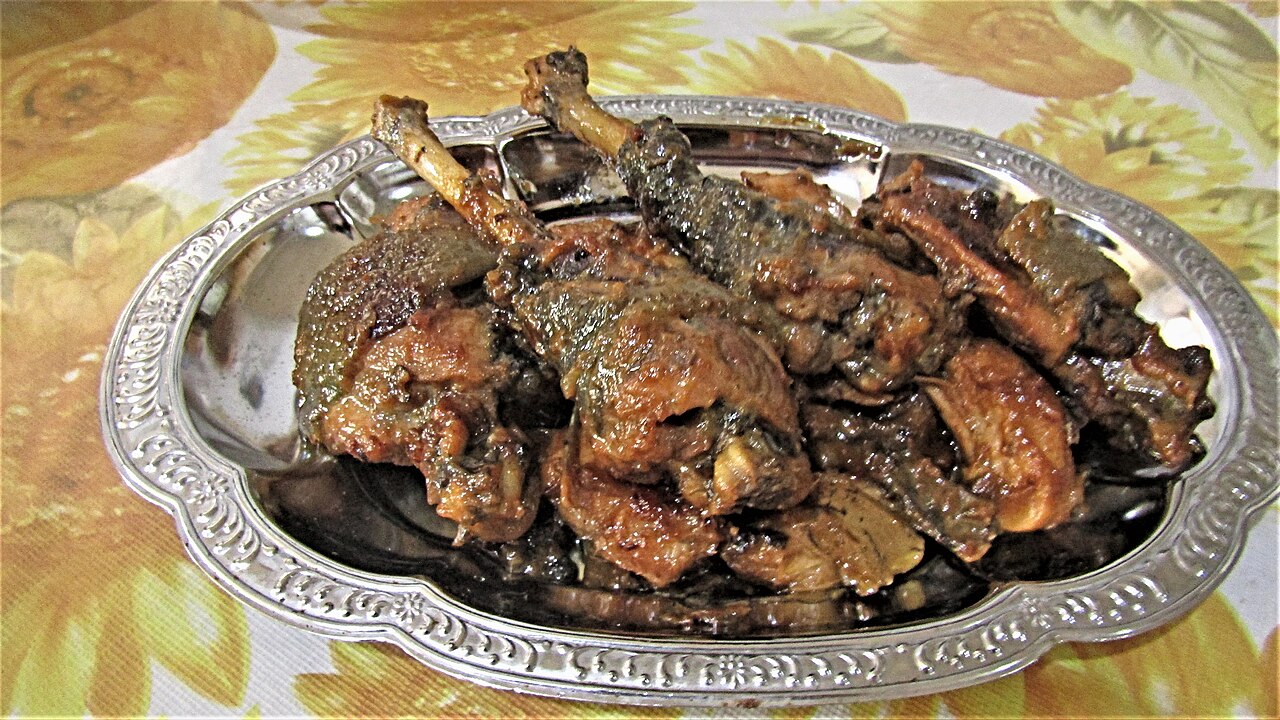
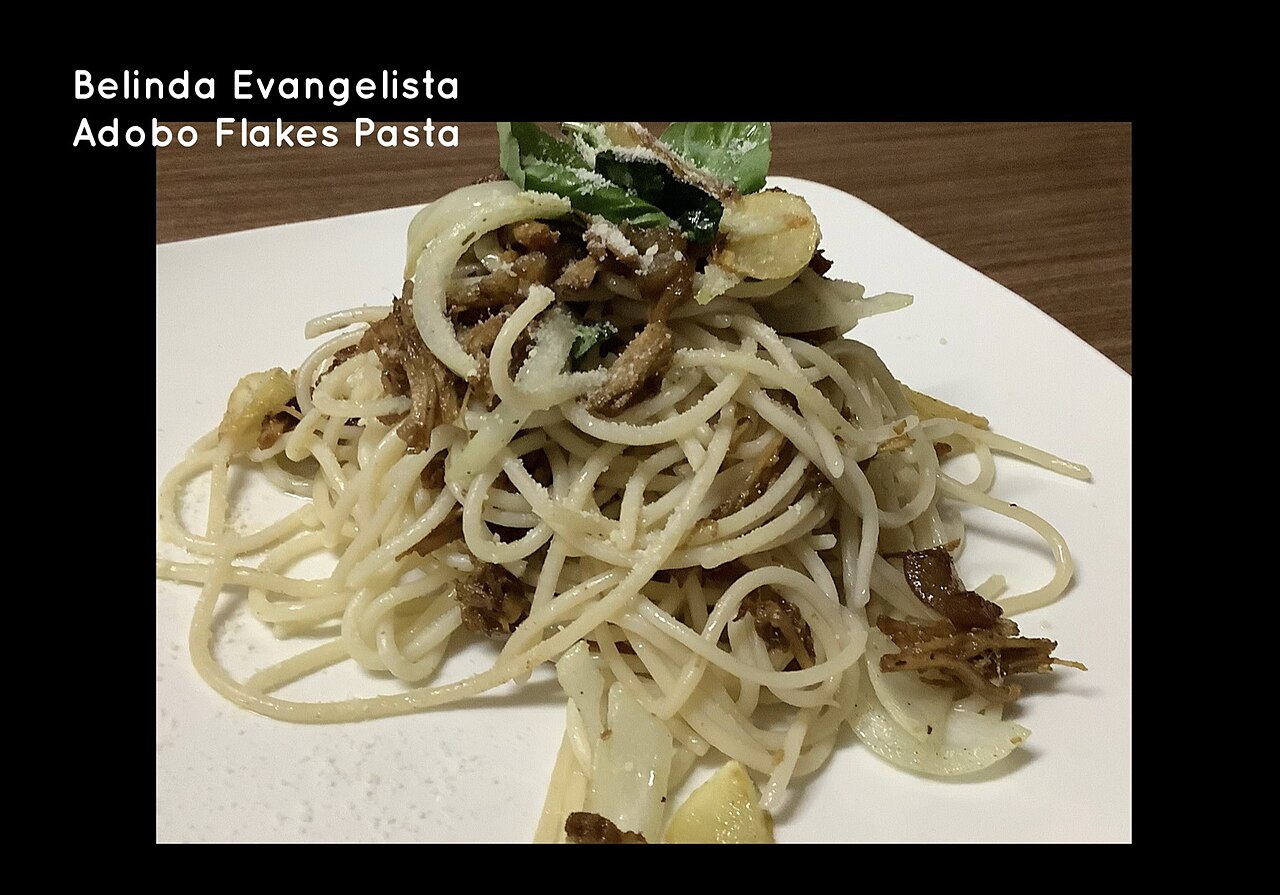
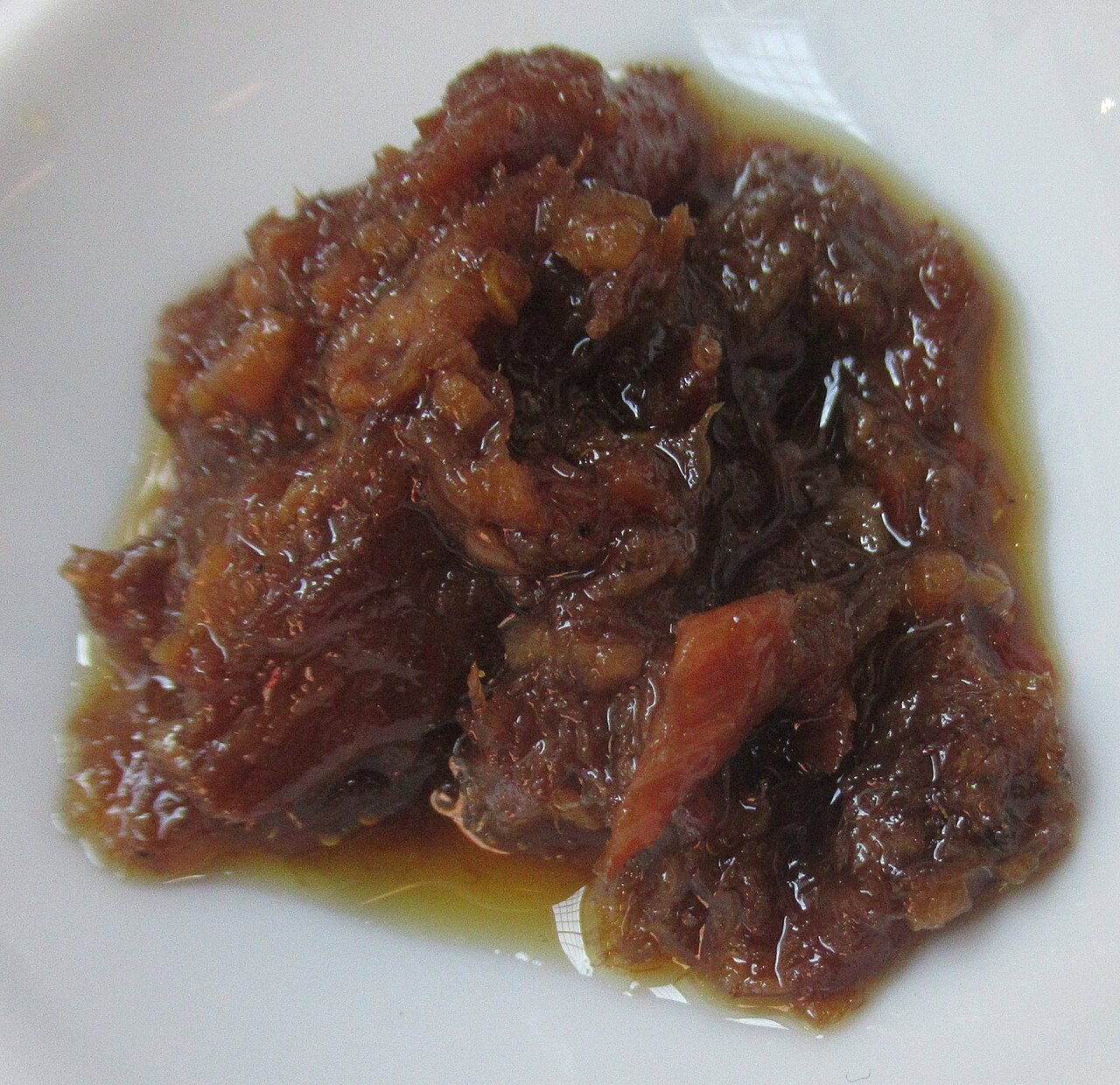
Adobo resists a single definition, unfolding across an enormous range of regional, household, and ingredient-based variations. The most fundamental split is between adobong puti ("white adobo"), which relies on salt, and the more widespread adobong itim ("black adobo"), built around soy sauce. Proteins span chicken (adobong manok), pork (adobong baboy), beef (adobong baka), quail, duck, venison, and even snake, monitor lizard, and frog. Seafood versions feature fish, catfish, shrimp, and cuttlefish. The technique extends to vegetables and fruits—water spinach, bamboo shoots, eggplant, banana flowers, okra—and to offal such as liver, gizzard, heart, and neck. In Batangas and Laguna, turmeric produces a yellowish adobong dilaw, while achuete seeds yield a red variant; both omit soy sauce in favor of sugar, garlic, onions, and vinegar. A related dish, pinatisan, swaps vinegar for patis (fish sauce). Vinegar itself varies by household, ranging from coconut sap and rice vinegar to white wine or cider vinegar, ensuring no two kitchens produce an identical result.
Everyday Staple and Enduring Legacy
Adobo occupies a singular place in Filipino food culture, frequently cited as the unofficial national dish and described as the quintessential Philippine stew. It appears at both humble daily meals and grand feasts, always accompanied by rice. Its practical virtues make it a favorite among mountaineers and travelers: the vinegar that defines its flavor also inhibits bacterial growth, granting the dish a notably long shelf-life without refrigeration. Historically, adobo was prepared in small clay pots known as palayok or kulon, but contemporary kitchens have largely shifted to metal pots and woks (kawali). The dish's versatility—accommodating virtually any protein, vegetable, or edible animal part—means it functions less as a fixed recipe and more as a foundational cooking philosophy. Its roots in precolonial preservation techniques, its absorption of Chinese soy sauce, and its naming by Spanish colonizers together make adobo a living record of centuries of cultural exchange, yet its identity remains unmistakably Filipino.
Gallery
Frequently Asked Questions
What exactly is Adobo in Filipino cuisine?
Adobo is both a specific dish and a broader cooking technique rooted in Philippine cuisine. The method involves browning protein or vegetables in oil, then simmering them in a tangy mixture of vinegar, salt or soy sauce, and garlic.
What are the core ingredients every Adobo recipe needs?
The three non-negotiable pillars are vinegar, salt or soy sauce, and garlic. Beyond that, cooks have enormous freedom to swap in chicken, pork, seafood, or even vegetables.
When did Adobo first appear in written records?
The earliest known written reference to Adobo dates back to 1613, found in the Vocabulario de la lengua tagala, a Tagalog-Spanish dictionary compiled during the colonial era.
Why do Filipinos call Adobo the unofficial national dish?
It holds that title because the dish appears across virtually every region of the Philippines and is a staple at family gatherings, holidays, and everyday meals alike. Its simplicity and versatility make it a shared cultural touchstone rather than a regional specialty.
Can you make Adobo with anything other than meat?
Absolutely—while chicken and pork are the most common proteins, the technique works just as well with fish, shrimp, or a full vegetable medley. The vinegar-garlic-soy base is the constant; the main ingredient is entirely up to the cook.
More in Filipino cuisine 1-24
Spotted an error? Know more?
Reader corrections go straight into our review queue. Suggest an edit · How this site is sourced