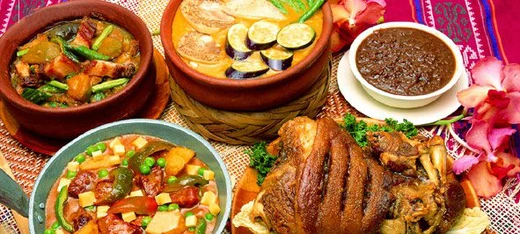
Calabaza
A versatile winter squash known as calabaza in Spanish.

Infrogmation · CC BY-SA 4.0
Calabaza is the Spanish word for any winter squash, but in English it usually means the West Indian pumpkin, a type grown in the West Indies, tropical America, and the Philippines. In Cuba, Florida, Puerto Rico, Mexico, and the Philippines (where it is also spelled *kalabasa*), it is the common name for *Cucurbita moschata*. This species goes by other names elsewhere: *ahuyama* in Colombia, the Dominican Republic, and Venezuela; *ayote* in Central America; *zapallo* in parts of South America; and simply "pumpkin," "squash," or "calabash" in English-speaking islands.
The English word "calabash" and the French *calebasse* come from the older Spanish term, which itself traces back to the Iberian *calapaccu*—from *-cal*, meaning house or shell. It is a doublet of "carapace" and *galapago*.
In North America, *calabaza* can refer to several *Cucurbita* species, but it is most often used for cultivars of *C. moschata*, which is native to Central America and Mexico. Skin color ranges from dark green to light yellow, and flesh is usually bright orange or yellow. Varieties differ slightly in taste and texture, but are generally sweet and firm yet soft. Cultivars of *C. maxima* may also be called calabaza if they resemble *C. moschata* types, but *C. foetidissima* is not commonly known as calabaza—it is typically called buffalo gourd or Missouri gourd.
Calabaza plants are monoecious and pollinated by insects like honeybees and bumblebees. Their vines can reach up to 15 meters (50 feet) from the fruit to the plant, with long internodes. Most grow as vines, though some *C. moschata* varieties are bush-type, which tend to yield more fruit—typically between two and fifteen per plant. Fruits weigh 2 to 23 kilograms (5 to 50 pounds) and come in shapes like oval, spheroid, obovate, pear, oblate, or elliptic; improved types are often spheroid, oblate, or flat. The rind is light to dark green when immature and light orange to beige when mature, and may be smooth or warted. The flesh, 3 to 8 centimeters (1 to 3 inches) thick, ranges from green-yellow to orange.
Calabaza is used in stews, cakes, and candies, and can replace pumpkin varieties. Its flavor is smooth and slightly sweet, and it is a good source of beta-carotene, some of which converts to vitamin A. Under Spanish colonial influence, *C.
- Native region
- Central America and Mexico
Lore & Background
The term calabaza is of pre-Roman origin, derived from the Iberian calapaccu, from -cal meaning house or shell, and is a doublet of carapace and galapago. The French term calebasse and English 'calabash' are based on the older Spanish. In North America, calabaza may refer to several species of Cucurbita, most commonly C. moschata, which is native to Central America and Mexico. Cultivars of C. maxima may also use the term if they resemble C. moschata, but C. foetidissima is not commonly known as calabaza—it is typically called buffalo gourd or Missouri gourd.
Reader's Guide
Calabaza plants are monoecious and pollinated by insects like honeybees and bumblebees. They have long internodes and vines up to 15 metres, with most plants having vine-type growth, though some bush-type C. moschata exist. Fruits weigh 2 to 23 kilograms and vary in shape from oval to elliptic; rind color ranges from light to dark green when immature to light orange or beige when mature, and flesh is green-yellow to orange, 3 to 8 centimetres thick. Calabaza is eaten in stews, cakes, candies, and as a pumpkin substitute. Under Spanish colonial influence, it became established in the Philippines, where it is a staple vegetable. The flowers are used in Mexican, New Mexican, and Salvadoran cuisine, and in Philippine cuisine the flowers and young leaves are also eaten. The seeds, toasted and seasoned, are known as pepitas.
Did You Know?
- Calabaza fruits can weigh from 2 to 23 kilograms (5 to 50 pounds).
- The toasted seeds of calabaza are known as pepitas.
Etymology & Linguistic Heritage
The word calabaza carries a linguistic lineage that stretches back to the pre-Roman peoples of the Iberian Peninsula. Its root traces to the Iberian term calapaccu, built on the element -cal, which conveyed the idea of a house or shell. This ancient origin also links calabaza as a doublet to the Spanish words carapace and galapago, all sharing that same ancestral root. The French term calebasse, and consequently the English word "calabash," derives directly from this older Spanish form. In English-speaking contexts, calabaza most specifically denotes the West Indian pumpkin, a winter squash cultivated across the Caribbean, tropical America, and the Philippines. Yet the squash itself travels under a remarkable constellation of names depending on where you are. In Colombia, the Dominican Republic, and Venezuela it is called ahuyama; across Central America it goes by ayote; in parts of South America it is known as zapallo. In the Philippines the spelling shifts to kalabasa, while English-speaking islands may simply call it pumpkin, squash, or calabash. One vegetable, many tongues.
Botanical Profile & Growth Habits
Calabaza plants are monoecious, meaning a single vine carries both male and female flowers, and they rely on insect pollinators—honeybees and bumblebees among them—to set fruit. The vines are notably long, with internodes that stretch the distance from the crown of a fruit back to the plant's base by as much as fifteen metres, roughly fifty feet. Most cultivars exhibit a sprawling vine-type growth habit, though certain Cucurbita moschata varieties have been recorded growing in a compact bush form. A typical plant produces between two and fifteen fruits per season, with the bush types tending to deliver the higher end of that range. Individual fruits span a wide weight range, from roughly two kilograms up to twenty-three, or about five to fifty pounds. Shape is equally variable: oval, spheroid, obovate, pear-shaped, oblate, or elliptic, with improved cultivars leaning toward the spheroid, oblate, or flat profiles. The rind shifts from light to dark green while immature to a pale orange or beige at maturity, and its surface may be smooth or distinctly warted. The edible flesh, ranging from green-yellow to orange, measures roughly three to eight centimetres thick.
Culinary Versatility Across Cultures
In the kitchen, calabaza is remarkably adaptable. Its flesh is smooth and mildly sweet, making it a natural substitute for pumpkin in stews, baked cakes, and even candies. Nutritionally, it is a solid source of beta-carotene, a portion of which the human body can convert into vitamin A. Under Spanish colonial influence, Cucurbita moschata took root in the Philippines, where it became a staple vegetable woven into countless dishes. Locals call it kalabasa, or in Philippine English simply "squash" or "pumpkin." Beyond the fruit itself, the blossoms—flor de calabaza in Spanish, bulaklak ng kalabasa in Filipino—are a prized ingredient. In Mexican and New Mexican cooking they appear in quesadillas and empanadas; in Salvadoran cuisine they feature in pupusas. In the Philippines the flowers are commonly stuffed (relyeno or relleno) or simmered into soups, often accompanied by the young leaves, known as talbos ng kalabasa. Even the seeds, once toasted and seasoned, become the familiar snack known as pepitas.
Taxonomic Identity & Regional Nomenclature
In Spanish, calabaza serves as a broad generic label for essentially any winter squash, but in English-language usage it narrows to a specific crop: the West Indian pumpkin, a winter squash historically grown in the West Indies, tropical America, and the Philippines. In Cuba, Florida, Puerto Rico, Mexico, and the Philippines the name most commonly points to Cucurbita moschata, a species native to the Caribbean. Within North America the term can stretch further, encompassing cultivars of several Cucurbita species. C. moschata remains the most frequent referent, with skin ranging from dark green to light yellow and flesh typically bright orange or yellow. The taste is generally slightly sweet, and the texture firm yet soft. Cultivars of C. maxima may also borrow the name when their appearance mirrors that of C. moschata types, and the widespread species C. foetidissima explicitly lists "calabaza" among its recognized common names. This layered nomenclature means that a single word can point to multiple botanical species depending on the region, the market, and the tradition in which it is spoken.
Gallery


Frequently Asked Questions
What is Calabaza in Filipino cuisine?
Calabaza (also spelled kalabasa in Filipino) is the local name for a sweet, orange-fleshed winter squash, specifically the species Cucurbita moschata. It appears in both savory stews and sweet desserts across Philippine home cooking.
What's the most popular Calabaza dish?
Calabaza con Leche is the go-to preparation, where sliced squash is gently simmered in coconut milk with a touch of sugar and often a pinch of ginger or cinnamon. It's served warm as a dessert or a light meal.
Is Calabaza the same thing as pumpkin?
They're related but not identical; Calabaza refers specifically to Cucurbita moschata, which has a more elongated shape and a sweeter, denser flesh than the typical round American pumpkin. In practice, many English speakers loosely call it 'pumpkin,' but Filipino cooks treat it as its own distinct ingredient.
How do Filipino cooks typically prepare Calabaza?
The squash is most often peeled, sliced, and simmered in coconut milk or a light broth, sometimes folded into soups like sinigang or served as a standalone sweet dish. Its natural sweetness means it needs very little added sugar, and it holds its shape well in stews.
Where did Calabaza originally come from?
The squash is native to Central America and Mexico, and it reached the Philippines through Spanish colonial-era trade routes. Over centuries it became a widely cultivated crop across the archipelago, now considered a staple in local agriculture and kitchens.
More in Filipino cuisine 1-24
Spotted an error? Know more?
Reader corrections go straight into our review queue. Suggest an edit · How this site is sourced