Calamansi
A sour citrus hybrid central to Philippine cuisine.

kevin · CC BY-SA 2.0
Calamansi (Citrus × microcarpa), also known as calamondin, Philippine lime, or Philippine lemon, is a citrus hybrid cultivated predominantly in the Philippines. It is native to the Philippines and extends southwards to parts of Indonesia, Malaysia, and Brunei, and northwards to Taiwan and tropical regions of southern China. Calamansi is ubiquitous in traditional Philippine cuisine and is also used in Malaysian and Indonesian cuisines.
Quick Facts
- Genus
- Citrus
- Species
- × microcarpa
Facts from the source article.
Lore & Background
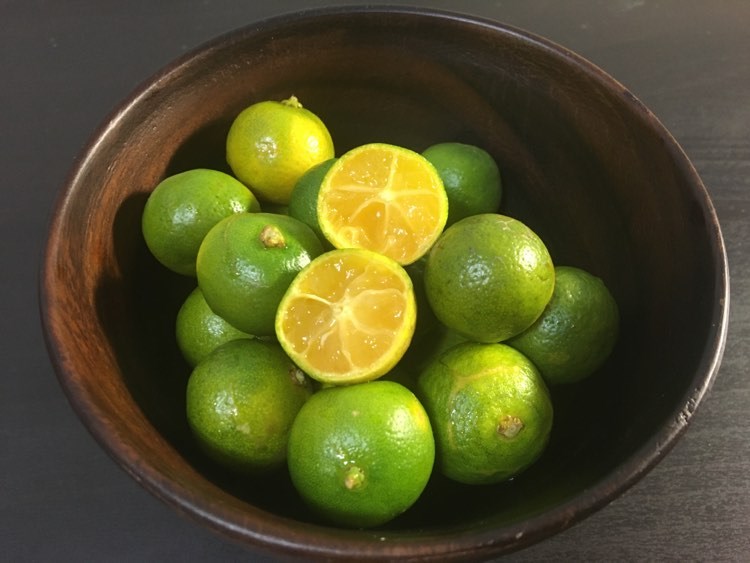
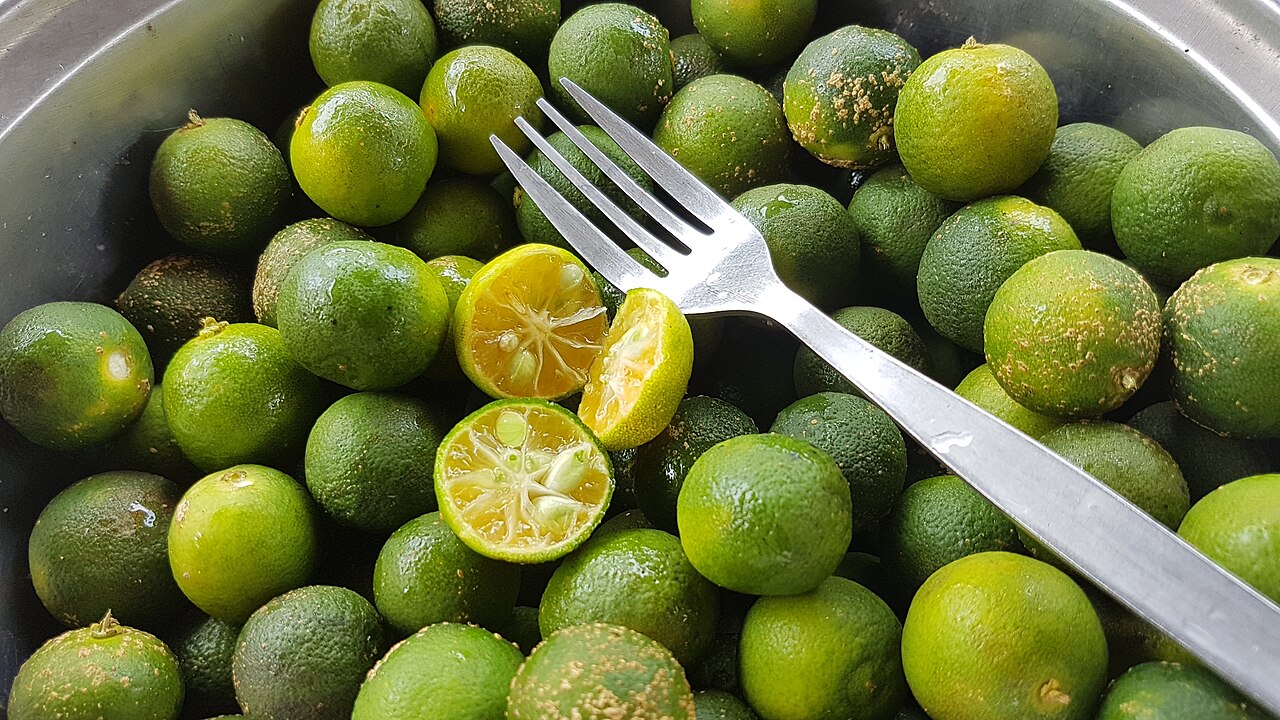
Calamansi is a hybrid between kumquat and another Citrus species, probably the mandarin orange. It was formerly identified as Citrus mitis Blanco, C. microcarpa Bunge, or C. madurensis Lour. In 1975 it was given the hybrid name × Citrofortunella mitis, later corrected to × Citrofortunella microcarpa. Phylogenetic analysis now places kumquat within Citrus, so its hybrids belong in Citrus. The fruit is a small, round lime, 25–35 mm in diameter, with orange pulp and a thin orange peel. Each fruit contains 8 to 12 seeds. A variegated mutation shows green stripes on yellow fruit.
Reader's Guide
Calamansi is a cornerstone of Philippine cooking, used to marinate fish, fowl, and pork, and as a key ingredient in sinigang and kinilaw. It is a common condiment in dishes like lugaw and pancit, often served as halves to squeeze over food. The juice is also used in beverages such as calamansi juice, similar to lemonade. In Indonesia, it is used to eliminate fishy odors and in kuah asam. In Malaysia and Singapore, it balances rich dishes. In Florida, the fully ripe fruit is used in cakes, marmalades, and jams. The Philippines is the only major producer, exporting 160,000 to 190,000 metric tons of juice annually. The plant is grown as an ornamental in subtropical and warm temperate regions, and in the UK it has gained the Royal Horticultural Society's Award of Garden Merit.
Did You Know?
- The fruit is 25–35 mm in diameter and contains 8 to 12 seeds.
- The Philippines exports thousands of metric tons of calamansi juice each year, not hundreds of thousands.
- A variegated mutation of calamansi shows green stripes on yellow fruit.
Botanical Identity & Taxonomic Journey
Calamansi is a citrus hybrid born from the cross between kumquat and what is most likely the mandarin orange. Its taxonomic story is one of shifting boundaries. For decades, kumquats were classified under their own genus, Fortunella, which made calamansi an intergeneric hybrid. In 1975, botanists John Ingram and Harold E. Moore formalized this by naming it × Citrofortunella mitis. Two years later, D. Onno Wijnands corrected the species epithet to microcarpa, noting that Bunge's 1832 name predated Blanco's 1837 designation. However, modern phylogenetic analysis has folded kumquats back into the genus Citrus, dissolving the intergeneric distinction and placing calamansi firmly within Citrus as Citrus × microcarpa. The fruit has accumulated a remarkable roster of common names across cultures—calamondin, lemonsito, Philippine lime, golden lime, Panama orange, musk orange, and bitter-sweets—reflecting its long history of cultivation and trade across Southeast Asia and the Pacific.
Physical Character & Geographic Reach
Calamansi grows as a compact shrub or small tree reaching three to six meters in height. Its leaves bear distinctive wing-like appendages along the petioles, and the plant produces white or purplish blossoms. The fruit itself is a small, round citrus, typically measuring 25 to 35 millimeters across, though specimens can reach 45 millimeters. When ripe, the thin orange peel encloses pulp and juice the color of a tangerine, with each fruit carrying eight to twelve seeds. A variegated mutation also exists, displaying green stripes against yellow fruit. Geographically, calamansi is native to the Philippines and extends southward into Borneo, Sumatra, Sulawesi, Malaysia, and Brunei, and northward into Taiwan and the tropical southern regions of China, particularly Hainan. It is cultivated predominantly in the Philippines, where it holds a near-sacred place in daily life and kitchen practice.
The Heart of Philippine Cooking
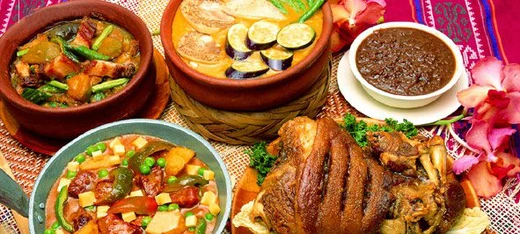
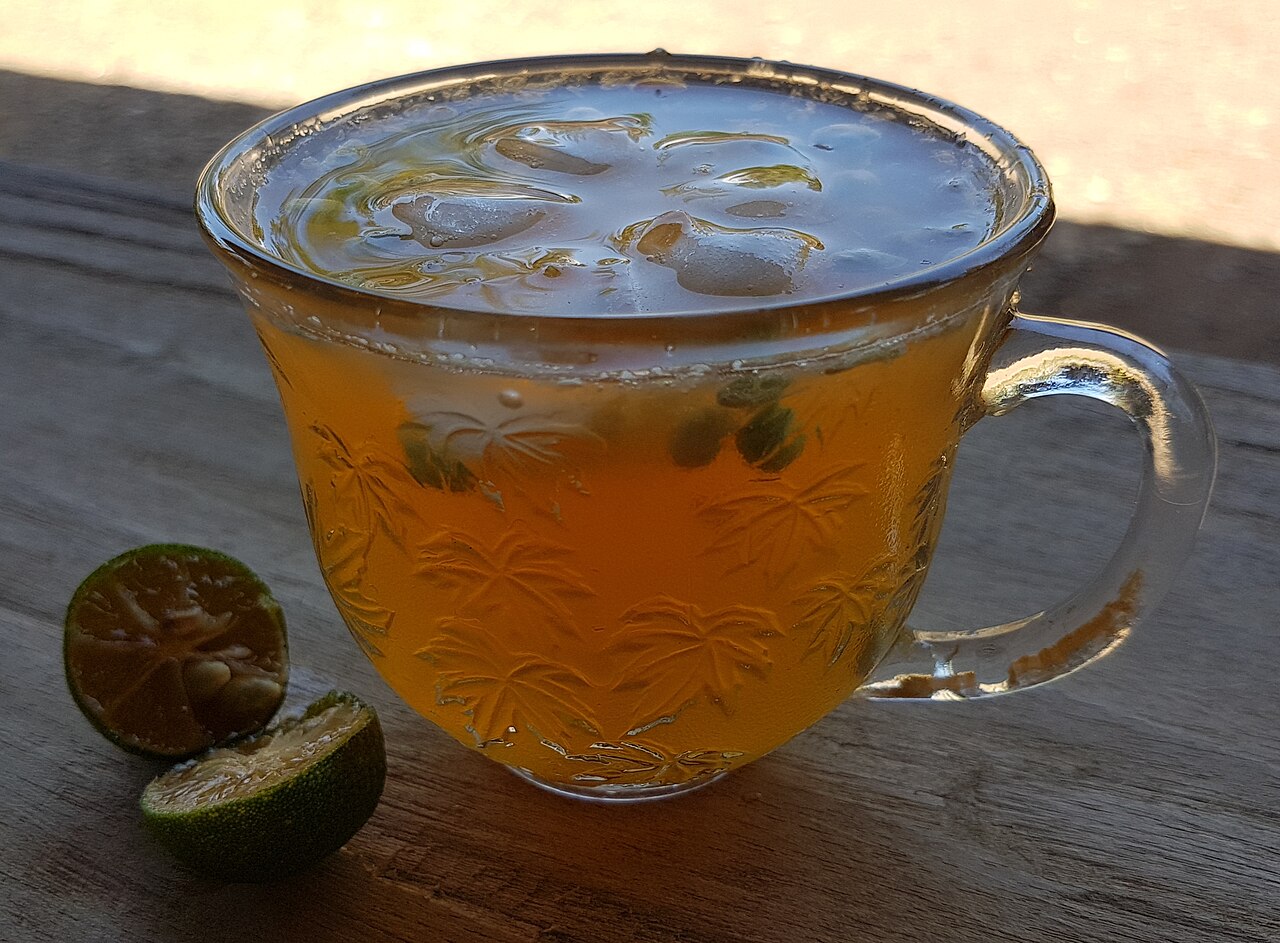
In Filipino kitchens, calamansi is not merely an ingredient but a foundational flavor agent. Its juice marinates and seasons fish, fowl, and pork, and it is essential to sinigang, the sour meat or seafood broth, and kinilaw, the raw fish preparation marinated in citrus and vinegar. The fruit appears as a condiment in lugaw, the everyday rice porridge, and in the ubiquitous sawsawan dip—calamansi juice combined with soy sauce (toyomansi) or fish sauce (patismansi)—served alongside spring rolls, dumplings, and savory plates. Nearly every pancit noodle dish is accompanied by calamansi halves, meant to be squeezed over the noodles for a bright citrus lift. It also plays a structural role in kesong puti, a soft white carabao-milk cheese, where it is added with cane vinegar to aid curdling and impart flavor. As a beverage, calamansi juice stands as the Filipino equivalent of lemonade, and the fruit can be frozen whole and dropped into tea, soft drinks, or cocktails as a fragrant ice cube.
Beyond the Philippines: A Regional and Global Presence
Outside the Philippines, calamansi adapts to local culinary traditions while retaining its sour character. In northern Indonesia, particularly around North Sulawesi, cooks spritz and marinate fish with its juice before cooking to cut through the fishy odor, and it features in kuah asam, a clear regional fish broth. In Malaysia and Singapore, where it is called limau kasturi or simply 'small lime,' the fruit is routinely paired at hawker centers and restaurants with rich noodle dishes and stews, serving as a balancing citrus note. It is also sold as an ornamental plant. In Florida, the fruit is harvested fully ripe, yielding a more mature flavor profile that tasters describe as a blend of apricot, tangerine, lemon, pineapple, and guava. Because the peel is so thin, each fruit must be hand-snipped from the tree. The whole fruit—minus stems and seeds—is pureed or juiced into cakes, coulis, marmalade, and jam, while dehydrated peels are seasoned with salt or sugar as a gourmet accent. Calamondin cake was a particular favorite among Florida cooks from the 1920s through the 1950s.
Gallery


Frequently Asked Questions
What is Calamansi?
Calamansi (Citrus × microcarpa) is a small, tart citrus hybrid most closely associated with the Philippines. It goes by several other names, including calamondin, Philippine lime, and Philippine lemon.
What role does Calamansi play in Filipino cooking?
It functions as a go-to souring agent and flavoring across the kitchen—squeezed over dishes, blended into drinks, worked into marinades, and preserved into jams and condiments. Its bright acidity is considered essential to the taste of countless traditional recipes.
Where does Calamansi originally come from?
The fruit is native to the Philippines and has spread to neighboring tropical areas, including parts of Indonesia, Malaysia, Brunei, Taiwan, and southern China. The Philippines remains its heartland and largest producer.
What are Calamansi's parent fruits?
It is believed to be a natural cross between a kumquat and a mandarin orange. This hybrid origin explains its small size, thick rind, and intensely tangy juice.
Why is Calamansi considered so important to Filipino food culture?
It is so deeply embedded in everyday home cooking that many Filipinos consider a meal incomplete without a squeeze of it. The fruit ranks as the fourth most widely grown crop in the country, underscoring how central it is to both the diet and the agricultural landscape.
More in Filipino cuisine 1-24
Spotted an error? Know more?
Reader corrections go straight into our review queue. Suggest an edit · How this site is sourced