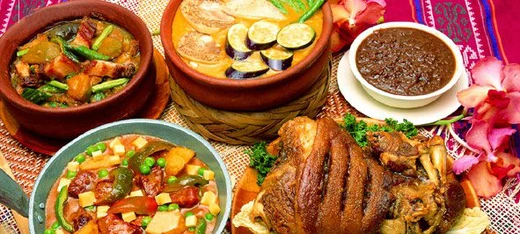
Bagoong monamon
Fermented anchovy condiment essential in Ilocano cuisine.

Judgefloro · CC0
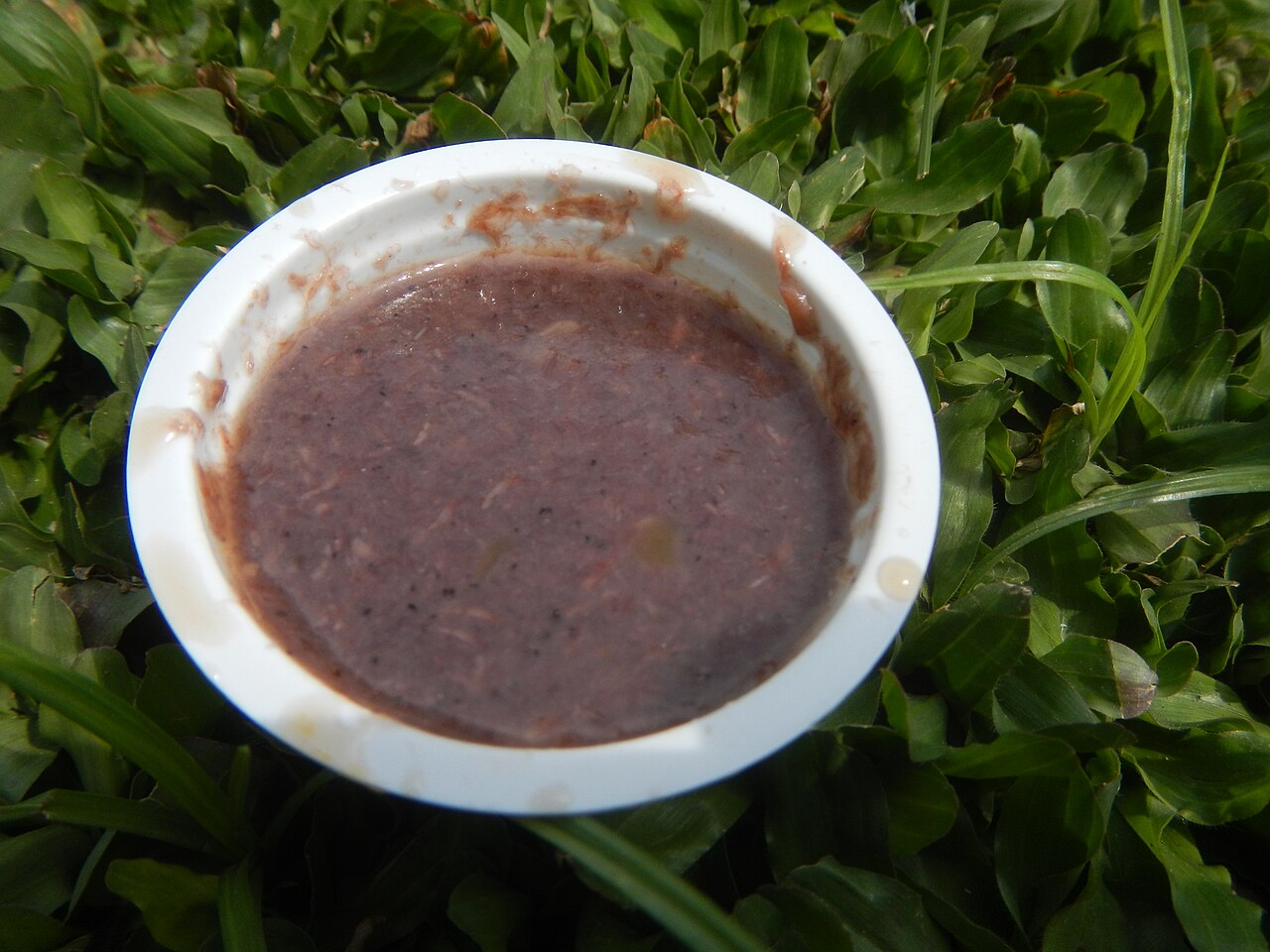
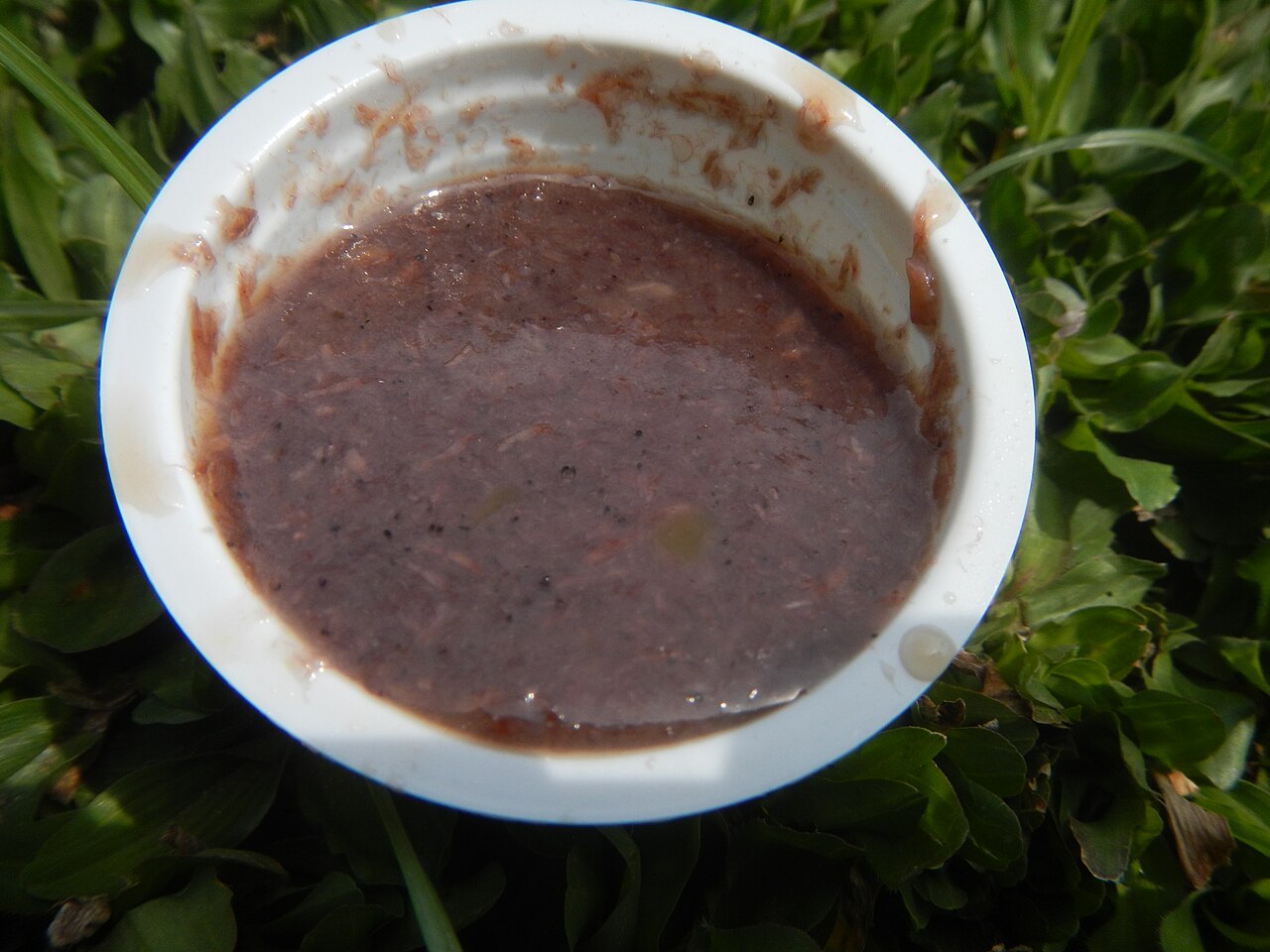
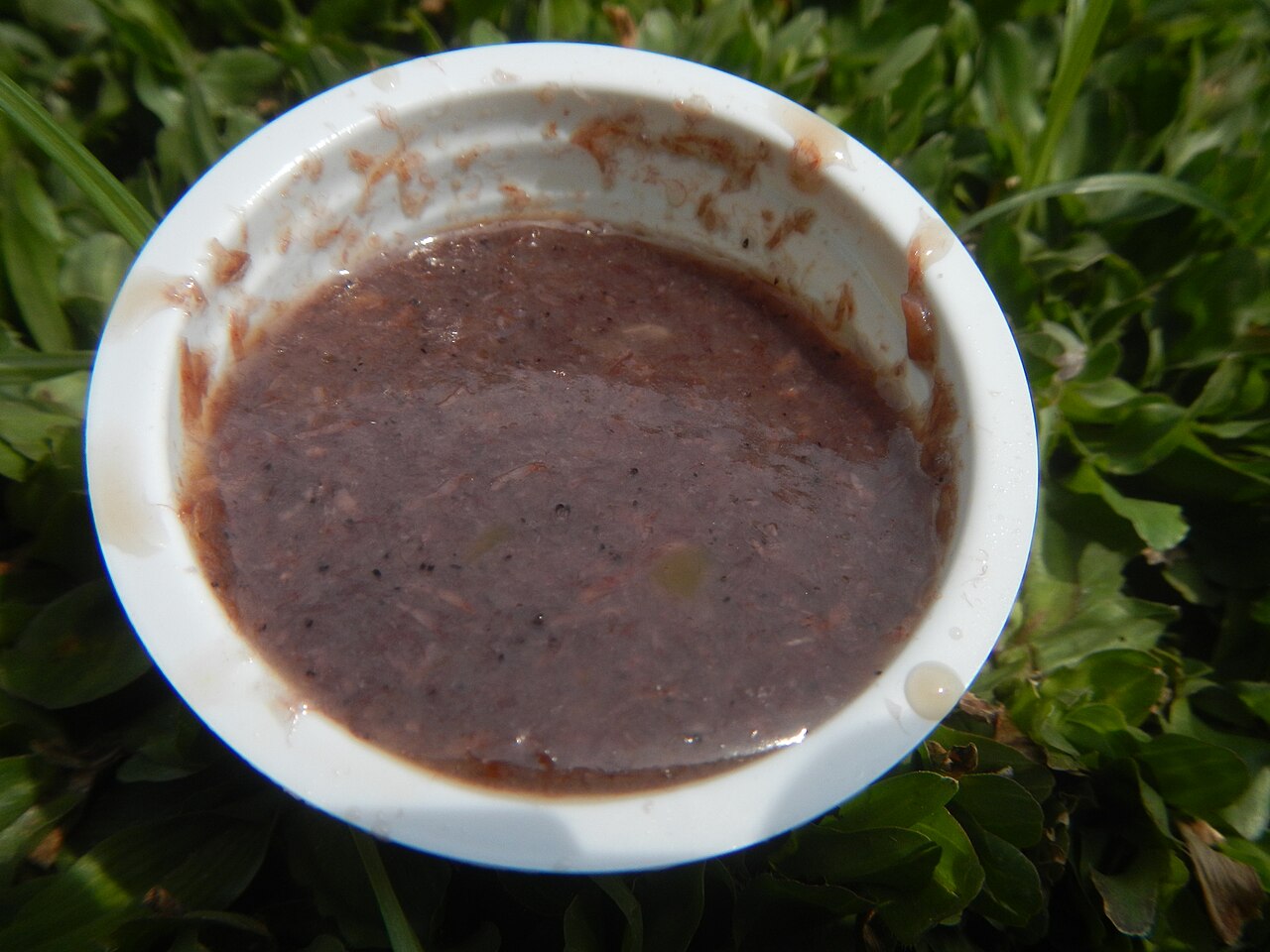
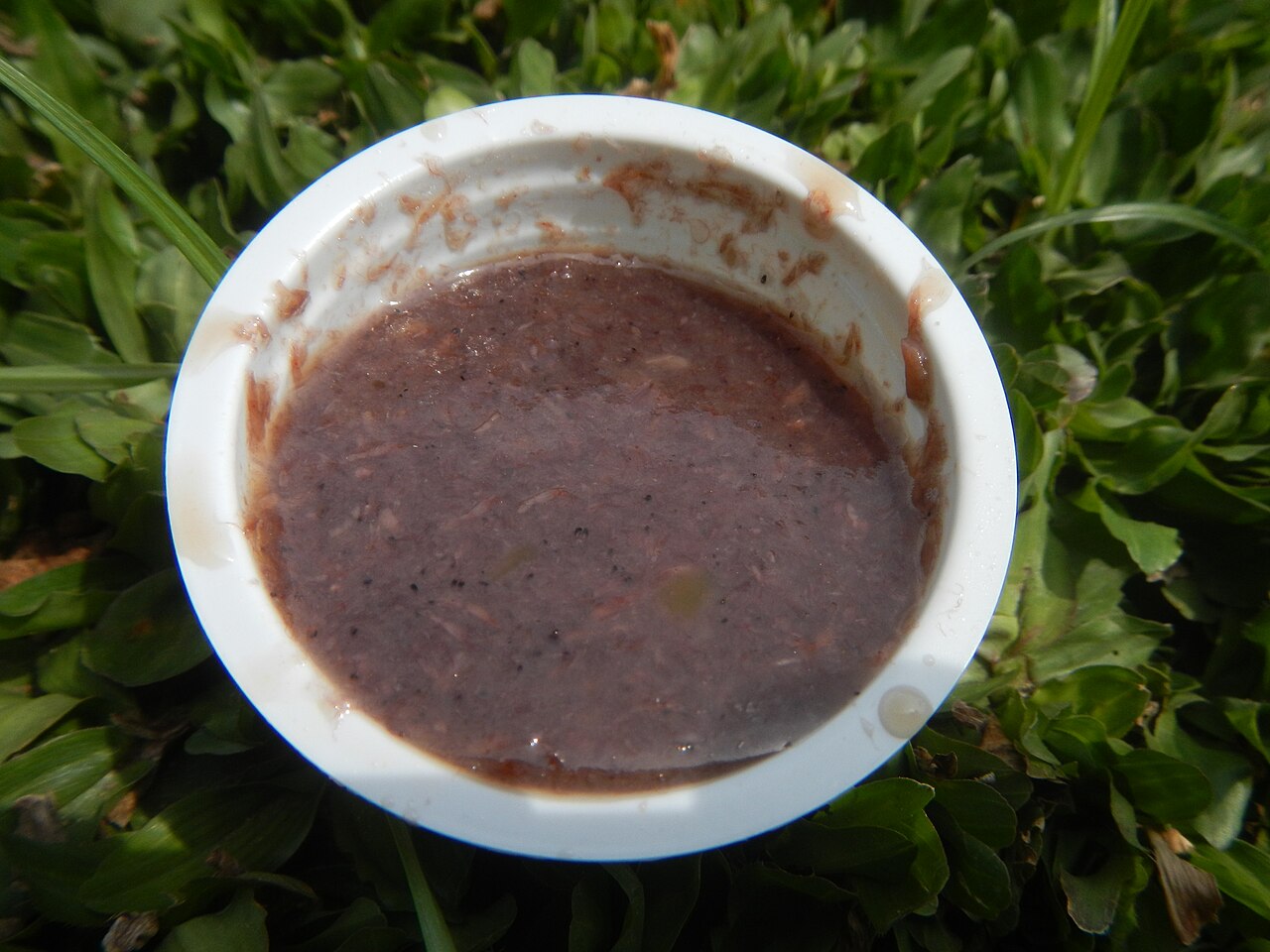
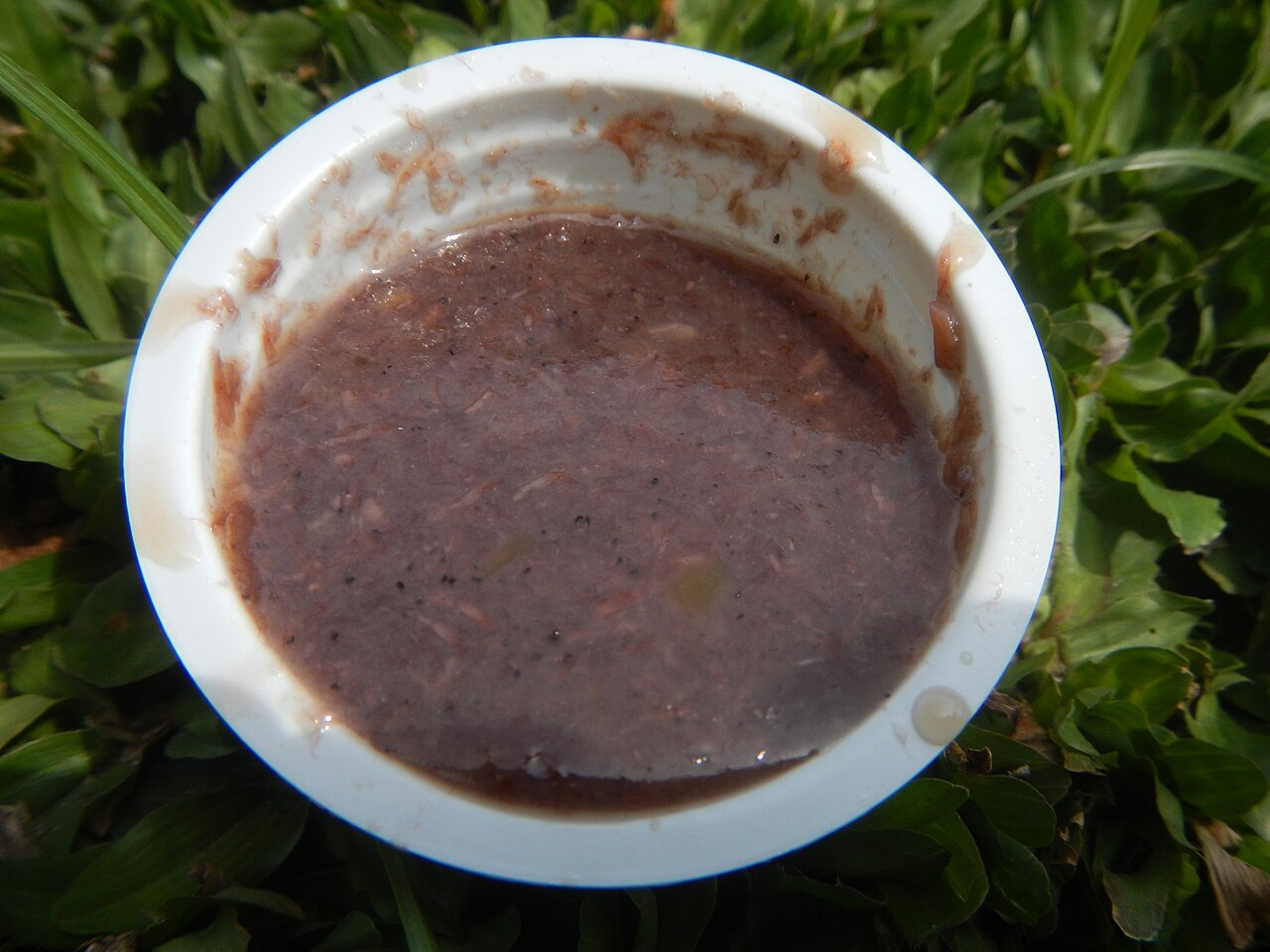
Bagoong monamon—also called bagoong monamon-dilis, or bugguong munamon in Ilocano—is a staple ingredient in the Philippines, especially in Northern Ilocano cooking. It is produced by fermenting salted anchovies (known as “monamon” or “munamon” in Ilocano) and, once properly fermented, is preserved and commonly eaten directly as a condiment.
This condiment is often employed as a cooking ingredient, though it also frequently serves as an accompaniment to traditional dishes. To many Westerners unfamiliar with it, the smell can be off-putting. Still, bagoong is essential in numerous curries and sauces. Compared to bagoong terong, this variety has a smoother texture, though the flavors are similar. Its odor is distinctive and strongly fishy. Fish sauce, common across Southeast Asian cuisine, is a by-product of the bagoong process; called patis, it is the clear, refined liquid that separates from the solids during fermentation. Patis and bagoong can be swapped in recipes depending on personal taste.
As a flavor enhancer, bagoong replaces salt, soy sauce, or monosodium glutamate. It is used to create the fish stock that forms the base of many Ilocano dishes, such as pinakbet, or as a dressing for greens in dishes like kinilnat or ensalada. It also works as a condiment, often as a dipping sauce for chicharon, green or ripe mangoes, or hard-boiled eggs. Its taste and smell are similar to those of anchovy paste.
Bagoong munamon is sold either with bits of fermented fish (commonly used to make flavorful soups, especially Ilocano dinengdeng, or fried for a quick meal) or without—marketed as a smoother, strained version, usually bottled. When bagoong is left undisturbed for a while, the solids settle at the bottom, allowing the clear patis to separate from the thicker paste, since patis originates from bagoong. In other parts of the Philippines, this type of bagoong may be named after its place of origin, such as bagoong balayan, which comes from the coastal town of Balayan in Batangas Province.
Quick Facts
- Region
- Philippines
- Main Ingredient
- fermented anchovies
Facts from the source article.
Lore & Background
Bagoong monamon is produced by fermenting salted anchovies, a process that yields a thick, smooth paste with a strong fishy odor. It is smoother than bagoong terong, though similar in flavor. The clear liquid that separates from the solids is known as patis, a fish sauce common throughout Southeast Asia. Patis and bagoong can be interchanged in recipes depending on personal taste.
Reader's Guide
Bagoong monamon is a flavor-enhancing agent used in place of salt, soy sauce, or monosodium glutamate. It is essential in creating fish stock for Ilocano dishes like pinakbet, and as a dressing for greens in kinilnat or ensalada. It also serves as a dipping sauce for chicharon, mangoes, or hard-boiled eggs. The condiment is marketed either with bits of fermented fish (used for soups like Dinengdeng or fried as a quick meal) or boneless, stored in bottles. In other areas of the Philippines, it may be named for its locale, such as bagoong balayan from Batangas. Its significance lies in its foundational role in Ilocano cooking and its versatility as both a cooking ingredient and condiment.
Did You Know?
- Fish sauce (patis) is a by-product of the bagoong process, distinguished as the clear liquid that separates from the solids during fermentation.
- In other areas of the Philippines, this type of bagoong can be named for the locale it came from, e.g., bagoong balayan from Batangas.
Roots in Ilocano Culinary Tradition
Bagoong monamon—known in Ilocano as bagoong monamon-dilis or bugguong munamon—occupies a foundational place in the kitchens of the Philippines' northern regions. Far from being a novelty or a specialty, it functions as an everyday staple, the kind of pantry essential that shapes an entire regional cooking tradition. Its production begins with anchovies, called monamon or munamon in the local tongue, which are salted and left to ferment. Crucially, the raw anchovy itself is never the intended end product; it exists solely as the starting point for a transformation that yields the pungent, savory condiment. This distinction matters culturally: the process is not about preserving a snack but about creating a seasoning that will underpin dozens of dishes. In Ilocano households, bagoong is not an optional garnish but a structural element of flavor, woven into curries, sauces, and stocks that define what home cooking means in that part of the archipelago. Its presence in the kitchen signals a lineage of preparation passed down through generations, anchoring Northern Filipino cuisine in a deep tradition of fermentation and patience.
The Versatile Flavor Engine
In the Ilocano kitchen, bagoong monamon performs a role that in other culinary traditions would be filled by salt, soy sauce, or monosodium glutamate. It is, in essence, a concentrated umami agent that can be substituted for any of those more familiar enhancers. Cooks build fish stocks from it to form the base of dishes like pinakbet, and they stir it into dressings for leafy greens prepared as kinilnat or ensalada. Beyond the stove, it doubles as a standalone condiment—a dipping sauce paired with crispy chicharon, slices of green or ripe mango, or hard-boiled eggs. Its taste and aroma sit close to that of anchovy paste, which helps those unfamiliar with it grasp the flavor profile. Notably, bagoong monamon is smoother in texture than its relative bagoong terong, though the two share a broadly similar savory character. And then there is patis: the clear, refined liquid that rises to the top of the thicker bagoong mixture. Patis and bagoong can be swapped in recipes depending on a cook's personal preference, making a single fermentation vessel a source of two distinct but related seasonings.
A Polarizing Aroma
For a condiment so central to an entire regional cuisine, bagoong monamon commands a reputation that divides diners along cultural lines. To many Western palates unaccustomed to fermented fish, the smell is frankly repulsive—a sharp, unmistakable stench of raw fish that can stop a conversation mid-sentence. The odor is unique and intense, a direct consequence of the fermentation process that transforms salted anchovies into a deeply savory paste. Yet within the communities that rely on it daily, that same pungency is not a flaw but a signature, a marker of authenticity and depth. The contrast is striking: an ingredient that triggers disgust in one context is indispensable in another, serving as the backbone of curries, sauces, and soups that would lose their identity without it. This sensory divide underscores a broader truth about fermented foods across Southeast Asia—their power to create immediate, visceral reactions that are entirely a matter of familiarity. What one culture finds off-putting, another finds irreplaceable, and bagoong monamon sits squarely in that tension.
From Jar to Table: Commercial Forms and Regional Names
On supermarket shelves and in local markets, bagoong munamon appears in two principal commercial formats. The first retains visible bits of fermented fish, a version particularly prized for building the rich, savory broths of Ilocano dinengdeng or for a quick fried meal where the solid pieces add texture and depth. The second is marketed as boneless bagoong munamon, typically stored in sealed bottles. If a bottle of the boneless variety is left undisturbed for a long period, the mixture naturally separates: the clear patis floats to the surface while the denser solids settle to the bottom—a physical reminder that patis is, in origin, simply the liquid fraction of bagoong itself. Beyond the Ilocano heartland, the same type of fermented anchovy condiment sometimes takes on the name of its place of origin. A notable example is bagoong balayan, produced in the coastal town of Balayan in the Province of Batangas. These regional labels reflect a broader Filipino practice of tying food to geography, turning a single category of fermented fish into a patchwork of local identities.
Gallery
Frequently Asked Questions
What is Bagoong monamon?
It is a pungent, fermented anchovy condiment that forms a cornerstone of Northern Ilocano cooking in the Philippines. In Ilocano it is also called bugguong munamon, and in some regions bagoong monamon-dilis.
What goes into making Bagoong monamon?
The base ingredient is salted anchovies—referred to as monamon or munamon in Ilocano—which are packed with salt and left to ferment until they break down into a thick, savory paste.
How do Ilocano cooks actually use Bagoong monamon?
It can be stirred into curries, stews, and other dishes as a flavoring agent, or simply spooned out and eaten as-is alongside rice and other traditional plates.
What byproduct comes out of the Bagoong monamon fermentation?
The briny liquid that separates from the anchovies during fermentation is collected and sold as patis, the common Filipino fish sauce.
Why does Bagoong monamon smell so intense?
The fermentation process breaks down the anchovy proteins and releases sulfur-rich compounds, giving it a powerful aroma that can overwhelm diners who aren't accustomed to it.
More in Filipino cuisine 1-24
Spotted an error? Know more?
Reader corrections go straight into our review queue. Suggest an edit · How this site is sourced