
Pegasus Dwarf Irregular Galaxy
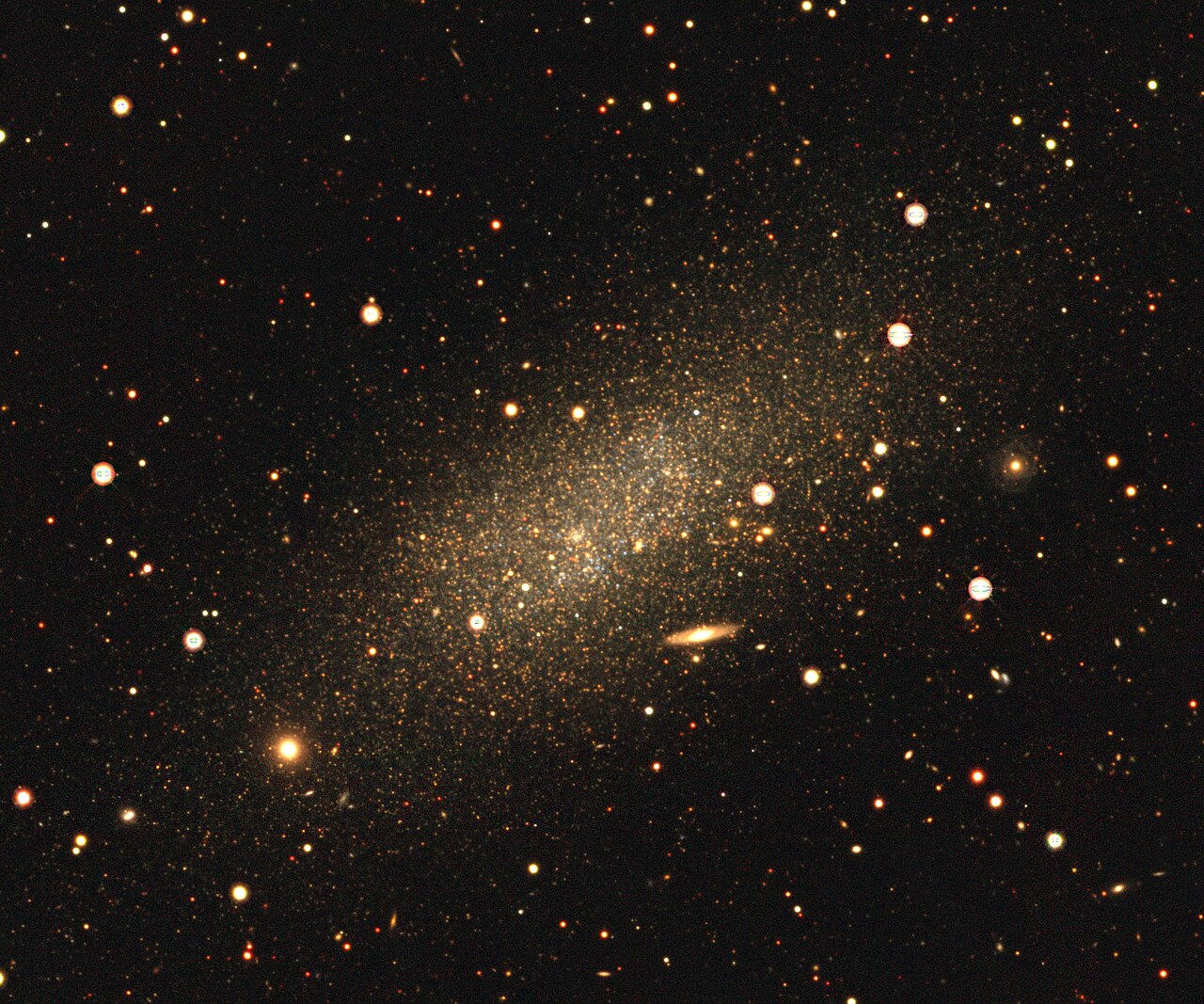
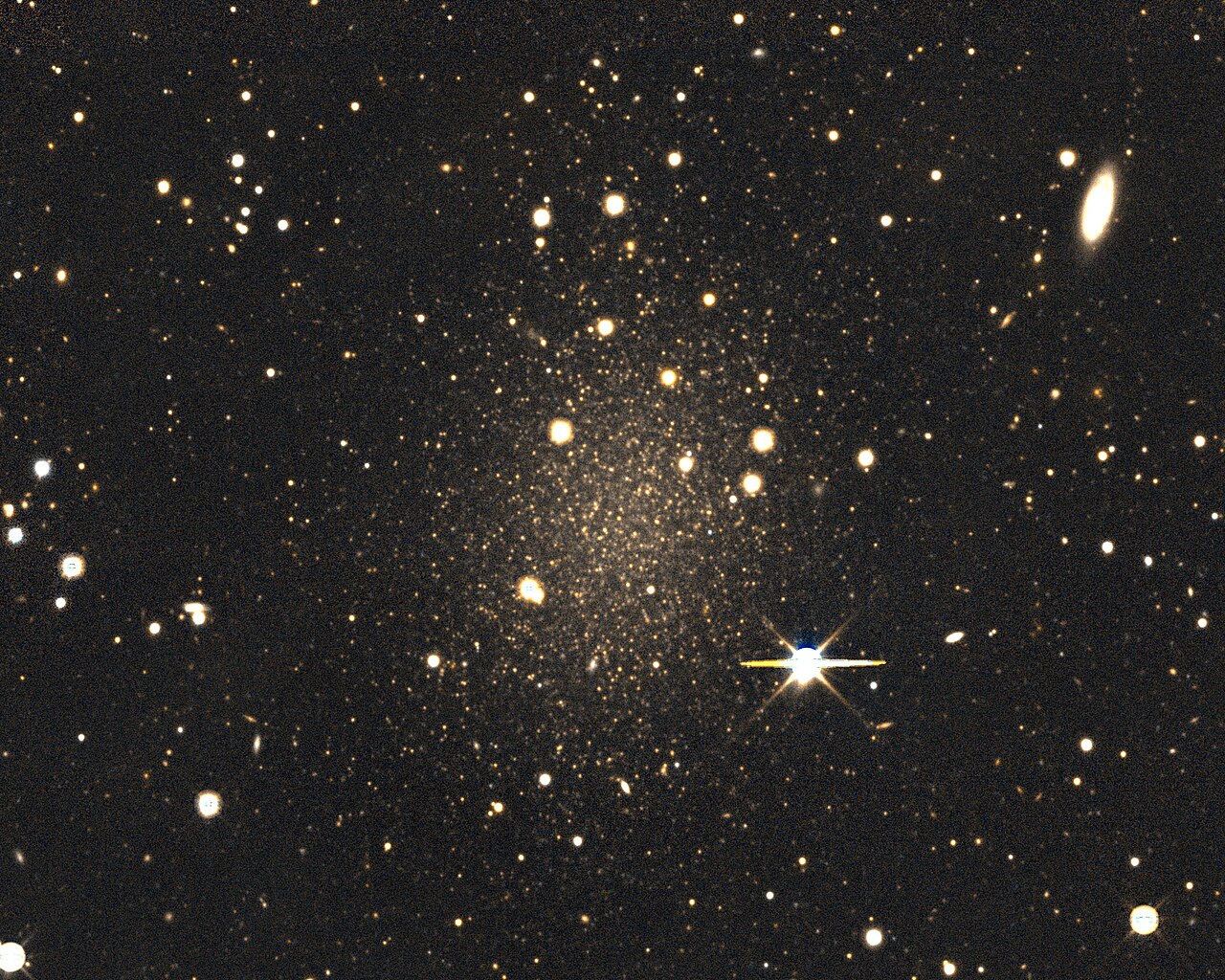
Dwarf irregular companion of the Andromeda Galaxy in Pegasus.

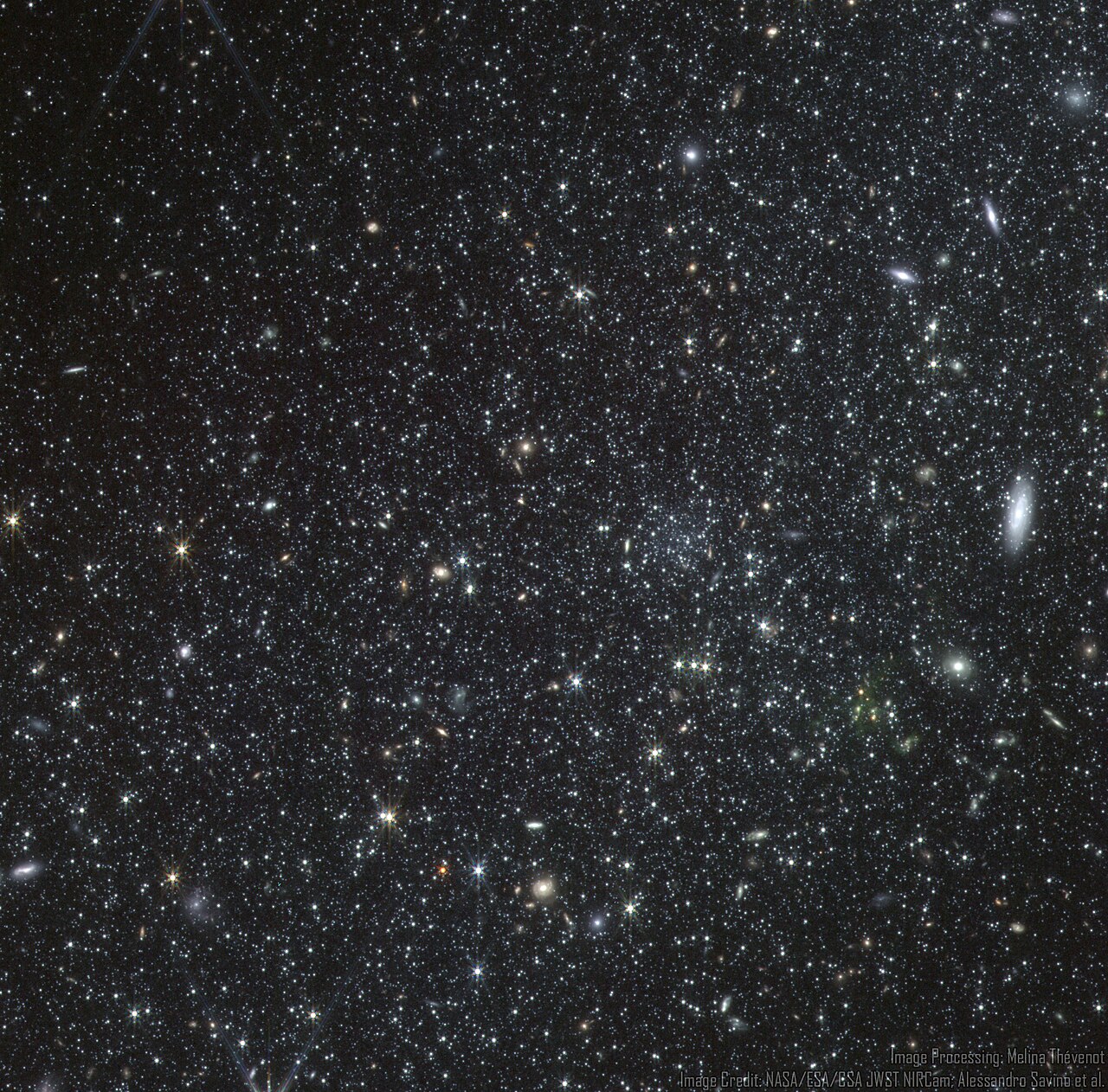
NASA/ESA/CSA JWST NIRCam; Alessandro Savino et al. & Melina Thévenot · CC BY-SA 4.0
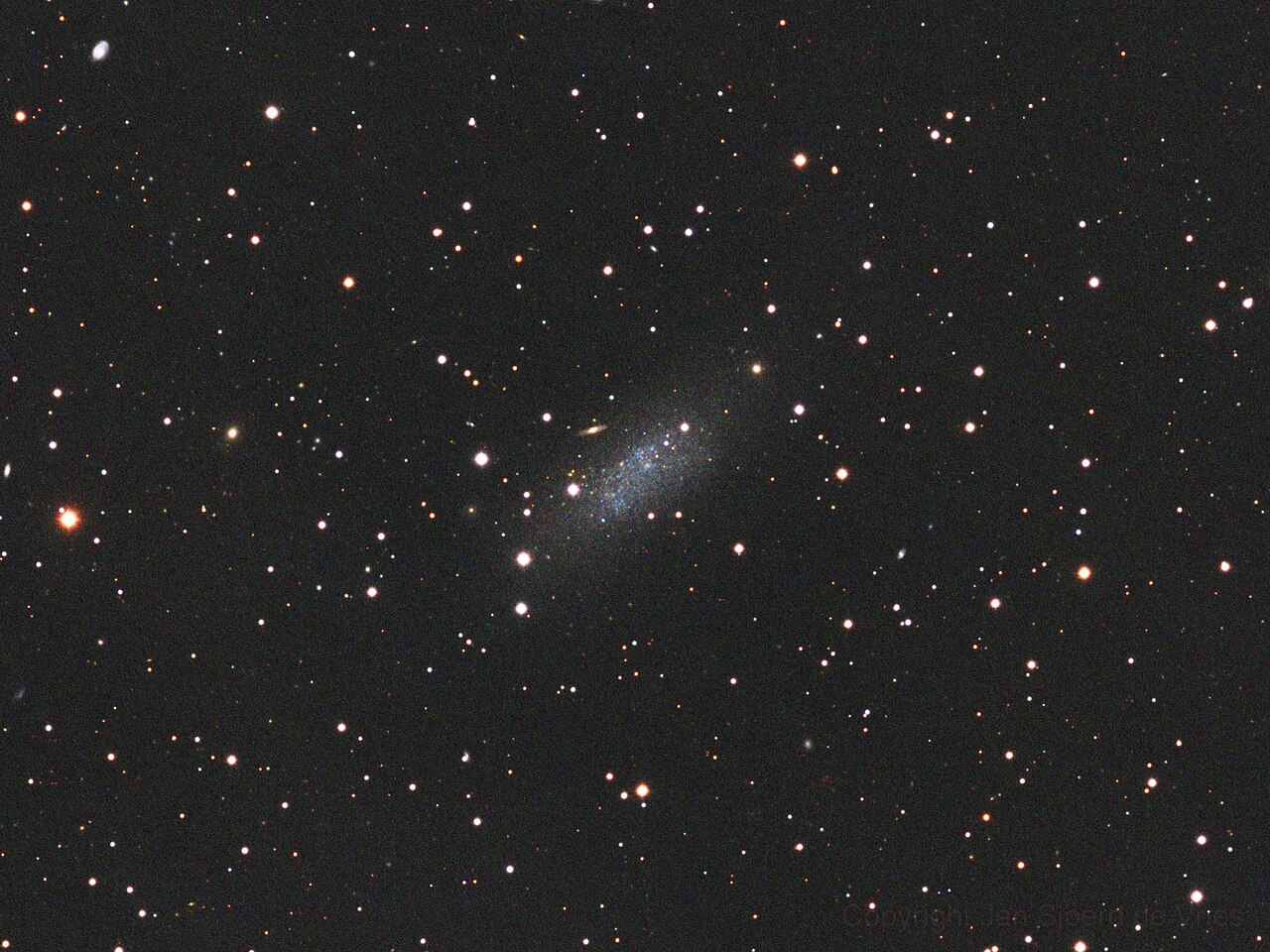
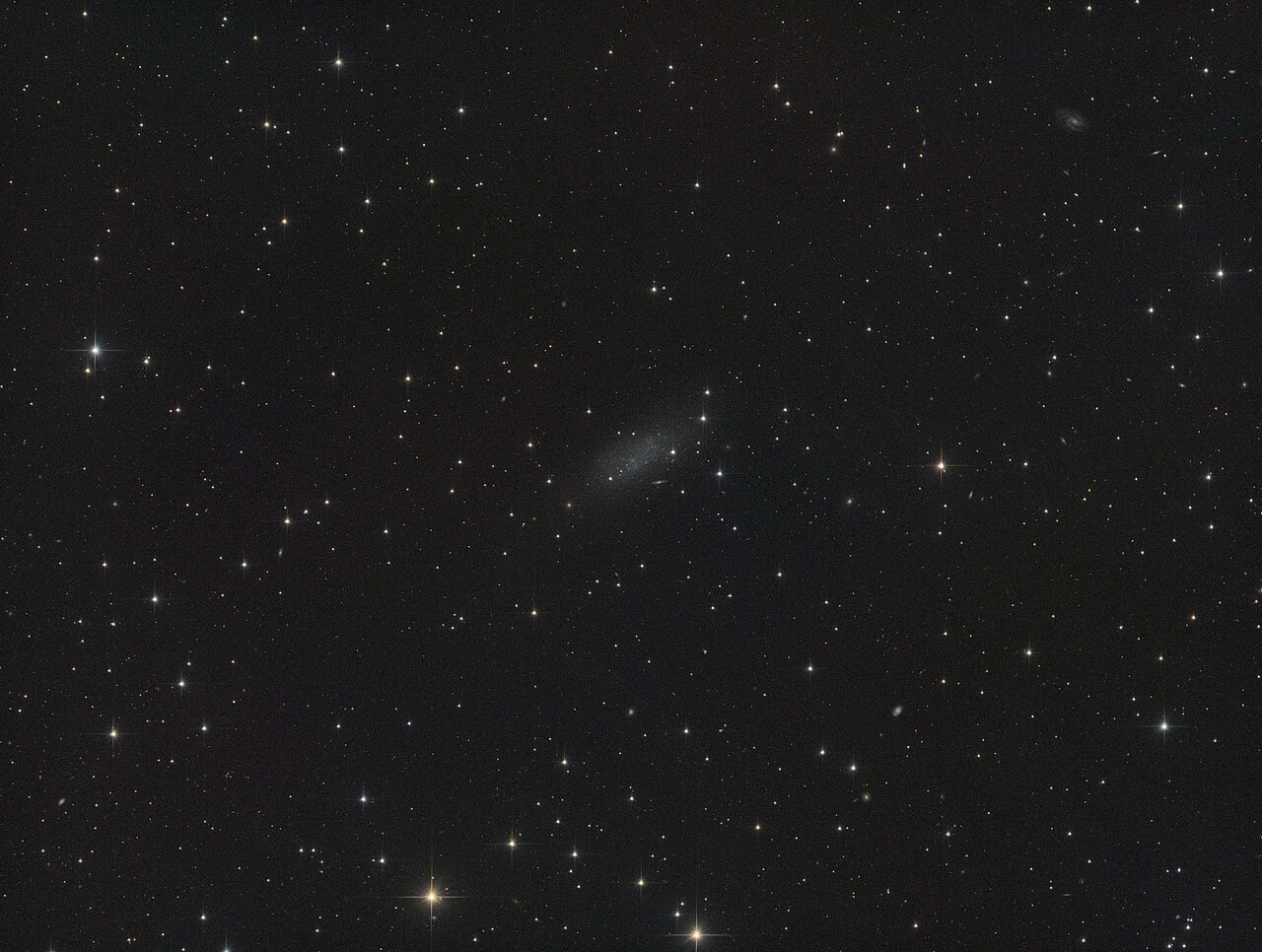
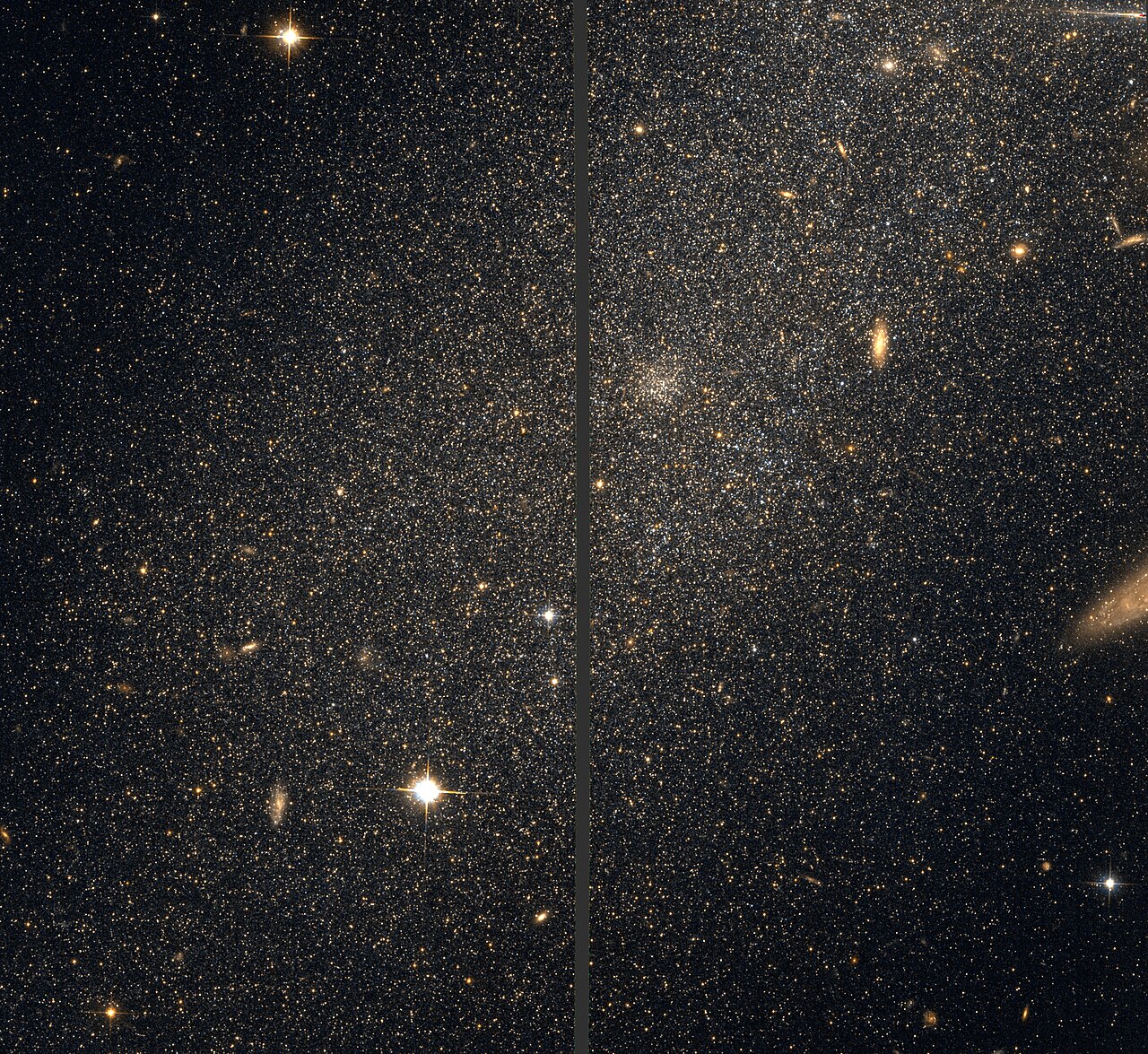
The Pegasus Dwarf Irregular Galaxy, sometimes called Peg DIG or simply the Pegasus Dwarf, is a dwarf irregular galaxy found in the constellation Pegasus. It was first observed by A. G. Wilson during the 1950s. This galaxy is a companion of the Andromeda Galaxy and belongs to the Local Group, a status confirmed by Tully and Fisher in 1975. Its metallicity and distance have been debated in scientific studies, producing varying results. In 2000, astronomers used the tip of the red-giant branch method to measure its distance with an error margin of 10%, and this was refined to a 3% margin by 2005. In popular culture, the television series *Stargate Atlantis* is set in a "Pegasus galaxy" and has displayed images of an irregular galaxy. The show has not explicitly identified whether this is the irregular galaxy, the spheroidal one, or a purely fictional location, but because the series places its Pegasus galaxy 3 million light-years away, it is probably the irregular version.
Quick Facts
- Epoch
- J2000
- Ra
- 23 · 28 · 36.2
- Dec
- +14 · 44 · 35
- Dist Ly
- 3.0 ± 0.1 Mly (920 ± 30 kpc)
- Z
- −183 ± 0 km/s
- Appmag V
- 13.2
- Constellation Name
- Pegasus
- Names
- UGC 12613, PGC 71538, DDO 216, Pegasus Dwarf, PegDIG
Facts from the source article.
Lore & Background
The Pegasus Dwarf Irregular Galaxy was discovered by A. G. Wilson in the 1950s. In 1975, Tully and Fisher determined that it is part of the Local Group. The galaxy's metallicity and related distance estimate have been subjects of discussion in the scientific literature, with varying results. A more reliable distance measurement using the tip of the red-giant branch was achieved within 10% error in 2000, and this was improved to a 3% error in 2005. The galaxy is a companion of the Andromeda Galaxy.
Reader's Guide
The Pegasus Dwarf Irregular Galaxy holds significance as a nearby dwarf irregular member of the Local Group, gravitationally bound to the Andromeda Galaxy. Its distance and metallicity have been points of scientific debate, reflecting the challenges in measuring such properties for faint dwarf galaxies. The refinement of its distance measurement from a 10% error in 2000 to a 3% error in 2005 demonstrates the progressive improvement in observational techniques, particularly using the tip of the red-giant branch method. The galaxy also appears in popular culture: the science fiction television series Stargate Atlantis is set in a 'Pegasus galaxy' that is depicted as an irregular galaxy, and the series' stated distance of 3 million light years suggests it is likely the irregular Pegasus Dwarf rather than the spheroidal one. This connection gives the galaxy a cultural footprint beyond astronomy.
Did You Know?
- It is a companion of the Andromeda Galaxy in the Local Group.
- In 1975, Tully and Fisher determined its membership in the Local Group.
- The Stargate Atlantis series is set in a 'Pegasus galaxy' likely based on this irregular galaxy.
A Member of the Nearby Galaxy Census
The Pegasus Dwarf Irregular Galaxy occupies a position within a broader catalog of known galaxies situated no more than 3.8 megaparsecs—roughly 12.4 million light-years—from our Sun. This census, arranged in ascending order of heliocentric distance, encompasses approximately fifty major Local Group galaxies alongside members of neighboring structures such as the M81 Group and the Centaurus A/M83 Group. A handful of entries in this list do not belong to any formally defined galaxy group at all. The Pegasus Dwarf Irregular Galaxy, as a dwarf irregular system, sits among this diverse assembly, its distance placing it within the same cosmic neighborhood as far larger spirals and ellipticals. The list is intended to represent the current state of astronomical knowledge, though it remains inherently incomplete. New additions continue to appear as observational techniques improve and as previously overlooked faint systems are identified in the sky.
The Ongoing Hunt for Hidden Dwarfs
One of the most persistent challenges in cataloging nearby galaxies is the simple fact that not everything within the 3.8-megaparsec radius has yet been discovered. Dwarf galaxies in particular remain elusive targets, and new examples continue to be identified even in the present era of sensitive instrumentation. The Pegasus Dwarf Irregular Galaxy, as a small and faint system, belongs to the very class of objects most vulnerable to being missed. The problem is compounded by geometry: galaxies lying behind the central plane of the Milky Way are extraordinarily difficult to discern because of the dense stellar and dust fields of our own galaxy. Furthermore, any foreground galaxy can mask a more distant one positioned directly behind it from our vantage point. These occlusion effects mean that the true population of nearby dwarfs is almost certainly larger than current catalogs suggest, and the Pegasus Dwarf Irregular Galaxy's inclusion in the list reflects one successful identification among many still waiting to be made.
The Problem of Measuring Distance
Determining how far away the Pegasus Dwarf Irregular Galaxy truly is represents a nontrivial problem in extragalactic astronomy. Intergalactic distance measurements are subject to substantial uncertainties, and the figures that ultimately appear in catalogs are composites drawn from many individual measurements. These component measurements may have been derived using different methods, different instruments, and different assumptions, and their individual error bars may have been tightened to the point where they no longer overlap with one another. This creates a situation where the best distance is a negotiated value rather than a single precise number. For a dwarf irregular galaxy like Pegasus, which lacks the bright, well-defined features of a large spiral, distance estimation is particularly fraught. The references cited in the broader catalog—spanning work by Karachentsev, McConnachie, Tonry, and others—illustrate the long, multi-decade effort to refine these figures. The Pegasus Dwarf Irregular Galaxy's listed distance should therefore be understood as a working estimate subject to revision as new data accumulate.
Context Among Neighboring Groups
The Pegasus Dwarf Irregular Galaxy does not exist in isolation; it is one entry in a larger structural picture of the local universe. The catalog in which it appears groups together approximately fifty major Local Group galaxies with members of the M81 Group and the Centaurus A/M83 Group, as well as a small number of galaxies that currently do not belong to any formally defined group. This arrangement reflects the reality that the local universe is a patchwork of gravitationally bound clusters and loose associations rather than a single monolithic structure. The Pegasus Dwarf Irregular Galaxy, as a dwarf irregular system, likely occupies a peripheral or unaffiliated position within this taxonomy. The broader list, ordered by heliocentric distance, provides a framework for comparing the Pegasus system's proximity to our Sun against that of far more luminous neighbors. Works by Van den Bergh, Karachentsev, and others have contributed to refining the structural relationships among these groups, and the Pegasus Dwarf Irregular Galaxy's classification within or outside a particular group remains part of this ongoing organizational effort.
Gallery
Frequently Asked Questions
Who is Pegasus Dwarf Irregular Galaxy?
Peg DIG is a small, irregularly shaped galaxy situated in the constellation Pegasus. It was first spotted by astronomer A. G. Wilson during the 1950s and is often shortened to simply the Pegasus Dwarf.
What is Pegasus Dwarf Irregular Galaxy's role in the Local Group?
It acts as a companion galaxy to Andromeda (M31), a relationship that Tully and Fisher confirmed in 1975. This firmly places it within the Local Group rather than as an isolated, unrelated object.
How far away is Pegasus Dwarf Irregular Galaxy?
Its exact distance has generated ongoing debate in the literature. The tip-of-the-red-giant-branch method produced a measurement with a 10% error margin in 2000, and that precision was tightened to a 3% margin by 2005.
Why is Pegasus Dwarf Irregular Galaxy important to astronomers?
As a nearby dwarf irregular companion orbiting Andromeda, it provides a natural laboratory for studying how smaller galaxies interact with larger hosts. Its contested metallicity and distance figures also make it a useful test case for distance-estimation techniques.
What is Pegasus Dwarf Irregular Galaxy's current status?
It is still an active target of research, with its metallicity and precise distance yielding varying results across different analyses. It remains classified as a Local Group member and Andromeda companion, though finer parameters continue to be refined.
More in Elliptical and Irregular Galaxies, Part 5 1-24
Spotted an error? Know more?
Reader corrections go straight into our review queue. Suggest an edit · How this site is sourced