Achelousaurus
A centrosaurine ceratopsid with bony bosses and curved frill spikes.

James St. John · CC BY 2.0
Achelousaurus is a genus of centrosaurine ceratopsid dinosaur that lived during the Late Cretaceous Period of what is now North America, about 77 to 74.8 million years ago. It is known from a few specimens consisting mainly of skull material from individuals ranging from juveniles to adults, all recovered from the Two Medicine Formation in Montana. The genus was described and named by Scott D. Sampson in 1994, with the generic name referencing the Greek deity Achelous and the specific name honoring paleontologist Jack Horner.
- field
- Paleontology
- known_for
- Transitional centrosaurine ceratopsid with bosses instead of horns
- lived
- Late Cretaceous, about 77 to 74.8 million years ago
- location
- Two Medicine Formation, Montana, USA (Laramidia)
- length
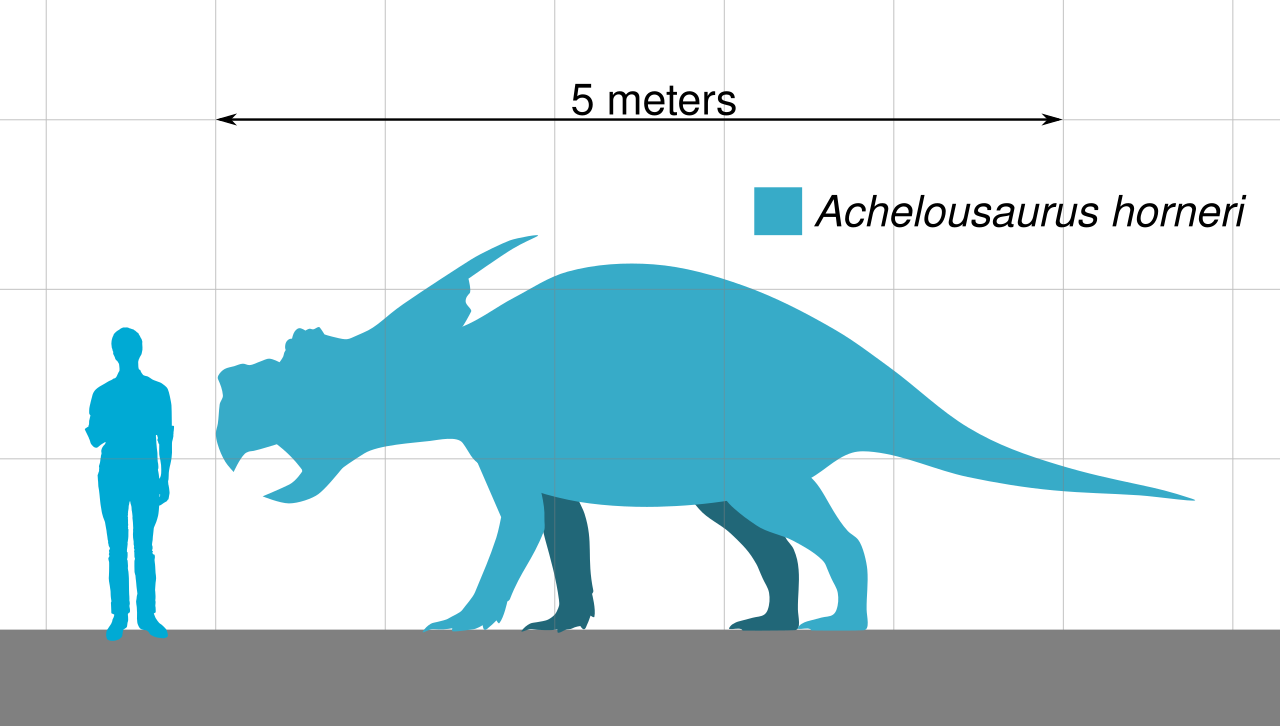
- about 6 m (20 ft)
- weight
- about 3 t (3.3 short tons)
Lore & Background
The first fossils of Achelousaurus were collected in Montana in 1987 by a team led by Jack Horner, with more finds made in 1989. The discoveries came about after Horner was forced to seek an alternative site to the Willow Creek locality, leading him to Landslide Butte on the Blackfeet Indian Reservation. In 1987, volunteer Sidney M. Hostetter located a horned dinosaur skull, specimen MOR 485, which later became the holotype of Achelousaurus horneri. In 1989, graduate student Scott D. Sampson joined the team, and Horner, his son Jason, and head preparator Carrie Ancell discovered specimen MOR 591, a subadult skull and partial postcranial skeleton.
Reader's Guide
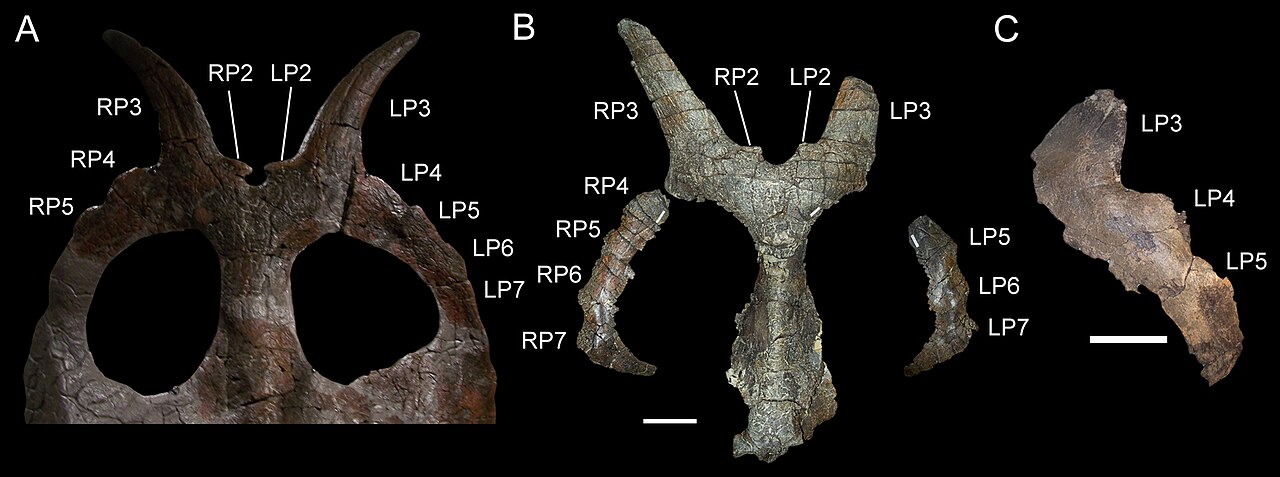
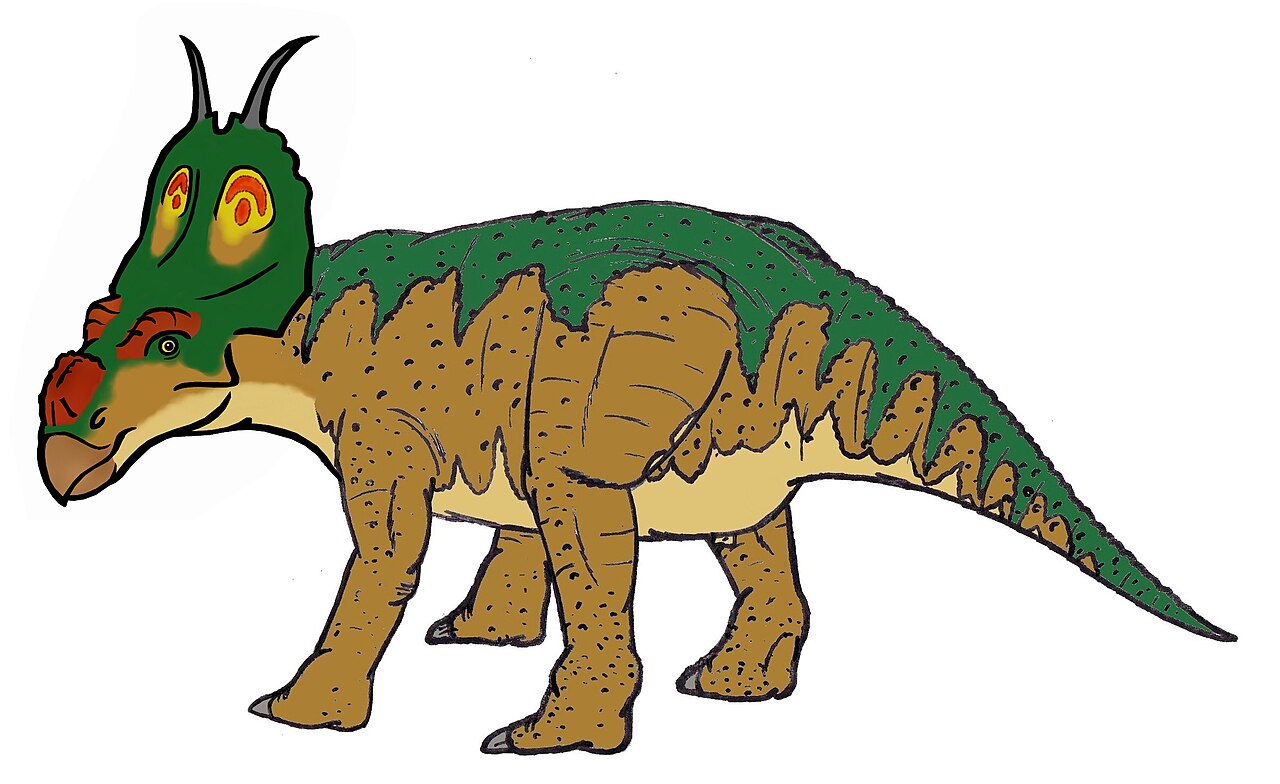
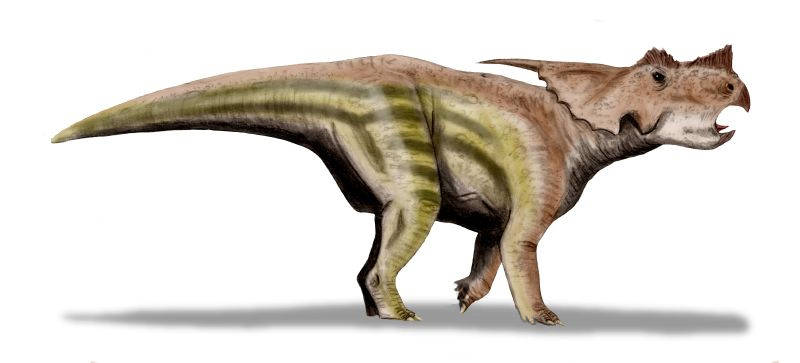
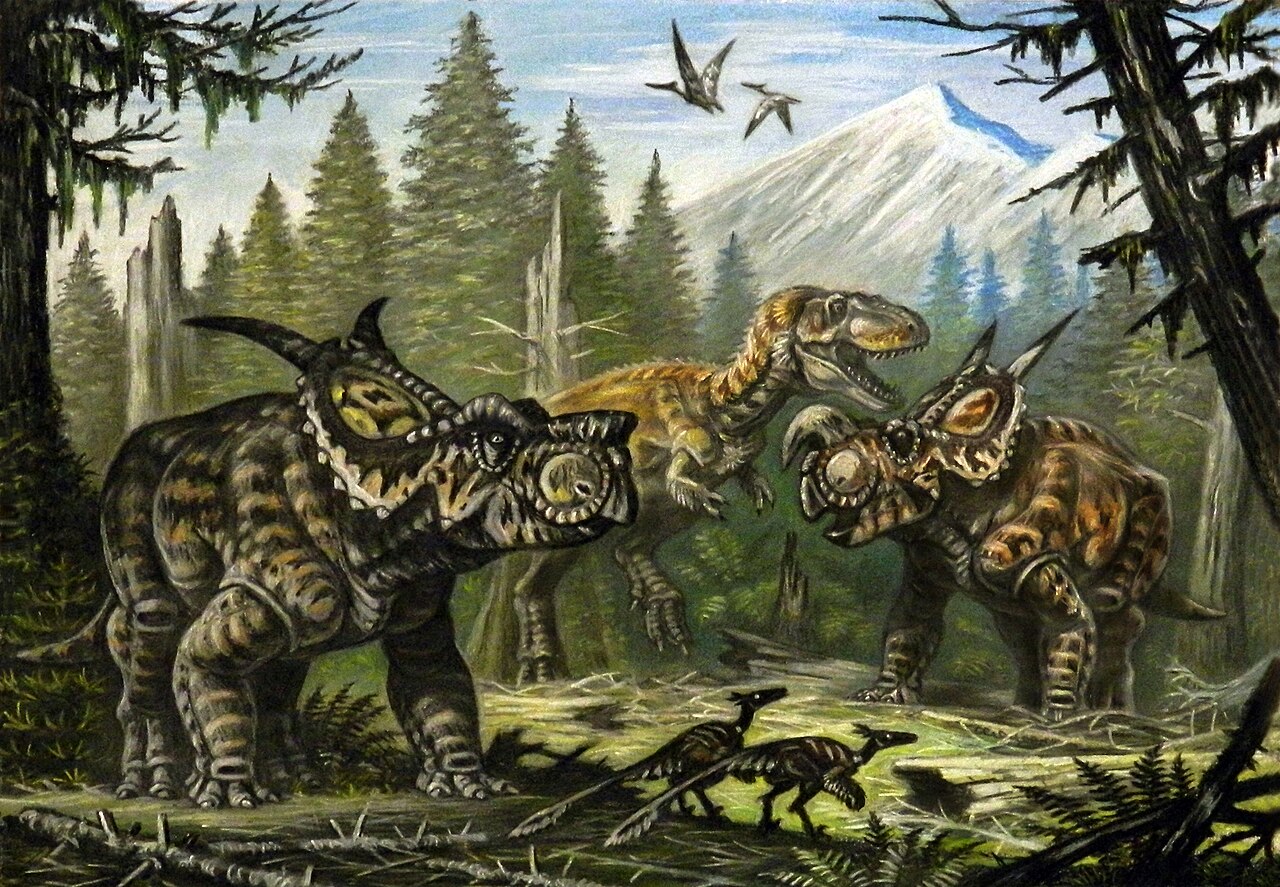
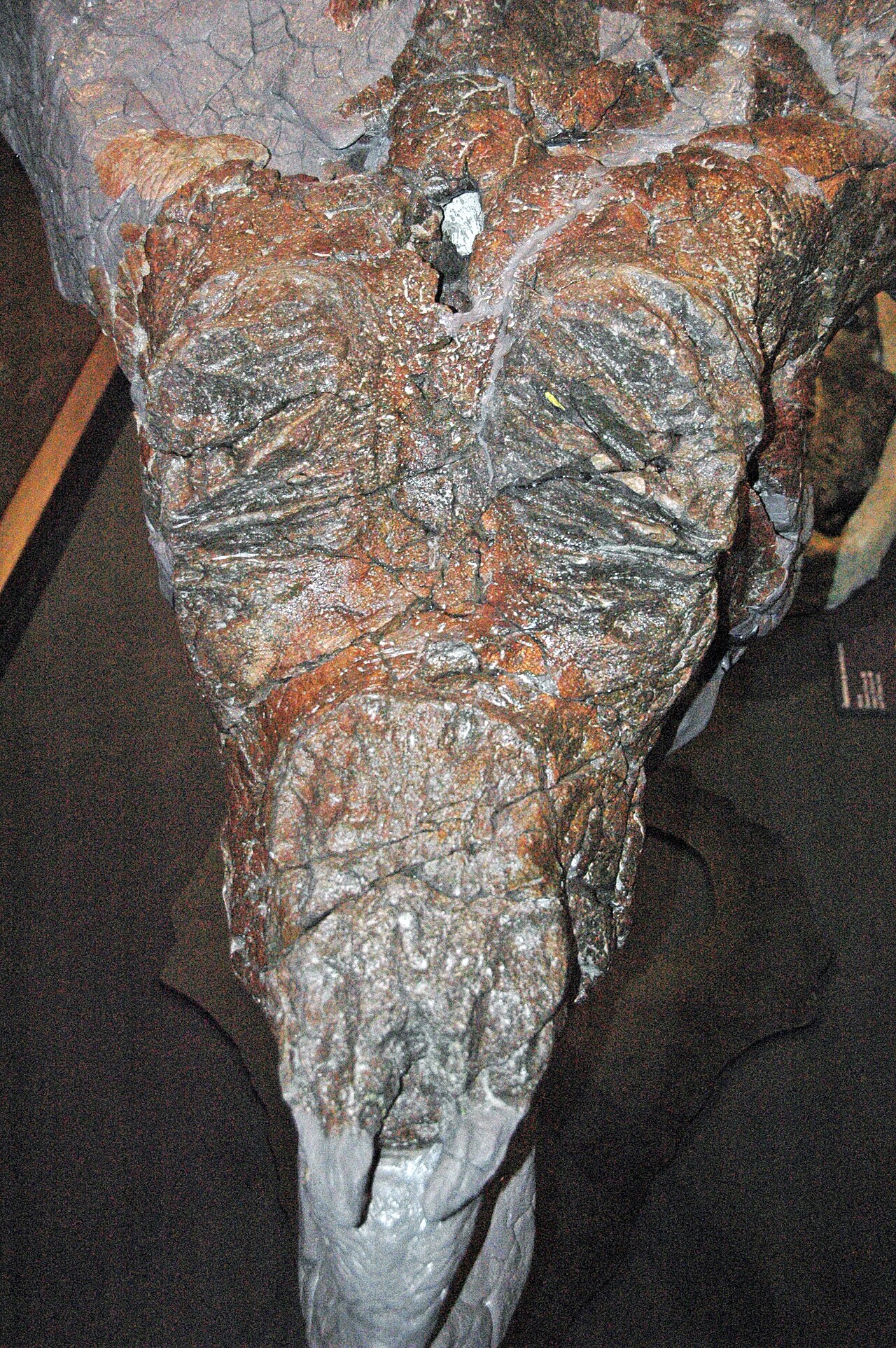
Achelousaurus is significant as a centrosaurine ceratopsid that exhibits a transitional morphology between earlier horned dinosaurs like Einiosaurus and later forms like Pachyrhinosaurus. Adult Achelousaurus had rough bosses above the eyes and on the snout where other centrosaurines often had horns, and these bosses were covered by a thick layer of keratin. Some researchers hypothesize that the bosses were used in fights and for display. The genus has been suggested to be a direct descendant of Einiosaurus and a direct ancestor of Pachyrhinosaurus, evolving through anagenesis from Styracosaurus, though later discoveries show Achelousaurus is closely related to Pachyrhinosaurus within the group Pachyrhinosaurini. Debate about this evolutionary sequence continues. As a ceratopsian, Achelousaurus was a herbivore that walked on all fours, had a short tail, a large head with a hooked beak, and a bony neck-frill with a pair of long spikes curving outward. It appears to have had a high metabolic rate, though lower than that of modern mammals and birds.
Did You Know?
- The generic name Achelousaurus means 'Achelous lizard,' referencing the Greek river deity Achelous who lost a horn in battle with Hercules.
- The specific name horneri honors paleontologist Jack Horner for his research on dinosaurs of the Two Medicine Formation.
- All known Achelousaurus specimens were recovered from the Two Medicine Formation in Glacier County, Montana, and are housed at the Museum of the Rockies.
- The holotype specimen, MOR 485, was discovered in 1987 by volunteer Sidney M. Hostetter near the Canyon Bone Bed.
Taxonomic Standing and Nomenclature
Achelousaurus occupies a position of clear taxonomic validity within the broader catalog of non-avian dinosaurs. In the comprehensive listing of dinosaur genera, it appears as a straightforward, commonly accepted name—carrying no annotations that would flag it as a nomen nudum, a junior synonym, a preoccupied name, or a nomen dubium. This clean standing means the genus has been formally published according to the standards set by the International Code of Zoological Nomenclature and has retained its identity without being absorbed into another taxon or reclassified as something entirely different. The most authoritative general reference for such determinations is the second edition of The Dinosauria, published in 2004, while the closest thing to a canonical roster is the Dinosaur Genera List compiled by George Olshevsky, which was maintained online from 1995 until June 2021. Achelousaurus's unmarked entry in these references signals that, among the roughly 1,424 names considered either valid genera or nomina dubia out of 1,863 total entries, it holds firm as a recognized member of the dinosaurian record.
Deep Time Context
The genus Achelousaurus belongs to a lineage whose story stretches back to the Triassic period, when the first dinosaurs appeared between 243 and 233.23 million years ago. For a considerable span, these reptiles were not yet the dominant terrestrial vertebrates they would later become. That shift came after the Triassic–Jurassic extinction event, roughly 201.3 million years ago, which cleared ecological space and allowed dinosaurs to radiate across the landscape. Their supremacy then persisted unbroken through the entire Jurassic and into the Cretaceous, spanning tens of millions of years of evolutionary diversification. The fossil record makes it abundantly clear that this era of dominance ended with the Cretaceous–Paleogene extinction event approximately 66 million years ago, which wiped out all non-avian dinosaur lineages. Achelousaurus, as a non-avialan genus, belongs to that vanished chapter—part of the vast array of terrestrial vertebrates that flourished for over 160 million years before the mass extinction reset the planet's ecosystems and left only the feathered theropod descendants, our modern birds, as the sole surviving dinosaur lineage.
Position in the Comprehensive Catalog
There is no single official, canonical list that definitively enumerates every non-avian dinosaur genus ever proposed. The closest approximation is the Dinosaur Genera List, assembled by biological nomenclature expert George Olshevsky and first published online in 1995, with regular updates continuing until June 2021. The most authoritative general source in the field remains the second edition of The Dinosauria, released in 2004. Together, these references underpin a comprehensive listing that contains 1,863 names in total, of which approximately 1,424 are regarded as either valid dinosaur genera or nomina dubia. Achelousaurus sits among these valid entries, positioned alphabetically between Acanthopholis and Acheroraptor. What distinguishes it from many of its neighbors in the catalog is the absence of any reclassification note—whereas other entries in the same section have been subsequently identified as petrified wood, choristoderans, metriorhynchid crocodilians, or various other non-dinosaurian reptiles, Achelousaurus retains its standing as a bona fide member of the dinosaurian clade without such caveats.
The Non-Avian Distinction and Living Legacy
The comprehensive listing to which Achelousaurus belongs is specifically a catalog of non-avialan dinosaurs—those lineages that did not give rise to modern birds. This distinction is not merely academic; it reflects the single most consequential bifurcation in dinosaurian history. The fossil record demonstrates that birds evolved from earlier theropods during the Late Jurassic, meaning that the only dinosaur lineage to survive the Cretaceous–Paleogene extinction event approximately 66 million years ago was the one that would become the avian clade. All other lineages, including the one to which Achelousaurus belongs, perished in that catastrophic event. Today, birds constitute the only known living dinosaurs, a fact that fundamentally reshapes how we understand the group. For a non-avian genus like Achelousaurus, this means its story is one of complete extinction—its lineage ended definitively 66 million years ago, and it persists now only as a name in taxonomic catalogs, a fossil record entry, and a point of reference in the ongoing scientific effort to document and classify the roughly 1,424 valid or dubious genera that once walked the Earth.
Gallery
Frequently Asked Questions
What is Achelousaurus?
Achelousaurus is a centrosaurine ceratopsid dinosaur that lived in North America during the Late Cretaceous, roughly 77 to 74.8 million years ago. It is a relatively small horned dinosaur known mainly from skull material of individuals ranging from juveniles to adults.
What makes Achelousaurus different from other ceratopsians?
Rather than the long brow horns typical of many horned dinosaurs, Achelousaurus sported rounded bony bosses on its brow and a frill lined with curved spikes. This blend of traits marks it as a transitional form between earlier and later centrosaurine ceratopsids.
How big was Achelousaurus?
The animal reached about six meters (roughly 20 feet) in length and weighed around three tonnes. Because specimens span juvenile to adult sizes, researchers can track how its skull and frill changed through growth.
Where are Achelousaurus fossils found?
Every known specimen comes from the Two Medicine Formation in Montana, which preserves the ancient lowland landscape of Laramidia. No achelousaurine material has been reported from outside that formation.
Who named Achelousaurus and what does the name mean?
Scott D. Sampson formally described the genus in 1994, taking the generic name from the Greek river deity Achelous. The species epithet was chosen to honor paleontologist Jack Horner.
More in Dinosaur genera 1-24
Spotted an error? Know more?
This is a living reference — every entry is fact-audited, and reader corrections feed straight into our audit queue. Suggest an edit · See this site's audit record