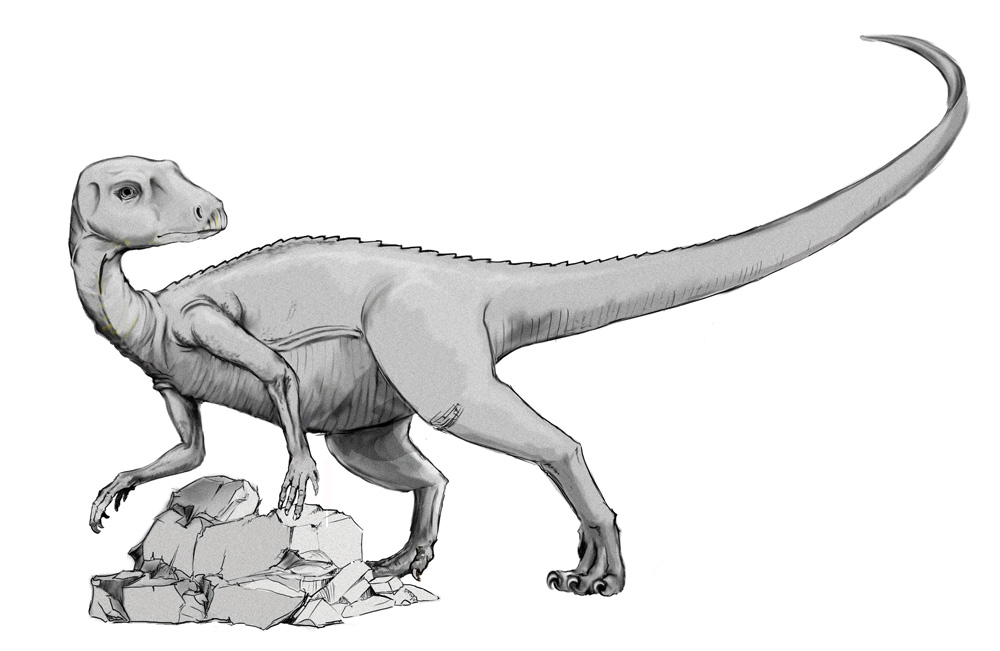
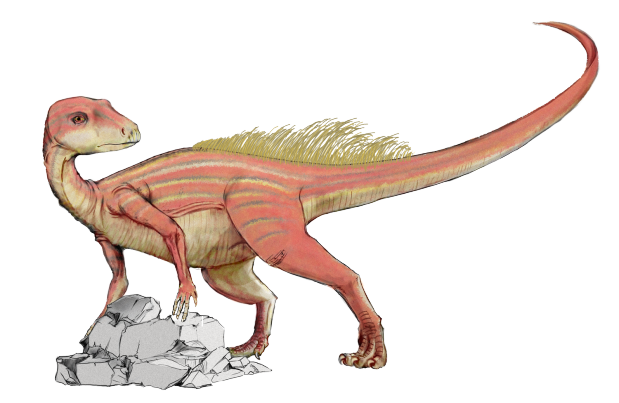
Abrictosaurus
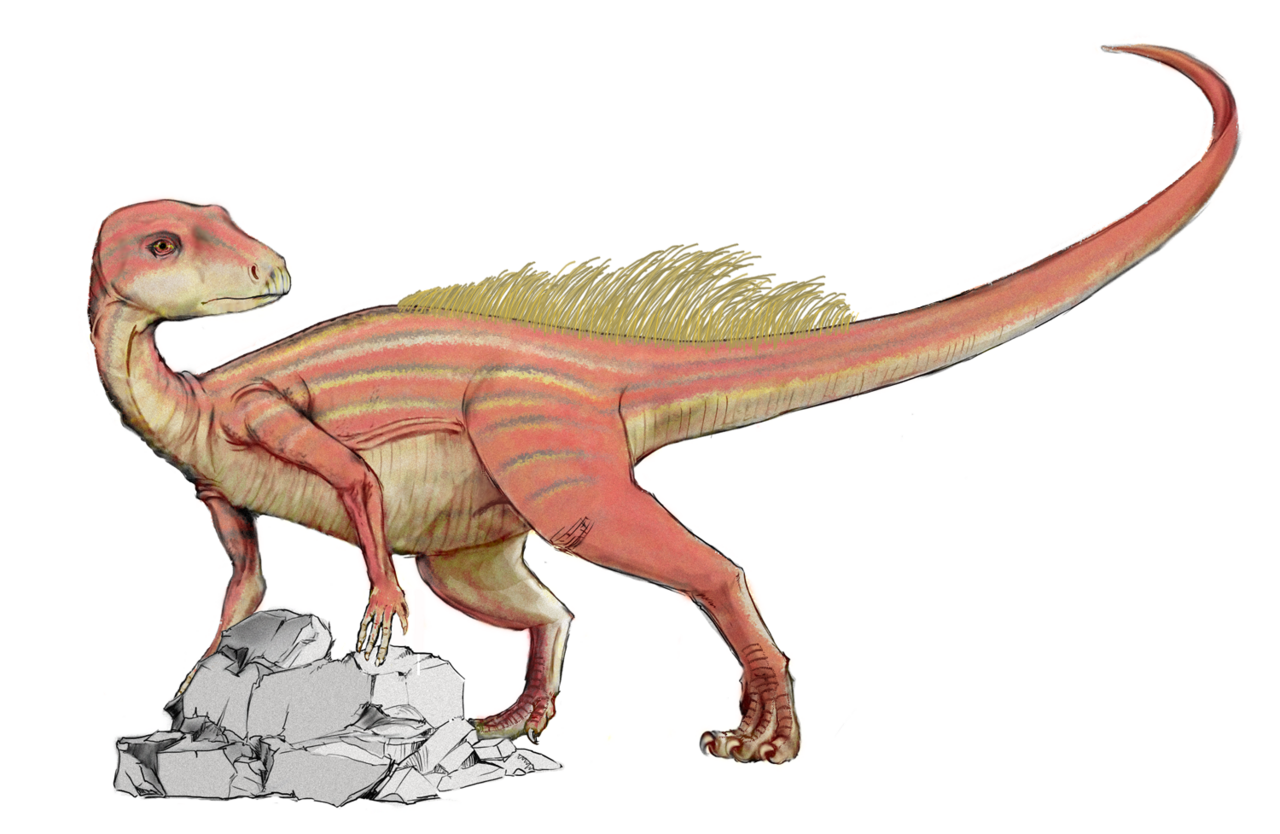
A small, basal heterodontosaurid dinosaur from the Early Jurassic.

Paul C. Sereno · CC BY 3.0
Abrictosaurus, whose name means "wakeful lizard," is a genus of heterodontosaurid dinosaur from the Early Jurassic, found in what is now Lesotho and South Africa. It walked on two legs and ate plants or possibly both plants and meat, and it ranks among the most primitive members of the heterodontosaurid family. This dinosaur measured about 1.2 meters long and weighed under 45 kilograms.
Scientists know Abrictosaurus from the remains of just two individuals, uncovered in the Upper Elliot Formation across the Qacha's Nek District in Lesotho and Cape Province in South Africa. That formation dates to between roughly 200 and 190 million years ago, during the Hettangian and Sinemurian stages of the Early Jurassic. The environment there likely included sand dunes and seasonal floodplains, with a semi-arid climate and only occasional rain. Other dinosaurs from the same formation include the theropod *Megapnosaurus*, the sauropodomorph *Massospondylus*, and fellow heterodontosaurids *Heterodontosaurus* and *Lycorhinus*. Fossils of terrestrial crocodylomorphs, cynodonts, and early mammals also turn up in abundance.
**Description**
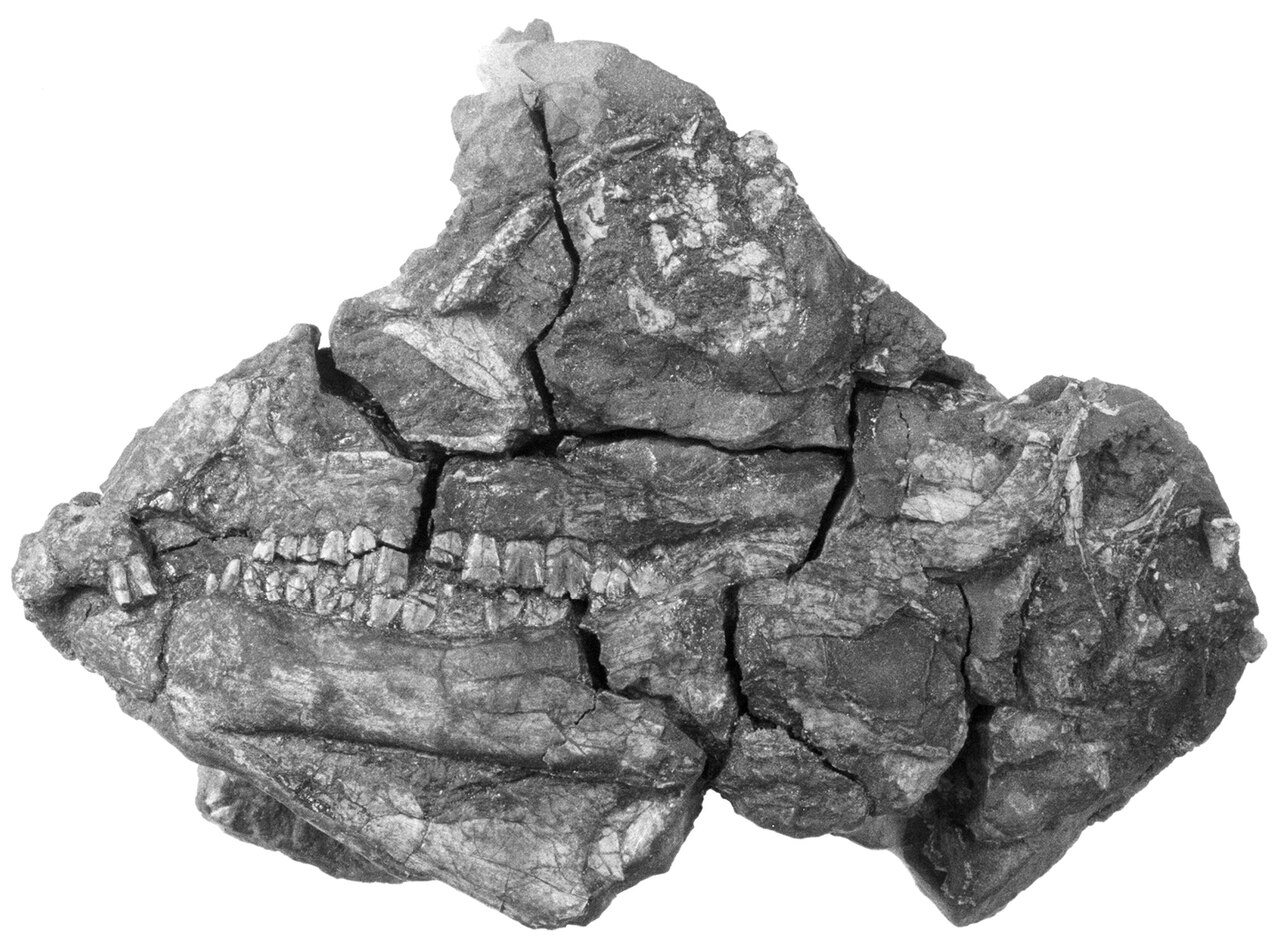
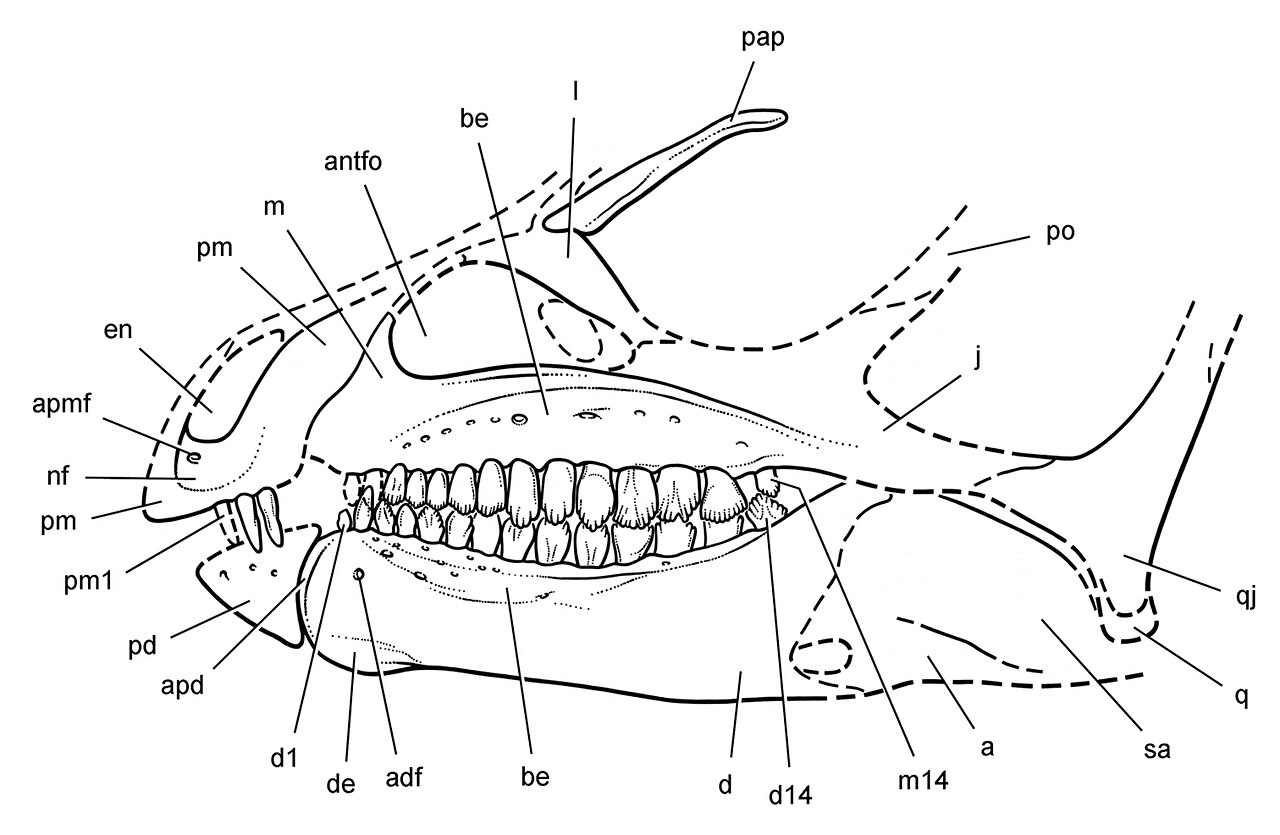
Heterodontosaurids like Abrictosaurus were small, early ornithischians, named for their unusually varied teeth. They are best known for large, canine-like tusks (called caniniforms) in both the upper and lower jaws. The front of the jaw had no teeth, instead sporting a hard beak for cropping plants. Three premaxillary teeth were present: the first two small and cone-shaped, the third enlarged into the upper caniniform. The lower caniniform, even larger, was the first tooth of the lower jaw. A wide gap (a diastema) in the upper jaw made room for the lower tusk and separated the premaxillary teeth from the broader chewing teeth of the maxilla. Similar teeth lined the rest of the lower jaw.
Abrictosaurus is usually seen as the most basal member of the Heterodontosauridae. *Lycorhinus* and *Heterodontosaurus* both had high-crowned cheek teeth that overlapped in the jaw, forming a continuous chewing surface like that of Cretaceous hadrosaurids. Abrictosaurus, by contrast, had more widely spaced cheek teeth with lower crowns, closer to those of other early ornithischians. Some have suggested that Abrictosaurus lacked tusks, which would be another primitive feature, but one of its two specimens clearly does have caniniforms. The upper caninifor
- Time period
- Early Jurassic (Hettangian to Sinemurian, ~200–190 million years ago)
- Length
- Approximately 1.2 meters (3.9 ft)
- Weight
- Less than 45 kilograms (99 lb)
- Diet
- Herbivore or omnivore
- Notable feature
- Canine-like tusks (caniniforms) in upper and lower jaws
- Discovery location
- Lesotho and South Africa
- Named by
- James Hopson in 1975
Lore & Background
The holotype specimen of Abrictosaurus (NHMUK PV RUB 54) was first described by paleontologist Richard Thulborn in 1974, who considered it a new species of Lycorhinus and named it L. consors. Because this specimen lacked the caniniform tusks found in the type species Lycorhinus angustidens, Thulborn believed it to be female. In 1975, James Hopson redescribed a fragmentary heterodontosaur skull (NHMUK PV RUA 100) from South Africa that Thulborn had assigned to Lycorhinus angustidens. Hopson showed that this skull could not belong to L. angustidens but was more similar to the holotype, and he erected a new genus, Abrictosaurus, to contain both specimens. The generic name, from Greek meaning 'wakeful lizard,' refers to Hopson's disagreement with Thulborn's hypothesis that heterodontosaurids underwent periods of aestivation.
Reader's Guide
Abrictosaurus holds significance in paleontology primarily for its role in debates about sexual dimorphism and the evolution of heterodontosaurids. The hypothesis of sexual dimorphism in heterodontosaurids has long centered on Abrictosaurus, because the holotype specimen lacks tusks—a trait often associated with males in modern mammals. The discovery of caniniforms in the second specimen (NHMUK PV RUA 100) showed that Abrictosaurus consors also possesses this 'male' characteristic, suggesting it is a valid species. However, the holotype may actually be a juvenile, based on its short face and unfused sacral vertebrae, meaning the lack of tusks could be a juvenile trait rather than a secondary sexual characteristic. This uncertainty weakens the case for sexual dimorphism. As one of the most basal heterodontosaurids, Abrictosaurus provides insight into the early evolution of ornithischian dinosaurs, particularly in dental and limb morphology. Its fossils come from the Upper Elliot Formation, which preserves a semiarid environment with sand dunes and seasonal floodplains, and it lived alongside other dinosaurs such as Megapnosaurus, Massospondylus, Heterodontosaurus, and Lycorhinus.
Did You Know?
- Abrictosaurus means 'wakeful lizard,' referring to a disagreement with the hypothesis that heterodontosaurids underwent aestivation.
- The holotype specimen was originally named Lycorhinus consors by Richard Thulborn in 1974.
- Abrictosaurus had caniniforms serrated only on the anterior surface, unlike those of Lycorhinus and Heterodontosaurus.
- The two known specimens were housed at University College London before being transferred to the Natural History Museum, London, in 1986.
Taxonomic Placement and Validity
Abrictosaurus occupies a position in the comprehensive catalogue of non-avian dinosaur genera that carries quiet but significant weight. In a list spanning 1,863 names—many of which have been reclassified as petrified wood, crocodilians, or true birds—Abrictosaurus appears without any disqualifying annotation. It is not flagged as a nomen nudum, not demoted to junior synonym status, and not reidentified as a member of another clade entirely. This unmarked entry places it squarely within the roughly 1,424 names that the field currently regards as either valid dinosaur genera or nomina dubia. The absence of a caveat is, in taxonomic parlance, a form of endorsement: the name has survived the gauntlet of peer review, nomenclatural scrutiny, and the ongoing re-evaluation that has reshuffled so many of its alphabetical neighbors. For a genus nestled between Abditosaurus and Abrosaurus in the A-section, that quiet legitimacy is its most defining characteristic.
The Dinosaurian Tapestry
Abrictosaurus belongs to a lineage whose story stretches back to the Triassic period, when the first dinosaurs emerged between 243 and 233.23 million years ago. For a long stretch of that early era, they were merely one group among many reptilian competitors. It was the Triassic–Jurassic extinction event, roughly 201.3 million years ago, that cleared the stage and allowed dinosaurs to seize dominance over terrestrial vertebrate life. That dominance held firm through the Jurassic and into the Cretaceous, a reign that lasted tens of millions of years before the Cretaceous–Paleogene extinction around 66 million years ago wiped out every non-avian lineage. The only dinosaur bloodline to endure that catastrophe traces back to feathered theropods of the Late Jurassic, giving rise to the birds we see today. Abrictosaurus, as a non-avian member of that great radiation, represents a chapter that is closed—its story preserved only in stone and in the meticulous catalogues where its name still stands.
Nomenclatural Governance
The name Abrictosaurus exists within a tightly regulated framework of zoological nomenclature. The International Code of Zoological Nomenclature sets the rules under which a genus name can be valid, preoccupied, or entirely void. In practice, the dinosaur community relies on two principal references: George Olshevsky's Dinosaur Genera List, first published online in 1995 and maintained through June 2021, and the second edition of The Dinosauria, released in 2004, which serves as the most authoritative general source in the field. Subjective determinations—whether a name is a junior synonym, whether a taxon qualifies as a dinosaur at all—are adjudicated against The Dinosauria unless primary literature offers a conflicting view. Abrictosaurus passes through this gauntlet without triggering any of the special provisions: it is not a nomen oblitum abandoned for fifty years, not a nomen manuscriptum lacking scientific backing, and not a preoccupied name already claimed by another taxon. Its clean standing reflects a name that met the ICZN's publication standards and has remained uncontested.
A Name Among Thousands
The landscape in which Abrictosaurus is catalogued is one of extraordinary flux. Of the 1,863 names in the comprehensive listing, a substantial minority have been reclassified entirely: some turned out to be pieces of petrified wood, others were identified as choristoderans, metriorhynchid crocodilians, or proterosuchid archosauriforms. Many more carry the label of nomen nudum, having appeared in print without meeting formal publication standards, or are flagged as junior synonyms of previously described genera. Against this backdrop of constant revision, Abrictosaurus's unannotated entry is notable precisely because so many of its neighbors are not. It sits in the A-section alongside names that have been synonymized, reidentified, or relegated to the status of manuscript names. The list itself is a living document, shaped by decades of paleontological debate and nomenclatural adjudication. That Abrictosaurus retains its standing without qualification speaks to a name that has weathered the field's most rigorous scrutiny and emerged intact.
Gallery
Frequently Asked Questions
What is Abrictosaurus?
Abrictosaurus is a small, bipedal heterodontosaurid dinosaur from the Early Jurassic, dating to roughly 200–190 million years ago. Its name translates to "wakeful lizard," and it sits among the most primitive known members of the heterodontosaurid family.
How big was Abrictosaurus?
It reached about 1.2 meters (around 4 feet) in total length and tipped the scales at under 45 kilograms, making it a compact, lightweight dinosaur for its time.
What did Abrictosaurus eat?
Its diet remains uncertain, but evidence points to either a strictly plant-based menu or a mixed diet that included small animals alongside vegetation.
Where were Abrictosaurus fossils found?
Only two specimens are known, both recovered from the Upper Elliot Formation in the Qacha's Nek District of Lesotho and Cape Province in South Africa.
What is the most distinctive feature of Abrictosaurus?
It bore prominent, canine-like tusks (caniniforms) in both the upper and lower jaws, a trait that helps distinguish it within the heterodontosaurid group and hints at a specialized feeding or display role.
More in Dinosaur genera 1-24
Spotted an error? Know more?
This is a living reference — every entry is fact-audited, and reader corrections feed straight into our audit queue. Suggest an edit · See this site's audit record