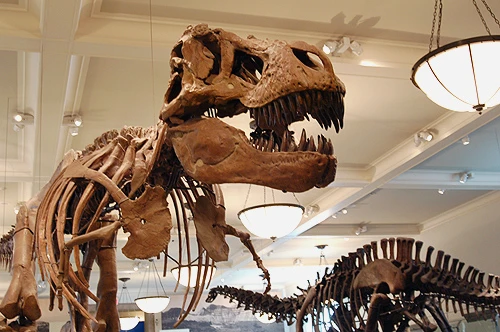
Abelisaurus
A predatory dinosaur known only from a partial skull.

ケラトプスユウタ · CC BY-SA 4.0
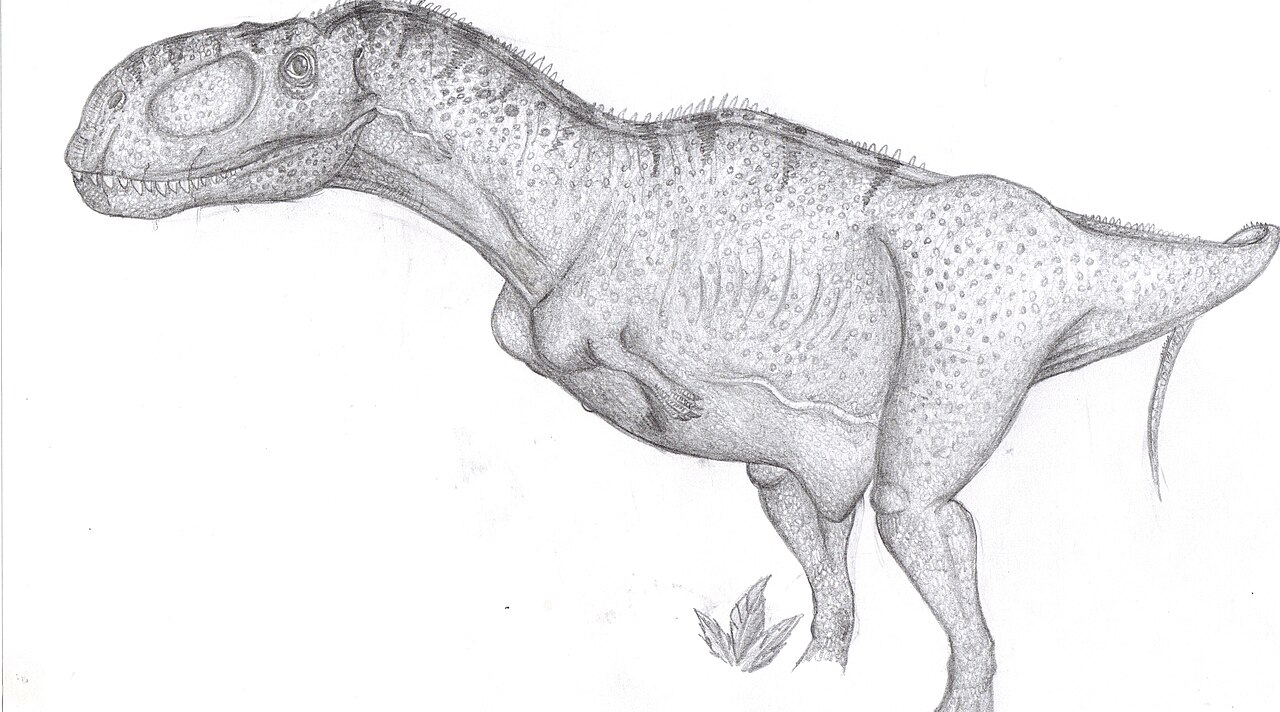
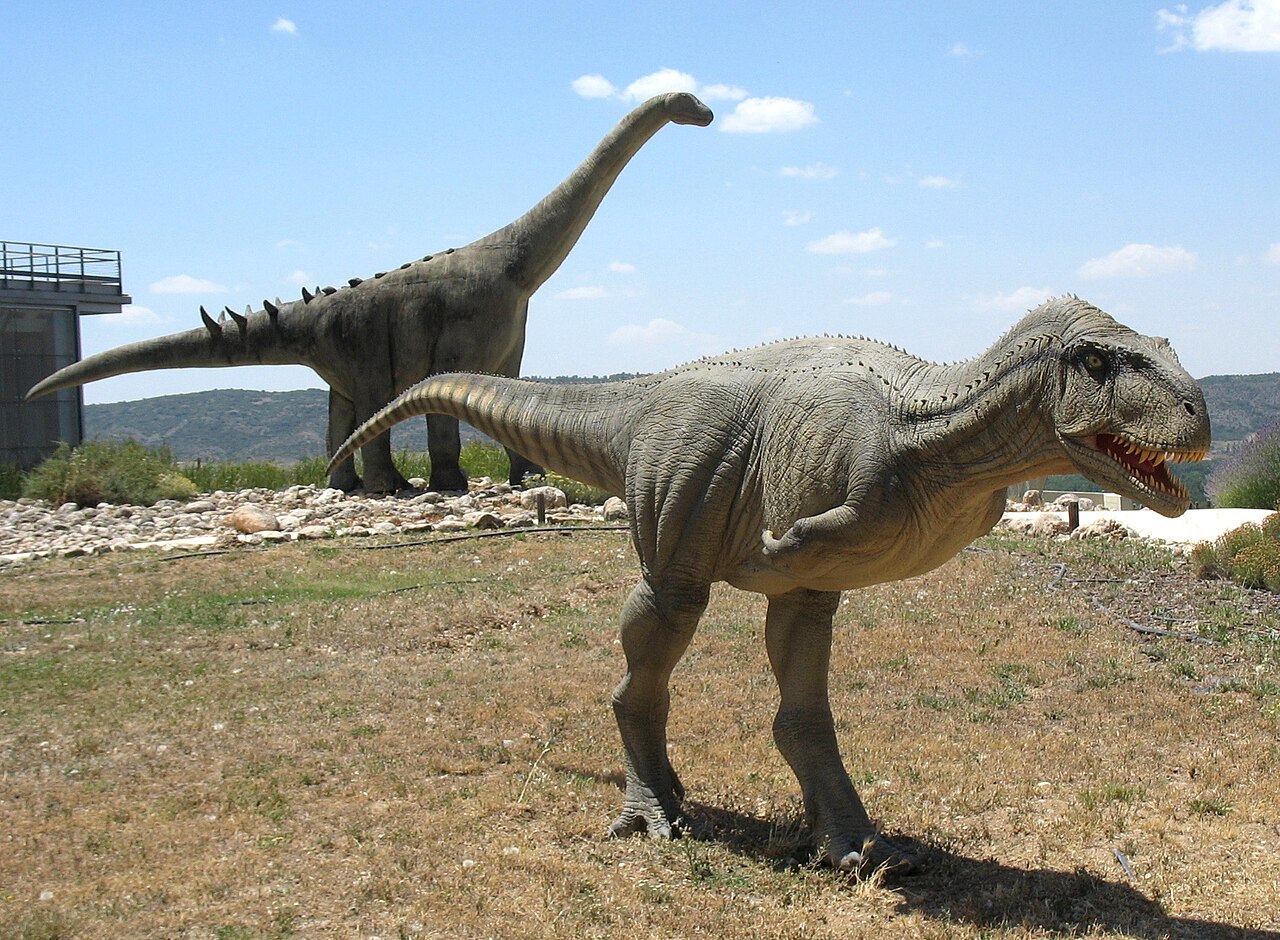
Abelisaurus is a genus of predatory abelisaurid theropod dinosaur that lived during the Late Cretaceous Period (Campanian) in what is now South America. It is known from only one partial skull, making its size uncertain, but it was a bipedal carnivore. The genus was named and described in 1985 by Argentine paleontologists José Bonaparte and Fernando Emilio Novas, and it is the type genus of the family Abelisauridae.
- known_for
- Type genus of the family Abelisauridae; first named abelisaurid
- location
- Patagonia, Argentina (Anacleto Formation)
Lore & Background
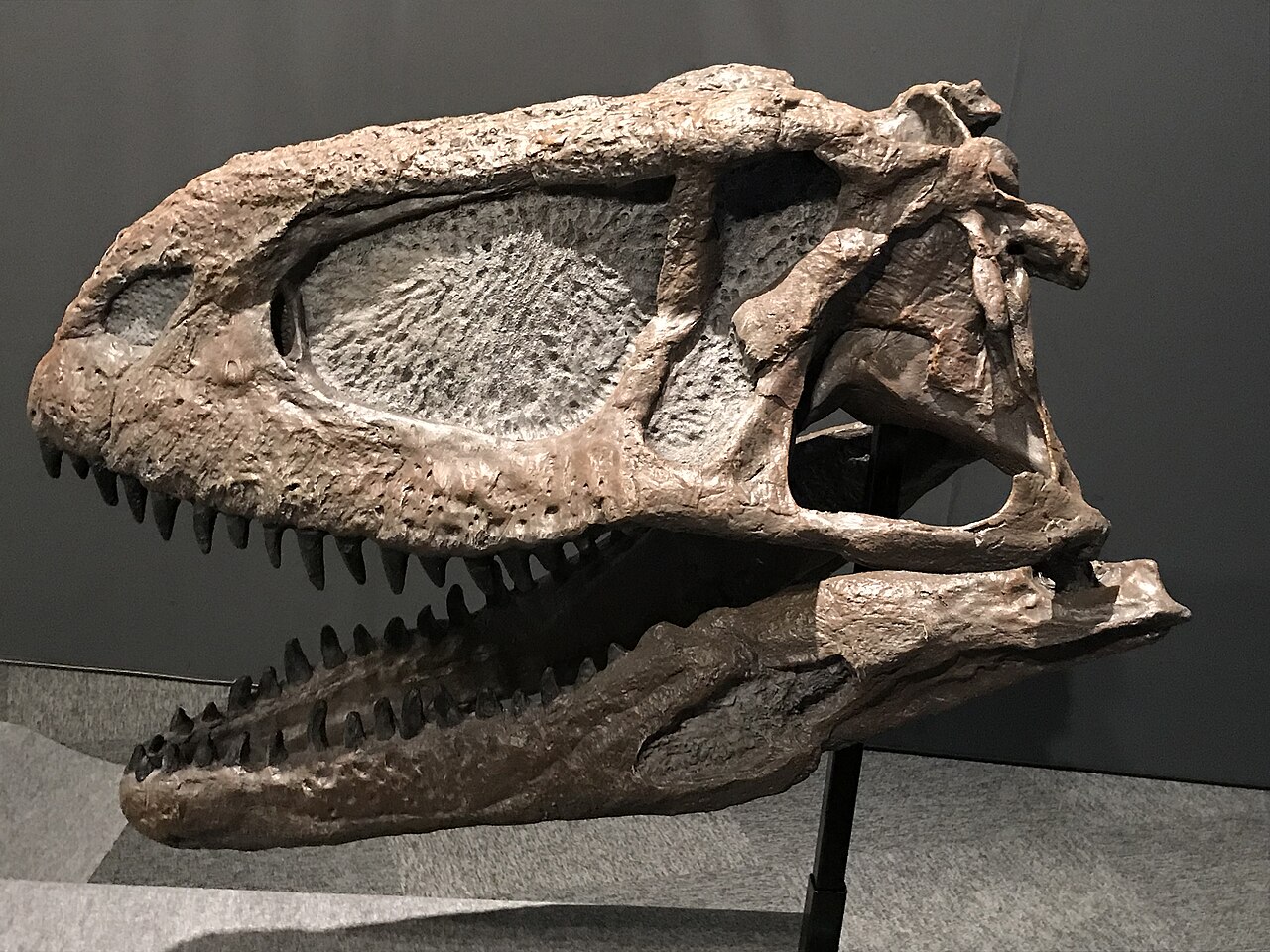
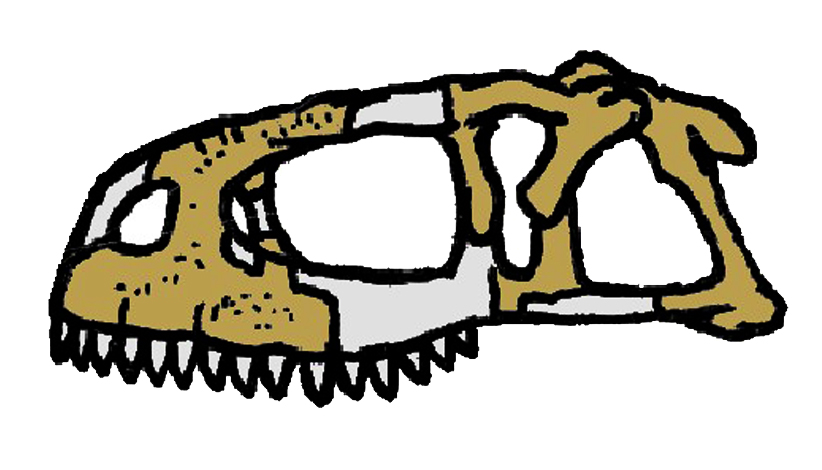
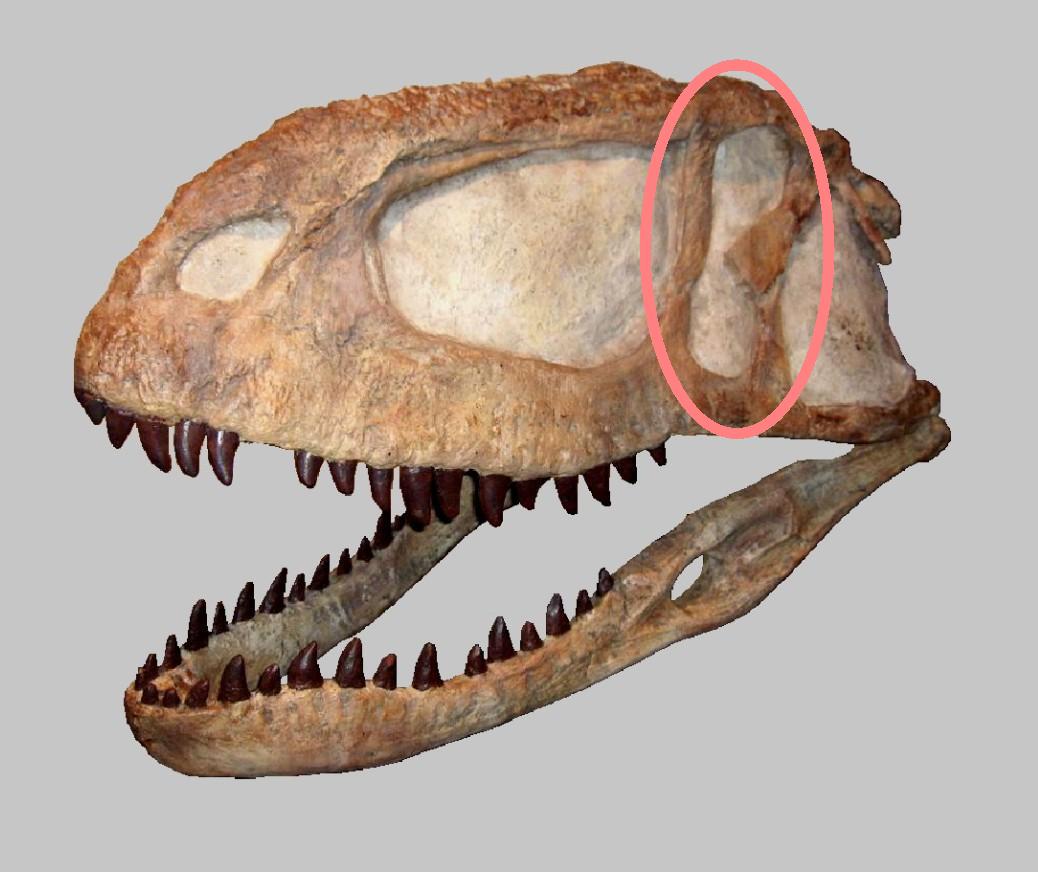
The holotype specimen, MC 11098, was uncovered in 1983 at the 'Cantera de la Pala Mécanica' site in the Lago Pellegrini quarries, which had been exploited by Roberto Abel since 1975. The fossil consists of an incomplete skull lacking the lower jaws, missing most of the connections between the snout and the back of the skull, and most of the palate. Despite the missing pieces, the skull was estimated at over 85 centimetres long. The genus name honors Roberto Abel, the discoverer, and the species name comahuensis refers to the Comahue region of Argentina.
Reader's Guide
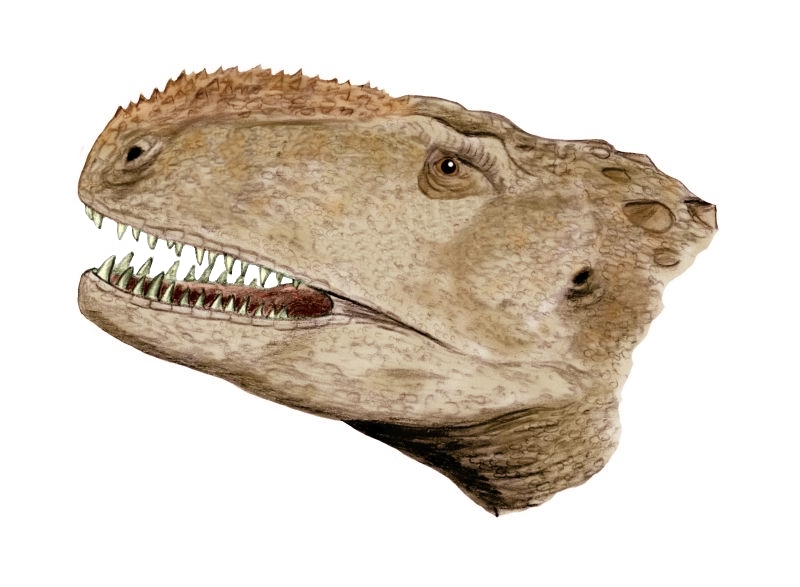
Abelisaurus is significant as the first named member of the Abelisauridae family, a group of predatory dinosaurs that later became better known from more complete specimens such as Carnotaurus and Majungasaurus. Its classification has been debated: originally placed in Carnosauria, it is now considered a neoceratosaurs, though some scientists place it as a basal abelisaurid outside Carnotaurinae. Because only a skull is known, some have suggested it might be a carcharodontosaurid, but this is thought unlikely. Its size estimates vary widely, from 7.4 metres to 11 metres, reflecting the difficulty of extrapolating from a single partial skull. The skull's broad back and lack of bony crests, though with ridges that may have supported a keratinous crest, suggest it was an apex predator, possibly hunting titanosaurian sauropods.
Did You Know?
- Abelisaurus is known from only one partial skull, lacking the lower jaws.
- The genus was named after Roberto Abel, who discovered the type specimen and was former director of the provincial Museum of Cipolletti.
- The skull has rough ridges on the snout and above the eyes that might have supported a crest made of keratin.
A Valid Name in the Dinosaurian Record
Abelisaurus occupies a position of straightforward taxonomic acceptance within the broader catalog of non-avian dinosaurs. In a comprehensive listing that encompasses 1,863 names ever proposed for non-avian dinosaur genera, roughly 1,424 are regarded as either valid genera or nomina dubia. Abelisaurus appears in this list without any qualifying annotation—no flag for junior synonymy, no designation as a nomen nudum, no note indicating it was later reclassified as a crocodilian, a true bird, or even a piece of petrified wood. This clean entry signals that the name has survived the rigorous scrutiny of the International Code of Zoological Nomenclature and the subjective determinations made in authoritative references. Unlike neighboring entries in the alphabetical listing that carry parenthetical caveats about disputed status or reassignment, Abelisaurus stands as a commonly accepted genus, its type specimen and diagnostic features sufficient to maintain its place in the valid roster of dinosaurian names.
A Lineage Within a 200-Million-Year Story
Abelisaurus belongs to a group of reptiles whose evolutionary history stretches back to the Triassic period, when the first dinosaurs appeared between 243 and 233.23 million years ago. The group did not immediately dominate the land; that shift came after the Triassic–Jurassic extinction event approximately 201.3 million years ago, which cleared the ecological stage for dinosaurs to become the principal terrestrial vertebrates. Their supremacy persisted through both the Jurassic and Cretaceous periods. Abelisaurus, as a member of this vast assemblage, is part of a lineage that ultimately gave rise to the only surviving dinosaur clade: birds, which evolved from earlier theropods during the Late Jurassic. While birds alone passed through the Cretaceous–Paleogene extinction event around 66 million years ago and continue to walk the Earth today, Abelisaurus and its non-avian relatives exist only as fossil evidence, preserved in the geological record as a chapter in a story spanning nearly two hundred million years.
The Framework That Validates a Name
The standing of Abelisaurus as a recognized genus is underwritten by a specific nomenclatural infrastructure. There is no single official, canonical list of all non-avian dinosaur genera; the closest reference is the Dinosaur Genera List compiled by biological nomenclature expert George Olshevsky, first published online in 1995 and maintained with regular updates until June 2021. The most authoritative general source in the field is the second edition of The Dinosauria, published in 2004. The vast majority of names in comprehensive listings, including Abelisaurus, are sourced to Olshevsky's work, while all subjective determinations—such as whether a name is a junior synonym or whether a taxon is truly dinosaurian—rest on The Dinosauria unless primary literature presents a conflicting case. All of this operates under the International Code of Zoological Nomenclature, which governs how names are published, how synonyms are resolved, and how invalid or preoccupied names are handled. Abelisaurus passes through every one of these gates without being flagged.
One Name Among Nearly Two Thousand
The alphabetical listing in which Abelisaurus appears is a remarkable document of scientific trial and error. It contains 1,863 names that have ever been considered non-avian dinosaurs, yet only approximately 1,424 are regarded as valid genera or nomina dubia. The remaining names represent a long history of misidentification and reclassification: some turned out to be choristoderans, metriorhynchid crocodilians, proterosuchid archosauriforms, pareiasaurs, or simply petrified wood. Others were never formally published under ICZN standards, making them nomina nuda, or were preoccupied by earlier uses, or fell into disuse for over fifty years, becoming nomina oblitum. Abelisaurus sits in the A section between Abditosaurus and Abrictosaurus, a position that reflects no such complications. Its unadorned entry, free of the dashes and explanatory notes that accompany so many of its neighbors, marks it as one of the names that withstood the full weight of taxonomic revision and retained its place in the valid dinosaurian record.
Gallery
Frequently Asked Questions
What is Abelisaurus?
Abelisaurus is a bipedal carnivorous theropod from the Late Cretaceous that hunted in what is now Patagonia, Argentina. It belongs to the abelisaurid group and lived during the Campanian stage.
How much of Abelisaurus do we actually know?
The entire known record is a single partial skull, so even its body size remains uncertain. Because so little material survives, many anatomical and behavioral details are still debated among paleontologists.
Who named Abelisaurus and when?
Argentine paleontologists José Bonaparte and Fernando Emilio Novas formally described the genus in 1985 based on material recovered from the Anacleto Formation.
Why is Abelisaurus important to dinosaur classification?
It is the type genus of the family Abelisauridae, meaning the entire family is anchored to this one species. As the first abelisaurid ever given a formal name, it defines the group's taxonomy.
Where and when did Abelisaurus live?
Its fossils come from the Anacleto Formation in Patagonia, Argentina, placing it in South America during the Late Cretaceous (Campanian), roughly 70 million years ago.
More in Dinosaur genera 1-24
Spotted an error? Know more?
This is a living reference — every entry is fact-audited, and reader corrections feed straight into our audit queue. Suggest an edit · See this site's audit record