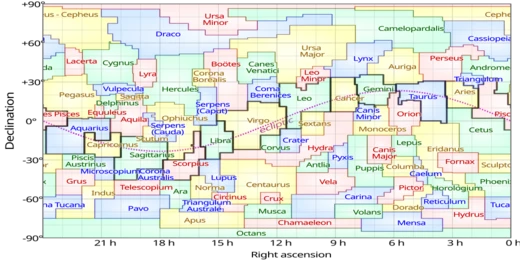
Puppis
Puppis is the largest remnant of the ancient Argo Navis constellation.

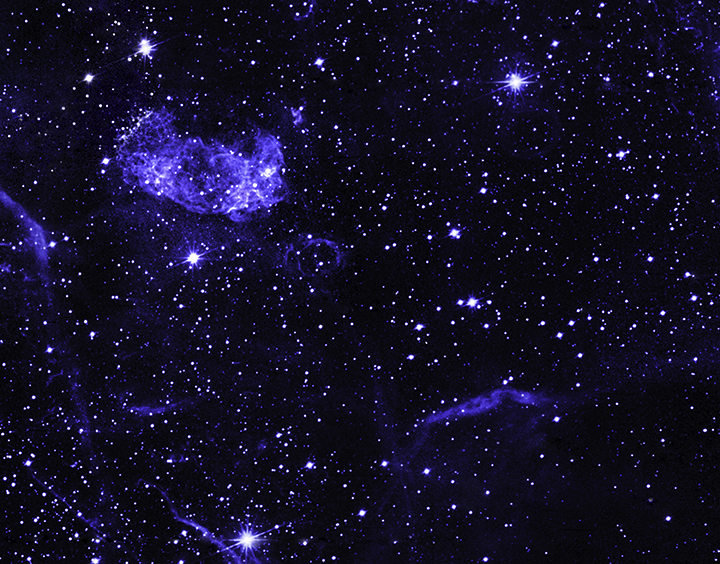
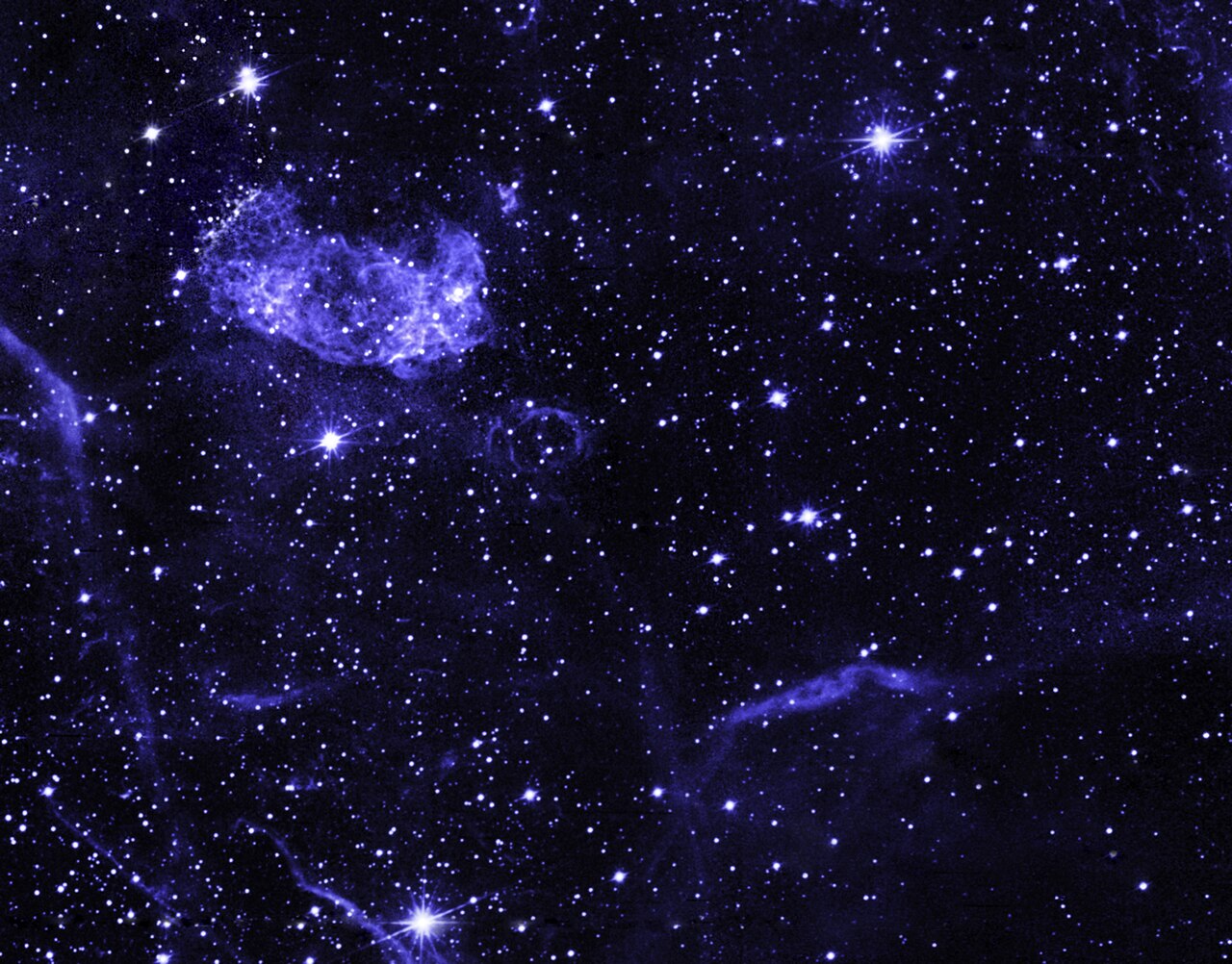
(Credit: ROSAT: NASA/GSFC/S.Snowden et al.; Optical: NOAO/AURA/NSF/Middlebury Co · Public domain
Puppis, meaning "stern," is a southern-sky constellation. It originally formed part of the larger traditional constellation Argo Navis, the ship of Jason and the Argonauts. This ancient grouping was split into three sections, with Carina representing the keel and hull, Vela the sails, and Puppis the stern. In terms of area, Puppis is the largest of these three, and it is now counted among the 88 modern constellations officially recognized by the International Astronomical Union.
The history of Argo Navis goes back to Greek texts, which drew from Egyptian astronomy around 1000 BC. Plutarch noted that its Egyptian counterpart was called the "Boat of Osiris." Because Argo Navis was about 28% larger than the next biggest constellation, Hydra, the French astronomer Nicolas Louis de Lacaille subdivided it into three parts in 1752. He named this section "Argûs in puppi." Even after the split, Lacaille kept a single set of Bayer designations for the entire original constellation. As a result, Carina holds the α, β, and ε stars, Vela has γ and δ, and Puppis has ζ, and so on. In 1844, John Herschel proposed fully dividing Argo Navis according to Lacaille's divisions, but the original constellation was still used into the 20th century. It officially received a three-letter abbreviation alongside its divisions in 1922, and Puppis, Carina, and Vela were all included in the IAU's list of modern constellations in 1930.
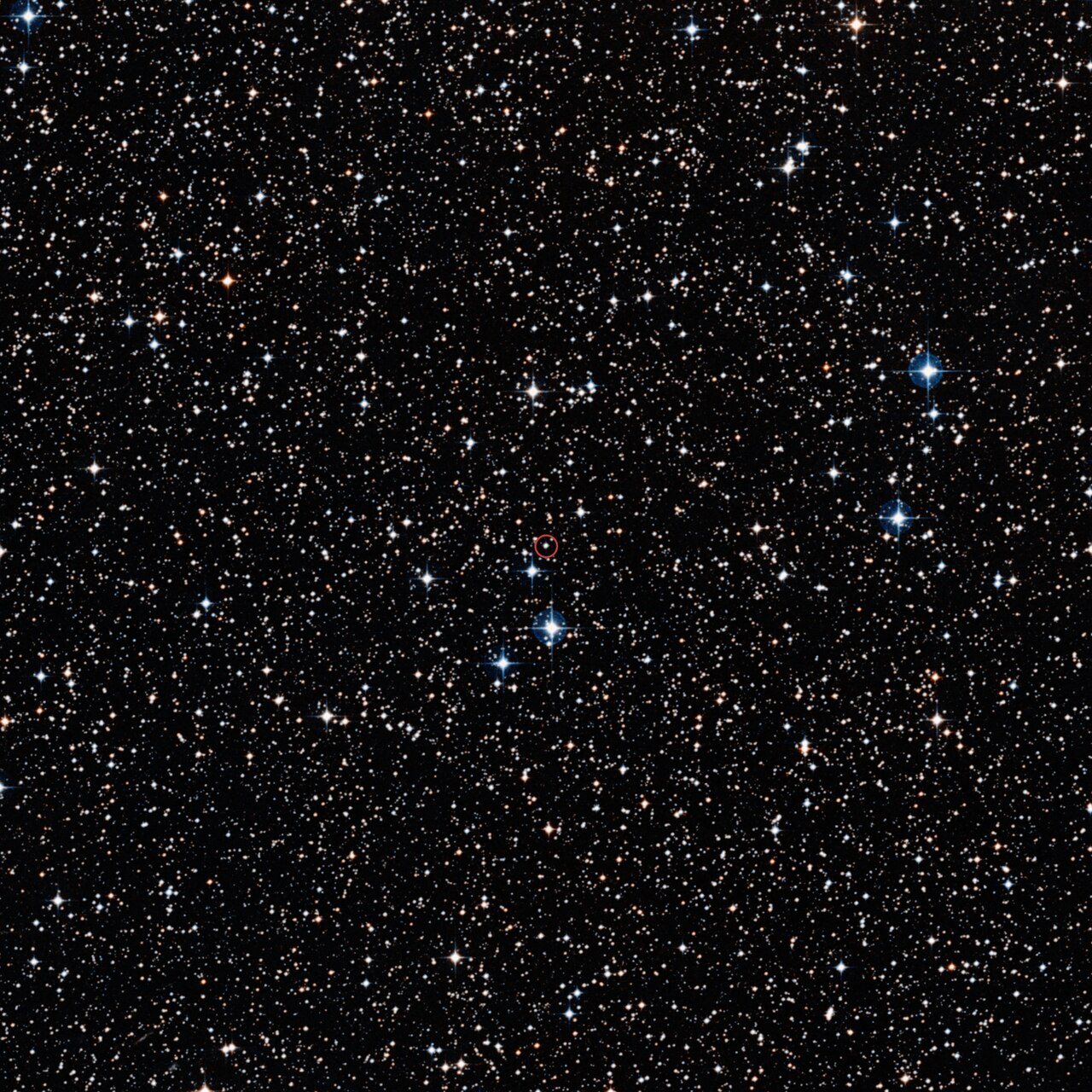
Several stars in Puppis have proper names formally adopted by the IAU, though two exceptions are Ahadi and Bulqayn, which are not catalogued by the organization. The brightest star, Zeta Puppis, is a massive supergiant—one of the hottest and most intrinsically bright stars visible without a telescope. It is a runaway star that rotates rapidly. The second brightest, Pi Puppis, is a double star and the brightest member of the Collinder 135 open cluster; its primary component is a K-type giant. RS Puppis is a highly luminous cepheid variable star embedded in a reflection nebula. It follows a regular six-week cycle of brightness changes, and these pulses create light echoes off the surrounding nebula, giving an accurate distance estimate of 6,500 light-years.
Multiple extrasolar planetary systems have been found in Puppis. In 2003, a planet was discovered orbiting HD 70642, a system similar to Jupiter with a wide, circular orbit and a long period.
Quick Facts
- Abbreviation
- Pup
- Genitive
- Puppis
- Pronounce
- ˈ · p · ʌ · p · ᵻ · s, genitive the same
- Symbolism
- the Poop Deck
- Ra
- 7.5
- Dec
- −30
- Family
- Heavenly Waters
- Quadrant
- SQ2
- Areatotal
- 673
- Arearank
- 20th
- Numbermainstars
- 9
- Numberbfstars
- 76
Facts from the source article.
Lore & Background
The constellation of Argo Navis is recorded in Greek texts, derived from ancient Egypt around 1000 BC. According to Plutarch, its equivalent in Egyptian astronomy was the "Boat of Osiris". As Argo Navis was roughly 28% larger than the next largest constellation, Hydra, it was sub-divided into three sections in 1752 by the French astronomer Nicolas Louis de Lacaille, including Puppis, which he referred to as "Argûs in puppi". Despite the division, Lacaille kept a single set of Bayer designations for the whole constellation, Argo. Therefore, Carina has the α, β, and ε, Vela has γ and δ, Puppis has ζ, and so on. In 1844, John Herschel proposed completely dividing Argo Navis in accordance with Lacaille's divisions. However, the constellation continued to be used into the 20th century, and officially received a three-letter designation alongside its divisions in 1922. Puppis, along with Carina and Vela, was included in the list of modern IAU constellations in 1930.
Reader's Guide
Puppis is notable for its rich stellar and deep-sky content. The brightest star, Zeta Puppis, is a massive supergiant that is one of the hottest and intrinsically brightest stars visible to the naked eye, and is a runaway star and rapid rotator. The second brightest, Pi Puppis, is a double star and the brightest member of the Collinder 135 open cluster. RS Puppis is a luminous cepheid variable star embedded in a reflection nebula, whose regular six-week cycle of brightness variation produces light echoes that provide an accurate distance estimate of 6,500 light years. Several extrasolar planetary systems have been found in Puppis, including HD 70642 with a Jupiter-like planet, HD 69830 with three Neptune-mass planets and an asteroid belt, NGC 2423-3 with a massive planet, HD 60532 with two Jupiter-like planets, and a 2023 detection of two ice giant exoplanets colliding around 2MASS J08152329-3859234. The constellation contains many open clusters, including M46, M47, M93, NGC 2451, and NGC 2477. The Gum Nebula, the largest emission nebula in the sky, extends 36° across the southeast boundary with Vela, and is an old supernova remnant. Puppis A is a 3,700-year-old supernova remnant spanning 100 light years and is a source of X-ray emission.
Did You Know?
- Puppis was originally part of the ancient constellation Argo Navis, which was divided into three sections in 1752 by Nicolas Louis de Lacaille.
- RS Puppis is a cepheid variable star whose light echoes off a surrounding nebula provided an accurate distance estimate of 6,500 light years.
- In 2023, astronomers detected two ice giant exoplanets colliding around the star 2MASS J08152329-3859234 in Puppis.
From Argo Navis to Modern Sky
Puppis, whose name translates to "stern," occupies a prominent place in the southern celestial sphere as the largest of three constellations born from the ancient Argo Navis. That original figure, representing the vessel of Jason and the Argonauts, traces its roots to Egyptian astronomy around 1000 BC, where Plutarch recorded its counterpart as the "Boat of Osiris." Because Argo Navis sprawled roughly 28 percent larger than Hydra, the next biggest constellation, French astronomer Nicolas Louis de Lacaille split it into three sections in 1752, naming this portion "Argûs in puppi." Interestingly, Lacaille retained a single set of Bayer letter designations across the entire former constellation, so Puppis carries the zeta designation while Carina holds alpha, beta, and epsilon, and Vela takes gamma and delta. John Herschel formally proposed the full separation in 1844, yet the old name lingered into the twentieth century. In 1922 the three parts officially received their own three-letter codes, and by 1930 Puppis stood among the 88 constellations ratified by the International Astronomical Union.
Stellar Showcases
Three stars command attention in Puppis. Zeta Puppis, the constellation's brightest member, is a massive supergiant ranked among the hottest and most intrinsically luminous stars visible without optical aid. It also qualifies as a runaway star and spins at a rapid rate, making it a fascinating target for astrophysicists. Pi Puppis, the second-brightest, is a double star whose primary component is a K-type giant; it simultaneously serves as the brightest member of the Collinder 135 open cluster. RS Puppis stands out as a particularly luminous cepheid variable embedded within a reflection nebula. Its brightness pulses on a regular six-week cycle, and those pulses generate light echoes that bounce off the surrounding nebular gas, yielding a remarkably precise distance estimate of roughly 6,500 light years. Beyond these three, several other Puppis stars have earned proper names formally adopted by the IAU, though two—Ahadi and Bulqayn—fall outside the IAU catalogue.
Worlds Beyond Our Sun
Puppis has proven a remarkably fertile hunting ground for exoplanet discoveries. In July 2003, astronomers identified a Jupiter-analogue orbiting HD 70642 on a wide, circular, long-period path. Then in May 2006, HD 69830 made headlines as the first multi-planetary system containing no Jupiter- or Saturn-mass worlds; instead it hosts three Neptune-mass planets with an asteroid belt nestled between the middle and outer members. On June 21, 2007, the first exoplanet ever found within the open cluster NGC 2423 was detected around the red giant NGC 2423-3—a behemoth of at least 10.6 Jupiter masses circling at 2.1 AU. September 2008 brought twin Jupiter-like planets around HD 60532, with the inner one completing an orbit every 201.3 days and the outer taking 604 days. Most recently, in 2023, two ice-giant exoplanets each weighing tens of Earth masses were detected around the 300-million-year-old star 2MASS J08152329-3859234, with evidence suggesting a collision event between them.
Deep-Sky Treasures
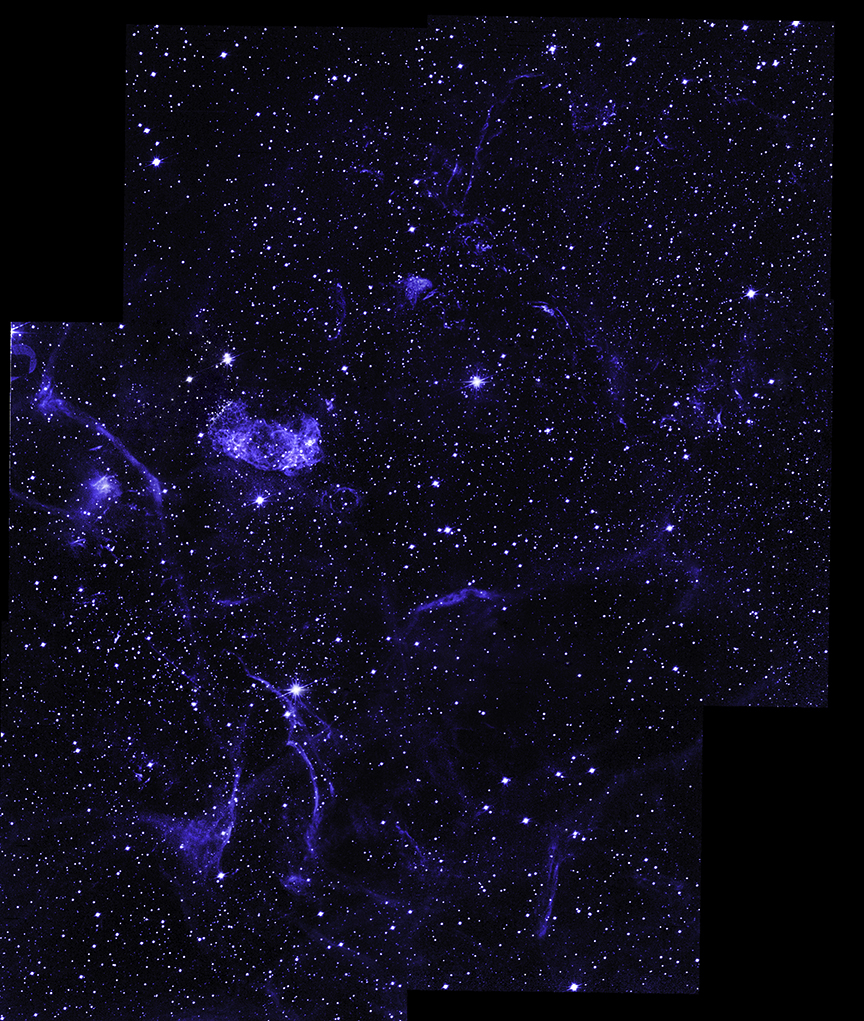
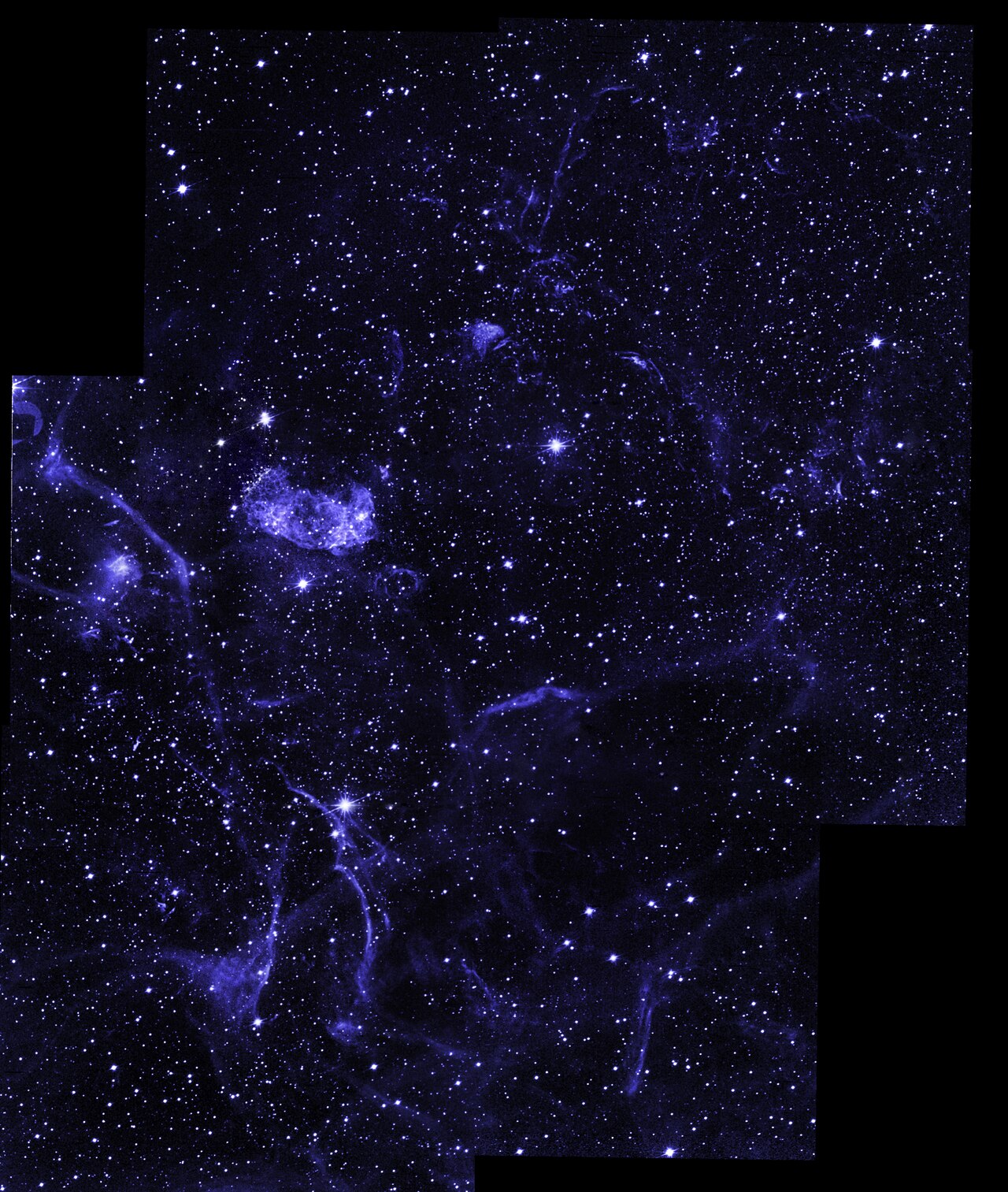
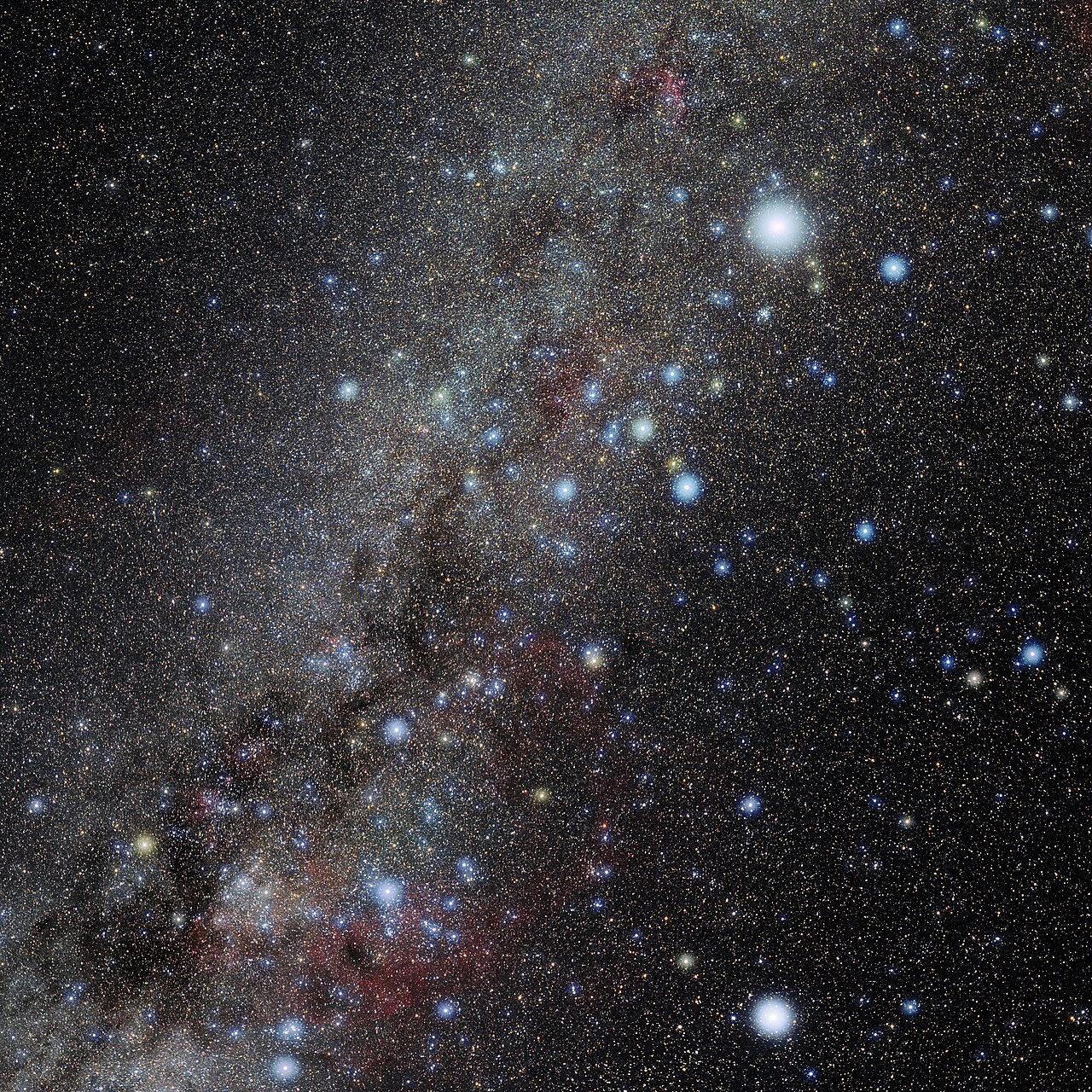
Because the Milky Way sweeps through Puppis and interstellar absorption in this direction is notably low, the constellation offers some of the brightest stretches of our galaxy. Open clusters abound: M46 and M47 sit close enough to share a single binocular field, while M47's brightest stars reach sixth magnitude and are visible to the unaided eye under dark skies. M93 lies somewhat to the south, and NGC 2451—a very bright cluster containing the star c Puppis—sits near NGC 2477, a favorite target for small telescopes. M46 itself is a circular cluster of 50 to 100 stars at roughly 5,400 light years, classified as Shapley class f and Trumpler III 2 m, with the planetary nebula NGC 2438 superimposed at about 2,900 light years. The constellation's most spectacular feature is the Gum Nebula, the largest emission nebula in the sky, stretching 36 degrees along the southeastern boundary with Vela. It is actually an ancient supernova remnant spanning a thousand light years. Closer in, Puppis A is a 3,700-year-old supernova remnant covering 100 light years and radiating X-rays.
Gallery
More in Constellations, Part 3 1-24
Spotted an error? Know more?
Reader corrections go straight into our review queue. Suggest an edit · How this site is sourced