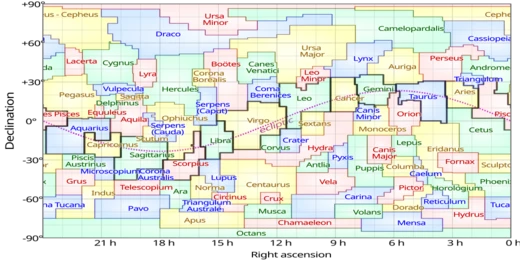
Pavo (constellation)
A southern constellation named for the peacock, part of the Southern Birds.

MichaelMaggs · CC BY-SA 3.0
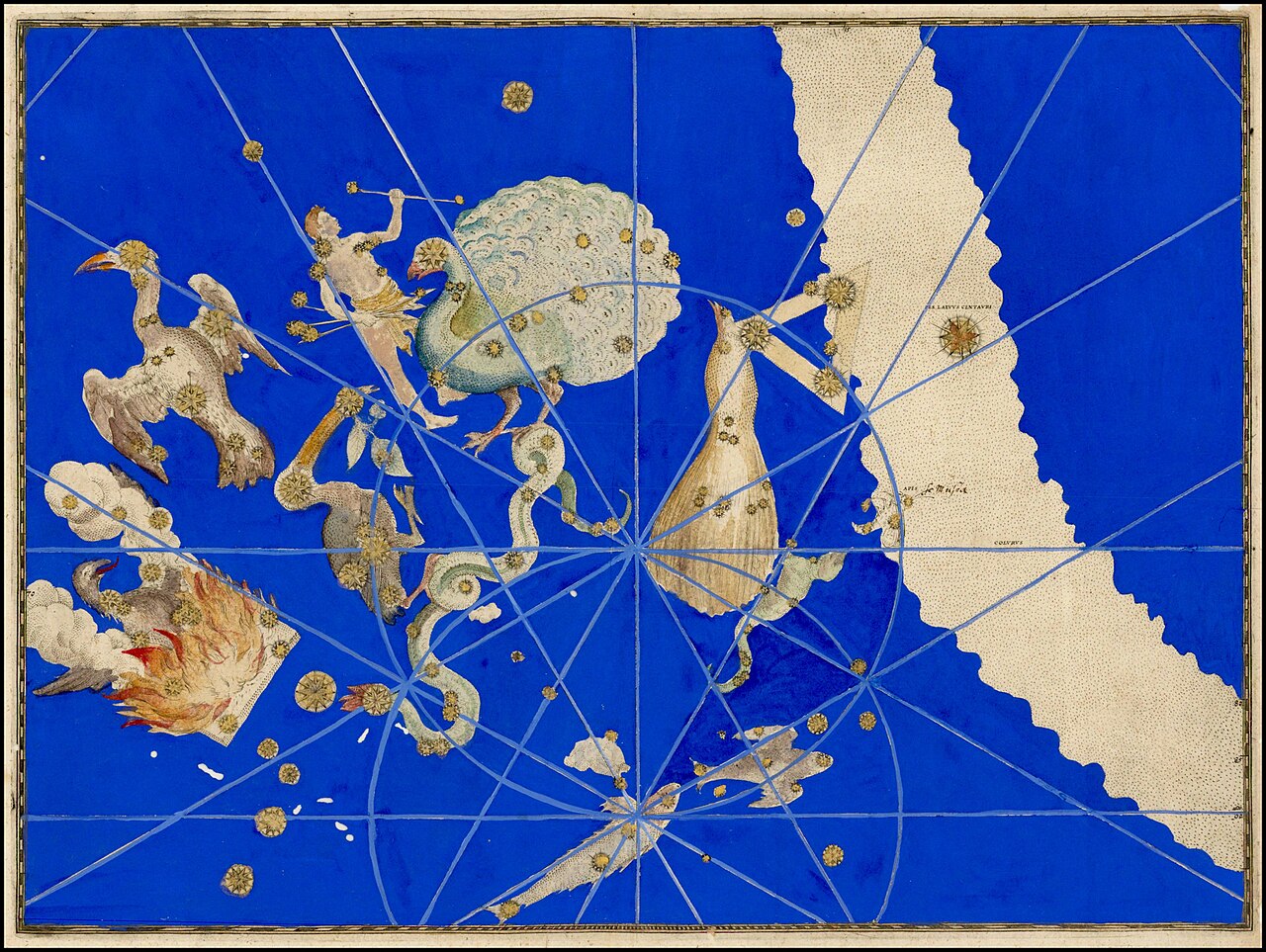
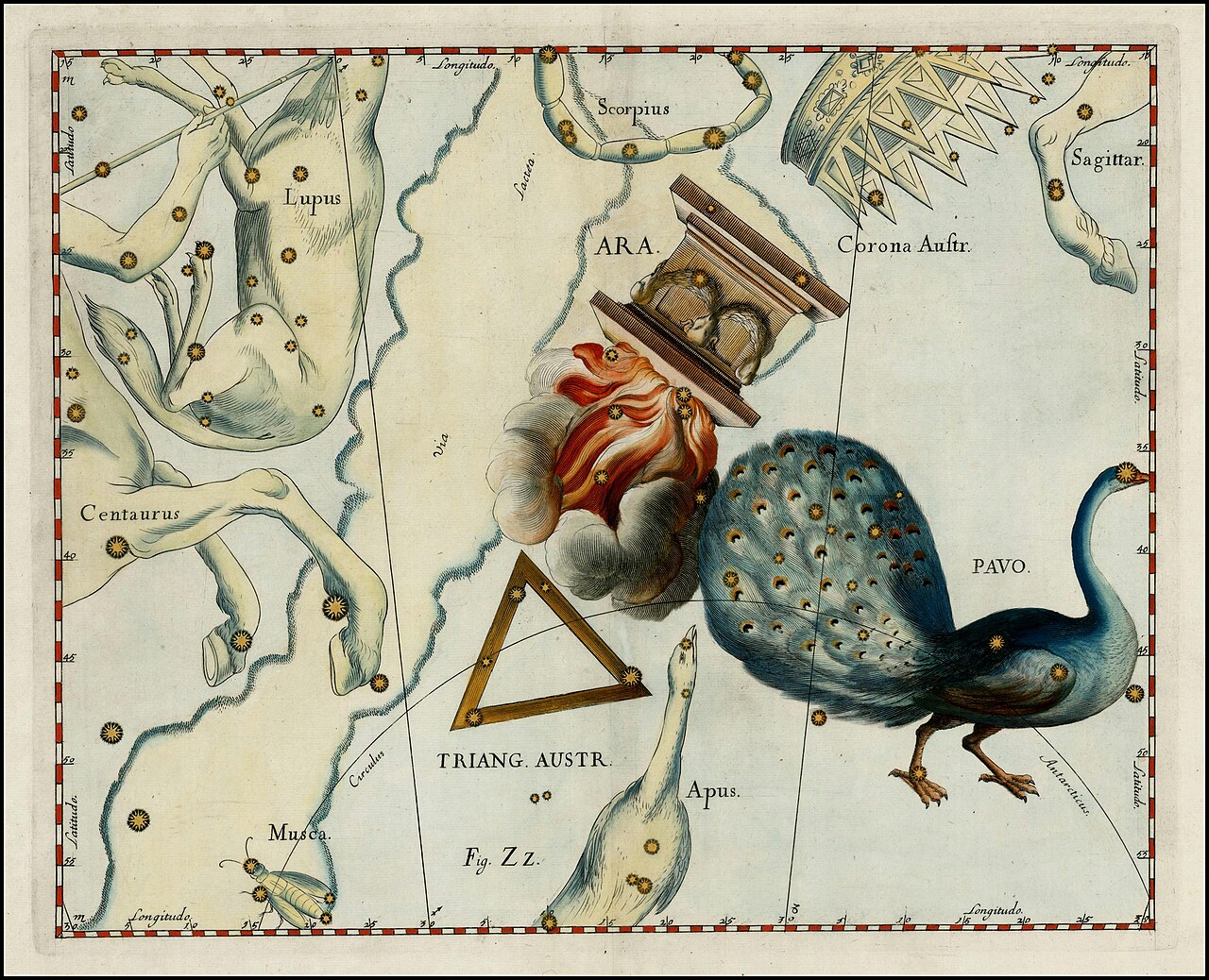
Pavo is a constellation in the southern sky whose name is Latin for 'peacock'. It first appeared on a 35-cm (14 in) diameter celestial globe published in 1598 in Amsterdam by Petrus Plancius and Jodocus Hondius and was depicted in Johann Bayer's star atlas Uranometria of 1603. Pavo is notable as one of the twelve constellations established by Plancius from the observations of explorers Pieter Dirkszoon Keyser and Frederick de Houtman, and is part of the group known as the 'Southern Birds' along with Grus, Phoenix, and Tucana.
Quick Facts
- Abbreviation
- Pav
- Genitive
- Pavonis
- Pronounce
- ˈ · p · eɪ · v · oʊ, ˈ · p · a: · v · oʊ, / genitive p · ə · ˈ · v · oʊ · n · ᵻ · s
- Symbolism
- the Peacock
- Ra
- 18 · 10.4 to 21 · 32.4
- Dec
- -56 · 35.4 to −74 · 58.8
- Family
- Bayer
- Quadrant
- SQ4
- Areatotal
- 378
- Arearank
- 44th
- Numbermainstars
- 7
- Numberbfstars
- 24
Facts from the source article.
Lore & Background
Pavo was one of the twelve constellations established by Petrus Plancius from the observations of the southern sky by explorers Pieter Dirkszoon Keyser and Frederick de Houtman, who had sailed on the first Dutch trading expedition, known as the Eerste Schipvaart, to the East Indies. It first appeared on a 35 cm (14 in) diameter celestial globe published in 1598 in Amsterdam by Plancius with Jodocus Hondius. The first depiction of this constellation in a celestial atlas was in German cartographer Johann Bayer's Uranometria of 1603. De Houtman included it in his southern star catalogue the same year under the Dutch name De Pauww . Pavo and the nearby constellations Phoenix, Grus, and Tucana are collectively called the 'Southern Birds'. According to Mark Chartrand, former executive director of the National Space Institute, Plancius may not have been the first to designate this group of stars as a peacock: 'In Greek myth the stars that are now the Peacock were Argos [or Argus], builder of the ship Argo. He was changed by the goddess Juno into a peacock and placed in the sky along with his ship.' The peacock 'symboliz[ed] the starry firmament' for the Greeks, and the goddess Hera was believed to drive through the heavens in a chariot drawn by peacocks. Another myth involves Io, a princess of Argos, and the hundred-eyed Argus Panoptes, whose eyes Hera placed on the peacock's tail. It is uncertain whether the Dutch astronomers had the Greek mythos in mind when creating Pavo, but the 'peacock' likely referred to the green peacock encountered in the East Indies, rather than the blue peacock known to the ancient Greeks. Another possible inspiration for the name Pavo may be from the major financial supporter of the Dutch missions, Reynier Pauw (Pauw means Pavo/peacock in Dutch).
Reader's Guide
Pavo is significant as one of the twelve constellations introduced by Plancius from the observations of Keyser and De Houtman during the first Dutch trading expedition to the East Indies. Its inclusion in Bayer's Uranometria of 1603 helped establish it in Western astronomy. The constellation contains notable deep-sky objects: NGC 6752, the fourth-brightest globular cluster in the sky, and the spiral galaxy NGC 6744, which closely resembles the Milky Way but is twice as large. Pavo also displays an annual meteor shower known as the Delta Pavonids, whose radiant is near the star δ Pav. Six of its star systems have been found to host planets, including HD 181433 with a super-Earth, and HD 172555 with evidence of a major interplanetary collision in the past few thousand years. The constellation's brightest star, Alpha Pavonis (Peacock), is a spectroscopic binary. Part of Pavo is referred to as 'the Saucepan' in Australia, used as a navigational tool to find the southern celestial pole. The Wardaman people of the Northern Territory of Australia saw the stars of Pavo and the neighbouring constellation Ara as flying foxes, while the Adnyamathanha people of the Flinders Ranges call the Saucepan Mirarrityi, representing their men's stories in their flag.
Did You Know?
- Pavo first appeared on a 35-cm celestial globe published in 1598 by Petrus Plancius and Jodocus Hondius.
- Delta Pavonis is a nearby Sun-like star only 19.9 light-years distant.
- Part of Pavo is called 'the Saucepan' in Australia and used to find the southern celestial pole.
Origins and the Dutch Southern Sky
Pavo, whose Latin name simply means peacock, is a constellation of the deep southern sky that owes its formal existence to the age of European maritime exploration. The figure first materialized on a 35-centimeter celestial globe printed in Amsterdam in 1598 by Petrus Plancius and Jodocus Hondius. Its conception is credited to Plancius, who drew upon the southern-sky observations made by Pieter Dirkszoon Keyser and Frederick de Houtman during the Eerste Schipvaart, the first Dutch trading voyage to the East Indies. De Houtman listed the pattern in his own southern star catalogue that same year under the Dutch title De Pauww. German cartographer Johann Bayer then rendered Pavo in his landmark atlas Uranometria in 1603, giving the figure its first appearance in a printed star atlas. The constellation belongs to a quartet of avian groupings—alongside Grus, Phoenix, and Tucana—collectively nicknamed the Southern Birds. It was not until 1756 that French astronomer Nicolas-Louis de Lacaille assigned the now-familiar Bayer letter designations to Pavo's stars, a gap of more than a century after the figure's initial charting.
Mythological Echoes and the Question of Naming
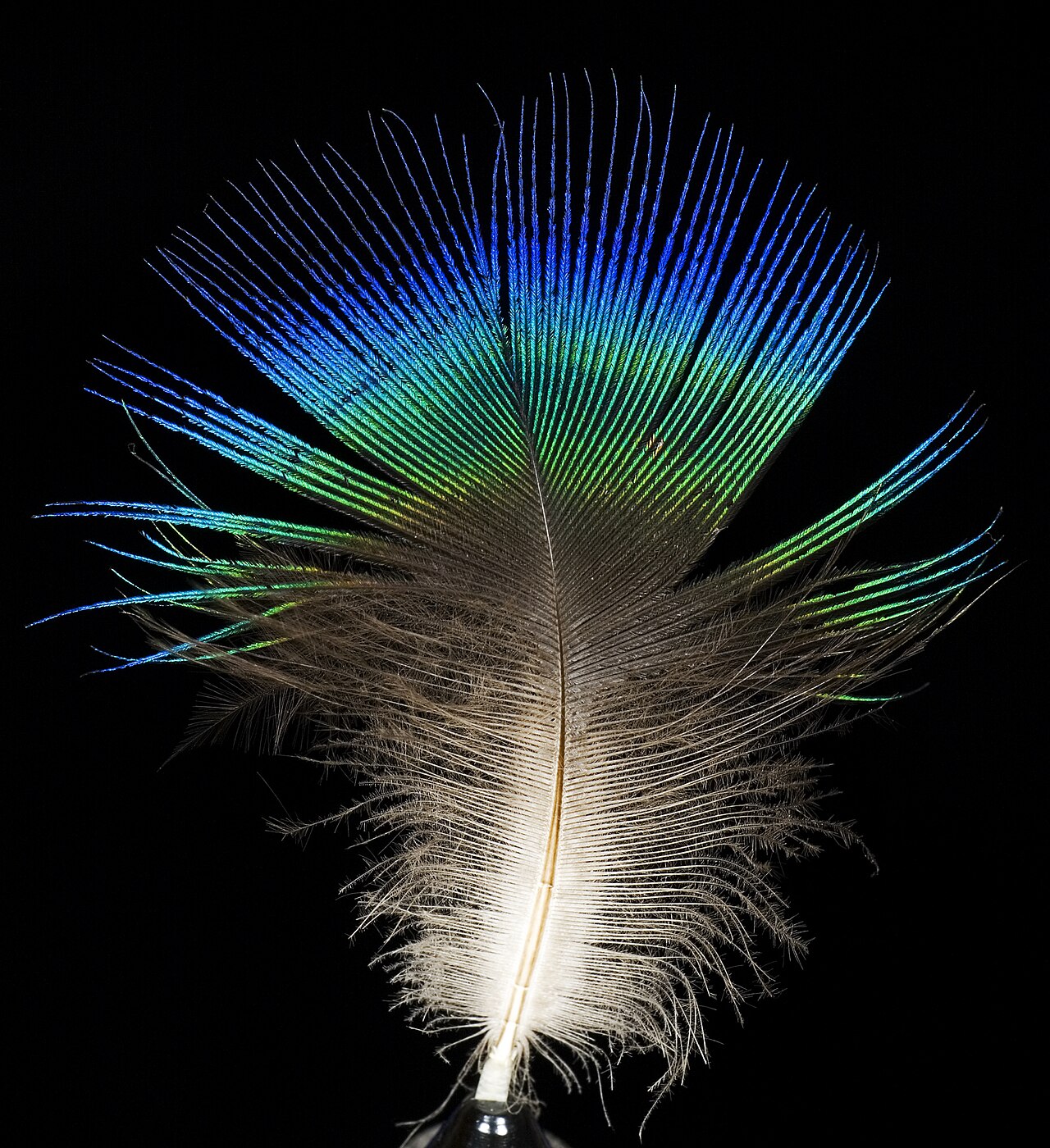
Long before Dutch cartographers pinned the peacock to the southern heavens, Greek storytellers had already woven this region of sky into their mythology. According to one tradition, the stars now forming Pavo represented Argos, builder of the legendary ship Argo, whom the goddess Juno transformed into a peacock and set among the stars. In another tale, Zeus disguised the princess Io as a heifer to hide her from his jealous wife Hera. When Hera uncovered the deception, she banished Io and stationed Argus Panoptes, a hundred-eyed guardian, to watch over her. Hermes lulled the creature to sleep with music and slew it. Hera, in mourning, placed Argus's one hundred eyes upon the tail feathers of a peacock, her sacred bird. Ovid's Metamorphoses captures the moment, describing how Saturnia set the eyes among the feathers and filled the tail with starry jewels. Whether the Dutch navigators who first charted Pavo had these myths in mind remains uncertain; the green peacocks they encountered in the East Indies likely inspired the name more directly. A further possibility is that the constellation honored Reynier Pauw, a major financial backer of Dutch expeditions, since Pauw is the Dutch word for peacock.
Stellar and Deep-Sky Treasures
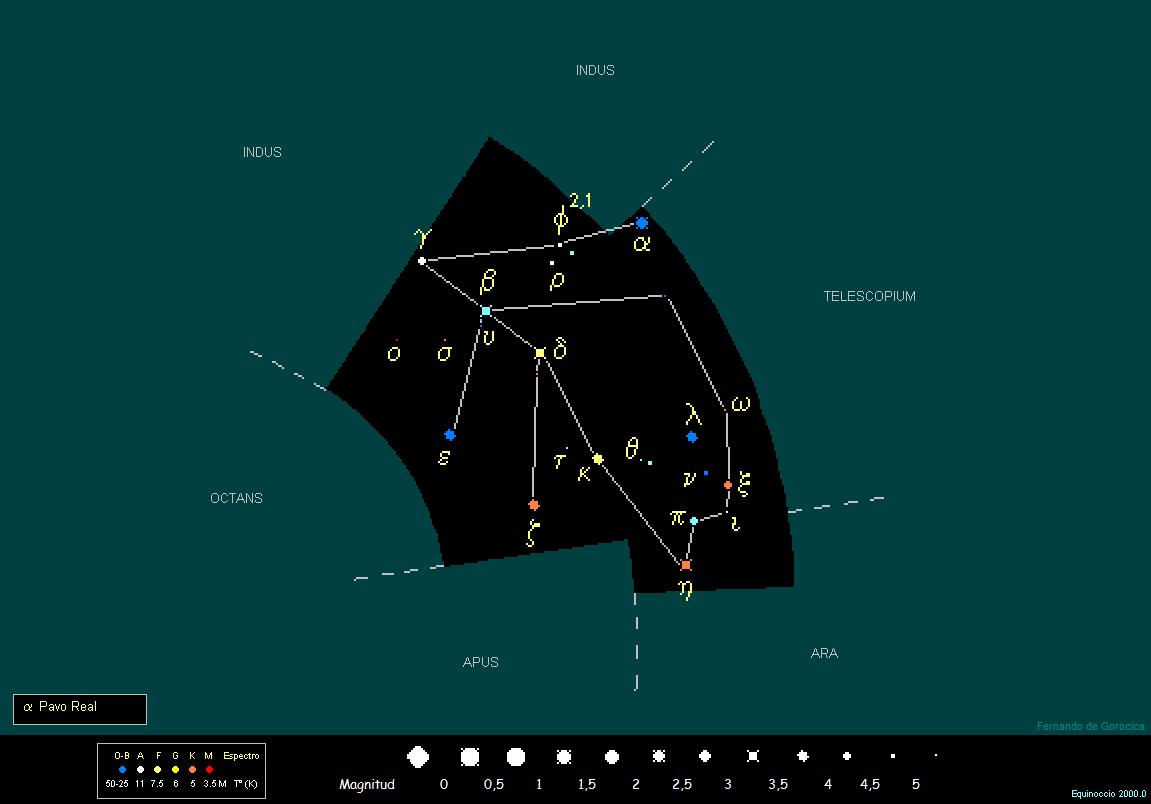
Pavo's brightest star, Alpha Pavonis, commonly called Peacock, shines at magnitude 1.91 with a blue-white hue, yet it is in truth a spectroscopic binary rather than a single sun. Nearby, Delta Pavonis offers a more familiar stellar portrait: a Sun-like star sitting just 19.9 light-years from Earth. The constellation has also proven fertile ground for exoplanet hunters, with six star systems confirmed to host planets. Among them, HD 181433 carries a super-Earth in its orbit, while HD 172555 shows signs of a massive interplanetary collision that occurred within the last few thousand years. Beyond individual stars, Pavo shelters two notable deep-sky objects. NGC 6752 ranks as the fourth-brightest globular cluster in the sky. The spiral galaxy NGC 6744 presents a striking view of a disk galaxy that closely mirrors the Milky Way's structure while being twice its size. Finally, the Delta Pavonids meteor shower returns each year with its radiant anchored near the star delta Pavonis, a recurring celestial event visible from the southern hemisphere.
Indigenous Sightlines and the Saucepan
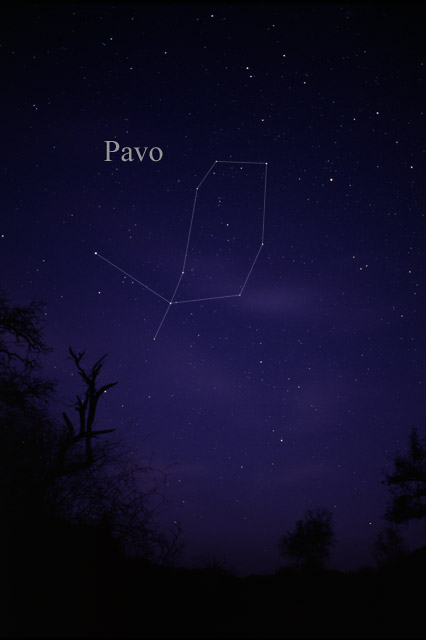
For the Aboriginal peoples of Australia, Pavo's stars carry meanings that predate European astronomy by millennia. The Wardaman people of the Northern Territory perceived the stars of Pavo and the neighboring constellation Ara as flying foxes. In the Flinders Ranges of South Australia, the Adnyamathanha people recognize a specific asterism within Pavo called Mirarrityi, which they use to represent men's stories and which appears on their community flag. This same pattern, known more broadly across Australia as the Saucepan, is formed by a rough quadrangle of faint stars lying southward of the main Peacock figure, with an additional pair of stars stretching eastward to suggest a handle. Beyond its cultural significance, the Saucepan serves a practical navigational purpose: it helps observers locate the southern celestial pole. Pavo itself spans 378 square degrees, ranking 44th among the 88 modern constellations, and remains permanently below the horizon for anyone north of the 30th parallel, while circling the pole for observers south of the 50th parallel.
Gallery

More in Constellations, Part 3 1-24
Spotted an error? Know more?
Reader corrections go straight into our review queue. Suggest an edit · How this site is sourced