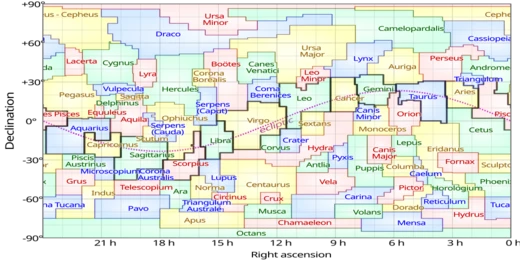
Piscis Austrinus
A faint southern constellation home to the bright star Fomalhaut.

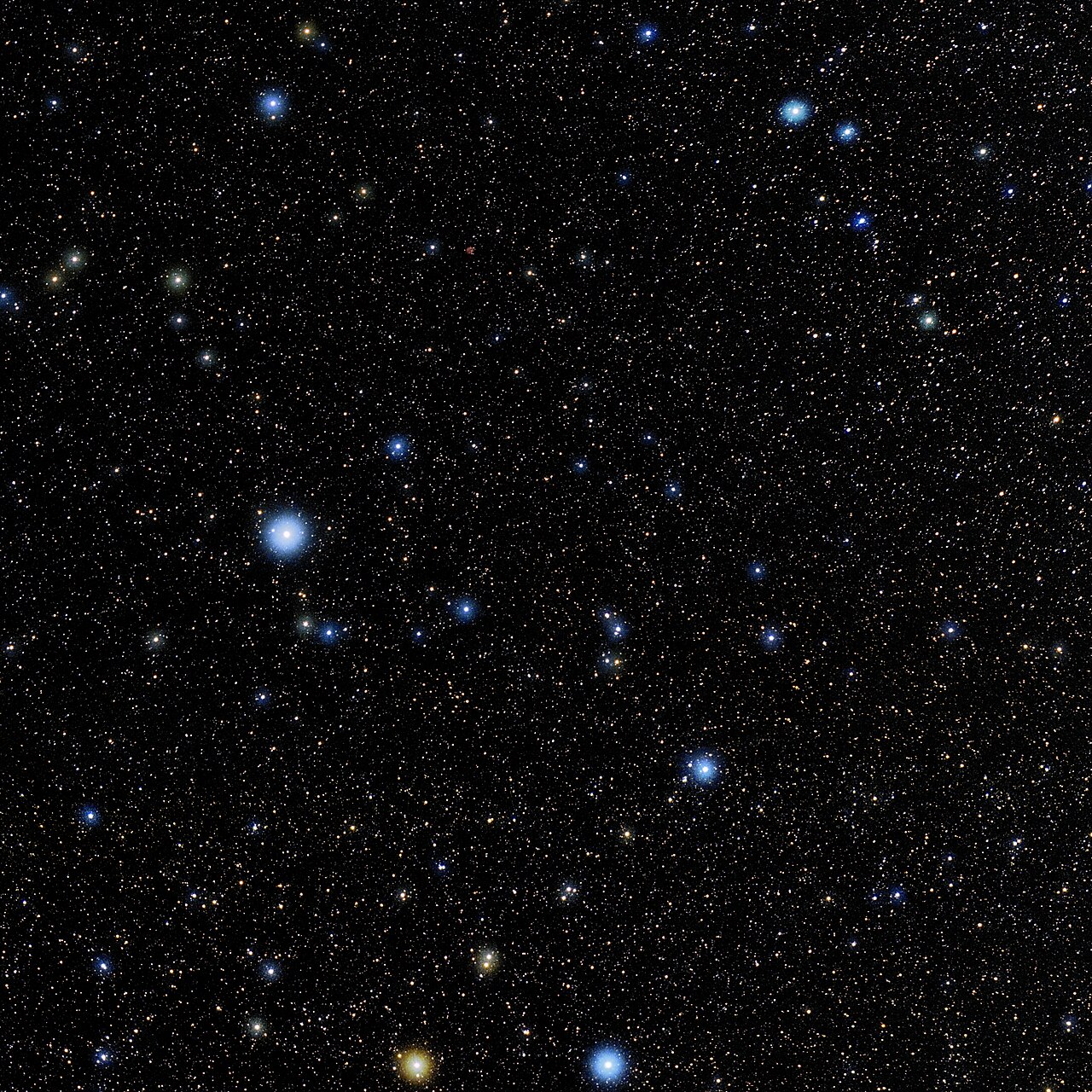
E. Slawik/NOIRLab/NSF/AURA/M. Zamani · CC BY 4.0
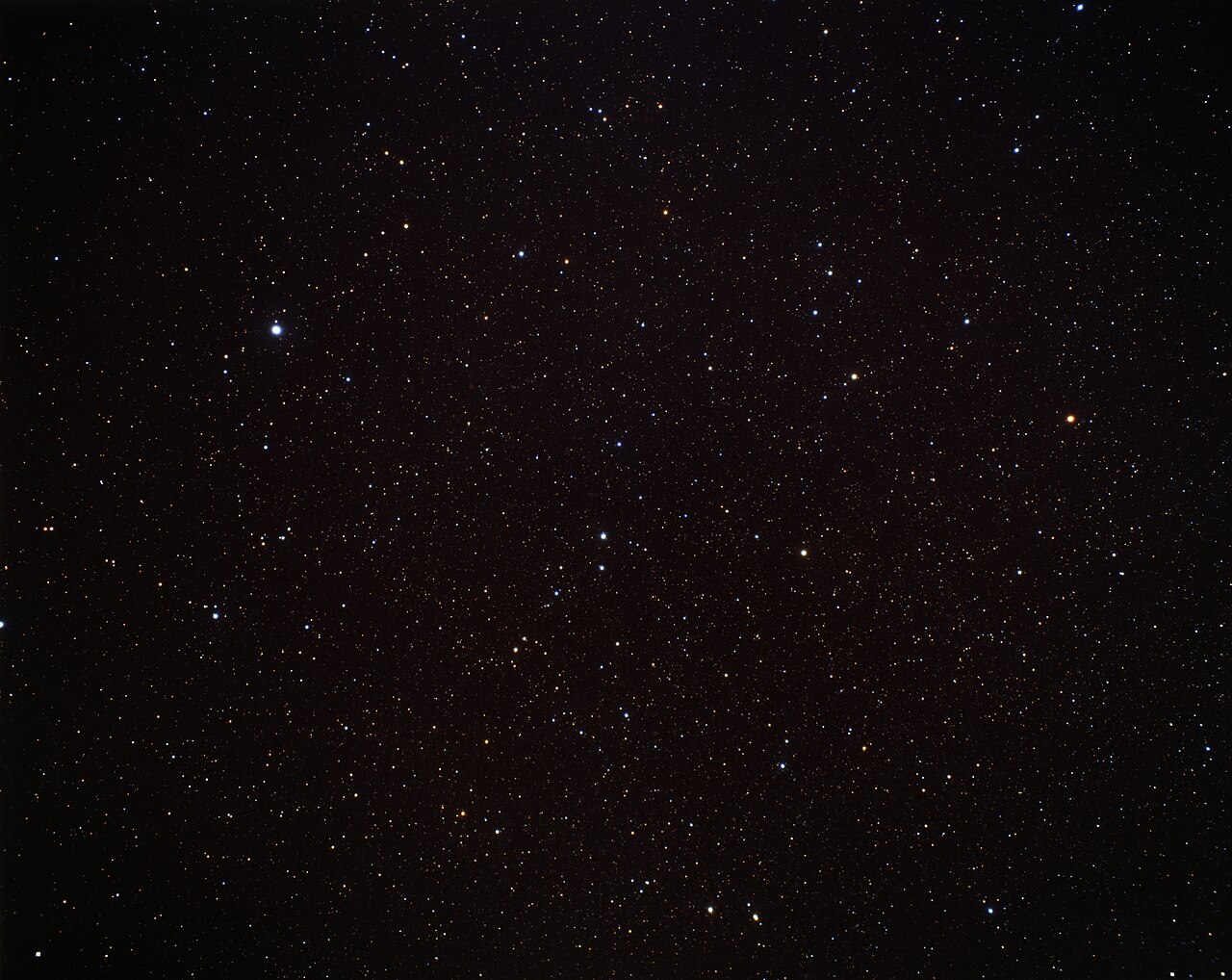
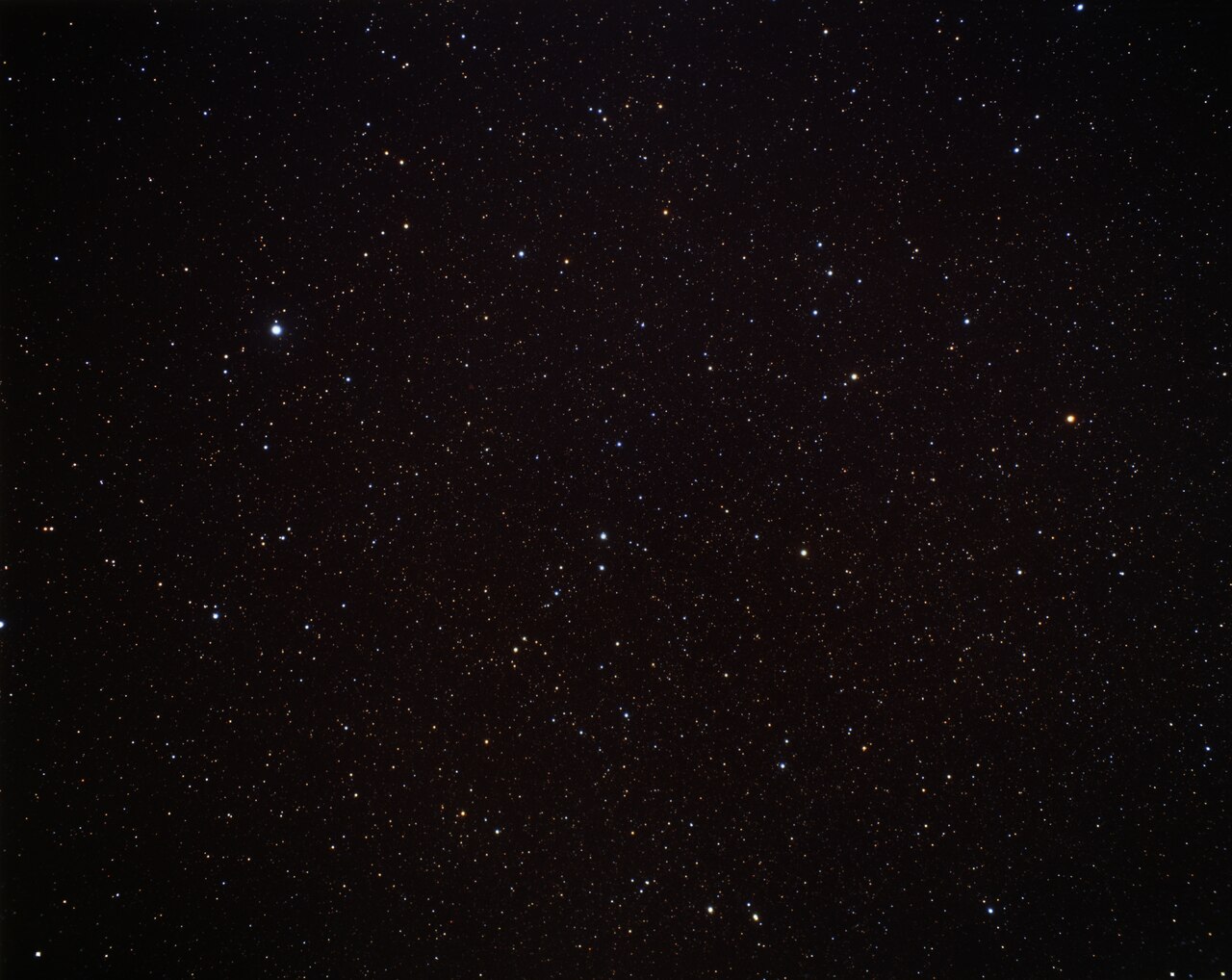
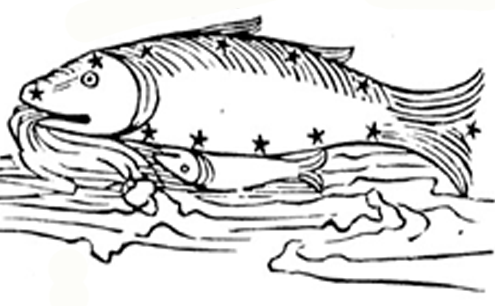
Piscis Austrinus is a faint constellation in the southern sky. Its Latin name means "the southern fish," which sets it apart from the larger constellation Pisces, a pair of fish. Before the 1900s, it was sometimes called Piscis Notius. The 2nd-century astronomer Ptolemy included it among his 48 constellations, and it is still one of the 88 modern ones. Along with the eagle Aquila the crow Corvus and water snake Hydra, Piscis Austrinus was introduced to the Ancient Greeks around 500 BCE; the constellations marked the summer and winter solstices, respectively. Only one star in Piscis Austrinus shines brighter than 4th magnitude: Fomalhaut. This 1st-magnitude star is the 18th-brightest in the entire night sky.
Quick Facts
- Abbreviation
- PsA
- Genitive
- Piscis Austrini
- Pronounce
- ˈ · p · aɪ · s · ᵻ · s · _ · ɒ · s · ˈ · t · r · aɪ · n · ə · s or ɒ · s · ˈ · t · r · eɪ · l · ᵻ · s, genitive ˈ · p · aɪ · s · ᵻ · s · _ · ɒ · ˈ · s · t · r · aɪ · n · aɪ
- Symbolism
- the Southern Fish
- Ra
- 21 · 27 · 13.8661–23 · 06 · 54.6033
- Dec
- -24.8250446–-36.4592972
- Family
- Heavenly Waters
- Quadrant
- SQ4
- Areatotal
- 245
- Arearank
- 60th
- Numbermainstars
- 7
- Numberbfstars
- 21
Facts from the source article.
Lore & Background
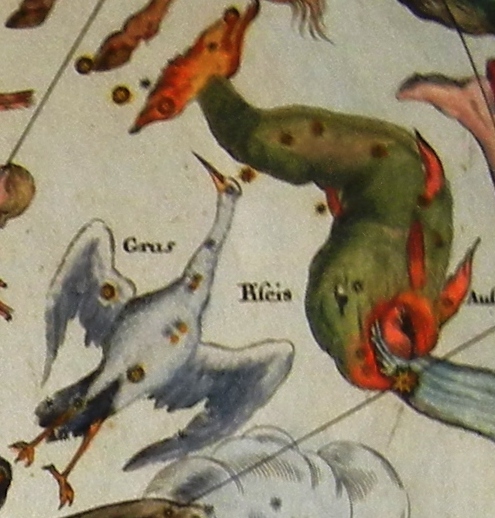
Piscis Austrinus originated with the Babylonian constellation simply known as the Fish (MUL.KU). Professor of astronomy Bradley Schaefer has proposed that ancient observers must have been able to see as far south as Mu Piscis Austrini to define a pattern that looked like a fish. Along with the eagle Aquila, the crow Corvus, and water snake Hydra, Piscis Austrinus was introduced to the Ancient Greeks around 500 BCE; the constellations marked the summer and winter solstices, respectively. In Greek mythology, this constellation is known as the Great Fish and it is portrayed as swallowing the water being poured out by Aquarius, the water-bearer constellation. The two fish of the constellation Pisces are said to be the offspring of the Great Fish. In Egyptian mythology, this fish saved the life of the Egyptian goddess Isis, so she placed this fish and its descendants into the heavens as constellations of stars. In the 5th century BC, Greek historian Ctesias wrote that the fish was said to have lived in a lake near Bambyce in Syria and had saved Derceto, daughter of Aphrodite, and for this deed was placed in the heavens. For this reason, fish were sacred and not eaten by many Syrians. The stars of the modern constellation Grus once formed the 'tail' of Piscis Austrinus. In 1597 (or 1598), Petrus Plancius carved out a separate constellation and named it after the crane.
Reader's Guide
Piscis Austrinus is notable for containing Fomalhaut, the 18th-brightest star in the night sky, which is surrounded by a circumstellar disk and possibly hosts a planet. The constellation also contains Lacaille 9352, one of the brightest red dwarf stars in the night sky (though still too faint to see with the naked eye), and PKS 2155-304, a BL Lacertae object that is one of the optically brightest blazars in the sky. Historically, Ptolemy called the constellation Ichthus Notios 'Southern Fish' in his Almagest; this was Latinised to Piscis Notius and used by German celestial cartographers Johann Bayer and Johann Elert Bode. Bayer also called it Piscis Meridianus and Piscis Austrinus, while French astronomer Nicolas-Louis de Lacaille called it Piscis Australis. English Astronomer Royal John Flamsteed went with Piscis Austrinus, which was followed by most subsequently. The official constellation boundaries, as set by Belgian astronomer Eugène Delporte in 1930, are defined by a polygon of four segments. Within the constellation's borders, there are 47 stars brighter than or equal to apparent magnitude 6.5. Exoplanets have been discovered in five other star systems in the constellation, including HD 205739, HD 216770, HD 207832, WASP-112, and WASP-124.
Did You Know?
- Fomalhaut was once thought to host the first extrasolar planet detected by a visible light image, but infrared observations later retracted this claim, identifying it as a spherical cloud of dust.
- Piscis Austrinus contains Lacaille 9352, a red dwarf star just under half the Sun's diameter and mass, located only 10.74 light-years away.
- In Egyptian mythology, the fish of this constellation saved the life of the goddess Isis, who placed it and its descendants into the heavens.
Mythological Roots and Cultural Echoes
Piscis Austrinus carries a mythological lineage stretching back to ancient Babylon, where it was catalogued simply as the Fish (MUL.KU). Astronomer Bradley Schaefer has proposed that Babylonian observers could identify stars as far south as Mu Piscis Austrini to trace a recognizable fish-shaped pattern. By roughly 500 BCE the constellation had entered Greek astronomy, where it was depicted as the Great Fish drinking the water poured from Aquarius's vessel, with the two fish of Pisces said to be its offspring. Egyptian tradition offered a different narrative: the fish rescued the goddess Isis, and in gratitude she placed it and its descendants among the stars. The fifth-century BC historian Ctesias recorded yet another version, claiming the fish lived in a lake near Bambyce in Syria and saved Derceto, daughter of Aphrodite. This act of salvation rendered fish sacred across much of Syria, where they were not eaten. These layered stories give the faint southern constellation a cultural depth far exceeding its modest stellar presence.
A Name in Flux
The constellation's identity has shifted considerably across centuries and languages. Ptolemy included it among his 48 constellations in the Almagest, calling it Ichthus Notios, which was later Latinised to Piscis Notius. German cartographers Johann Bayer and Johann Elert Bode used that form, though Bayer also employed Piscis Meridianus and Piscis Austrinus. French astronomer Nicolas-Louis de Lacaille preferred Piscis Australis, while English Astronomer Royal John Flamsteed settled on Piscis Austrinus, a name that eventually became standard. In 1597 or 1598, Petrus Plancius carved out the stars that had formed the fish's tail and named them Grus, the crane. The International Astronomical Union formalised the three-letter abbreviation PsA in 1922, and Belgian astronomer Eugène Delporte fixed the modern polygonal boundaries in 1930. Today the constellation sits bordered by Capricornus, Microscopium, Grus, Sculptor, and Aquarius, spanning right ascension from 21h 27.3m to 23h 06.5m and declination from −24.83° to −36.46°.
Fomalhaut and the Stars Within
Despite its faintness, Piscis Austrinus houses several objects of genuine scientific interest. Fomalhaut, the 18th-brightest star in the night sky at magnitude 1.16, is a white main-sequence star roughly 25 light-years away, nearly twice the Sun's mass and over sixteen times its luminosity. It is encircled by a circumstellar disk, and the Hubble Space Telescope once captured what appeared to be the first visible-light image of an extrasolar planet, Fomalhaut b; infrared observations later reclassified it as a spherical dust cloud. Nearby, the BY Draconis variable TW Piscis Austrini may be gravitationally linked to Fomalhaut, lying within a light-year. The second-brightest star, Epsilon, is a blue-white giant 400 light-years distant, 4.1 times the Sun's mass and 661 times its luminosity. Beta, Delta, and Zeta form the Chinese asterism Tien Kang, the heavenly rope. S Piscis Austrini is a Mira-type variable red giant swinging between magnitudes 8.0 and 14.5. Lacaille 9352, one of the brightest red dwarfs visible, and the BL Lacertae blazar PKS 2155-304 also fall within the borders.
Observing a Faint Southern Fish
Piscis Austrinus is a notably dim constellation, containing only a single star brighter than fourth magnitude. Ancient astronomers counted twelve stars as belonging to it, though one was later reassigned to Grus as Gamma Gruis, and others drifted into Microscopium. Bayer labelled the prominent stars with Greek letters alpha through mu, while Lacaille, working from Europe where the constellation was poorly visible, redrew the figure and added nu and pi. Bode contributed tau and upsilon, and Flamsteed assigned designations to twenty-four stars, four of which ended up in Microscopium. Within the modern boundaries there are forty-seven stars at or brighter than apparent magnitude 6.5. The entire constellation is visible to observers located south of 53° north latitude, making it accessible from much of the Northern Hemisphere's temperate zones but most striking from southern latitudes. Its modest stellar cast belies the rich mythological and scientific stories it carries.
Gallery
More in Constellations, Part 3 1-24
Spotted an error? Know more?
Reader corrections go straight into our review queue. Suggest an edit · How this site is sourced