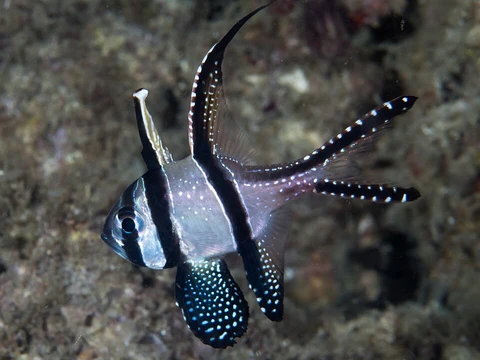
Jaydia
A genus of cardinalfishes native to the western Pacific Ocean.

Jaydia is a genus of cardinalfishes belonging to the family Apogonidae. These fish are found in the western Pacific Ocean. The genus includes 18 recognized species, one of which is known only from fossil otoliths dating to the Burdigalian stage.
Quick Facts
- Taxon
- Jaydia
- Type Species
- Apogon ellioti
- Type Species Authority
- Day 1875
Facts from the source article.
Lore & Background
The genus Jaydia was established to include species formerly placed within Apogonidae. Its members are distributed across the western Pacific Ocean. The 18 recognized species include forms described by various ichthyologists such as H. M. Smith, Radcliffe, M. C. W. Weber, G. Cuvier, Fourmanoir, Temminck & Schlegel, Valenciennes, Gon, G. R. Allen, T. H. Fraser, Gilchrist, Kotthaus, P. W. Fang, and Bleeker. One species, Jaydia? quilonica, is known only from otoliths and dates to the Burdigalian stage. Several species have common names, including the silver-mouth cardinalfish, ocellated cardinalfish, Indian cardinalfish, monster cardinalfish, silver-belly cardinalfish, pearly-finned cardinalfish, spot-fin cardinalfish, Smith's cardinalfish, and flag-fin cardinalfish.
Reader's Guide
Jaydia represents a notable genus within the cardinalfish family Apogonidae, restricted to the western Pacific Ocean. Its significance lies in the diversity of its 18 recognized species, which include both extant forms and a fossil species described from otoliths. The genus includes species described by prominent ichthyologists over more than a century, from early works by Cuvier and Bleeker to recent additions by Gon and colleagues. The inclusion of a fossil species, Jaydia? quilonica, from the Burdigalian, provides a temporal dimension to the genus's history. The common names given to several species—such as silver-mouth, ocellated, Indian, monster, silver-belly, pearly-finned, spot-fin, Smith's, and flag-fin cardinalfish—reflect morphological or geographic traits. The genus's legacy is tied to its role in understanding the biogeography and evolution of cardinalfishes in the western Pacific.
Did You Know?
- Jaydia is a genus of fishes in the family Apogonidae.
- The genus is native to the western Pacific Ocean.
- There are 18 recognized species in the genus Jaydia.
- One species, Jaydia? quilonica, is a fossil species based on otoliths from the Burdigalian.
Taxonomic Identity & Geographic Range
Jaydia represents a genus of small marine fishes classified within the family Apogonidae, the cardinalfishes. Its geographic distribution is restricted to the western Pacific Ocean, a region renowned for extraordinary coral reef biodiversity. As a member of Apogonidae, Jaydia shares the broader characteristics of this family, including typically small, laterally compressed bodies well adapted to reef and rocky substrate habitats. The genus occupies a specific niche within the western Pacific's diverse ichthyofauna, and its members are distinguished from other apogonid genera by particular morphological traits that taxonomists have used to delineate the group. The western Pacific range encompasses a vast array of marine environments, from shallow reef flats to deeper reef slopes, providing the ecological context in which these cardinalfishes have evolved. The genus name itself follows the conventions of zoological nomenclature, anchoring it within the broader Linnaean framework that organizes the millions of described fish species worldwide.
Species Richness & Common Names
The genus Jaydia encompasses eighteen formally recognized living species, a number that reflects both the taxonomic richness of the western Pacific and the ongoing work of ichthyologists to resolve species boundaries within the group. Several members bear evocative common names that hint at their distinctive coloration or morphology: the silver-mouth cardinalfish, the ocellated cardinalfish, the Indian cardinalfish, the monster cardinalfish, the silver-belly cardinalfish, the pearly-finned cardinalfish, the spot-fin cardinalfish, Smith's cardinalfish, and the flag-fin cardinalfish. The remaining species, including J. albomarginatus, J. catalai, J. erythrophthalma, J. hungi, J. novaeguineae, J. quartus, J. striata, J. striatodes, and J. tchefouensis, carry only their scientific binomials, a reminder that not every fish accumulates a popular name. Together, these eighteen species illustrate the remarkable morphological diversity that can exist within a single genus of reef-associated fishes.
A Long History of Discovery
The species within Jaydia were described over a span of nearly two centuries, beginning with G. Cuvier's 1828 descriptions of two species and extending to the 2022 publication of a fossil species by Carolin, Bajpai, Maurya, and Schwarzhans. In between, numerous taxonomists contributed: M. C. W. Weber described two species in 1909 and 1911; H. M. Smith and Radcliffe named two in 1912; Fourmanoir and colleagues added species in 1965 and 1973; Gon, Liao, and Shao described J. erythrophthalma in 2015. Other contributors include Temminck and Schlegel, Valenciennes, Gilchrist, Kotthaus, P. W. Fang, Bleeker, T. H. Fraser, and Gon with G. R. Allen. This long, multi-author history underscores how the western Pacific's fish fauna continued to yield new taxa well into the twenty-first century, with modern molecular and morphological techniques refining earlier descriptions and occasionally splitting or reassigning species.
Fossil Evidence & Deep Time
Among the entries in the genus Jaydia stands a single, tentatively assigned fossil species: Jaydia? quilonica, described by Carolin, Bajpai, Maurya, and Schwarzhans in 2022. The question mark preceding the genus name signals that its placement within Jaydia remains provisional, a cautionary flag common in paleoichthyology when identification relies on limited material. This species was identified from otoliths, tiny calcified ear stones that preserve fine structural details even in rock, and dates to the Burdigalian stage, a subdivision of the early Miocene epoch. The Burdigalian represents a period of significant oceanic and climatic change, making the presence of a cardinalfish otolith from that interval a valuable data point for understanding the evolutionary history of reef-associated fishes in the western Pacific. While the living species of Jaydia are known only from modern waters, this fossil record extends the genus's temporal footprint deep into the Cenozoic, suggesting that the lineage or a close relative has persisted for tens of millions of years.
Frequently Asked Questions
What is Jaydia?
Jaydia is a genus of cardinalfishes placed in the family Apogonidae. It comprises 18 recognized species, all native to the western Pacific Ocean.
How many species are in the genus Jaydia?
Taxonomists currently recognize 18 species within this genus. Notably, one of those species is known only from fossil material rather than from living populations.
Where do Jaydia cardinalfishes live?
Every recognized species in the genus is native to the western Pacific Ocean, making that region their entire known range.
Is there a fossil Jaydia species?
Yes. A tentatively assigned species, Jaydia? quilonica, is identified solely on the basis of fossil otoliths. Those remains date to the Burdigalian stage.
What family does Jaydia belong to?
Jaydia is classified in the family Apogonidae, the cardinalfish family, which groups together a wide array of small reef-associated fish species.
More in Cardinalfish 1-24
Spotted an error? Know more?
Reader corrections go straight into our review queue. Suggest an edit · How this site is sourced