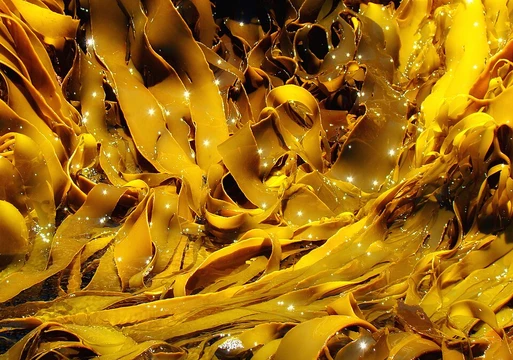
Turbinaria ornata
A tropical brown alga that can rapidly colonize coral reefs.

Turbinaria ornata is a tropical brown alga belonging to the order Fucales, originally found in the coral reef ecosystems of the South Pacific. In the United States, it is commonly called crowded sea bells, while worldwide it is known as crowned sea bells. This alga can rapidly spread across reefs because it releases older, more buoyant fronds that drift on surface currents, sometimes forming large floating mats of many individual thalli. Researchers are studying whether a rise in the density of this seaweed, paired with a drop in living coral cover, signals a shift in reef health.
**Description** The alga ranges in color from yellow to dark brown and grows 2 to 20 centimeters tall. Its appearance is often compared to a club made of spiky flowers. *Turbinaria ornata* can change its shape and structural strength in response to water movement.
**Distribution and habitat** It is widespread across the central and western Pacific and Indian Oceans, thriving in tropical locations such as the Hawaiian Islands and Tahiti. The species is very common in rocky intertidal zones and often forms massive colonies, making it the most abundant alga in those areas. Although considered invasive in some regions, it is not viewed as a problem species in Hawaii. Its global population explosion on reefs is attributed to its ability to adjust its form to water forces and to produce air bladders that let it float to distant places.
**Human use and cultural significance** *Turbinaria ornata* offers a range of health benefits and is being studied for pharmaceutical uses due to its antioxidant, anti-inflammatory, antidiabetic, antiproliferative, and neuroprotective effects in humans. It contains compounds that may help reduce postprandial hyperglycemia, offering an alternative approach to treating diabetes. The alga can also be cultivated as a natural wastewater treatment, reducing the release of untreated hazardous chemicals into land and water. Additionally, its compounds are useful for restoring areas previously contaminated by toxic pollutants.
In Hawaiian, *Turbinaria ornata* is called Limu Kahili. “Limu” means seaweed, and “Kāhili” refers to a feathered ornament that symbolized royalty among Hawaiian families and chiefs.
Quick Facts
- Genus
- Turbinaria (alga)
- Species
- ornata
Facts from the source article.
Lore & Background
Turbinaria ornata is described as a club made up of spikey flowers, ranging in color from yellow to dark brown and spanning 2-20 cm tall. It can alter its morphology and strength in response to hydrodynamic forces, and produces air bladders that allow it to float to distant locations. This alga is widely distributed in the central and western Pacific and Indian oceans, flourishing in tropical areas such as the Hawaiian islands and Tahiti, and is very common in rocky intertidal areas, often being the most abundant algal species where found. Although considered invasive in some places, it is not considered a problem species in the Hawaiian islands. Its population has exploded on reefs globally due to its morphological adaptability and floating dispersal.
Reader's Guide
Turbinaria ornata holds significance both ecologically and pharmaceutically. Ecologically, its rapid colonization of coral reef ecosystems, facilitated by buoyant fronds that form large rafts, has drawn scientific attention as a potential indicator of reef health changes, particularly when its density increases while living coral density decreases. The species is also being researched for a wide variety of health benefits, including antioxidant, anti-inflammatory, antidiabetic, antiproliferative, and neuroprotective effects. Specifically, it contains compounds that may reduce postprandial hyperglycemia, offering an alternative therapeutic approach for treating diabetes. Additionally, T. ornata can be grown and used as a natural alternative for wastewater treatment, reducing untreated dangerous chemicals, and its compounds can help restore land and water bodies previously contaminated by toxic chemicals. In Hawaiian culture, it is called Limu Kahili, with 'limu' meaning seaweed and 'Kāhili' referring to a feathered ornament symbolizing royalty among Hawaiian families and chiefs.
Did You Know?
- Turbinaria ornata is called crowded sea bells in the US and crowned sea bells worldwide.
- It can disperse by detaching older, more buoyant fronds that travel on surface currents, sometimes in large rafts.
- In Hawaiian, it is called Limu Kahili, where 'Kāhili' refers to a feathered ornament symbolizing royalty.
More in Brown Macroalgae and Kelp 1-24
Spotted an error? Know more?
Reader corrections go straight into our review queue. Suggest an edit · How this site is sourced