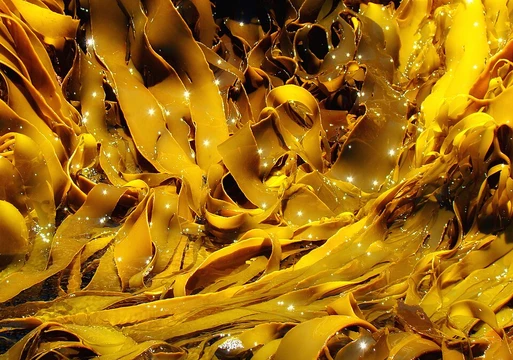
Lessonia (alga)
A southern-hemisphere kelp genus with economic and ecological importance.

Lessonia is a genus of large kelp found only in the southern Pacific Ocean, making it the sole kelp genus limited to the southern hemisphere. Its range mainly covers the coastlines of South America, New Zealand, Tasmania, and the Antarctic islands. Along with *Macrocystis*, it is one of the two main genera that form kelp forests.
In Chile, protecting *Lessonia* kelp helps maintain biodiversity on rocky shores. Marine biologists study the harvesting of wild *Lessonia* populations to understand how this activity affects local wildlife. Some species, like *Lessonia nigrescens*, are economically valuable and are harvested for alginate. These kelps use various chemical defenses and are somewhat resistant to being eaten by herbivores. Their zoospores can still produce sporophytes even after being ingested by fish.
The genus’s conservation status has not been thoroughly studied. Only two species, *L. oreas* and *L. rufa*, have been assessed by the IUCN, and both are listed as "least concern."
**Taxonomy**
The genus was first described by Jean Baptiste Bory de Saint-Vincent in 1825. It was named in honor of René Primevère Lesson, a French surgeon, naturalist, ornithologist, and herpetologist. The holotype for the genus is *L. flavicans*. Recent research has found evidence of cryptic speciation within *Lessonia*, including in *L. nigrescens* in Chile and *L. variegata* in New Zealand. *Lessonia* is the type genus for the family Lessoniaceae.
Over time, species of *Lessonia* have been confused and combined, even by Bory himself, who described *L. flavicans* under that name and also as *L. fuscescens*. The former species *L. laminarioides* was moved to a new but related genus, *Pseudolessonia*, in 2006. Another proposed species, *L. vadosa*, was merged into *L. flavicans*. Other species once placed in this genus have been reassigned to *Ascoseira*, *Himantothallus*, *Myriodesma*, and *Laminaria*. Three species—*L. media*, *L. meridionalis*, and *L. septentrionalis*—were accepted in 2024.
**Chimerism**
Several *Lessonia* species are known to undergo chimerism, where two distinct organisms fuse to create a new one. Chimeric organisms contain multiple genomes in a single body. Benefits include increased body size and genetic diversity, which improve survival rates. The main drawback is the potential for competition between the different genomes. *L.
Quick Facts
- Taxon
- Lessonia (alga)
Facts from the source article.
Lore & Background
The genus was first described by Jean Baptiste Bory de Saint-Vincent in 1825, named in honor of French surgeon and naturalist René Primevère Lesson. The holotype is L. flavicans. Recent studies have provided evidence of cryptic speciation within Lessonia, including L. nigrescens in Chile and L. variegata in New Zealand. Species have been conflated and combined over time, including by Bory himself, who described L. flavicans once by that name and once as L. fusceseens. The former species L. laminarioides was moved to a new genus, Psuedolessonia, in 2006. Other proposed species have been incorporated into Ascoseira, Himantothallus, Myriodesma, and Laminaria. Three species—L. media, L. meridionalis, and L. septentrionalis—were accepted in 2024.
Several species of Lessonia are known to experience chimerism, where two distinct organisms fuse to generate a new organism, resulting in multiple genomes in one body. Benefits include increased body size and genetic diversity, while the main cost is potential competition between genomes. L. berteroana and L. spicata are both known to undergo chimerism, with only the holdfast experiencing genetic mixing; the stipes each remain genetically homogenous.
Species of Lessonia are very difficult to identify based on morphological characteristics due to high plasticity. Blades may be flat and elongated, broad, or narrow, with smooth, rugose, or wavy surfaces and smooth or jagged edges. A major factor in morphology is wave exposure, as Lessonia is found across a variety of habitats.
Reader's Guide
Lessonia holds significance as the only kelp genus restricted to the southern hemisphere and as one of two principal genera in kelp forests. In Chile, its preservation is important for maintaining biodiversity on rocky shores. The genus is of economic importance: Chile is the world's largest producer of wild-harvested algae, with Lessonia making up 29% of global exports. Over 300,000 dry tons of seaweed are produced per year in Chile, employing more than 11,000 people, almost all of it Lessonia. Commercial landings began in the 1960s but were only included in national statistics since the 1980s. Since 2000, harvesting has increased due to market demand and a decrease in the value of copper. A fishing ban was enacted between 18 and 26 degrees in 2005 due to overharvesting concerns, though some studies indicate no substantial differences between harvested and unharvested populations. The Chilean seaweed industry must purchase biomass from artisanal fishers, and regulations involve fishers, industry, authorities, and scientists. Despite New Zealand hosting six species, the most of any country, harvesting there is almost nonexistent. Argentina has very little cultivation or harvesting, partly due to low public knowledge. Tasmania cultivates a wide variety of algae, including L. corrugata, using long-line and land-based aquaculture. Peru harvests L. trabeculata for export to China.
Did You Know?
- Chile produces over 300,000 dry tons of seaweed per year, almost all of it Lessonia.
- Several Lessonia species experience chimerism, where two organisms fuse and share multiple genomes.
- Only two Lessonia species have been assessed by the IUCN, both marked 'least concern'.
More in Brown Macroalgae and Kelp 1-24
Spotted an error? Know more?
Reader corrections go straight into our review queue. Suggest an edit · How this site is sourced