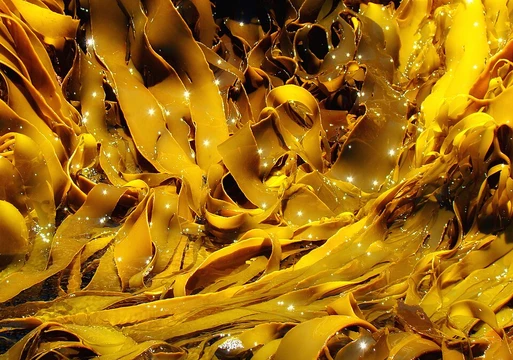
Leathesia marina
A brown alga that breaks into filaments when squeezed.

Leathesia marina (Lyngbye) Decaisne, 1842, previously known as Leathesia difformis Areschoug, 1847, is a species of littoral brown algae in the class Phaeophyceae and the order Ectocarpales. Commonly called sea cauliflower, sea potato, and brown brains, it is notable for its distinctive brain-like appearance and its ability to break apart into filaments when squeezed.
Quick Facts
- Taxon
- Leathesia marina
Facts from the source article.
Lore & Background
Leathesia marina is a brown seaweed that grows attached to other seaweeds and sometimes rocks. When young, the organism is solid, but as it matures it becomes hollow and somewhat convoluted, resembling a small leathery brown bag about the same size as a tennis ball. Its texture is rubbery and the outer surface smooth. These brain-like forms can be found in the mid to low intertidal zone, growing on rock or as epiphytes. Individuals can reach up to about 15 centimetres (5.9 in) in diameter.
Reader's Guide
The significance of Leathesia marina lies in its distinctive morphology and a simple field identification method. Young individuals can resemble other globular algae such as Soranthera ulvoidea, but a squeeze test distinguishes them: Leathesia breaks apart into filaments, while other globular forms flatten but remain intact. This characteristic is a key diagnostic feature. The species has a history of taxonomic revision, having been previously known as Leathesia difformis. A 2011 phylogenetic study placed it within the Chordariaceae, clarifying its relationships. Its common names—sea cauliflower, sea potato, and brown brains—reflect its unusual appearance. The species is also documented in demographic studies, such as one conducted in Nova Scotia by Chapman and Goudey in 1983.
Did You Know?
- Leathesia marina was previously known as Leathesia difformis Areschoug, 1847.
- When squeezed, Leathesia marina breaks apart into filaments, unlike similar globular algae.
- A 2011 phylogenetic study found relationships between L. difformis and the rest of Chordariaceae.
More in Brown Macroalgae and Kelp 1-24
Spotted an error? Know more?
Reader corrections go straight into our review queue. Suggest an edit · How this site is sourced