Kjellmaniella
A monotypic kelp genus noted for its fucoidan profile.

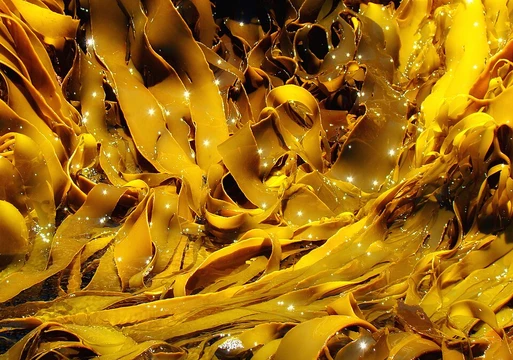
Kjellmaniella is a monotypic genus of kelp, a type of large brown algae. Its sole species, Kjellmaniella crassifolia, goes by the Japanese name kagome (カゴメ/籠目). This seaweed has drawn notice lately due to its fucoidan content and the diverse range of fucoidan compounds it offers, a profile that sets it apart from other seaweeds. As a result, it is now incorporated into dietary supplements, cosmetics, and a variety of processed foods.
Quick Facts
- Genus
- Kjellmaniella
- Species
- crassifolia
Facts from the source article.
Lore & Background
The compounded name kagome kombu was proposed as the standard Japanese common name in 2007, prompted by reclassification under the Saccharina genus by Lane et al. in 2006, though this was later reversed back to Kjellmaniella by Starko et al. in 2019, cowritten by Yotsukura. The algae is also known informally as gamo in the seafood market. It is characterized by textures appearing on the frond, described as dekoboko (凸凹; paraphrasable as 'bumps and dimples') or 'gyrations'.
Reader's Guide
Kjellmaniella crassifolia, known as kagome, is significant for its fucoidan content and multilateral profile of fucoidan chemicals, which has led to its use in dietary supplements, cosmetics, and various processed foods. In culinary contexts, it is edible and used in products such as tororo kombu or oboro kombu (shavings), Matsumae-zuke, and shio kombu (simmered in soy sauce). A rice dish called kagome meshi was developed in a collaborative effort for Hakodate city as a new signature food item, consisting of rice mixed with chopped gagome seaweed and topped with various seafood. In Korea, the seaweed (called gagome or gaedajima) is harvested as foodstuff. During the COVID-19 scare in Hakodate, gagome-kombu candy drops were freely distributed, with a costumed mascot named Kagomeman, designed by Prof. Hajime Yasui of Hokkaido U., participating in the handing-out. The genus occupies subtidal or sublittoral habitats similar to kombu but in deeper waters, anchored to rocky substrates by its holdfast connected to the stipe, which bears undivided blades.
Did You Know?
- Kjellmaniella is a monotypic genus comprising only the species Kjellmaniella crassifolia.
- The species is known as kagome in Japanese and is characterized by dekoboko ('bumps and dimples') textures on its frond.
- It was reclassified under Saccharina in 2006 but later reversed back to Kjellmaniella in 2019.
- In Hakodate, during the COVID-19 scare, gagome-kombu candy drops were distributed by a mascot named Kagomeman.
More in Brown Macroalgae and Kelp 1-24
Spotted an error? Know more?
Reader corrections go straight into our review queue. Suggest an edit · How this site is sourced