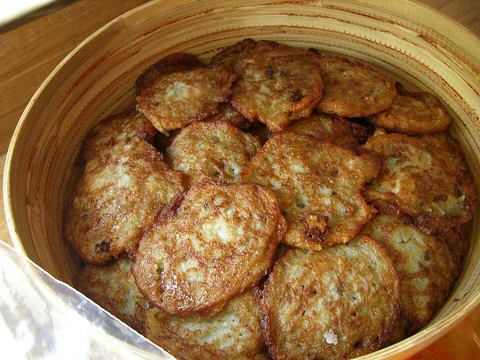
Twelve-dish Christmas Eve supper
A twelve-dish meal commemorating the twelve disciples during the Nativity Fast.

No machine-readable author provided. Oleh Petriv assumed (based on copyright cla · Public domain
The twelve-dish Christmas Eve supper is a traditional meal prepared in Central-Eastern European cultures that historically made up the Polish–Lithuanian Commonwealth, chiefly in Poland, as well as Lithuania, Belarus, and Ukraine. The twelve dishes commemorate the twelve disciples of Jesus, and the meal is observed during the Nativity Fast, which prohibits meat, eggs, and milk.
- Region
- Poland, Lithuania, Belarus, Ukraine
- Associated religions
- Catholic and Orthodox Christian
- Number of dishes
- 12
- Symbolism
- Commemorates the twelve disciples of Jesus
- Dietary restrictions
- No meat, eggs, or milk (Nativity Fast)
- Common ingredients
- Fish, mushrooms, grains, poppy seeds, honey
Lore & Background
The supper begins after the first star appears in the sky, symbolizing the birth of Jesus in Christian tradition and a soul of deceased ancestors in pre-Christian beliefs. Before the meal, families typically engage in a prayer, often the Our Father, and the head of the household may offer a blessing. After the prayer, the meal commences, with the first course often being a symbolic dish like kutia or a similar grain-based preparation.
Reader's Guide
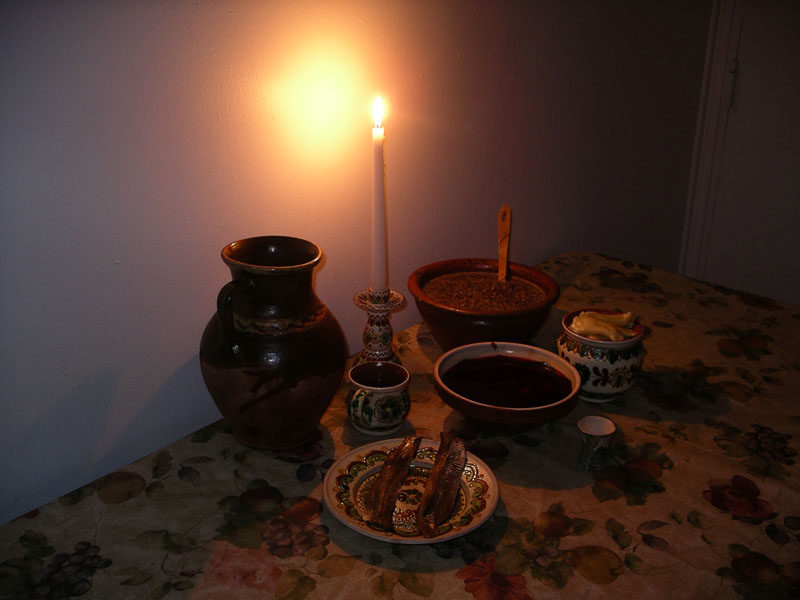
The twelve-dish Christmas Eve supper holds deep cultural and religious significance in the regions of the former Polish–Lithuanian Commonwealth. The meal is held under candlelight in a quiet, dim, and mystical atmosphere. An extra plate and seat are left at the table for the spirits of departed family members, who are believed to visit that night. The dishes vary by country but often include soups like mushroom soup or barszcz, fish such as herring, carp, or pike, and dumplings like pierogi or varenyky. Poppy seeds symbolize abundance and prosperity, and honey is offered to departed souls. The tradition reflects a blend of Christian and pre-Christian beliefs, emphasizing family, remembrance, and spiritual preparation for Christmas.
Did You Know?
- In Poland, poppy seeds were believed to aid souls on the way to the afterlife or serve as a delicacy for visiting spirits.
- In Ukraine, varenyky with poppy-seed filling were thought to bring prosperity and fecundity to villagers.
- In Lithuania, sweet dishes are not common at the supper, as they are considered inappropriate for the solemn atmosphere.
- The first star appearing in the sky signals the start of the meal, symbolizing both the birth of Jesus and the souls of ancestors.
Origins & Religious Framework
The twelve-dish Christmas Eve supper is a tradition rooted in Central-Eastern European cultures that were historically part of the Polish–Lithuanian Commonwealth. The custom is most strongly associated with Poland but extends into Lithuania, Belarus, and Ukraine. The number twelve is a direct reference to the twelve disciples of Jesus, giving the meal its sacred structure. The Nativity Fast imposes strict dietary rules: no meat, eggs, or dairy products including cheese are permitted. This constraint shapes the entire menu, elevating fish, mushrooms, and grains to the central role. In the Orthodox traditions of Belarus and Ukraine, the twelve dishes are arranged on a spectrum from bitter to sweet, creating a deliberate culinary arc. The meal is not merely sustenance but a liturgical act, binding the family to the memory of Christ's birth through the very act of eating together in the evening.
The Table's Contents
While the exact lineup shifts from one country to another, a core set of ingredients anchors the supper across the region. Fish—typically herring, carp, or pike—takes the lead protein role. In Lithuania, herring appears in multiple preparations, including silkė su morkomis with carrots and silkė su grybais with mushrooms. Mushrooms, whether dried or pickled, feature prominently in soups, sauerkraut dishes, and dumplings. The dumplings themselves—pierogi in Poland, varenyky in Ukraine, auselės in Lithuania—come filled with sauerkraut, mushrooms, or crushed poppy seeds and are among the most beloved items. Soups open the Polish meal, traditionally mushroom soup or barszcz, while in Ukraine and among Orthodox Christians the ritual begins with kutia. Desserts vary: Poland and western Belarus and Ukraine serve jam-filled doughnuts (pączki or pampushky), whereas Lithuania largely omits sweet dishes, considering them unsuited to the evening's solemnity. Beverages include dried-fruit kompot or cranberry kisiel, with oaten kisiel being the older preparation.
Pre-Meal Rituals & Atmosphere
The supper does not simply begin; it is preceded by a sequence of gestures that mark the transition from the ordinary day to the sacred evening. The family waits for the first star to appear in the sky, a moment that in Christian tradition recalls the star of Bethlehem and in older pre-Christian belief signals the return of a deceased ancestor's soul. Once that star is sighted, every member of the household washes face, hands, and legs in cold water, reciting the words 'Be as healthy as this water is.' The boldest among them venture to a nearby river or lake for a brief swim. Following this water rite, the group gathers for prayer, often the Our Father. The head of the household then anoints each person's forehead with honey, drawing the sign of the Cross and blessing them with sweetness and good fortune for the coming year. The meal itself is served under candlelight, in a deliberately quiet, dim, and almost mystical setting that distinguishes the evening from any other gathering.
Symbolism & the Seat for the Departed
Every element on the table carries layered meaning that stretches beyond the plate. Poppy seeds, used generously across the region, symbolize abundance and prosperity; in Poland they were also thought to ease the passage to the afterlife or to serve as a delicacy for souls visiting the earth. Honey, the product of bees long regarded as sacred creatures, was offered as a gift to the departed. In Ukraine, varenyky filled with poppy seeds at the Sviata Vecheria were believed to carry magical power to bring prosperity and fecundity to the household. The star that signals the start of the meal bridges two worlds of belief: the Christian Nativity and the older animistic idea of ancestral spirits returning. Most poignantly, in Poland, Lithuania, Belarus, and western Ukraine, an extra plate and an empty seat are always set at the table. This is not an oversight but an intentional invitation, held open for the spirits of family members who have passed, who are believed to join the gathering on this one night of the year.
Gallery
Frequently Asked Questions
What is the twelve-dish Christmas Eve supper?
It is a traditional festive meal served on Christmas Eve in Belarus and neighboring countries, consisting of exactly twelve separate vegetarian dishes prepared during the Nativity Fast period.
Why must there be exactly twelve dishes?
The number is a deliberate reference to the twelve apostles of Jesus, giving the entire meal its core religious symbolism.
What ingredients are allowed and what is forbidden?
Because the Nativity Fast prohibits meat, eggs, and dairy, the dishes are built around fish, mushrooms, grains, poppy seeds, and honey instead.
Which countries and faiths observe this tradition?
It is a shared culinary heritage of the former Polish–Lithuanian Commonwealth, practiced in Belarus, Poland, Lithuania, and Ukraine by both Catholic and Orthodox Christian communities.
When is the supper actually eaten?
It is prepared and shared on Christmas Eve, marking the culmination of the Nativity Fast just before the celebration of Christ's birth.
More in Belarusian cuisine 1-18
Spotted an error? Know more?
Reader corrections go straight into our review queue. Suggest an edit · How this site is sourced