
Sour cereal soup
A Slavic fermented cereal soup with regional variations.

Maksym Kozlenko · CC BY-SA 4.0
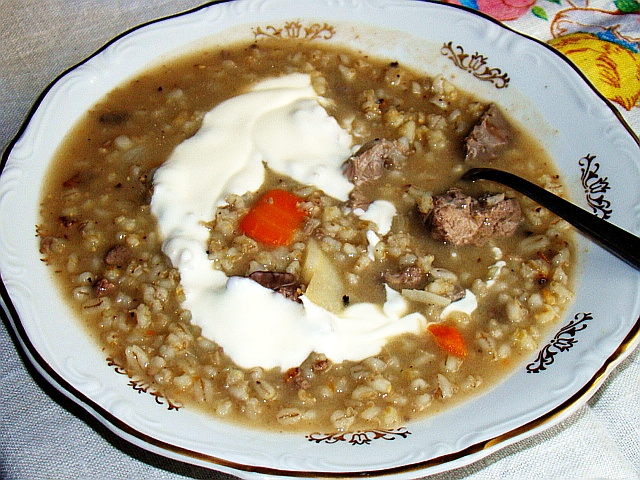
Sour cereal soup is a traditional Slavic soup made by fermenting various cereals such as rye, wheat, and oats to create a sourdough-like base, which is then stirred into a stock that may contain meat, hard-boiled eggs, potatoes, and dried mushrooms. The most notable variety, żur (also called żurek, zalewajka, keselica, or barszcz biały), is considered part of the national cuisine of Poland, but similar soups are found in Lithuanian, Ukrainian, Belarusian, and Czech cuisines, reflecting the historical reach of the Polish–Lithuanian Commonwealth.
Quick Facts
- Country
- Poland
- Course
- Soup, entree
- Served
- Hot
- Main Ingredient
- Soured rye flour or oats; potatoes, hard-boiled eggs; in some variations: meat (sausage, bacon, pork ribs, etc.)
- Variations
- Kisełycia
Facts from the source article.
Lore & Background
Sour cereal soup has ancient origins, likely in prehistoric and medieval fermented cereal porridges. In Poland, żurek is traditionally eaten at Easter but is also popular year-round, with regional variations such as Silesian żur śląski served over mashed potatoes, or Podlasie versions with halved hard-boiled eggs. In the Giant Mountains of the Czech Republic, the soup known as kyselo was a daily food for poor people for centuries, made from locally accessible, cheap, storable ingredients like dried mushrooms and rye sourdough, providing substantial energy for hard mountain life.
Reader's Guide
Sour cereal soup represents a deep culinary tradition across Central and Eastern Europe, linking modern national cuisines to the shared heritage of the Polish–Lithuanian Commonwealth. Its defining feature is the use of fermented cereal—rye, wheat, or oats—to create a tangy, thick base, distinguishing it from other sour soups that rely on vinegar or cream. In Poland, żurek is a celebrated Easter dish, while in the Czech Giant Mountains, kyselo is tied to local folklore, including legends of the mountain lord Krakonoš. The soup's adaptability is evident in its many ingredients—meat, potatoes, eggs, mushrooms—and its ability to be served in edible bread bowls. Despite modern instant versions, traditional preparation remains a family craft passed down orally. The soup's nutritional density (proteins, B vitamins, fiber) reflects its origins as a sustaining meal for laborers. Its close relatives include Russian okroshka, Romanian borș, and even Japanese miso soup, all based on fermentation.
Did You Know?
- In Poland, żurek is sometimes served in an edible bowl made of bread.
- In the Giant Mountains, local legend says the mountain lord Krakonoš invented kyselo and gave sourdough to people.
- The Czech soup kyselo is made with rye sourdough and mushrooms, and historically was prepared without eggs or potatoes.
- The word 'kyselo' is derived from the Slavic root meaning 'to make sour' or 'sour'.
Polish Żur and Regional Identity
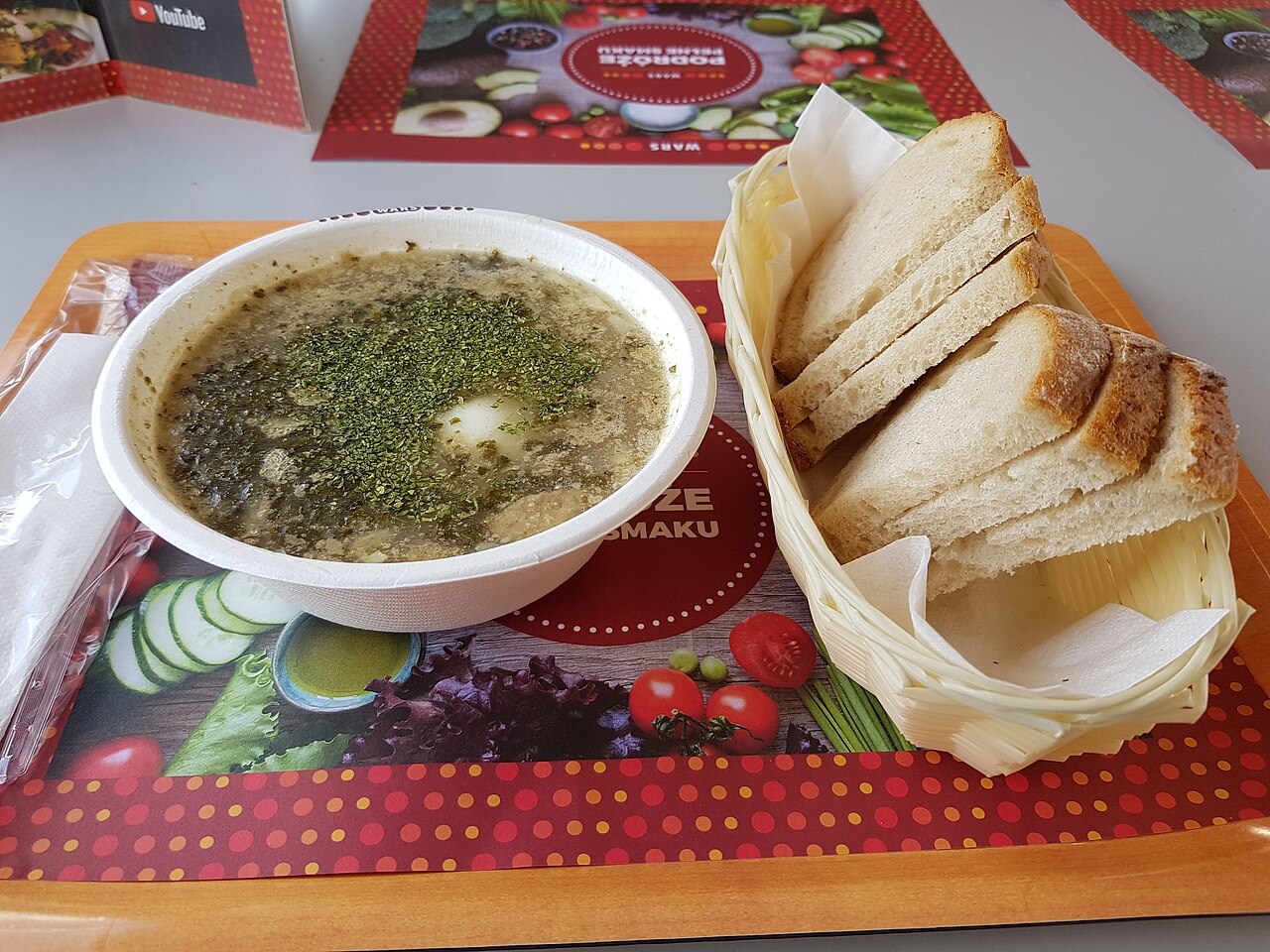
Żur stands as one of Poland's most recognizable traditional dishes, occupying a place of honor in the national culinary canon. At its heart lies soured rye flour—essentially a sourdough starter—sometimes supplemented with fermented oatmeal, bread, or wheat, which gives the broth its distinctive tangy, thick, and slightly sour character. The soup is always served hot and typically features boiled pork sausage, smoked sausage pieces, bacon, or pork ribs as its protein backbone. Regional variations reveal the dish's deep roots in local identity. In Silesia, żur śląski is ladled over mashed potatoes rather than served in a bowl. In Podlasie and other parts of the country, diners pair their portion with halved hard-boiled eggs. The Subcarpathian region offers żur owsiany, a variant built on fermented oatmeal. During Easter, żurek becomes a near-mandatory element of the holiday table, though it appears on menus throughout the year. A long list of supporting ingredients—cured bones, pork belly, onions, carrots, celery root, marjoram, bay leaves, allspice, lovage, caraway, garlic, dried mushrooms, cream, and horseradish—allows each cook to shape the flavor to personal and regional taste.
Kyselo and the Giant Mountains
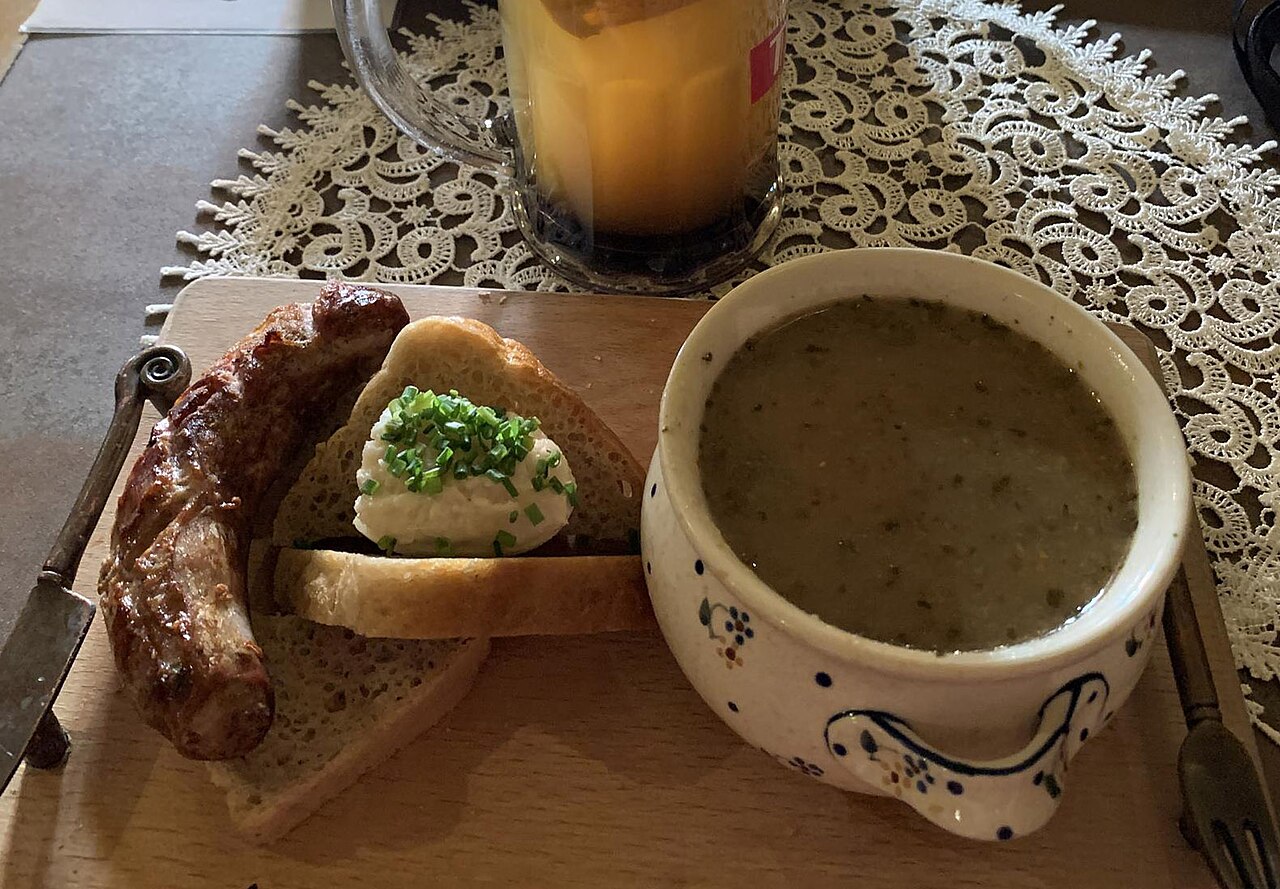
In the highland region of the Giant Mountains along the Czech-Polish border, kyselo (also called krkonošské kyselo or, in German, Kübelsauer) emerged as a sustaining food for communities living hard, labor-intensive mountain lives. Built on a strong broth of dried mushrooms—typically cep and similar Central European species—and caraway, the soup is thickened with rye sourdough, a technique that points to prehistoric and medieval fermented cereal porridges. Because the dish was born from necessity, it relies on cheap, storable, locally available ingredients, and it delivers substantial protein, B vitamins, and dietary fiber. Historically, kyselo contained no eggs, since families reserved their limited egg production for market sale and holiday consumption. Potatoes were likewise absent until they spread among Czech poor in the late eighteenth century. Families brewed their sourdough base in vessels called kyselák or kvasák, and each household prepared the soup slightly differently, passing the recipe down through oral tradition rather than written instruction. Today, instant powder bases exist for large catering kitchens, yet the homemade version remains a main course, often served in an edible bread bowl with roasted potatoes on the side.
A Shared Slavic Heritage
Sour cereal soup is far more than a single national dish; it is a culinary thread stitching together the cuisines of Poland, Lithuania, Ukraine, Belarus, and the Czech Republic. The shared heritage traces back to the Polish-Lithuanian Commonwealth, whose territory encompassed much of the land where these variants are still prepared today. In Lithuania the soup appears as žur, in Ukraine as kiselycia or kisialica, and in Belarus as žur or kisjalica. The Belarusian žur can also refer to a thicker fermented-oatmeal porridge, a type of kissel with roots stretching back to the era of Kievan Rus'. In the Czech Republic, the mountainous Bohemian region preserves kyselo, a close relative of the Polish sour rye soup, while in eastern Czech lands and Slovakia a soup called kyselica—though it is actually a sauerkraut variation—bears a similar name. Even beyond the Slavic world, analogous fermented-cereal soups appear in Russian okroshka made with kvass, Romanian borș built on fermented wheat or barley bran, and Finnish hapanvelli. The common principle across all these traditions is the use of fermentation to transform humble grains into a deeply flavored, nourishing base.
Folklore, Oral Tradition, and the Living Recipe
Because kyselo and its Slavic cousins predate written cookbooks, their recipes survive through oral transmission and communal memory. In the Giant Mountains, no two families prepare the soup identically; some omit eggs, others use hard-boiled rather than scrambled, some roast their potatoes while others simply boil them, and cream is an optional addition. This variability is not a flaw but a feature of a dish whose origins lie in ancient, prehistoric fermented porridges. The soup has also woven itself into local mythology. The legendary mountain lord Krakonoš (known in German as Rübezahl) is credited in folk tales with gifting sourdough to the people and inventing kyselo itself. A peak in the range called Kotel—meaning cauldron in both Czech and Polish—carries its own legend: when fog curls up from the valley below, locals say Krakonoš is stirring his pot. In Poland, żurek anchors the Easter table, and in Silesia it is poured over mashed potatoes in a way that echoes older serving customs. These stories and rituals ensure that a humble fermented grain soup remains a vessel for cultural identity across generations.
Gallery
Frequently Asked Questions
What is sour cereal soup in Belarusian cuisine?
It is a tangy, fermented-grain broth that sits at the heart of Slavic home cooking. In Belarus the dish is most often called žur or kiselycia, and it is built around a sour, dough-like cereal starter rather than a plain stock.
What are the main ingredients in Belarusian žur?
The fermented base is made from rye, wheat, or oats, and it is stirred into a broth that typically carries meat (sausage, bacon, or pork ribs), hard-boiled eggs, potatoes, and dried mushrooms.
How is the sour flavor created?
Cereal grains are left to ferment until they develop a thick, tangy, bread-like consistency. That fermented mass is then folded into the cooking liquid, so the soup's sourness comes from natural grain fermentation rather than added vinegar or acid.
How does Belarusian kiselycia relate to Polish żurek or Czech kyselo?
All three are regional expressions of the same fermented-cereal soup tradition that spread across the old Polish–Lithuanian Commonwealth. They share the core technique but differ in local meat choices, garnishes, and the exact grain used.
When and why do people traditionally serve sour cereal soup?
In Poland it is a well-known Easter table dish, and in the Giant Mountains area it functions as a year-round staple. In Belarus and neighboring Slavic communities it is most often prepared in spring as a warming, nourishing meal tied to seasonal and harvest customs.
More in Belarusian cuisine 1-18
Spotted an error? Know more?
Reader corrections go straight into our review queue. Suggest an edit · How this site is sourced