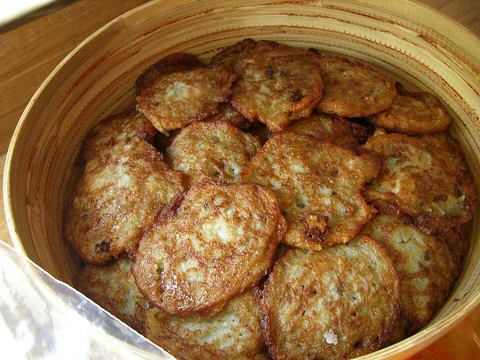
Pirog
A baked dough case with sweet or savory filling.

EgorovaSvetlana · CC BY-SA 4.0
Pirog (пирог in Russian, pyrih in Ukrainian, pīrāgs in Latvian, pyragas in Lithuanian, and other names across Belarusian and Swedish) is a baked dough casing filled with either sweet or savory ingredients. It originates from East Slavic cuisines. The word comes from the Proto-Slavic term *pir*, meaning "banquet" or "festivity." The Russian plural, *pirogi* (stress on the final syllable), should not be mixed up with Polish *pierogi* (stress on "ro"), which are dumplings akin to Russian pelmeni or varenyky.
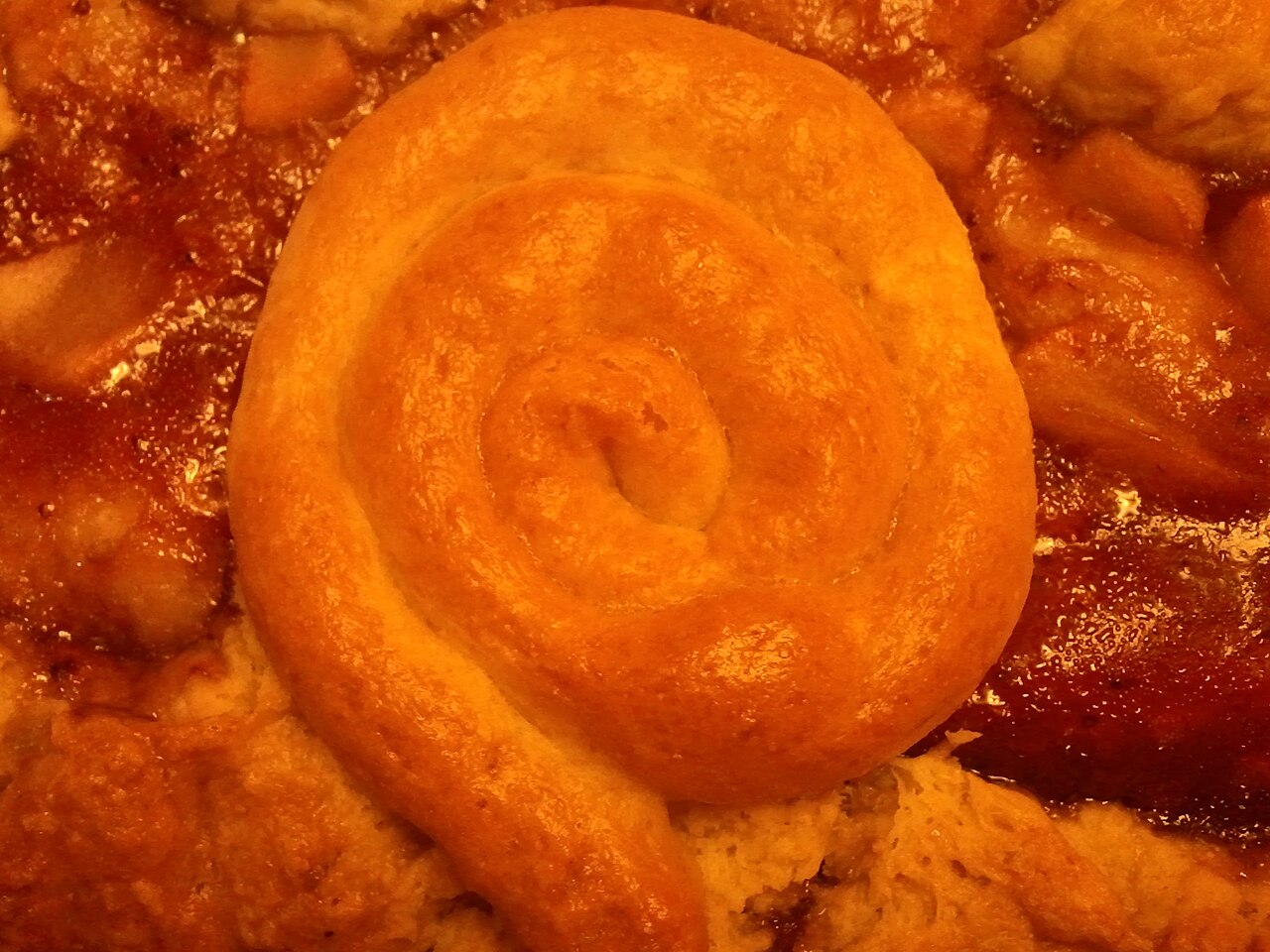
**Shape** Pirogi vary in form: often oblong with tapered ends, but also circular or rectangular. They may be closed or open-faced, lacking a top crust.
**Dough** Typically, pirogi use yeast-raised dough, setting them apart from pies and pastries in other cuisines. Historically, Russian pirogi dough was mostly rye flour; later, wheat flour was mixed in. Today, wheat flour is standard. Variants also use shortcrust, flaky, or puff pastry. In East-Slavic languages, *pirog* is a broad term covering nearly any pie, pastry, or cake. However, dishes like Karelian pastries (karjalanpiirakka) or Jewish knish are distinct and not classified as Slavic pirog.
**Filling** Sweet fillings may include tvorog or cottage cheese, fruits like apples, plums, or berries, as well as jam, honey, nuts, or poppy seeds. Savory versions can contain meat, fish, poultry, variety meats, eggs, mushrooms, cabbage, scallions, rice, buckwheat groats, potato, or a combination. In Ukrainian and Russian cuisines, pirogi (and their smaller versions, *pirozhki*) with savory fillings are served alongside clear borscht, broth, or consommé, or eaten on their own.
**Types** Several specific pirog varieties have distinct names: - **Coulibiac**: a medium-sized Russian pirog, oblong, with a complex filling. - **Kurnik** ("chicken pirog"), also called wedding pirog or tsar pirog: a dome-shaped savory Russian pirog, typically filled with chicken, eggs, onions, kasha or rice, and other optional ingredients. - **Poppy seed roll** and **nut roll**: popular across Central and Eastern Europe, considered pirog types in Eastern Europe. - **Pirozhki** (Russian diminutive for "small pirogi") or *pyrizhky* (Ukrainian): individual-sized buns meant to be eaten with one hand.
Quick Facts
- Region
- Eastern Europe, Northern Europe
Facts from the source article.
Lore & Background
Pirogi come in different shapes and forms: they are often oblong with tapering ends, but can also be circular or rectangular. They can be closed or open-faced with no crust on top. The dough is usually made from yeast-raised dough, which distinguishes them from pies and pastries common in other cuisines. In former times, the dough for Russian pirogi was made predominantly of rye flour; later it was mixed with wheat flour, and nowadays mainly wheat flour is used. There are also variants made from shortcrust, flaky or puff pastry.
Reader's Guide
In East-Slavic languages, pirog is a generic term which denotes virtually any kind of pie, pastry, or cake. Thus, Karelian pastry, Jewish knish, or charlotte cake are considered types of pirog in Eastern Europe. Certain types of pirog are known by different names, including Coulibiac (a middle-size Russian pirog of oblong shape with complex filling), Kurnik (a dome-shaped savory Russian pirog, usually filled with chicken, eggs, onions, kasha or rice), and Pirozhki (individual-sized buns). In Ukrainian and Russian cuisines, pirogi with a savory filling may be served as an accompaniment with clear borscht, broth, or consommé, or enjoyed on their own. The dish's significance lies in its versatility and deep roots in the festive and everyday cooking of multiple cultures, from Finland to Siberia.
Did You Know?
- The name pirog derives from the Proto-Slavic word *pir*, meaning 'banquet' or 'festivity'.
- Shanga is a separate category of baked good of Finno-Ugric origin, not a type of Slavic pirog.
Etymology & Linguistic Reach
The word pirog traces back to the ancient Proto-Slavic term pir, which carried the meaning of a banquet or festivity. This etymological root reveals that the dish was never merely sustenance—it was tied to celebration and communal gathering. The term has traveled far beyond Slavic borders, appearing in Northern Sami as pirog, in Latvian as pīrāgs, in Lithuanian as pyragas, in Finnish as piirakka, in Estonian as pirukas, in Swedish as pirog, and in Karelian as piirai. This wide linguistic footprint underscores how deeply the concept of a filled dough dish is embedded across Finno-Ugric and Baltic cultures as well as Slavic ones. A critical point of clarification exists between the Russian plural pirogi, stressed on the final syllable, and the Polish-English word pierogi, stressed on the second syllable. Despite the superficial similarity, these refer to entirely different food categories: pirogi are baked dough cases, while pierogi are dumplings akin to Russian pelmeni or varenyky.
Dough & Structural Identity
What sets pirog apart from the pie and pastry traditions of Western Europe is its dough. The standard preparation relies on yeast-raised dough, giving the baked case a light, bread-like quality that distinguishes it fundamentally from shortcrust or flaky pastry constructions. Historically, Russian pirogi were built on rye flour, reflecting the agricultural realities of the region. Over time, wheat flour was blended in, and in modern kitchens wheat has become the dominant ingredient. Nevertheless, variants employing shortcrust, flaky, or puff pastry do exist. In East-Slavic linguistic practice, the word pirog functions as an umbrella term encompassing virtually any pie, pastry, or cake. This means that Karelian pastry, Jewish knish, and even charlotte cake are all classified as types of pirog across Eastern Europe. The shape is equally flexible: oblong with tapering ends is common, but circular and rectangular forms are equally valid, and the dish can be fully enclosed or left open-faced without a top crust.
Fillings & Culinary Versatility
The filling spectrum of pirog is remarkably broad, spanning the sweet and the savory with equal confidence. On the sweet side, traditional options include tvorog or cottage cheese, seasonal fruits such as apples and plums, various berries, jam, honey, nuts, and poppy seeds. The savory repertoire is equally expansive, drawing on meat, fish, poultry, variety meats, eggs, mushrooms, cabbage, scallions, rice, buckwheat groats, potato, or creative combinations of several of these ingredients. In both Ukrainian and Russian culinary practice, pirogi and their smaller counterparts, pirozhki, frequently appear as an accompaniment to clear borscht, broth, or consommé, though they are equally at home enjoyed as a standalone item. This dual role—as both a side and a main—reflects the dish's versatility across meal contexts. Poppy seed rolls and nut rolls, popular throughout Central and Eastern Europe, are likewise considered types of pirog within the Eastern European framework, further illustrating how the category absorbs diverse baked preparations.
Regional Varieties & Named Types
Within the broad pirog family, several distinct types carry their own names and regional identities. Coulibiac is a medium-sized Russian pirog of oblong shape featuring a complex, layered filling. Kurnik, sometimes called the wedding pirog or tsar pirog, is a dome-shaped savory creation typically filled with chicken, eggs, onions, kasha or rice, and other optional components. Rassstegai, literally an unbuttoned pirog, is distinguished by a hole cut into its top. Shanga is a small or medium open-faced circular savory pirog of Finno-Ugric origin, widespread across the Ural and Siberian regions, spread from Karelia to the Ob, and recognized as part of Komi, Mari, North Russian, and Udmurt national cuisines. Vatrushka is a small sweet pirog popular across all Eastern Slavic cuisines, shaped as a ring of dough with quark nestled in the center. Pirozhki, the diminutive form, are individual-sized buns designed to be eaten with one hand. In the West Slavic world, Czech and Slovak kolach and Polish kołacz occupy a similar niche, typically with sweet fillings.
Gallery


Frequently Asked Questions
What exactly is a Pirog?
A Pirog is a baked pastry consisting of a raised dough shell that encases either a sweet or a savory filling. It is a cornerstone of East Slavic cooking, including the Belarusian table.
Where does the name 'Pirog' come from?
The word traces back to the Proto-Slavic root *pir, which meant a feast or celebration. In other words, the dish is literally named after the kind of gathering it was traditionally served at.
How is a Pirog different from pierogi?
Despite the similar-sounding names, they are entirely separate dishes. A Pirog is a single baked dough case surrounding a filling, whereas Polish pierogi are small boiled or pan-fried dumplings closer in style to pelmeni or varenyky.
What fillings go inside a Pirog?
Sweet versions commonly feature tvorog, berries, jam, or nuts, while savory ones hold meat, fish, mushrooms, cabbage, or potato. The dough itself is yeast-raised, historically made from rye flour but now more often wheat.
What shape does a Pirog take?
The most classic form is an oblong loaf with tapered ends, though round and rectangular versions are equally common. There is no single mandated shape, so the form often depends on the baker's region or the occasion.
More in Belarusian cuisine 1-18
Spotted an error? Know more?
Reader corrections go straight into our review queue. Suggest an edit · How this site is sourced