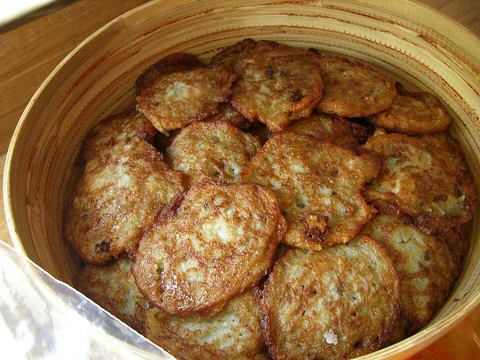
Oladyi
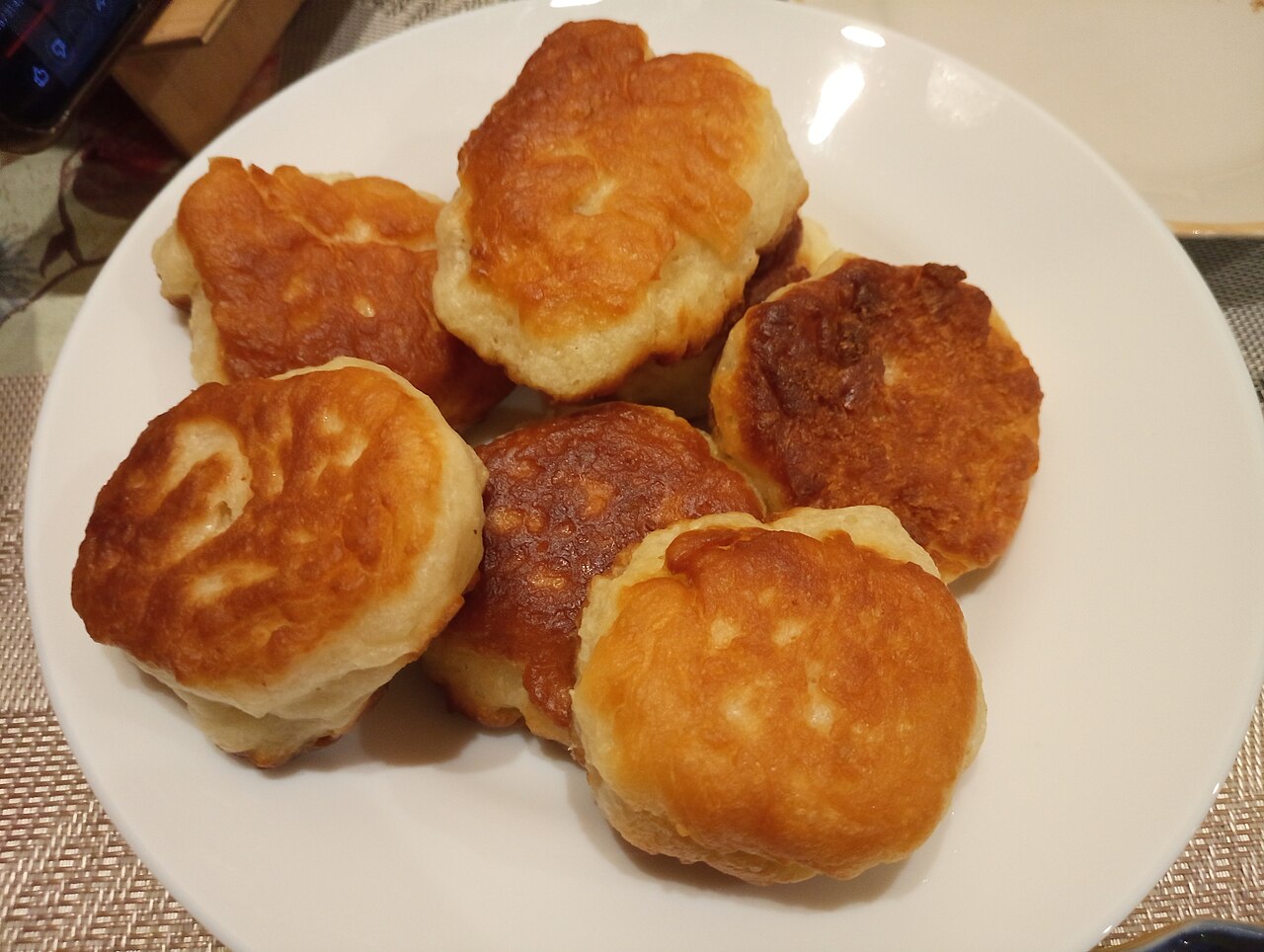
Small thick pancakes common in Russian and Ukrainian cuisines.

Off-shell · CC BY-SA 4.0
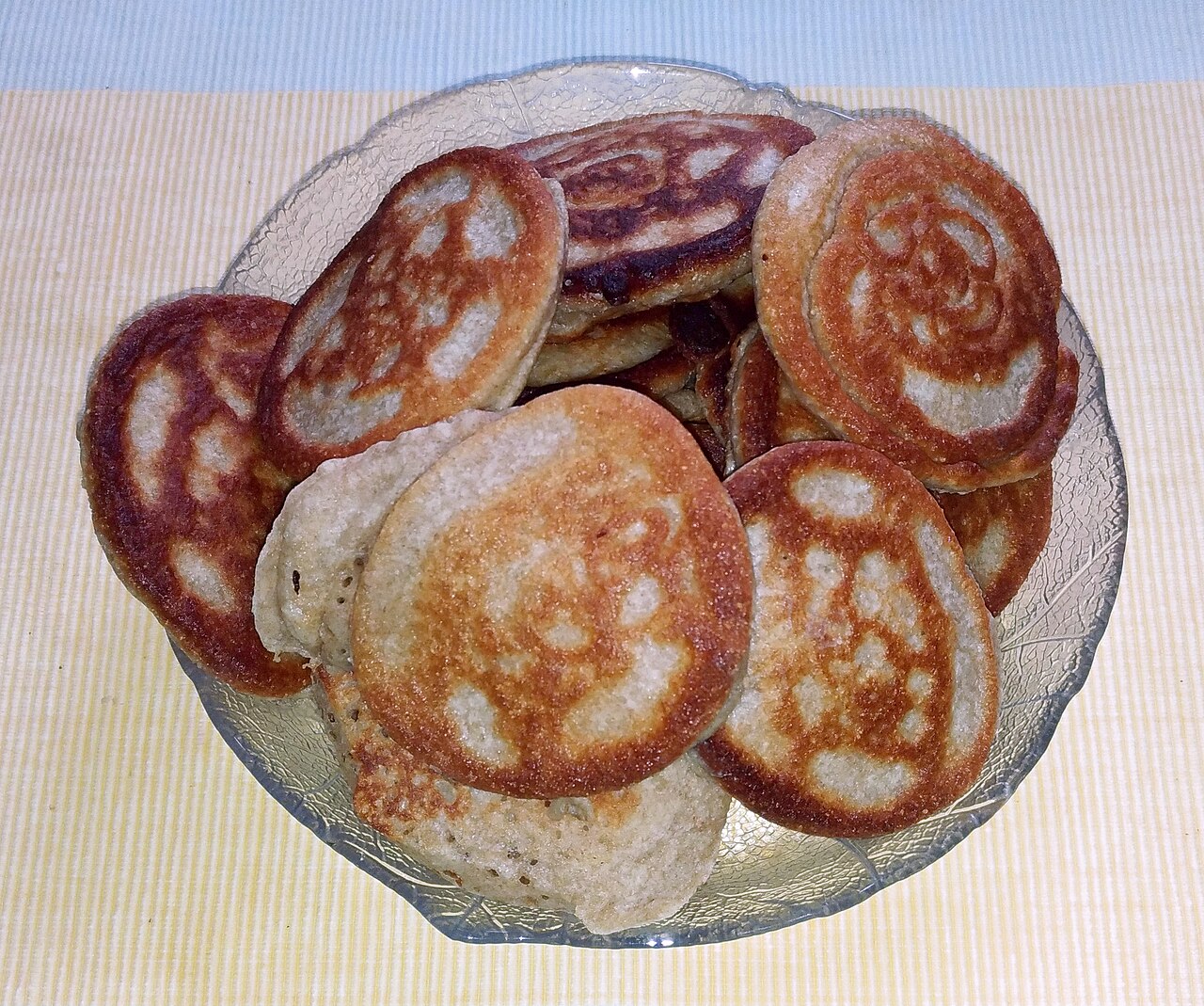
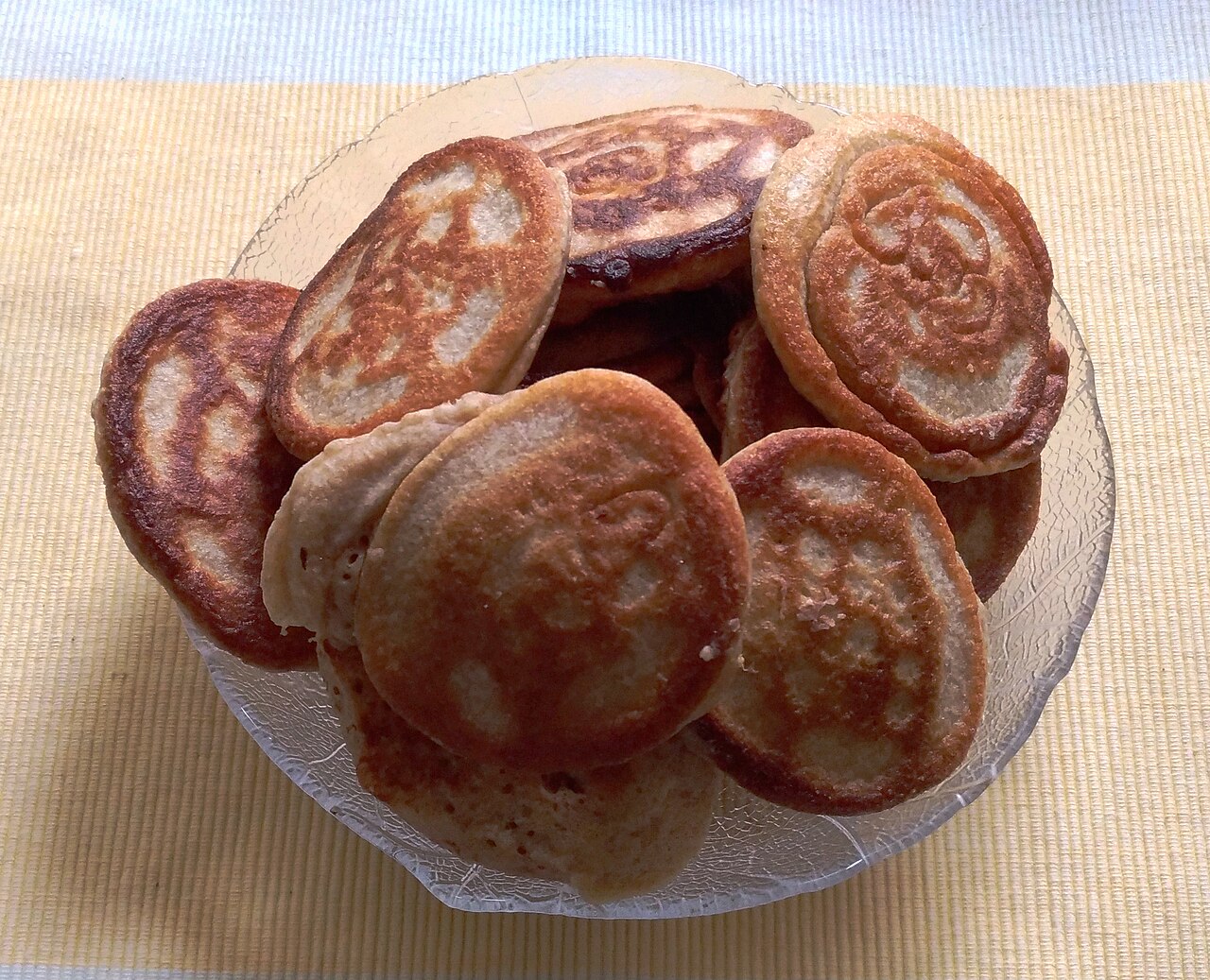
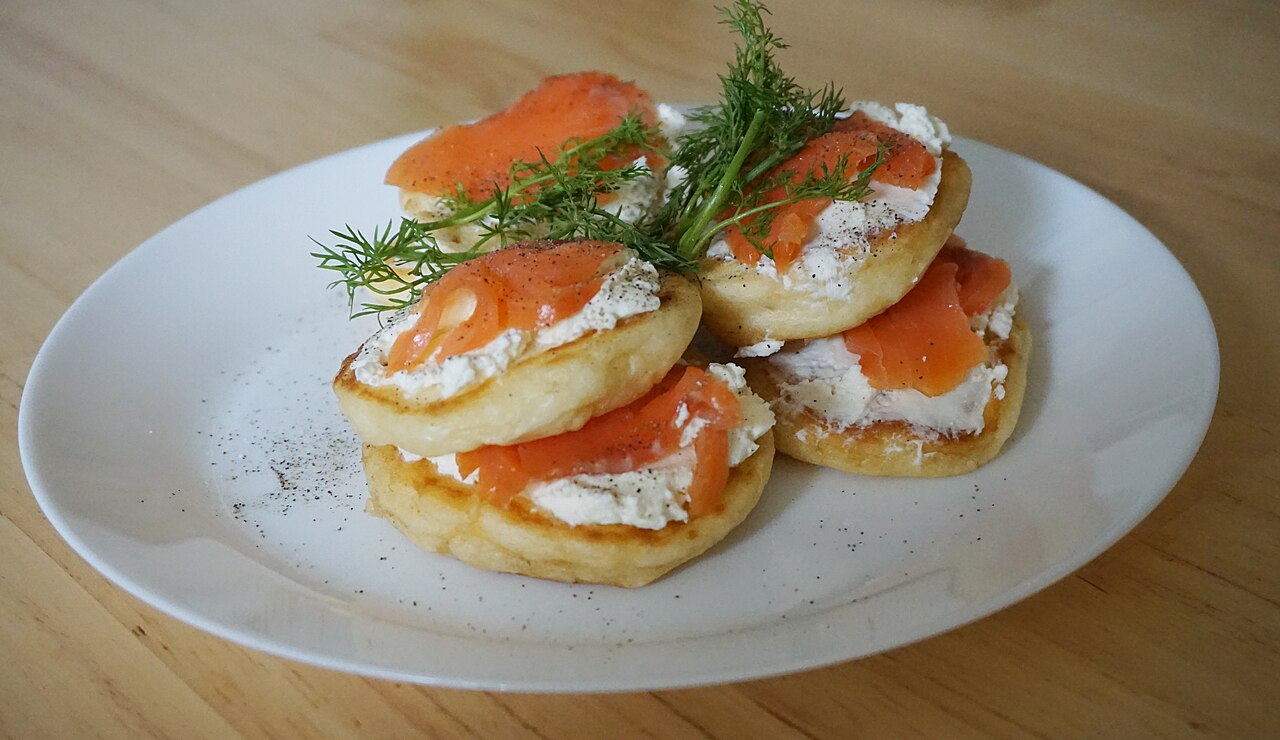
Oladyi (Russian: оладьи; Ukrainian: оладки) are small thick pancakes or fritters common in Russian and Ukrainian cuisines. The batter is made from wheat or buckwheat flour, eggs, milk, salt, and sugar with yeast or baking soda, and may also contain kefir, soured milk, or yoghurt. They are typically served with smetana (sour cream) or sweet toppings such as jam, powidl, or honey, and savory versions may include caviar.
Quick Facts
- Main Ingredient
- Batter, raisins, apples
Facts from the source article.
Lore & Background
The Old East Slavic word oladya as a proper noun is first attested in 1470. As a dish, it is first mentioned in Domostroy, the 16th-century Russian book of household rules, instructions and advice. The word derives from Ancient Greek ἐλάδιον, diminutive of ἔλαιον, 'olive oil', 'oily substance'. The word latke denoting potato pancakes in Jewish cuisine is derived from oladka.
Reader's Guide
Oladyi are a staple of Eastern Slavic home cooking, valued for their simplicity and versatility. The batter can be leavened with yeast or baking soda, and often includes dairy like kefir or soured milk. Additions such as apple or raisins are common. The term oladyi also extends to fritters made from potatoes, carrots, beans, rice, or summer squash, and syrniki (tvorog pancakes) may be considered a type. Their etymology traces back to Ancient Greek, reflecting historical culinary exchange. The Jewish latke derives its name from oladka, linking these traditions. Oladyi remain a comfort food, served with sour cream or sweet toppings, and appear in both everyday meals and festive contexts.
Did You Know?
- Oladyi are first mentioned as a dish in the 16th-century Russian book Domostroy.
- The word derives from Ancient Greek ἐλάδιον, meaning 'olive oil'.
The Batter and Its Variations
Oladyi occupy a distinctive place in the Eastern Slavic pantry as small, thick pancakes or fritters shared across Russian and Ukrainian cooking. The foundational batter draws on a straightforward set of staples: wheat flour (though buckwheat flour was once more common before gradually falling out of favour), eggs, milk, salt, and sugar. Leavening is achieved with either yeast or baking soda, giving the finished patty a light, risen structure. In many households the liquid element is swapped for kefir, soured milk, or yoghurt, lending a gentle tang and a softer body to the final product. Cooks also enjoy folding in extras such as apple or raisins, which scatter pockets of sweetness throughout each patty. Whether prepared in a Russian kitchen or a Ukrainian one, the core technique remains recognisably the same: a thick, pourable batter cooked until golden on both sides, yielding a fritter substantial enough to hold a generous dollop of topping yet small enough to be enjoyed in just a few bites.
Serving Traditions and the Wider Fritter Family
The way oladyi are dressed at the table reveals a great deal about their dual personality. In their most familiar sweet guise, they are crowned with a thick spoonful of smetana, the rich sour cream that is a staple across Eastern Slavic cooking, or drizzled with honey, jam, or powidl. On the savoury side, the same golden patty can be paired with caviar in a manner that echoes the tradition surrounding blini, elevating a humble pancake into something approaching a delicacy. Beyond the classic wheat-based version, the word oladyi functions as an umbrella term in both Russian and Ukrainian culinary vocabulary. Potato pancakes, carrot fritters, bean pancakes, rice pancakes, and summer squash fritters all fall under this broad label, each named by its primary ingredient. Even syrniki, the well-known tvorog pancakes, are sometimes classified as a variety of oladyi, underscoring how the concept of a small, pan-fried, batter-based patty stretches across an impressive range of ingredients and flavour profiles.
Etymology and Linguistic Heritage
The name oladyi carries a surprisingly ancient thread that reaches back to the classical Mediterranean world. The word ultimately derives from the Ancient Greek eladion, itself a diminutive form of elaion, which meant "olive oil" or more broadly "an oily substance." This etymological root hints at a very early association between the dish and the use of oil in its preparation, a connection that persists in the pan-cooking technique still employed today. In the Slavic linguistic record, the Old East Slavic form oladya first appears as a proper noun in the year 1470, marking one of the earliest documented uses of the term. The word's influence extends well beyond the Slavic-speaking world as well: the term latke, used in Jewish cuisine to denote potato pancakes, is itself derived from the Slavic diminutive oladka. This cross-linguistic borrowing testifies to the dish's long history of travelling through cultural exchanges, embedding itself in the food vocabularies of neighbouring peoples and leaving a lasting imprint on how an entire region names its favourite fried patty.
Historical Documentation and Household Context
The written record of oladyi stretches back to the late fifteenth century, when the Old East Slavic form of the word first surfaces as a proper noun in 1470. Its appearance as a recognised dish within a domestic setting comes a little later, in the Domostroy, a sixteenth-century Russian compendium of household rules, practical instructions, and domestic advice. The Domostroy's inclusion of oladyi among its recommended preparations tells us that by the sixteenth century the pancake had moved firmly into the realm of everyday household cooking. The fact that the dish is documented in a text concerned with proper household management suggests it occupied a respected, routine place in the Slavic kitchen, prepared by and for the family as part of ordinary meals. This early codification also hints at the social weight of the dish: a food worthy of being prescribed in a book of domestic governance was clearly a staple that helped define what a well-run household looked like. From that sixteenth-century instruction manual to the modern kitchen, oladyi have maintained their position as a cornerstone of Russian and Ukrainian culinary identity, a small, comforting patty that has outlasted centuries of change.
Gallery
Frequently Asked Questions
Who is Oladyi?
Oladyi are small, thick pancakes or fritters rooted in the shared Slavic culinary tradition of Belarus, Russia, and Ukraine. They occupy a middle ground between a flat crepe and a puffy fritter in both texture and size.
What are Oladyi's powers and role in the kitchen?
Their batter is built from wheat or buckwheat flour, eggs, milk, and a leavening agent such as yeast or baking soda, often enriched with kefir, soured milk, or yoghurt for extra tang. In the kitchen they serve as a versatile canvas for both sweet and savory toppings.
Why is Oladyi important to the canon?
The word itself descends from the Ancient Greek diminutive of 'olive oil' and surfaces as a proper noun in records dating to 1470. It was formally codified as a recognized dish in the 16th-century Domostroy, anchoring it firmly in Slavic food heritage.
What are Oladyi's known variants?
Cooks have long adapted the base batter to incorporate potato, carrot, beans, rice, or summer squash, each shifting the flavor while preserving the signature thick, puffy shape. These regional twists keep the dish recognizable while broadening its pantry reach.
More in Belarusian cuisine 1-18
Spotted an error? Know more?
Reader corrections go straight into our review queue. Suggest an edit · How this site is sourced