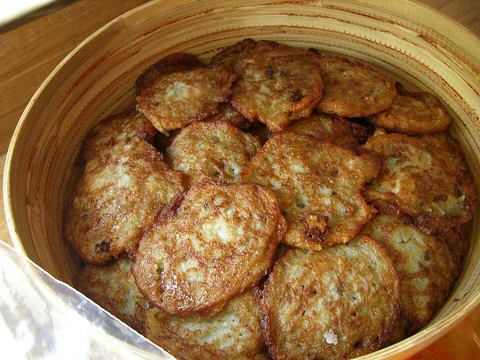
Baked milk
Simmered milk popular in Eastern Europe.

Veganbaking.net from USA · CC BY-SA 2.0
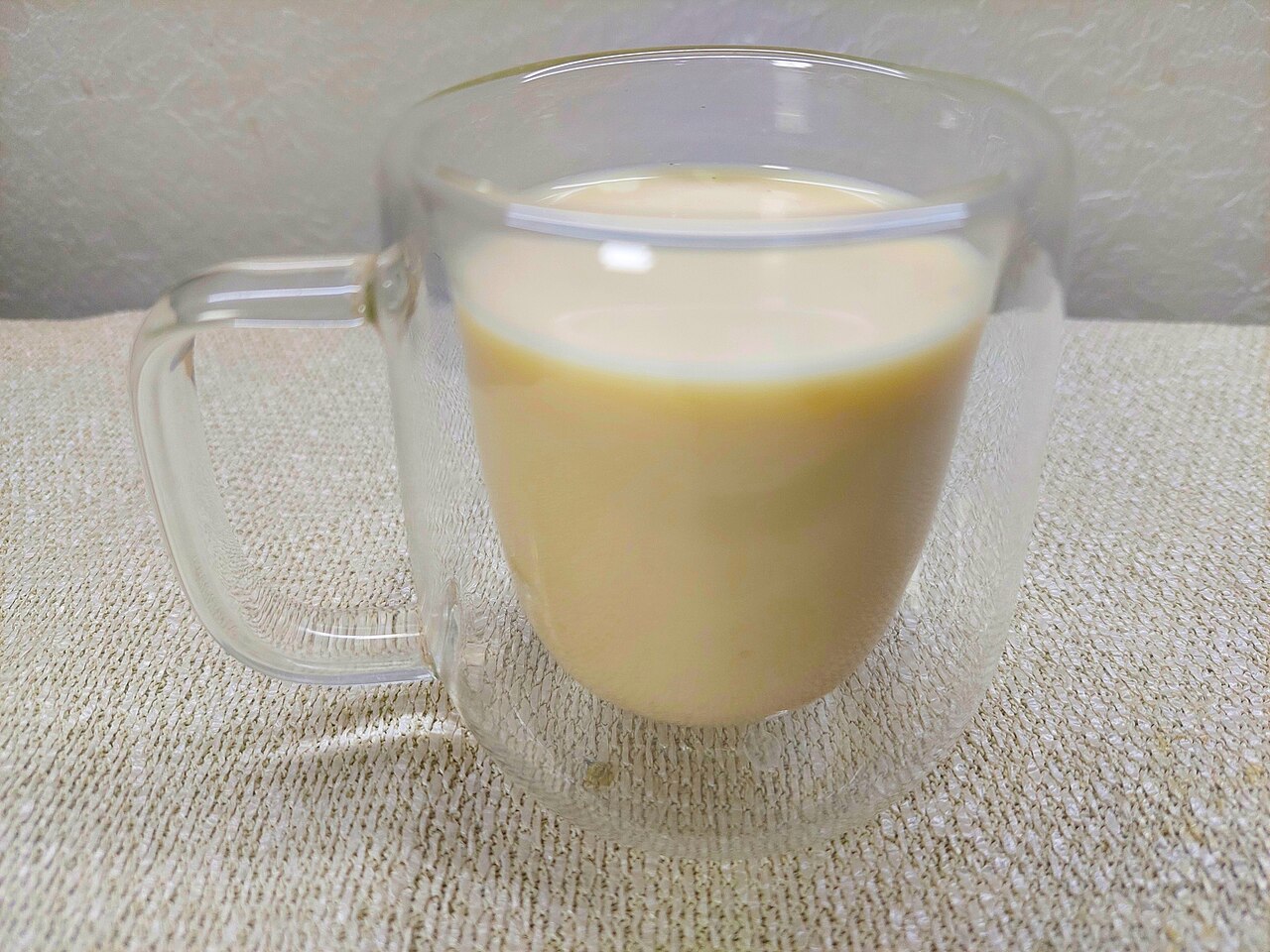
Baked milk (Russian: топлёное молоко; Ukrainian: пряжене молоко; Belarusian: топленае малако) is a type of boiled milk especially common in Russia, Ukraine, and Belarus. It is prepared by simmering milk over low heat for at least eight hours.
Historically, baked milk was also fairly popular beyond these countries. It was considered more agreeable to taste than plain boiled milk, and some medical writings suggested it might be easier to digest. The simplest 19th-century recipe called for leaving milk in an oven overnight, though more complex versions existed. In rural areas, baked milk was traditionally made by placing a jug of boiled milk in an oven for a day or overnight until a brown crust formed. The prolonged heat triggers reactions between amino acids and sugars in the milk, creating melanoidin compounds that give it a creamy color and caramel flavor. Much moisture evaporates, altering the milk’s consistency. The oven in a traditional Russian log house (izba) provides different cooking temperatures depending on where food is placed inside.
Today, baked milk is produced industrially. Like scalded milk, it is free of bacteria and enzymes and can be stored at room temperature for up to forty hours. Homemade baked milk is used in various cakes, pies, and cookies. Long-term consumption may help resolve milk allergies, though in some cases the acquired tolerance can revert to an unresolved allergy.
Fermented baked milk products include ryazhenka and varenets, types of traditional yogurt common as breakfast drinks in Ukraine, Belarus, and Russia. In peasant communities, varenets was made in the traditional East Slavic oven by baking sour milk until golden brown. During the Soviet era, the name “ryazhenka” was used for a government-produced cream-colored drink without the skin.
See also: Dulce de leche (a similar preparation used in pastries), List of baked goods.
- Type
- Dairy product
- Origin
- Russia, Ukraine, Belarus
- Also known as
- Toplyonoye moloko, pryazhene moloko, toplenaye malako
- Key ingredient
- Milk
- Related products
- Ryazhenka, varenets, dulce de leche
Lore & Background
Baked milk was relatively popular outside of Russia as well. It was deemed more palatable than boiled milk, and was described in medical literature as potentially more digestible. The most simple recipe suggested by 19th-century cookbooks for baked milk instructed one to leave milk in an oven overnight; however more elaborate recipes could be found as well. In rural areas, baked milk has been produced by leaving a jug of boiled milk in an oven for a day or overnight until it is coated with a brown crust. Prolonged exposure to heat causes reactions between the milk's amino acids and sugars, resulting in the formation of melanoidin compounds that give it a creamy color and caramel flavor. A great deal of moisture evaporates, resulting in a change of consistency. The stove in a traditional Russian loghouse (izba) sustains 'varying cooking temperatures based on the placement of the food inside the oven'.
Reader's Guide
Baked milk holds significance as a traditional dairy product in Eastern Europe, particularly in Russia, Ukraine, and Belarus, where it has been consumed for centuries. Its production method—simmering milk for eight hours or longer—creates a distinctive creamy color and caramel flavor through melanoidin formation. The product has been noted in medical literature as potentially more digestible than boiled milk, and long-term consumption may help resolve milk allergy, though acquired tolerance can sometimes revert. Today, baked milk is produced industrially and can be stored safely at room temperature for up to forty hours. It is used in home-made cakes, pies, and cookies, and serves as the base for fermented products like ryazhenka and varenets, which are common breakfast drinks in Ukraine, Belarus, and Russia. In China, the Yihetang chain popularized baked milk as an ingredient in bubble tea. Its legacy includes both traditional peasant production in East Slavic ovens and modern industrial adaptation.
Did You Know?
- Baked milk is made by simmering milk on low heat for eight hours or longer.
- Ryazhenka and varenets are fermented baked milk products, a type of traditional yoghurt.
The Slow Alchemy of Heat and Time
Baked milk is defined by patience. Rather than a quick boil, the process demands that milk be held at a gentle simmer for a minimum of eight hours, sometimes far longer. In rural households across Russia, Ukraine, and Belarus, the traditional method involved placing a jug of already-boiled milk into the oven of a loghouse (izba) and leaving it there for a full day or overnight, until a brown crust formed on the surface. The izba stove was no simple appliance; it maintained varying temperatures depending on where the food sat within the oven, so the cook had to position the milk carefully to achieve the right degree of browning. The chemistry at work is elegant: sustained heat drives reactions between the milk's amino acids and its natural sugars, producing melanoidin compounds responsible for the creamy golden hue and deep caramel notes that distinguish baked milk from ordinary boiled milk. Simultaneously, a substantial portion of the liquid evaporates, transforming the texture from thin to something richer and more concentrated. Nineteenth-century cookbooks offered both a bare-bones version—simply leaving milk in the oven overnight—and more elaborate preparations, showing the technique had room for creativity even at its simplest.
From Medical Texts to the Breakfast Table
Baked milk's appeal extended well beyond the borders of Russia, finding a place in kitchens across Ukraine, Belarus, and other regions. Its popularity was not merely a matter of taste; the drink was consistently regarded as more palatable than plain boiled milk, and medical writers of the period went so far as to describe it as potentially easier to digest. This dual reputation—as both a culinary pleasure and a gentle option for sensitive stomachs—helped it secure a firm foothold in household routines. In the home kitchen, baked milk became a versatile base for baking, featuring in cakes, pies, and cookies that benefited from its caramel depth and thickened body. Its flavor profile draws a natural comparison to dulce de leche, the similar preparation long used in home-made pastries elsewhere. Interestingly, the slow heating process may also carry a therapeutic dimension: long-term consumption of baked milk has been associated with the resolution of milk allergy in some individuals. However, this tolerance is not guaranteed to be permanent, as in certain cases the acquired tolerance can revert, and the underlying allergy re-emerges. This nuance underscores that the drink's benefits, while real, are not universal.
Fermented Heirs: Ryazhenka and Varenets
The slow-baked technique did not stop at a single product; it spawned a family of fermented derivatives that became staples of the East Slavic breakfast table. Ryazhenka and varenets are both classified as fermented baked milk products, essentially a traditional form of yoghurt built on the same long-heating principle. In peasant communities, varenets was prepared in the traditional East Slavic oven by baking sour milk until it reached a golden brown color, a process that married the caramelized sweetness of baked milk with the tang of fermentation. The result was a thick, aromatic drink that held a central place in morning meals across Ukraine, Belarus, and Russia. The Soviet era introduced a notable shift in how these products were understood and consumed. The name "ryazhenka" was co-opted to label a government-produced, creme-colored beverage that lacked the characteristic skin formed during traditional baking. This industrial reinterpretation stripped away the rustic, oven-baked character of the original while preserving the name in public consciousness. The distinction between the peasant varenets—golden, skin-coated, and oven-baked—and the Soviet ryazhenka—smooth, pale, and factory-made—illustrates how political and economic forces can reshape even the most humble dairy traditions.
Industrial Scale and Global Curiosity
The transition from hearth to factory transformed baked milk from a rural specialty into a shelf-stable commodity. Produced today on an industrial scale, the product shares a key characteristic with scalded milk: the prolonged heating eliminates both bacteria and active enzymes, rendering the milk safe for storage at room temperature for up to forty hours without refrigeration. This practical advantage made it a reliable pantry staple in households that lacked consistent cold storage, a particular benefit in the regions of Russia, Ukraine, and Belarus where the drink originated. The technique's influence has also crossed continents in unexpected ways. In China, the Yihetang beverage chain took the concept of baked milk—known locally as kǎo nǎi (烤奶)—and repurposed it as a flavoring ingredient in bubble tea, introducing the caramelized, slow-cooked milk profile to a new generation of consumers who might never encounter a traditional izba oven. This adaptation demonstrates how a traditional East Slavic preparation can be reimagined within a completely different culinary and commercial context, shedding its rustic origins while retaining the distinctive sweetness that prolonged heat imparts to dairy proteins and sugars.
Gallery
Frequently Asked Questions
What is Baked milk in Belarusian cuisine?
Baked milk (топленае малако) is a traditional dairy product made by slowly simmering milk over low heat for at least eight hours. It is a beloved staple across Belarus, Russia, and Ukraine.
How is Baked milk actually prepared?
The most common method involves gently simmering milk over a low flame for a minimum of eight hours until it takes on a deeper color and richer flavor. A simpler 19th-century approach was to simply leave milk in a warm oven overnight.
How does Baked milk taste compared to regular boiled milk?
Fans describe it as noticeably sweeter and more rounded, with a subtle caramelized depth that plain boiled milk lacks. Historical medical writers even noted it felt gentler on the stomach and was easier to digest.
Where did Baked milk originate and how did it spread?
The dish is rooted in the home kitchens of Belarus, Russia, and Ukraine, where rural families made it as a everyday pantry staple. By the 19th century, basic oven-based recipes were widely shared, and more elaborate variations also circulated across the region.
What other dairy products is Baked milk related to?
Baked milk belongs to a family of slow-cooked milk products that includes ryazhenka, varenets, and dulce de leche. All of them share the same core idea of extended, low-heat treatment to transform plain milk into something richer and sweeter.
More in Belarusian cuisine 1-18
Spotted an error? Know more?
Reader corrections go straight into our review queue. Suggest an edit · How this site is sourced