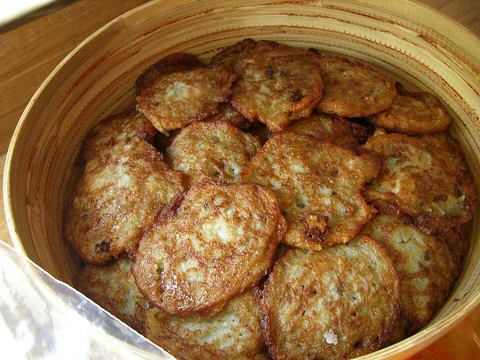
Kishka (food)
Eastern European sausage of stuffed intestine with meat and grain.

Rbrechko · CC BY-SA 4.0
Kishka or kishke refers to various types of sausage or stuffed intestine with a filling made from a combination of meat and meal, often grain or potato. The dish is popular across Eastern Europe as well as with immigrant communities from those areas, and is also eaten by Ashkenazi Jews who prepare their version according to kashrut dietary laws.
- Origin
- Eastern Europe
- Also known as
- kishke, kiszka, kaszanka, krvavnica, hurka, caltaboș, vėdarai, hurka
- Main ingredients
- meat, meal (grain or potato), often blood or organ meat
- Common casing
- animal intestines (pig or beef) or synthetic casings
- Dietary variants
- kosher (no blood or pork), vegetarian
Lore & Background
The name kishke is Slavic in origin and literally means 'gut' or 'intestine,' possibly related to the Ancient Greek word κύστις (kystis), 'bladder.' One Eastern European type is kaszanka, a blood sausage made with pig's blood and buckwheat or barley, with pig intestines used as a casing, similar to black pudding and traditionally served at breakfast. Kishkas can also be made with organ meat such as liver and various grain stuffings, ranging in color from grey-white to brownish-orange depending on paprika and other ingredients.
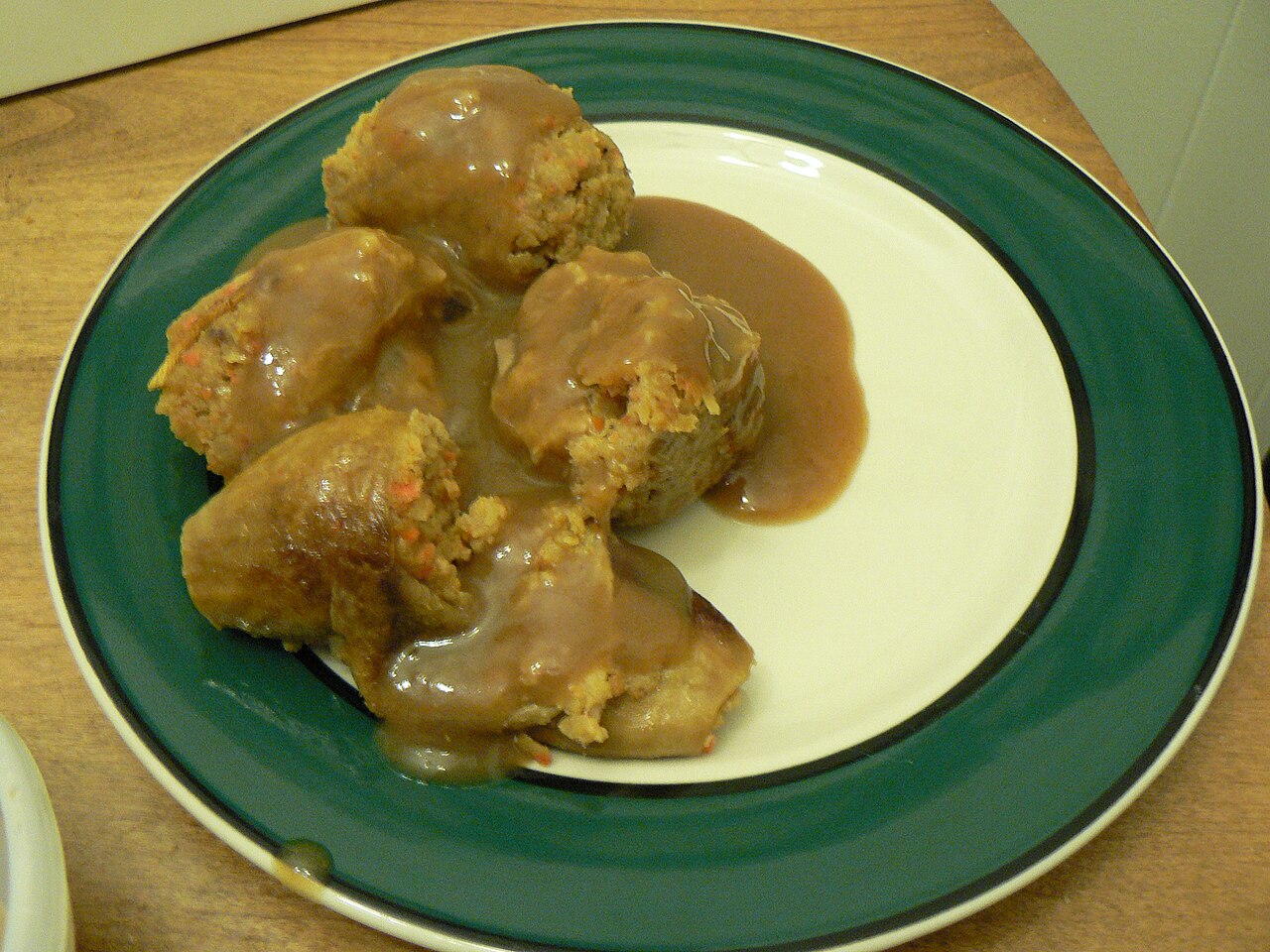
In Jewish cuisine, kishke (also known as stuffed derma) is traditionally made from flour or matzo meal, schmaltz, and spices, with beef intestine or synthetic casings. It is a common addition to Ashkenazi-style cholent, cooked overnight in the same pot, or prepared separately with gravy. Non-traditional varieties include kishke stuffed with rice or diced chicken livers and ground gizzards, and vegetarian recipes exist.
The sausages are popular in areas of the Midwestern United States where many Poles emigrated, with numerous mail order companies and delis selling various kishkas. As blood is often used as an ingredient, kishkas are considered an acquired taste.
Reader's Guide
Kishka holds significance as a versatile and culturally embedded food across Eastern Europe and among Ashkenazi Jewish communities. Its many regional names—kaszanka, krvavnica, hurka, caltaboș, vėdarai—reflect a shared tradition of using animal intestines as casings for mixtures of meat, grain, and often blood. The dish illustrates how resourcefulness in using offal and grains created a staple that traveled with immigrants, particularly to the Midwestern United States, where it remains available through delis and mail order. The Jewish version, kishke or stuffed derma, adapts the concept to kashrut by omitting blood and pork, using beef intestine or synthetic casings, and incorporating schmaltz and matzo meal. Its role in cholent highlights its place in Sabbath cooking. The polka song 'Who Stole the Kishka?' from the 1950s, recorded by Frankie Yankovic, shows the dish's cultural resonance beyond the kitchen. Kishka's range from blood sausage to vegetarian options demonstrates its adaptability, while its status as an acquired taste underscores its strong regional identity.
Did You Know?
- Kishka is also known as stuffed derma, from the German word Darm, meaning 'intestine.'
- The polka song 'Who Stole the Kishka?' was written in the 1950s by Walter Dana with lyrics by Walt Solek.
- Kosher kishka recipes omit animal blood and pork products.
A Name Woven Through a Continent
The word kishke carries a Slavic root that translates simply to "gut" or "intestine," a blunt and honest descriptor for what the dish actually is. Linguists have noted a possible kinship with the Ancient Greek kystis, meaning "bladder," since both terms point to a hollow organ. Yet the dish itself has multiplied into a constellation of local names across the region: jelito in Czech, krvavnica or hurka in Slovak (with the Eastern Slovak hurka already incorporating cooked blood, distinguishing it from its krvavnica counterpart), kiszka or kaszanka in Polish, chişcă or caltaboș in Romanian, vėdarai in Lithuanian, and hurka in Hungarian. This linguistic sprawl mirrors the dish's geographic reach, stretching from the Baltic to the Carpathians and beyond. Each community has stamped its own identity onto the same basic concept of a stuffed casing, making the name itself a small map of Eastern European culinary culture.
A Spectrum of Fillings and Flavors
At its core, kishka is a stuffed intestine, but the filling varies enormously from one kitchen to the next. The Polish kaszanka, a close cousin of black pudding, combines pig's blood with buckwheat or barley and is traditionally a breakfast staple. Other versions lean on organ meats like liver paired with grain stuffings, while the Greater Białystok area favors ground potatoes as the primary ingredient, often using pig intestines as the casing. The finished product's color shifts from grey-white to a warm brownish-orange depending on how much paprika and other seasonings the cook incorporates. For those who avoid meat entirely, vegetarian preparations exist in the broader kishka family. The dish's reputation as an acquired taste is largely tied to the use of blood, a factor that has shaped both its regional popularity and its slower adoption in new food cultures.
Kishke in the Kosher Kitchen
Ashkenazi Jewish tradition has its own distinct relationship with this stuffed-casing dish, known in Yiddish and Hebrew as kishke. The preparation follows kashrut dietary laws, which means animal blood and pork products are entirely absent. Instead, the classic recipe builds around flour or matzo meal, schmaltz, and spices, encased in beef intestine—though modern kitchens increasingly turn to synthetic casings. Kishke holds a special place in the Ashkenazi cholent, where it is typically laid atop the assembled pot and slow-cooked overnight alongside the other ingredients. It can also be simmered in salted water with a touch of vegetable oil, or baked and served with a gravy thickened from its own cooking liquids. In Israel today, prepared kishke sits in the frozen food aisle of most supermarkets. Creative twists include rice-stuffed versions and those packed with diced chicken livers and ground gizzards, while vegetarian adaptations round out the options.
From the Vistula to the Midwest
The story of kishka in America is inseparable from Polish immigration, particularly to the Midwest, where the dish found a second home. Mail-order catalogs and neighborhood delis now stock a range of kishkas, keeping the tradition alive for communities far from the old country. The dish's cultural footprint extends into music: in the 1950s, Walter Dana composed the polka "Who Stole the Kishka?" with lyrics by Walt Solek, a playful homage to kiszka and its alias kaszanka. Frankie Yankovic, a Grammy-winning polka artist, delivered a 1963 recording that became a radio staple for American audiences. Depending on the performer, the song weaves in references to other Polish staples—szynka, chruściki or faworki, pierogi, sernik or serniczek, and kielbasa—turning a single sausage into a doorway for an entire culinary heritage.
Gallery





Frequently Asked Questions
What exactly is Kishka in Belarusian cooking?
Kishka is a stuffed-intestine sausage in which the casing is packed with a blend of ground meat, a starchy grain or potato base, and often blood or organ meat. It sits at the heart of Belarusian home-style cooking and is a recognizable fixture across the wider Eastern European table.
What ingredients go inside a typical Kishka?
The classic filling combines pork or beef, a meal such as buckwheat, barley, or mashed potato, and frequently blood or offal for depth of flavor. Everything is mixed together, stuffed into a natural pig- or beef-intestine casing (or a synthetic one), and then cooked.
Why does the same sausage go by names like kaszanka, krvavnica, and hurka?
Each regional or linguistic community has its own term—kishke, kiszka, kaszanka, krvavnica, hurka, caltaboș, vėdarai—often reflecting a slightly different local recipe or a particular emphasis on blood versus grain. The variety of names is a reminder that the dish crosses many borders and kitchens.
Can Kishka be prepared kosher or as a vegetarian dish?
Ashkenazi Jewish cooks make a kashrut-compliant version that swaps out pork and blood for permitted meats and grains, while some modern recipes drop the meat entirely in favor of a grain-and-potato filling. Both adaptations preserve the stuffed-casing format that defines the dish.
Why is Kishka considered a cultural touchstone for Belarusian and Eastern European food?
It embodies a no-waste, whole-animal cooking tradition and makes use of seasonal grains, tying it to rural household economics. Its continued presence in immigrant kitchens abroad also keeps a tangible link to Belarusian and broader Eastern European identity.
More in Belarusian cuisine 1-18
Spotted an error? Know more?
Reader corrections go straight into our review queue. Suggest an edit · How this site is sourced