
Sorrel soup
A sour Eastern European soup made from sorrel leaves.

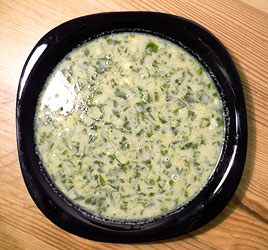
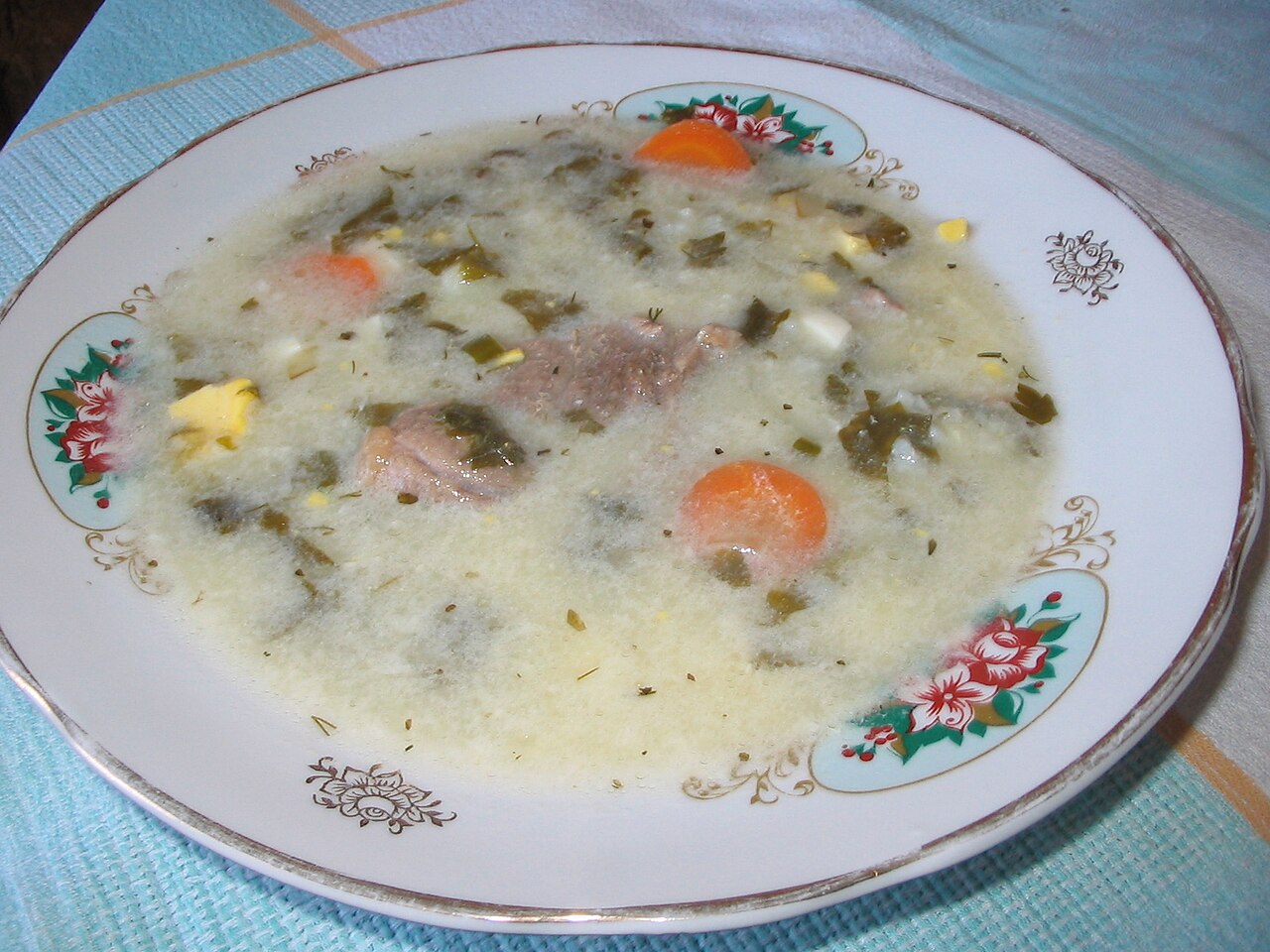
Kagor · CC BY-SA 3.0
Sorrel soup starts with water or broth, sorrel leaves, and salt. Other leafy greens—such as spinach, garden orache, chard, nettle, and sometimes dandelion, goutweed, or ramsons—can replace or supplement the sorrel. This soup appears in Ashkenazi Jewish, Belarusian, Estonian, Hungarian, Latvian, Lithuanian, Romanian, Armenian, Georgian, Polish, Russian, and Ukrainian cooking. Its English names—schav, shchav, shav, or shtshav—come from Yiddish, which borrowed them from Slavic languages (for example, Belarusian *шчаўе*, Russian and Ukrainian *щавель*, Polish *szczaw*). The word traces back to the Proto-Slavic *ščаvĭ*, meaning sorrel. Because it is so common across Eastern Europe, it is often called green borscht, a relative of the standard red beetroot borscht. In Russia, where shchi is the traditional staple soup, sorrel soup is also known as green shchi; older Russian cookbooks simply called it green soup.
Common additions include egg yolks or whole eggs (hard-boiled or scrambled), potatoes, carrots, parsley root, and rice. A Ukrainian version of green borscht also includes beetroot. In Polish, Ukrainian, Belarusian, and Russian kitchens, any kind of broth can replace water. The soup is usually topped with smetana, an Eastern European sour cream, and can be served hot or cold.
Its sour taste comes from oxalic acid in sorrel, sometimes called “sorrel acid” in Slavic languages. Adding sour cream can reduce that sourness, because the oxalic acid reacts with calcium and casein. Some people describe sorrel’s flavor as “tannic,” similar to spinach or walnuts.
Quick Facts
- Region
- Eastern and Northeastern Europe
- Served
- Hot or cold
- Main Ingredient
- Water or broth, sorrel leaves, and salt
Facts from the source article.
Lore & Background
Sorrel soup is characterized by its sour taste due to oxalic acid, called 'sorrel acid' in Slavic languages, present in sorrel. The sourness may disappear when sour cream is added, as the oxalic acid reacts with calcium and casein. Some refer to sorrel flavor as 'tannic,' as with spinach or walnuts. Varieties of the same soup include spinach, garden orache, chard, nettle, and occasionally dandelion, goutweed, or ramsons, together with or instead of sorrel.
Reader's Guide
Sorrel soup holds significance as a widespread dish across Eastern European and neighboring cuisines, often serving as a seasonal green alternative to beetroot borscht. Its sour flavor, derived from oxalic acid in sorrel, distinguishes it from other green soups. The soup is typically garnished with smetana, an Eastern European sour cream, and may be served hot or chilled. Common additional ingredients include egg yolks or whole eggs (hard-boiled or scrambled), potatoes, carrots, parsley root, and rice; a Ukrainian variety also includes beetroot. The soup may be prepared using any kind of broth instead of water. Its legacy is reflected in its multiple names across languages, all tracing back to the Proto-Slavic word for sorrel, and its status as a cousin to the more widely known beetroot borscht.
Did You Know?
- Sorrel soup is often called green borscht, as a cousin of the standard reddish-purple beetroot borscht.
- Its English names schav, shchav, shav, and shtshav are borrowed from Yiddish, which derives from Slavic languages.
- The soup's sour taste comes from oxalic acid, called 'sorrel acid' in Slavic languages.
- In old Russian cookbooks, sorrel soup was called simply green soup.
Linguistic Heritage and the Many Names of One Soup
The English names for this soup—schav, shchav, shav, shtshav—are all borrowings that traveled through Yiddish before settling into Anglophone usage. Yiddish, in turn, drew the word from the Slavic family of languages, and the root can be traced further back to Proto-Slavic, the reconstructed ancestor, where ščаvĭ simply meant sorrel. Modern descendants of that stem survive in Belarusian шчаўе, in the Russian and Ukrainian щавель (shchavel), and in Polish szczaw. Beyond the plant name itself, the soup has collected a set of regional nicknames. Because it shows up so consistently across Eastern European tables, many people call it "green borscht," framing it as the leafy counterpart to the more widely recognized beetroot borscht. In Russia, where shchi has long been the default everyday soup rather than borscht, the dish is referred to as "green shchi." Older Russian cookbooks took the naming even further, labeling it nothing more than "green soup."
A Wide Culinary Footprint and a Flexible Green Base
Sorrel soup enjoys an unusually broad presence across Eastern and Southwestern European food traditions. It is a recognized dish in Ashkenazi Jewish, Belarusian, Estonian, Hungarian, Latvian, Lithuanian, Romanian, Armenian, Georgian, Polish, Russian, and Ukrainian cuisines—a geographic arc stretching from the Baltic coast to the Caucasus. The recipe is not locked to a single leaf. While sorrel is the classic green, cooks across these cultures freely substitute or blend in spinach, garden orache, chard, and nettle. In some households, dandelion, goutweed, or ramsons appear in the pot, either alongside sorrel or as a complete replacement. This adaptability makes the soup a natural fit for seasonal foraging and whatever bitter greens are at hand. In Russia the dish carries particular weight: shchi, made with or without sorrel, has historically been the go-to home-cooked soup, a role that borscht more often occupies in neighboring traditions.
Building the Bowl: Ingredients, Broth, and Serving
In its most stripped-down form, the soup is nothing more than water or broth, a generous measure of sorrel leaves, and salt. From that bare skeleton, Polish, Ukrainian, Belarusian, and Russian cooks layer in supporting ingredients. Egg yolks or whole eggs—sometimes hard-boiled, sometimes scrambled—lend richness, while potatoes and rice supply a starchy backbone. Carrots and parsley root add a mild sweetness and textural contrast. A distinctive Ukrainian version folds beetroot into the green mixture, creating a bridge between this soup and the red borscht family. In the Slavic-speaking countries listed, any kind of broth may stand in for plain water, deepening the overall flavor. The finished bowl is customarily topped with a spoonful of smetana, the thick Eastern European sour cream, and it can be served either piping hot or well chilled, making it a practical choice across every season.
Sourness, Oxalic Acid, and the Chemistry of the Garnish
What sets sorrel soup apart from other green soups is its unmistakable tang, a quality that Slavic languages attribute to "sorrel acid"—the folk name for oxalic acid, the compound concentrated in sorrel leaves. This sharpness gives the broth an astringent edge that some diners describe as "tannic," evoking the mild bitterness of spinach or the astringency of walnuts. The flavor chemistry becomes especially interesting once the traditional garnish enters the picture. Stirring in smetana or another sour cream triggers a reaction between the oxalic acid and the calcium and casein proteins in the dairy, effectively softening much of the bite. The result is a rounder, milder profile that many find more approachable. Because of this interaction, the soup's taste is not static: it shifts depending on how much cream is added and whether the dish is served hot or cold, both of which change how the sour note registers on the palate.
Gallery

Frequently Asked Questions
Who is Sorrel soup?
Sorrel soup is a traditional Eastern European soup whose star ingredient is fresh sorrel leaves simmered in water or broth with a pinch of salt. In Belarusian cooking it sits alongside other green-leaf soups as a staple of the regional pantry.
What are Sorrel soup's powers/role?
Its signature trait is a sharp, tangy sourness that comes naturally from the oxalic acid packed into sorrel leaves. In Belarusian households it functions as a light, refreshing dish served either hot or chilled, typically finished with a dollop of smetana (sour cream).
Why is Sorrel soup important?
It shows up in the culinary traditions of at least a dozen countries—Belarus, Poland, Ukraine, Lithuania, Romania, and others—making it one of the most widely shared green soups in the region. Its flexibility, allowing cooks to substitute spinach, chard, nettle, or even dandelion, keeps it a year-round presence in many kitchens.
What are Sorrel soup's alternative names?
Depending on the language and community you ask, you'll hear schav, shchav, shav, or shtshav—terms that entered English via Yiddish, which borrowed them from Slavic words such as Belarusian шчаўе. It is also commonly called green borscht, green shchi, or simply "green soup."
More in Belarusian cuisine 1-18
Spotted an error? Know more?
Reader corrections go straight into our review queue. Suggest an edit · How this site is sourced