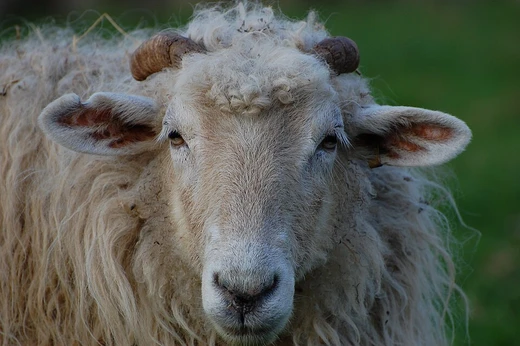
Pottok
Endangered semi-feral pony of the Basque Pyrenees.

The Pottok, also called Pottoka, is an endangered, semi-feral pony breed from the Basque Country’s Pyrenees, spanning France and Spain. An ancient breed, it is well-suited to the rugged mountain terrain it has long inhabited, and the Basque people consider it an iconic part of their heritage.
The name *pottoka* comes from the Basque language, used on both sides of the mountains. In Upper Navarrese, *potto* and *pottoka* refer generally to colts and young horses, while in Lapurdian and Lower Navarrese, *pottoka* means “pony.” The term is linked to words like *pottolo*, meaning “chubby” or “tubby.” French sources typically use the spelling *Pottok*; in English, both *Pottoka* and *Pottok* appear, and occasionally the breed is called the Basque Pony.
The breed’s origins are debated. Scientists agree the Pottok has lived in the area for at least several thousand years, showing genetic isolation. It is genetically closest to breeds such as the Asturcón, Losino, Galician, Landais, and Monchino horses. Notable genetic differences exist between populations in the Northern and Southern Basque Country, leading some to consider them separate breeds. Some theories link the Pottok to horses depicted in ancient cave paintings from the Magdalenian period (14,000–7000 BC) or to Bronze Age horse influxes, but neither has been scientifically confirmed. Research from the University of the Basque Country, examining genetic markers among the four indigenous Basque horse breeds, found that the Pottok and the Basque Mountain Horse are genetically the most distant from other breeds, while the Burguete and Jaca Navarra (meat breeds) are less so. This variability in the Pottok and Basque Mountain Horse likely stems from males ranging widely and mating with many females in feral or semi-feral herds. A known single-nucleotide polymorphism is very rare in purebred Pottoks. Mitochondrial DNA tests show Pottoks most often crossbreed with Basque Mountain Horses, less so with other breeds. While some genetic markers from other European horse breeds appear, the overall genetic distance from those breeds is large. One marker previously found only in certain British breeds has also been identified in Pottoks.
The Pottok’s traditional range extends west to the Biscayan Encartaciones and east roughly to the Saint-Jean-le-Vieux area.
Quick Facts
- Features
- small, large head, heavy winter coat
- Country
- Basque Country
Facts from the source article.
Lore & Background
The Pottok has lived in the Basque Pyrenees for at least several thousand years, displaying genetic isolation and closeness to breeds like the Asturcón, Losino, and Galician. Genetic research by the University of the Basque Country shows considerable differences between northern and southern populations, leading some to consider them separate breeds. Theories linking the Pottok to Magdalenian cave horses or Bronze Age influxes remain unverified.
Traditional habitat extends from the Biscayan Encartaciones to the Saint-Jean-le-Vieux area, with core mountain areas in Labourd and Navarre above 1,500 meters. A 1970 census found roughly 3,500 purebreds north of the Pyrenees and 2,000 to the south, a sharp decline from historic numbers due to habitat loss, mechanization, and crossbreeding. Semi-feral herds are shy, live in harems of 10–30 mares, and predict weather by moving to valleys before storms.
Crossbreeding with draught horses, Iberian horses, Arabians, and Welsh ponies has reduced purebred mares north of the Pyrenees to perhaps no more than 150. Conservation efforts include reserves in Bidarray and the Aralar Range, and the Pottok was the first Basque horse breed listed as endangered in June 1995. Studbooks in the Northern Basque Country (1970) distinguish Mountain and Plains types, while southern criteria separate purebreds by coat and height.
Reader's Guide
The Pottok holds significance as an ancient, genetically distinct breed emblematic of Basque heritage. Its adaptation to harsh mountain environments and semi-feral lifestyle underscores its ecological and cultural value. Once common, it declined due to habitat loss, mechanization, and crossbreeding, but conservation efforts—including reserves and studbooks—aim to safeguard its future. The breed's genetic isolation, with markers distinct from most European horses, highlights its uniqueness. Debates persist over whether to focus on purebreds or selective crossbreeding to increase numbers. The Pottok's legacy includes historical use by smugglers, as circus horses, and as pit ponies; today it is valued as a children's pony. Its endangered status and iconic role in Basque identity make it a focus of regional conservation and cultural pride.
Did You Know?
- The Pottok is genetically closest to breeds like the Asturcón, Losino, Galician, Landais, and Monchino horses.
- Pottok foals are born after 11 months, weaned after 6–7 months, and fillies become fertile at age 2.
- The breed's winter fur (borra) can reach up to 10 cm in length on young horses.
More in Basque domestic animal breeds 1-20
Spotted an error? Know more?
Reader corrections go straight into our review queue. Suggest an edit · How this site is sourced