Basque Mountain Horse
A rustic Basque breed reared for meat, now endangered.

Hayden Soloviev · CC BY 4.0
The Basque Mountain Horse, known as *Caballo de Monte del País Vasco* in Spanish and *Euskal Herriko Mendiko Zaldia* in Basque, is a breed from the Basque Country (Euskadi) in Spain. It appears in the country’s official livestock catalogue as an autochthonous breed at risk of extinction, and its primary use is for meat production.
The breed originated in the province of Álava, in the southern part of the Basque Country. It developed from the traditional Pottok horse, which from the early 1900s was crossbred with imported draught stallions such as the Ardennes, Breton, Comtois, and Percheron. The first official breed standard was approved on 21 July 1999 and published in the Basque official bulletin; it was later repealed and replaced in 2015. The first breed society was the Asociación de Ganaderos de Equino de Álava, with separate societies later forming in Bizkaia and Gipuzkoa. In 2014 these three merged into the Euskal Herriko Mendiko Zaldi Arrazaren Federazioa (Federación de la Raza de Caballo de Monte del País Vasco). In 2013 the herdbook recorded 4,556 breeding animals. By the end of 2023, the total registered was 6,218, including 3,812 broodmares and 288 active stallions, held by 313 breeders—all located within Euskadi, with none reported elsewhere in Spain or abroad.
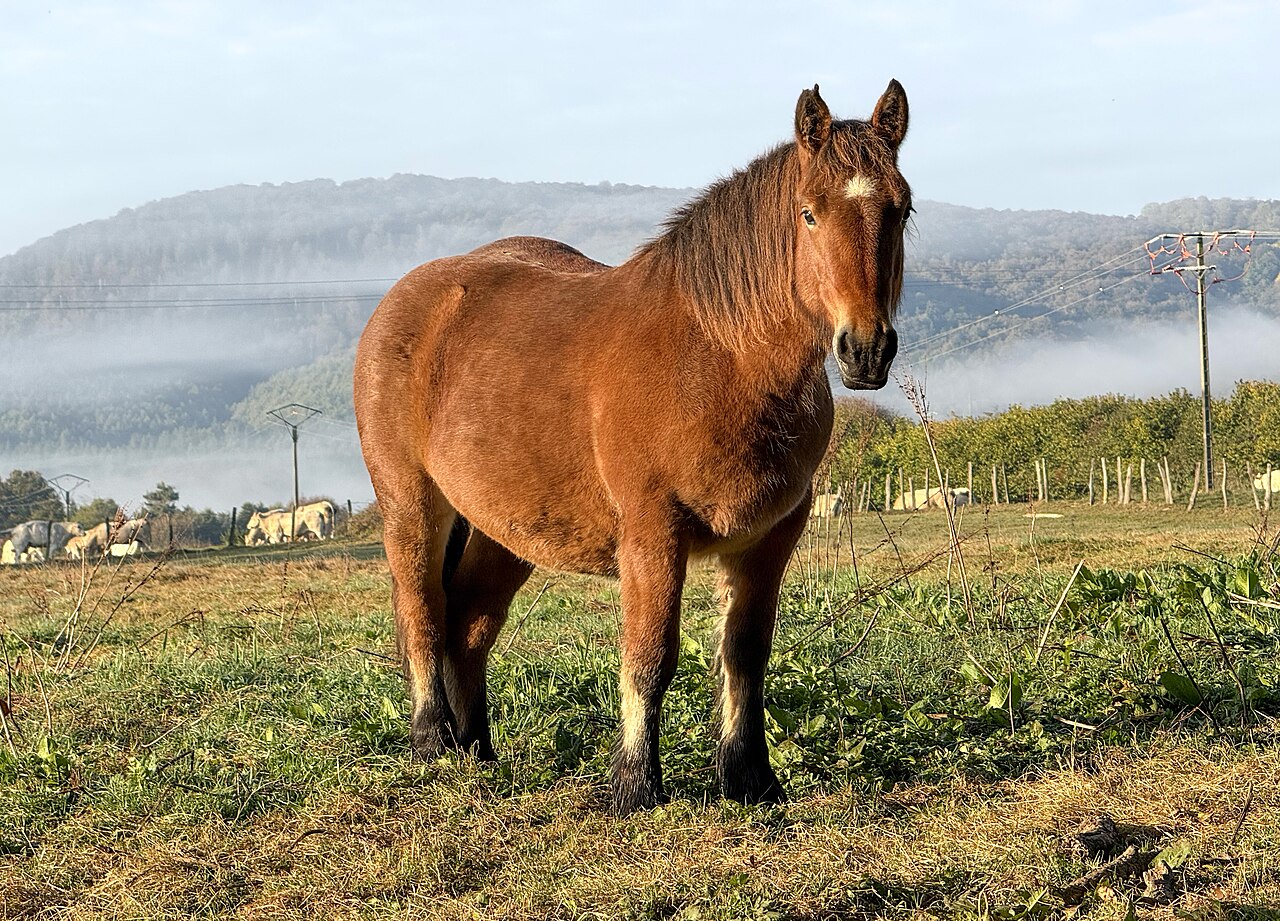
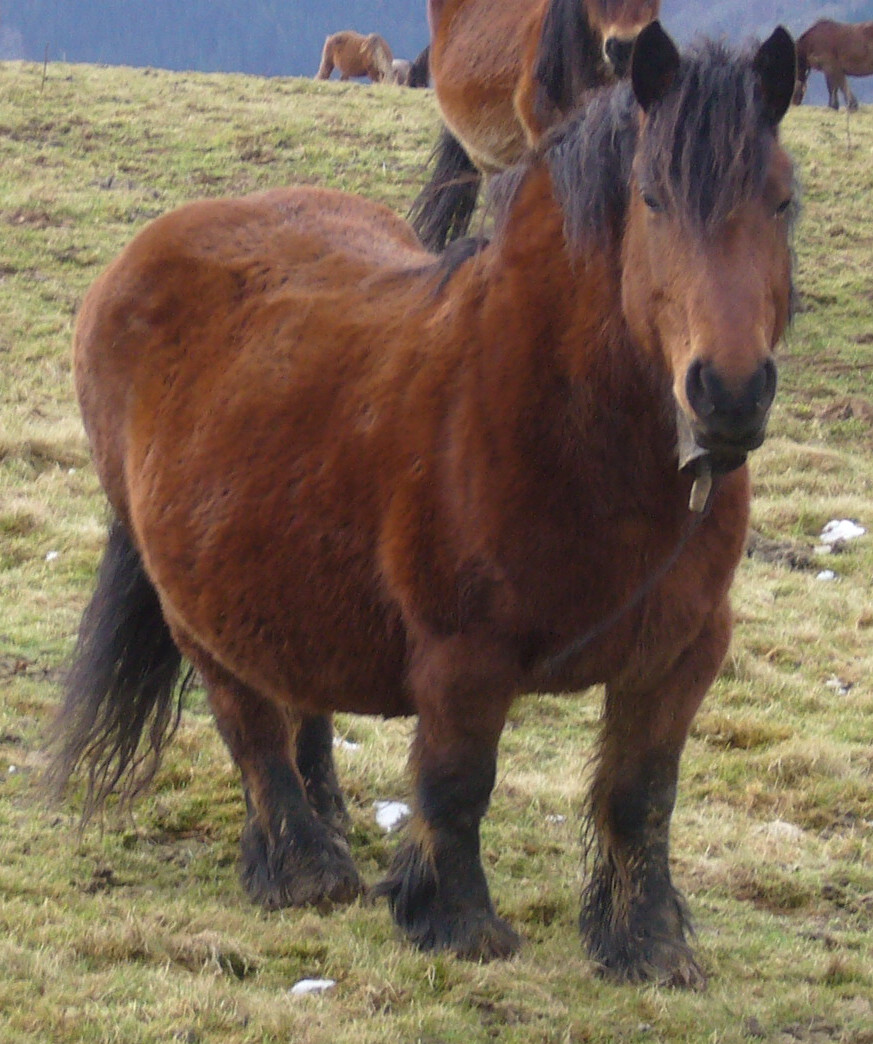
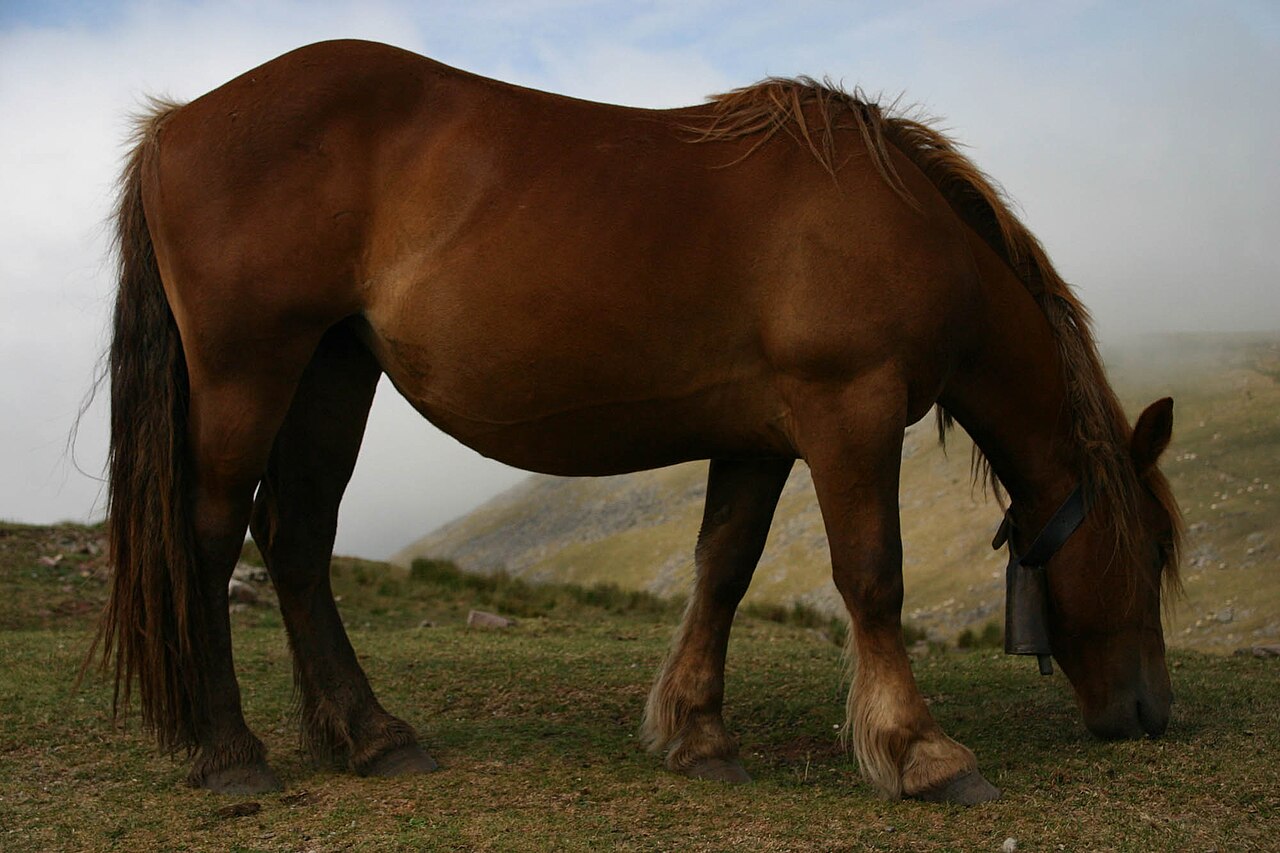
These horses are small to medium in size, rustic, muscular, and well-proportioned. Average height at the withers (both sexes) is 138.5 cm, average chest girth is 179 cm, and average cannon-bone circumference is 20 cm. The facial profile is straight or slightly concave. The most common coat colors are chestnut and bay in any shade; roan and black also occur. Grey and pied animals are not eligible for registration.
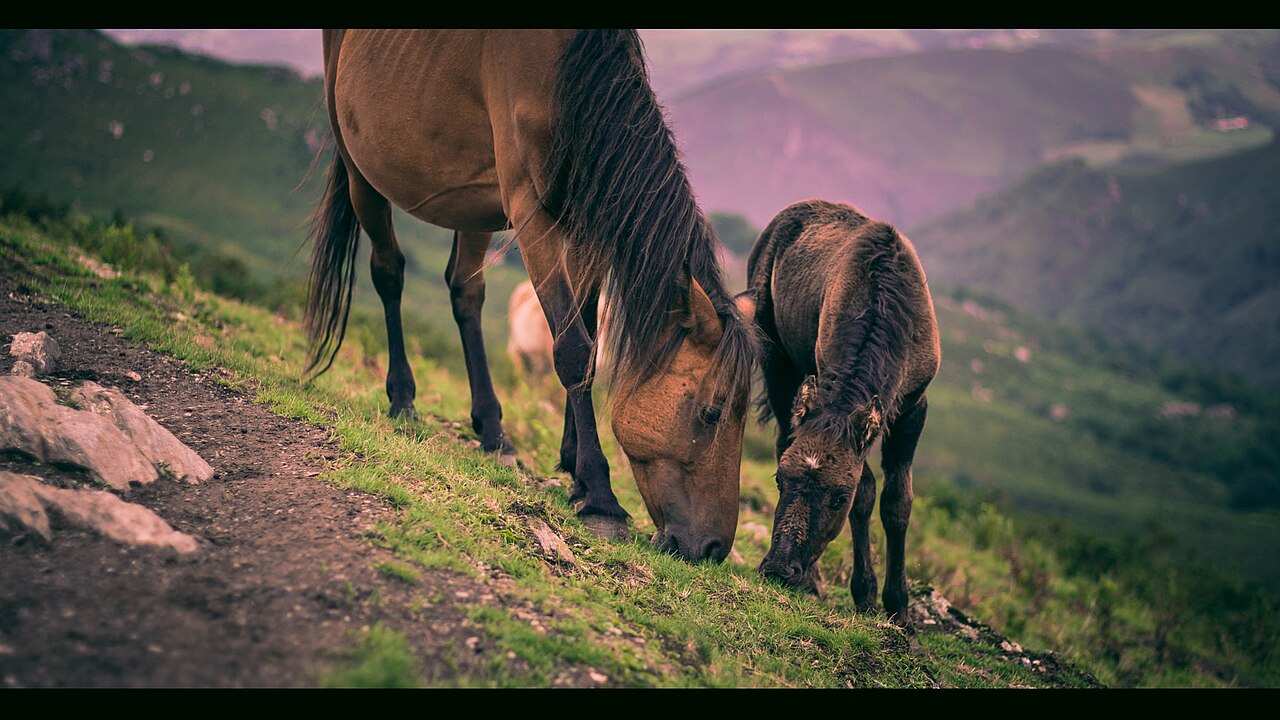
The horses are raised mainly for meat, sometimes by breeding mares to stallions of foreign meat breeds such as the Axis and Comtois. Management is extensive and transhumant: the horses graze freely on Álava’s mountains for most of the year, but are moved to lower ground in winter. During the coldest months, they may receive supplemental organic straw or oats, and extra salt as is typical for transhumant livestock. In 2023, reproduction was entirely natural—mares were covered by stallions, with no artificial insemination used. Foals are weaned at about six months and usually slaughtered at 12–16 months, reaching a live weight of roughly 165–185 kg.
Quick Facts
- Country
- Spain
- Distribution
- Euskadi (Basque Country/País Vasco)
- Standard
- [https: · www.euskadi.eus/y22-bopv/es/bopv2/datos/2015/12/1505312a.pdf Boletín Oficial del País Vasco]
- Height
- 138.5 cmstandard
Facts from the source article.
Lore & Background
The Basque Mountain Horse originated in the province and historical territory of Álava, the southern part of the País Vasco. It derives from the traditional Pottok breed, which from the early twentieth century were cross-bred to imported stallions of draught breeds including the Ardennes, Breton, Comtois and Percheron. The original breed standard was officially approved on 21 July 1999 and published in the Boletín Oficial del País Vasco; it was repealed in 2015 and replaced with a new one. The first breed society was the Asociación de Ganaderos de Equino de Álava; separate societies later formed in Bizkaia and in Gipuzkoa. In 2014 the three societies merged to form the Euskal Herriko Mendiko Zaldi Arrazaren Federazioa or Federación de la Raza de Caballo de Monte del País Vasco.
Reader's Guide
The Basque Mountain Horse is significant as a rare autochthonous breed of Spain, officially recognized in the national livestock catalogue and classified as endangered. Its conservation is managed through a herdbook and a federated breed society. The horses are small to medium, rustic, and muscular, with a straight or slightly concave facial profile. They are reared extensively and transhumantly: pasturing freely on the mountains of Álava most of the year and brought to lower ground in winter, with occasional supplemental feed. Foals are weaned at about six months and slaughtered at 12–16 months for meat, which may be marketed as Carne de Potro de la Montaña Alavesa, a product included in the Ark of Taste of the international Fondazione Slow Food per la Biodiversità. In 2023 reproduction was by natural means only, with no artificial insemination. The breed's numbers have grown from 4556 breeding animals in 2013 to 6218 registered animals at the end of 2023, all within Euskadi.
Did You Know?
- The breed is listed in the Catálogo Oficial de Razas de Ganado de España as an autochthonous breed in danger of extinction.
- It derives from the traditional Pottok breed cross-bred with draught stallions such as Ardennes, Breton, Comtois, and Percheron.
- In 2023, all registered horses and breeders were located only in Euskadi, with no reports from other Spanish regions or other countries.
- The meat may be marketed as Carne de Potro de la Montaña Alavesa, included in the Ark of Taste of the Fondazione Slow Food per la Biodiversità.
From Pottok Roots to a Recognized Breed
The Basque Mountain Horse traces its lineage to the traditional Pottok horses of Álava, the southernmost province of the Basque Country. In the early twentieth century, local breeders began crossing these native animals with imported draught stallions—Ardennes, Breton, Comtois, and Percheron—producing a sturdier, more robust type suited to the region's mountainous terrain. For decades this crossbred population existed without formal recognition, but on 21 July 1999 the first official breed standard was approved and published in the Boletín Oficial del País Vasco. That standard was later repealed in 2015 and superseded by a revised version. Institutional organization followed a similar gradual path: the Asociación de Ganaderos de Equino de Álava was the first dedicated society, and separate organizations subsequently emerged in Bizkaia and Gipuzkoa. In 2014 all three merged into a single federation, the Euskal Herriko Mendiko Zaldi Arrazaren Federazioa, which now serves as the unified body overseeing the breed's registry and development across the entire Basque autonomous community.
Build, Proportions, and Coat
The Basque Mountain Horse presents as a compact, rustic animal of small to medium stature, with a muscular frame and well-balanced proportions that reflect centuries of adaptation to rugged upland terrain. The average height at the withers, measured without distinguishing between sexes, stands at 138.5 centimetres. The breed's substantial build is further evidenced by an average thoracic circumference of 179 centimetres and a cannon-bone circumference of 20 centimetres—figures that speak to dense bone structure and a broad chest. The facial profile is typically straight or only slightly concave, lending the head a clean, honest appearance. Coat colour is predominantly chestnut or bay in any shade, though roan and black individuals are also permitted. Notably, grey and pied animals—whether piebald or skewbald—are explicitly excluded from registration, a rule that helps maintain a consistent visual identity for the breed within its official herdbook.
Transhumant Life on the Alava Mountains
The day-to-day existence of the Basque Mountain Horse is defined by a transhumant rhythm that has shaped the breed's hardy constitution. For the greater part of the year, the animals graze freely across the high pastures of Álava, moving at liberty over mountainous terrain. As winter descends, the herds are driven down to lower ground, and during the coldest months the animals may receive supplementary feeding in the form of organic straw or oats. As with other transhumant livestock, the horses are also provided with the additional salt they need to maintain their mineral balance. Reproduction remains entirely natural: in 2023, mares were covered exclusively by stallions present in the herd, with no recourse to artificial insemination. Foals are weaned at roughly six months of age, and the young animals are typically slaughtered between twelve and sixteen months, reaching a live weight in the range of 165 to 185 kilograms at that point.
A Vanishing Culinary Heritage
Although the Basque Mountain Horse is reared principally for its meat, the breed carries a conservation significance that extends well beyond the slaughterhouse. Spain's official livestock catalogue classifies it among autochthonous breeds in danger of extinction, a designation that underscores how narrowly the population is distributed. Every registered animal and every breeder resides within the Basque autonomous community; no horse is reported from any other Spanish region or from abroad. The numbers, while modest, show a gentle upward trend: 4,556 breeding animals were recorded in the herdbook in 2013, rising to 6,218 total registered animals by the end of 2023, comprising 3,812 brood-mares and 288 active stallions managed by 313 breeders. The meat itself holds a place of distinction in the Slow Food movement's Ark of Taste, marketed under the name Carne de Potro de la Montaña Alavesa. At times, mares are bred to foreign meat-breed stallions such as the Axis or Comtois to enhance carcass yield, yet the core identity of the breed remains firmly rooted in its native Alava mountains.
Gallery
Frequently Asked Questions
What is the Basque Mountain Horse?
The Basque Mountain Horse (Caballo de Monte del País Vasco in Spanish, Euskal Herriko Mendiko Zaldia in Basque) is a rustic, native horse breed from the Basque Country in Spain. It is officially catalogued as an autochthonous breed currently at risk of extinction.
Where did the Basque Mountain Horse originate?
The breed took shape in the province of Álava, in the southern part of the Basque Country. It grew out of the traditional Pottok horse, which from the early 1900s was crossed with imported draught stallions such as Ardennes, Breton, Comtois, and Percheron types.
What is the Basque Mountain Horse primarily used for?
Its main role is meat production, placing it squarely in the working-livestock category rather than riding or sport. It is reared as a rustic, meat-oriented animal within Basque pastoral traditions.
What does the Basque Mountain Horse look like?
It averages roughly 138.5 cm at the withers, with a chest girth near 179 cm and a cannon bone circumference around 20 cm. Accepted coat colors are chestnut, bay, roan, and black; grey and pied patterns fall outside the breed standard.
Why is the Basque Mountain Horse considered important?
As an autochthonous breed in danger of extinction, it represents a living thread of Basque agricultural heritage. Preserving it protects a distinctive genetic line that traces back to the Pottok and the early-20th-century draught crosses in Álava.
More in Basque domestic animal breeds 1-20
Spotted an error? Know more?
Reader corrections go straight into our review queue. Suggest an edit · How this site is sourced