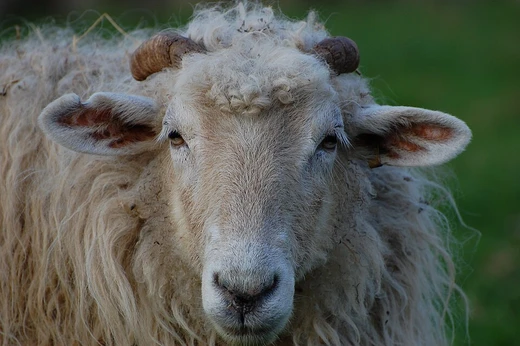
Monchina
Spanish mountain cattle breed at risk of extinction.

Valledemena · Public domain
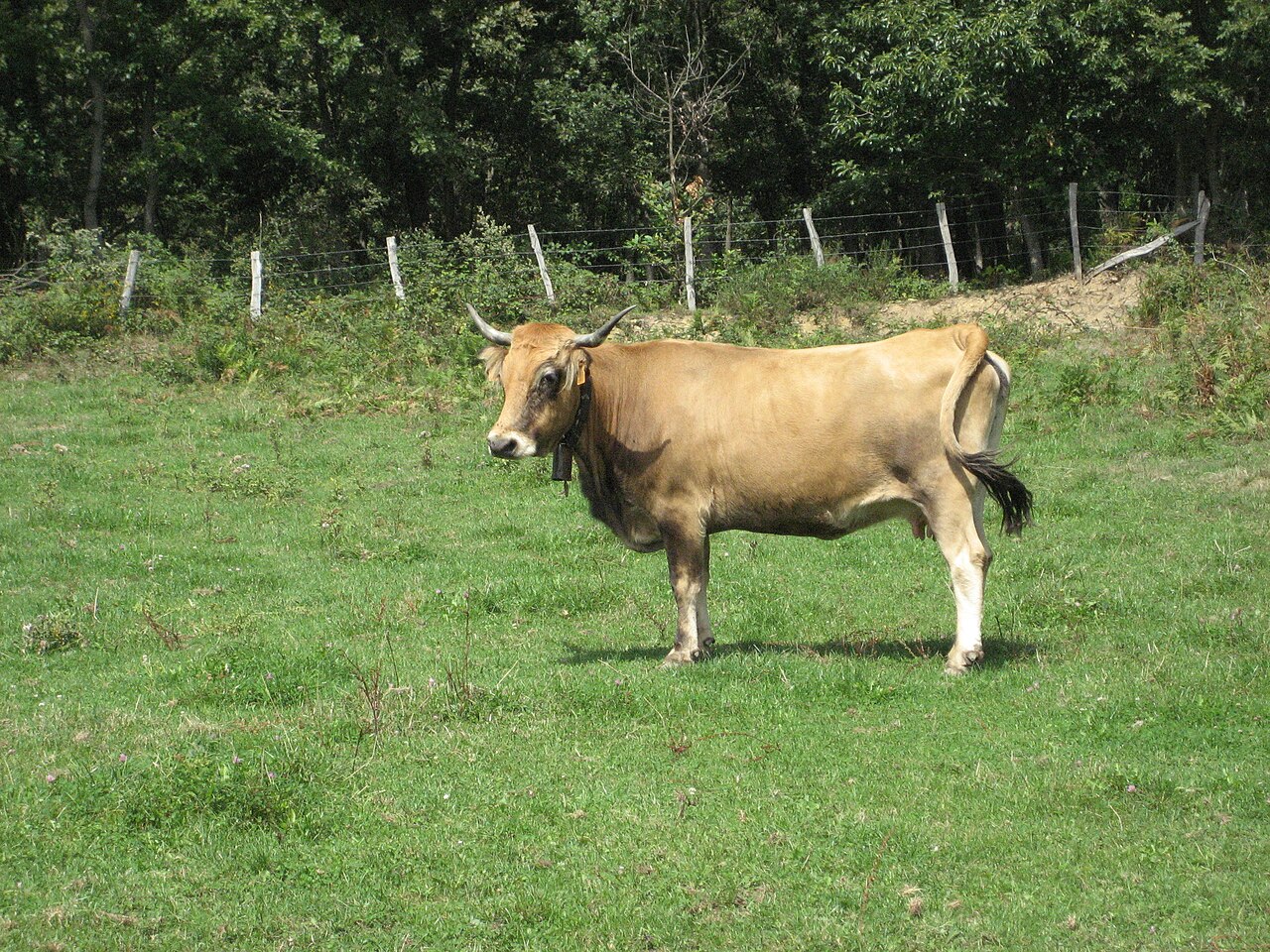
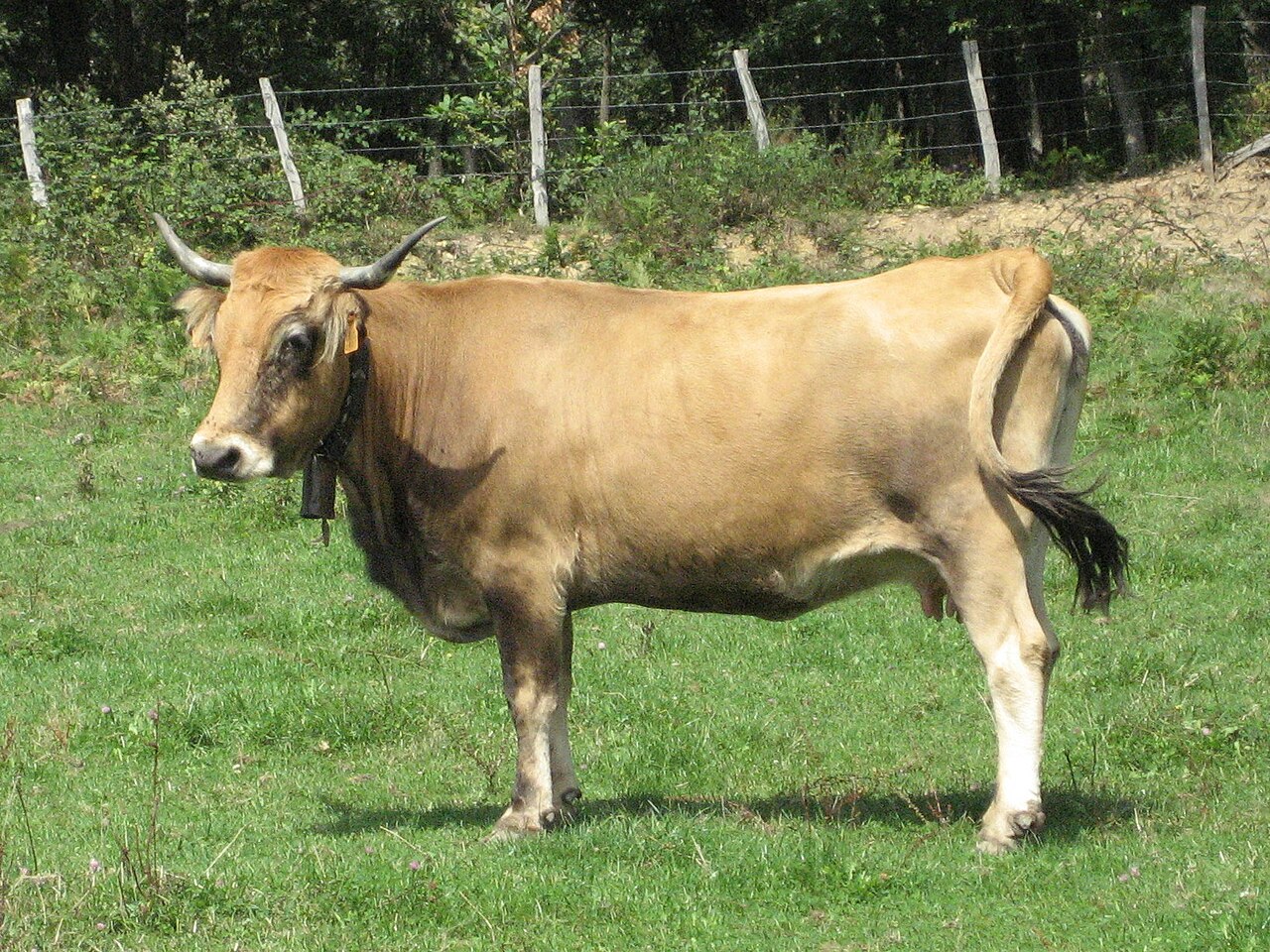
The Monchina, known as the *Behi montxina* in Basque, is a breed of mountain cattle native to northern Spain, specifically the autonomous communities of Cantabria and the Basque Country. It shares ties with the Betizu breed and may also be related to the Basque Country’s Terreña cattle. The breed is closely linked to the Villano de las Encartaciones dog, traditionally used to handle the cattle. Spain’s Ministry of Agriculture, Fisheries and Food classifies the Monchina as a “Raza Autóctona en Peligro de Extinción,” meaning it is a native breed at risk of extinction.
Historically, the Monchina has been raised in the mountainous regions of Cantabria and the Basque Country. Its main distribution areas include southeastern Cantabria, the Enkarterri comarca in southwestern Bizkaia, and the northern part of Burgos province in northeastern Castile y León. Key municipalities associated with the breed are Castro Urdiales, Guriezo, and Rasines in Cantabria; Karrantza, Trucíos, and the Cantabrian exclave of Villaverde de Trucíos in Bizkaia; and Merindad de Sotoscueva and Valle de Mena in Burgos.
For many years, breeders tried to boost meat production by cross-breeding Monchina with more productive meat breeds, such as Spain’s Asturiana de los Valles and France’s Charolaise and Limousine. This practice caused a sharp decline in purebred numbers. By the 1990s, the total breeding population had fallen to just two hundred cows and four or five bulls.
Quick Facts
- Country
- Spain
- Distribution
- Cantabria · Bizkaia · Burgos
- Use
- beefmapa3
- Horn
- horned
- Subspecies
- taurus
Facts from the source article.
Lore & Background
The Monchina is a traditional breed of the mountains of Cantabria and the Basque Country. It is distributed mainly in south-eastern Cantabria, in the comarca of Enkarterri in south-western Bizkaia, and in the northern part of the Province of Burgos in north-eastern Castile y León. It is closely associated with the municipalities of Castro Urdiales, Guriezo and Rasines in Cantabria; of Karrantza, Trucíos and the Cantabrian exclave of Villaverde de Trucíos in Bizkaia; and of Merindad de Sotoscueva and Valle de Mena in Burgos.
Reader's Guide
For many years extensive attempts were made to increase the meat yield by cross-breeding with more productive meat breeds such as the Spanish Asturiana de los Valles and the French Charolaise and Limousine. This led to a rapid reduction in the number of purebred stock, and in the 1990s the total breeding population was reported to consist of two hundred breeding cows and four or five bulls. The Monchina's significance lies in its status as a native breed at risk of extinction, representing a genetic heritage of the mountain regions of northern Spain. Its close association with the Villano de las Encartaciones dog breed highlights a traditional pastoral system. The breed's decline due to cross-breeding for meat yield underscores the tension between agricultural productivity and conservation of indigenous livestock.
Did You Know?
- The Monchina is classified as a 'Raza Autóctona en Peligro de Extinción' by the Spanish ministry of agriculture.
- It is closely associated with the Villano de las Encartaciones breed of dog, used in managing the cattle.
- It is distributed in southeastern Cantabria, Enkarterri in Bizkaia, and northern Burgos.
Geographic Identity & Regional Roots
The Monchina, called Behi montxina in the Basque language, is a mountain cattle breed indigenous to the northern highlands of Spain. Its traditional home spans the autonomous communities of Cantabria and the Basque Country, with the core of its distribution found in south-eastern Cantabria, the Enkarterri comarca of south-western Bizkaia, and the northern portion of the Province of Burgos in north-eastern Castile y León. The breed is especially linked to a constellation of small municipalities: Castro Urdiales, Guriezo, and Rasines in Cantabria; Karrantza, Trucíos, and the Cantabrian exclave of Villaverde de Trucíos within Bizkaia; and the Merindad de Sotoscueva and Valle de Mena in Burgos. This scattered yet coherent presence across three distinct provinces highlights how the Monchina has long been a fixture of the rugged pastoral landscape threading through the Iberian mountain corridor.
Breed Relationships & Pastoral Traditions
The Monchina does not exist in isolation within the genetic and cultural landscape of the Basque Country. It is related to the Betizu breed and may also share ancestral ties with the Terreña cattle of the same region, suggesting a broader family of mountain-adapted bovines that evolved in close proximity. Perhaps most distinctively, the Monchina is closely associated with the Villano de las Encartaciones, a breed of dog traditionally employed in managing these cattle. This pairing of a hardy mountain cow with a purpose-bred herding dog reflects a pastoral system refined over generations, where the dog's role in guiding and controlling the herd was as essential as the animal's own hardiness. Together, the Monchina and the Villano de las Encartaciones represent a complete working unit of the northern Spanish uplands, one that speaks to a way of life shaped by terrain, tradition, and mutual dependence between species.
The Crossbreeding Crisis
For decades, the drive to boost meat production posed a severe threat to the Monchina's genetic purity. Breeders and agricultural authorities pursued extensive crossbreeding programs, introducing more productive meat breeds into the Monchina population. The Spanish Asturiana de los Valles, along with the French Charolaise and Limousine, were the primary partners in these schemes. The logic was straightforward: larger, faster-growing animals would yield more meat. The consequence, however, was a rapid and dramatic decline in the number of purebred Monchina animals. By the 1990s, the situation had become critical. The total breeding population had been reduced to a mere two hundred breeding cows and only four or five bulls. This near-total loss of the gene pool brought the breed to the very edge of survival, transforming what had once been a common sight in the northern mountains into a vanishing rarity.
Conservation Status & Official Recognition
The Monchina's precarious numbers eventually compelled formal government intervention. The Ministerio de Agricultura, Pesca y Alimentación, Spain's ministry responsible for agriculture, fisheries, and food, officially classified the breed as a "Raza Autóctona en Peligro de Extinción" — a native breed at risk of extinction. This designation is not merely a bureaucratic label; it signals that the Monchina has lost the broad population base needed to sustain itself through natural selection and traditional breeding alone. The classification acknowledges both the breed's irreplaceable status as an indigenous Spanish cattle type and the urgency of protecting whatever purebred stock remains. It places the Monchina among the most vulnerable of Spain's native livestock, a living reminder that the crossbreeding era nearly erased a genetic lineage that had endured in the Cantabrian and Basque mountains for centuries.
Gallery
Frequently Asked Questions
What is the Monchina?
The Monchina, called Behi montxina in Basque, is a small mountain cattle breed native to the northern Spanish regions of Cantabria and the Basque Country. It is a hardy, locally adapted type of livestock rather than a dairy or beef specialist.
Where did Monchina cattle traditionally live?
Their historical range stretched across southeastern Cantabria, the Enkarterri (Encartaciones) area of Bizkaia, and parts of northern Burgos province. These rugged, semi-mountainous pastures shaped the breed's compact build and sure-footedness.
Is the Monchina breed endangered?
Yes. Spain's Ministry of Agriculture, Fisheries and Food officially lists the Monchina as a Raza Autóctona en Peligro de Extinción, meaning it is a native breed facing a real risk of disappearing. Conservation efforts focus on maintaining small herds and breeding programs in its traditional territory.
Which dog breed was traditionally paired with Monchina cattle?
The Villano de las Encartaciones, a working dog from the same region, was the breed's customary herding and handling partner. The two animals developed a long-standing working relationship in the mountain pastures of the Encartaciones and surrounding areas.
What other cattle breeds is the Monchina related to?
Genetic and historical links tie the Monchina most closely to the Betizu breed of the same mountain zone. Some researchers also point to a possible connection with the Terreña cattle of the wider Basque Country, though that relationship is less firmly established.
More in Basque domestic animal breeds 1-20
Spotted an error? Know more?
Reader corrections go straight into our review queue. Suggest an edit · How this site is sourced