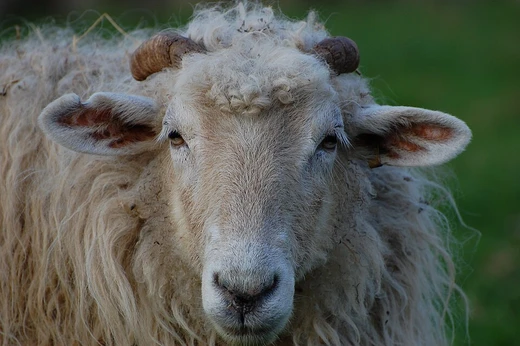
Asno de las Encartaciones
Spain's only small donkey breed, critically endangered and protected.

Mentxuwiki · CC BY-SA 4.0
The Asno de las Encartaciones, also called the Enkarterriko asto in Basque, is a breed of small donkey native to the western Basque Country in northeastern Spain. It takes its name from the Las Encartaciones district (Enkarterri) in the province of Biscay (Bizkaia). It is Spain’s only small donkey breed and is similar to the Gascon donkey, which is now considered a subtype of the Pyrenean breed. The animal is critically endangered and benefits from conservation efforts.
This donkey is originally from western Biscay, mainly found in the towns of Artzentales, Balmaseda, Galdames, Gordexola, Güeñes, Karrantza, Lanestosa, Sopuerta, Turtzioz, and Zalla. It nearly vanished over the 1900s. Numbers started dropping in the early decades of the century, with the steepest decline in the 1960s and 1970s. Around the early 1970s, there were roughly 1,000 animals, but by the late 1990s only about 100 remained. Like other donkey breeds, the main reasons were farm mechanization and people leaving rural areas.
The breed appeared at agricultural fairs in Gordexola in 1994 and Markina in 1995. This led to the creation of a breeders’ group, the Asociación para la protección y Defensa del Burro de Las Encartaciones, in 1996. A conservation plan, which included a 12-hectare reserve at Gordexola, came out in 1999. Official recognition followed in 2004. The Food and Agriculture Organization of the United Nations listed its status as “critical” in 2007, and the SAVE Foundation did the same in 2008. Spain’s agriculture ministry does not publish population data. Reports from 1999, 2001, and 2008 all put the number at about 100.
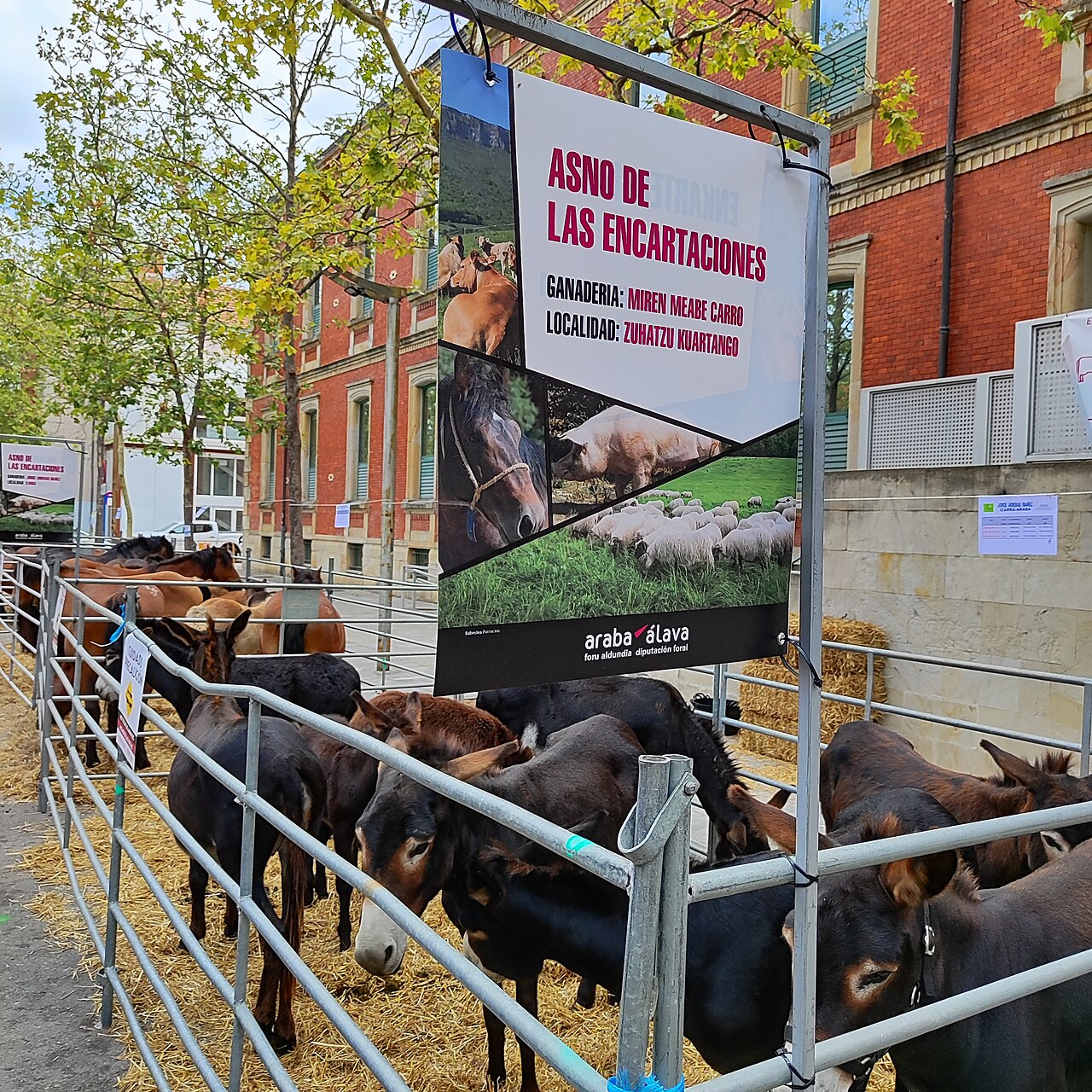
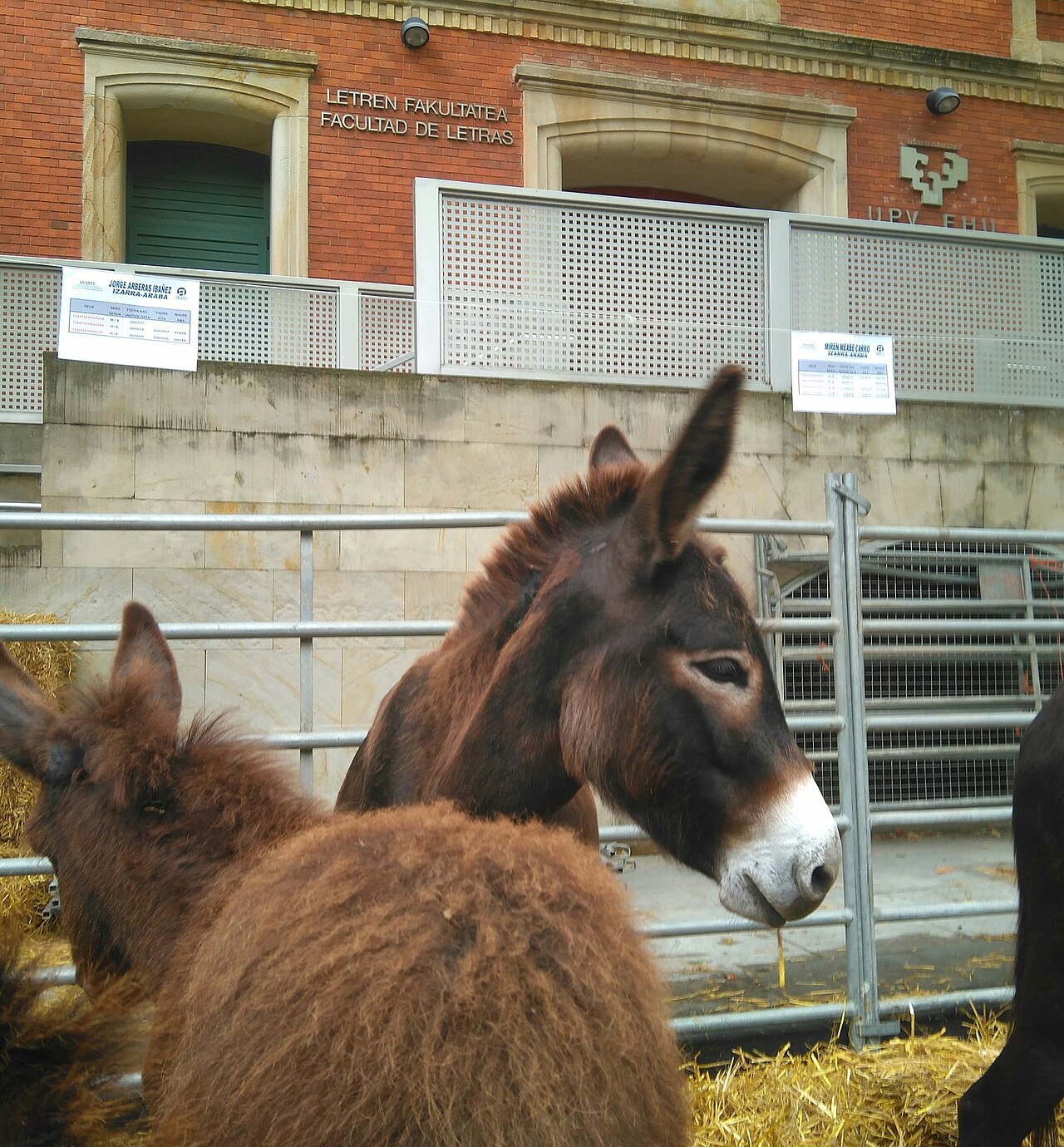
The Asno de las Encartaciones is Spain’s only small donkey breed. It stands around 120 cm tall and weighs roughly 200 kg. Its coat is black or dark bay, with a pale belly, muzzle, and area around the eyes. It may also have a darker stripe along its back.
Though small, this donkey is strong. It was used to haul minerals from mines along the Cantabrian coast and for all kinds of farm work. Its hooves are small and do not damage the ground. Because male donkeys tend to be competitive, Basque farmers preferred to keep females. The meat of male foals, slaughtered at about three months old, was a traditional local dish.
Quick Facts
- Country
- Spain
- Distribution
- Basque Country
- Standard
- [http: · www.magrama.gob.es/es/ganaderia/temas/zootecnia/Asno_de_las_encartaciones_orden_1_julio_2004_tcm7-297468.pdf MAPA] (in Spanish)
- Maleweight
- 170–210 kgmapa4
- Femaleweight
- 140–190 kgmapa4
- Maleheight
- 109–123 cmmapa4
- Femaleheight
- 103–123 cmmapa4
- Coat
- black or dark baymapa2
Facts from the source article.
Lore & Background
The Asno de las Encartaciones is indigenous to the western part of the province of Biscay, concentrated in municipalities including Artzentales, Balmaseda, Galdames, Gordexola, Güeñes, Karrantza, Lanestosa, Sopuerta, Turtzioz and Zalla. The breed almost disappeared during the twentieth century, with numbers falling most rapidly in the 1960s and 1970s. The population numbered about 1000 in the early 1970s and had fallen to barely 100 by the late 1990s. The principal causes were the mechanisation of agriculture and the depopulation of rural areas.
The breed was presented at agricultural fairs in Gordexola in 1994 and at Markina in 1995. A breeders' association, the Asociación para la protección y Defensa del Burro de Las Encartaciones, was formed in 1996, and a conservation plan including a 12-hectare reserve at Gordexola was published in 1999. The breed was officially recognised in 2004. Numbers of about 100 were reported in 1999, 2001 and 2008.
Reader's Guide
The Asno de las Encartaciones holds significance as Spain's only small donkey breed, representing a unique genetic resource adapted to the rugged terrain of the Basque Country. Its historical role in mineral extraction from the mines of the Cantabrian coast and in agricultural work highlights its utility in pre-industrial and early industrial economies. The breed's small hooves, which do not damage terrain, made it particularly suited for such tasks. The breed's critical conservation status, as listed by the FAO in 2007 and the SAVE Foundation in 2008, underscores the urgency of ongoing protection efforts, including the reserve at Gordexola and the work of the breeders' association formed in 1996. The traditional practice of slaughtering jack foals at about three months for meat, a local delicacy, reflects the breed's integration into Basque rural culture. The breed's near-disappearance in the twentieth century mirrors broader trends of agricultural mechanisation and rural depopulation, making its preservation a matter of cultural and biological heritage.
Did You Know?
- The Asno de las Encartaciones is the only small donkey breed in Spain.
- Its population fell from about 1000 in the early 1970s to barely 100 by the late 1990s.
- A 12-hectare reserve for the breed was established at Gordexola in 1999.
- Basque farmers traditionally preferred to keep jennies due to the competitive nature of jacks.
A Century of Loss
The Asno de las Encartaciones, known in Basque as Enkarterriko asto, is native to the western reaches of Biscay (Bizkaia) in the Basque Country. Its traditional range spans a cluster of small municipalities including Artzentales, Balmaseda, Galdames, Gordexola, Güeñes, Karrantza, Lanestosa, Sopuerta, Turtzioz, and Zalla. For generations these animals were a familiar presence in that landscape, but the twentieth century brought a devastating reversal. The decline set in during the early decades of the century and accelerated sharply through the 1960s and 1970s. By the early 1970s the population had already dropped to roughly one thousand head, and by the late 1990s fewer than one hundred remained. Two forces drove the collapse: the mechanisation of farming, which eliminated the need for small pack animals, and the steady emptying of rural communities as people moved to cities. The breed teetered on the edge of extinction, a living reminder of how quickly industrial change can erase a centuries-old pastoral tradition.
From Obscurity to Protection
The breed's rescue from the brink began with modest public visibility. In 1994 the Asno de las Encartaciones was showcased at an agricultural fair in Gordexola, followed by another appearance at Markina the next year. These exhibitions galvanised local enthusiasts, and in 1996 the Asociación para la protección y Defensa del Burro de Las Encartaciones was established to coordinate breeding and advocacy. A formal conservation plan followed in 1999, which included the designation of a twelve-hectare reserve at Gordexola to safeguard a core breeding population. Official breed recognition came in 2004, a milestone that gave the animal legal standing within Spanish agricultural policy. International bodies soon took notice: the FAO classified the breed as critically endangered in 2007, and the SAVE Foundation echoed that assessment in 2008. Yet transparency remains a concern—Spain's Ministry of Agriculture, Food and Environment has not published population figures for the breed. The best available estimates, hovering around one hundred individuals, were recorded in 1999, 2001, and again in 2008, suggesting the population has barely budged in nearly a decade.
A Distinctive Small Stature
Among all Spanish donkey breeds, the Asno de las Encartaciones holds a singular position: it is the country's only small donkey type. Standing at roughly 120 centimetres at the withers and tipping the scales near 200 kilograms, it is noticeably compact compared with larger Iberian and Pyrenean lines. Its closest visual relative is the Gascon donkey, which has since been reclassified as a sub-type of the Pyrenean breed. The coat is typically black or dark bay, contrasted by a pale belly, a light muzzle, and pale markings around the eyes. Some individuals display a darker dorsal stripe running along the spine. The breed takes its name from the comarca of Las Encartaciones—Enkarterri in Basque—a hilly district in the province of Biscay where the animals have roamed for centuries. Though small in stature, the breed is not fragile; its build is sturdy and its hooves are notably small, a trait that kept them from trampling the ground on which they worked. This combination of compact size and rugged strength set it apart from every other donkey line in Spain.
Work, Mines, and a Local Table
Despite its modest height, the Asno de las Encartaciones was a workhorse of the western Basque landscape. Its small, sturdy frame and compact hooves—designed not to damage the terrain beneath—made it well suited to hauling loads through the narrow passages of the Cantabrian coast's mineral mines. Beyond mining, the breed handled a wide range of agricultural tasks on smallholdings across the Encartaciones. An interesting cultural practice shaped how farmers managed their herds: because jacks (male donkeys) are inherently competitive and can be difficult to keep together, Basque farmers preferred to retain jennies. The jack foals, however, were not wasted. Slaughtered at around three months of age, their meat became a traditional local delicacy, a small but meaningful part of the region's culinary heritage. This dual role—as a tireless labourer in mines and fields, and as a source of a prized local food—wove the breed deeply into the daily rhythms and identity of the communities that raised it, a connection that was severed almost entirely by the mid-twentieth century.
Gallery
Frequently Asked Questions
What is the Asno de las Encartaciones?
It is a small donkey breed that originates from the Enkarterri district in western Biscay, in the Basque Country of Spain. In Basque it goes by the name Enkarterriko asto, and individuals stand roughly 120 cm at the shoulder.
Where exactly is the Asno de las Encartaciones from?
The breed is native to the western part of the province of Biscay, with historic strongholds in towns such as Artzentales, Balmaseda, Galdames, Gordexola, and Güeñes. Its very name is a direct reference to the Las Encartaciones (Enkarterri) region.
What does the Asno de las Encartaciones look like?
These compact donkeys typically weigh around 200 kg and carry a black or dark bay coat with noticeably paler coloring on the belly, muzzle, and around the eyes. Their small stature sets them apart from the larger donkey types common elsewhere in Spain.
How endangered is the Asno de las Encartaciones?
Both the FAO (2007) and the SAVE Foundation (2008) have classified the breed as critically endangered, meaning very few individuals remain in the wild or in managed herds. Active conservation programs are currently working to protect and grow the surviving population.
What makes the Asno de las Encartaciones unique among Spanish donkeys?
It holds the distinction of being the only small donkey breed found anywhere in Spain, which no other domesticated donkey in the country can claim. Its closest genetic relative is the Gascon donkey, a type that has since been reclassified as a subtype of the broader Pyrenean breed.
More in Basque domestic animal breeds 1-20
Spotted an error? Know more?
Reader corrections go straight into our review queue. Suggest an edit · How this site is sourced