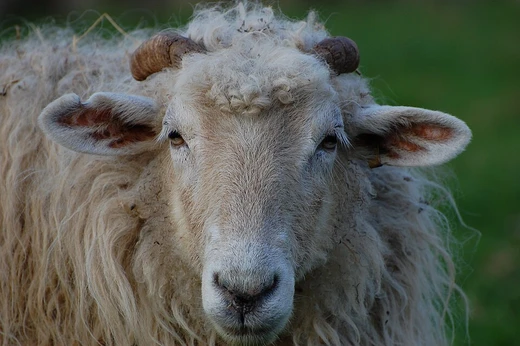
Azpi Gorri
Traditional Basque goat breed with reddish lower parts.

Xabier Armendaritz · CC BY-SA 4.0
The Azpi Gorri is a domestic goat breed from the Basque Country, where it is the only recognised goat breed. Its range covers northern Álava, southern Bizkaia, and a small number of herds in Navarre.
By the late 1900s, the breed was critically endangered, with only about one hundred breeding animals left. It was added to Spain’s official livestock breed catalogue in 1997 and to the Basque Country’s list of local breeds in 2001. A breed association, the Euskal Herriko Azpi Gorri Elkartea, was founded in 1999 and has managed the herd-book since 2007. That same year, the Azpi Gorri was included in the Slow Food Foundation’s Ark of Taste, which also lists the Azpi Zuri—a colour variant with white instead of red on the lower parts.
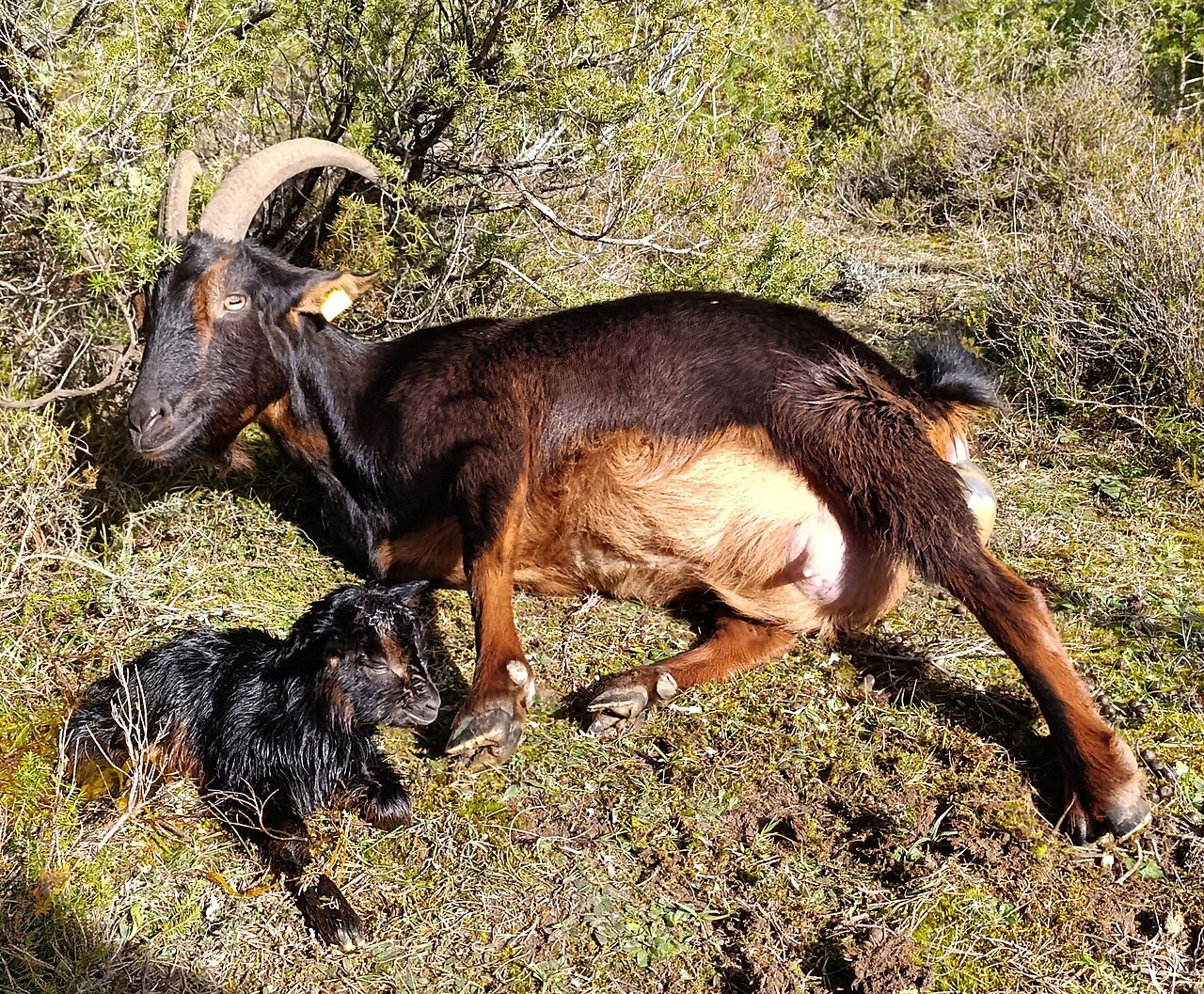
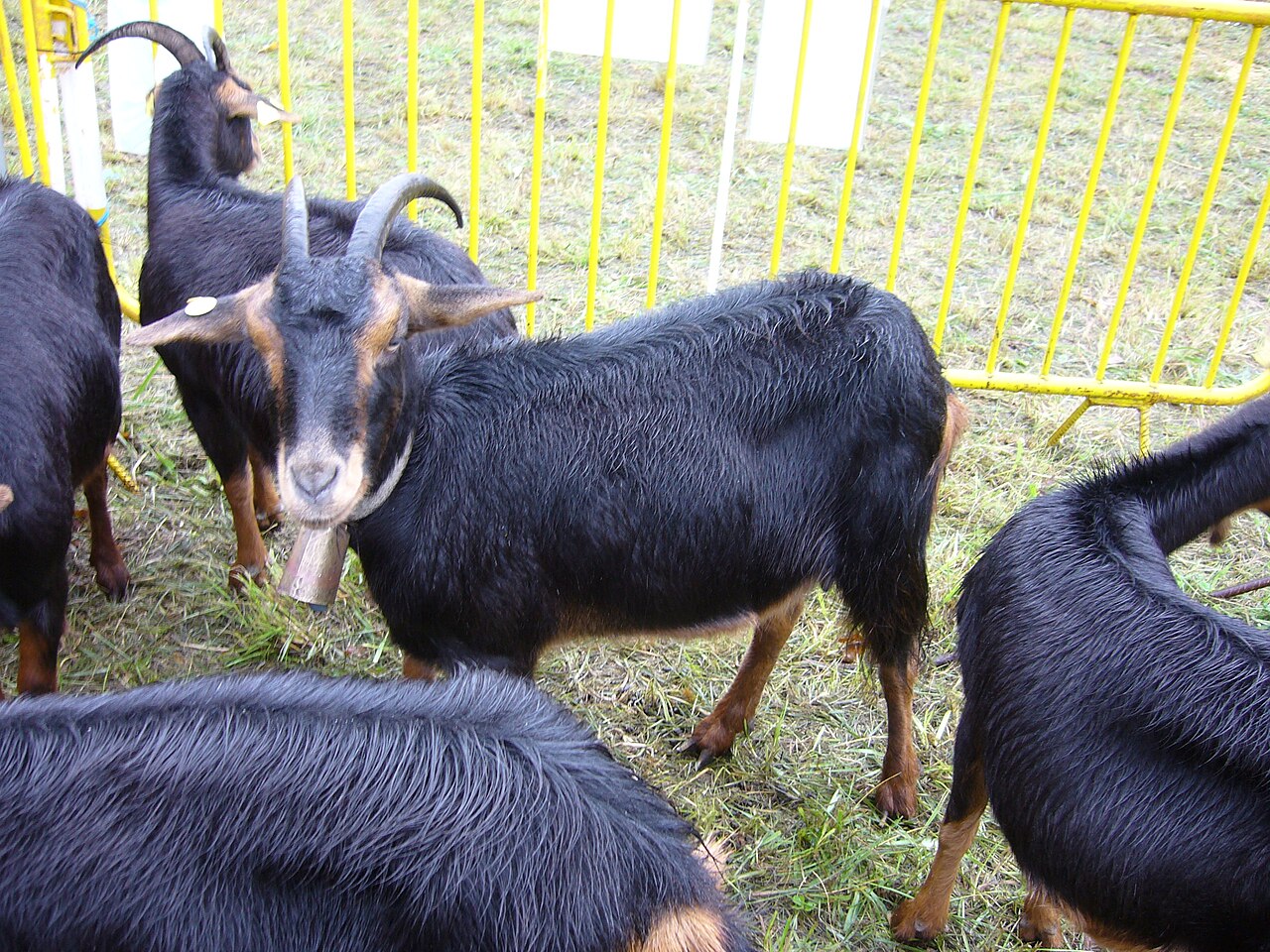
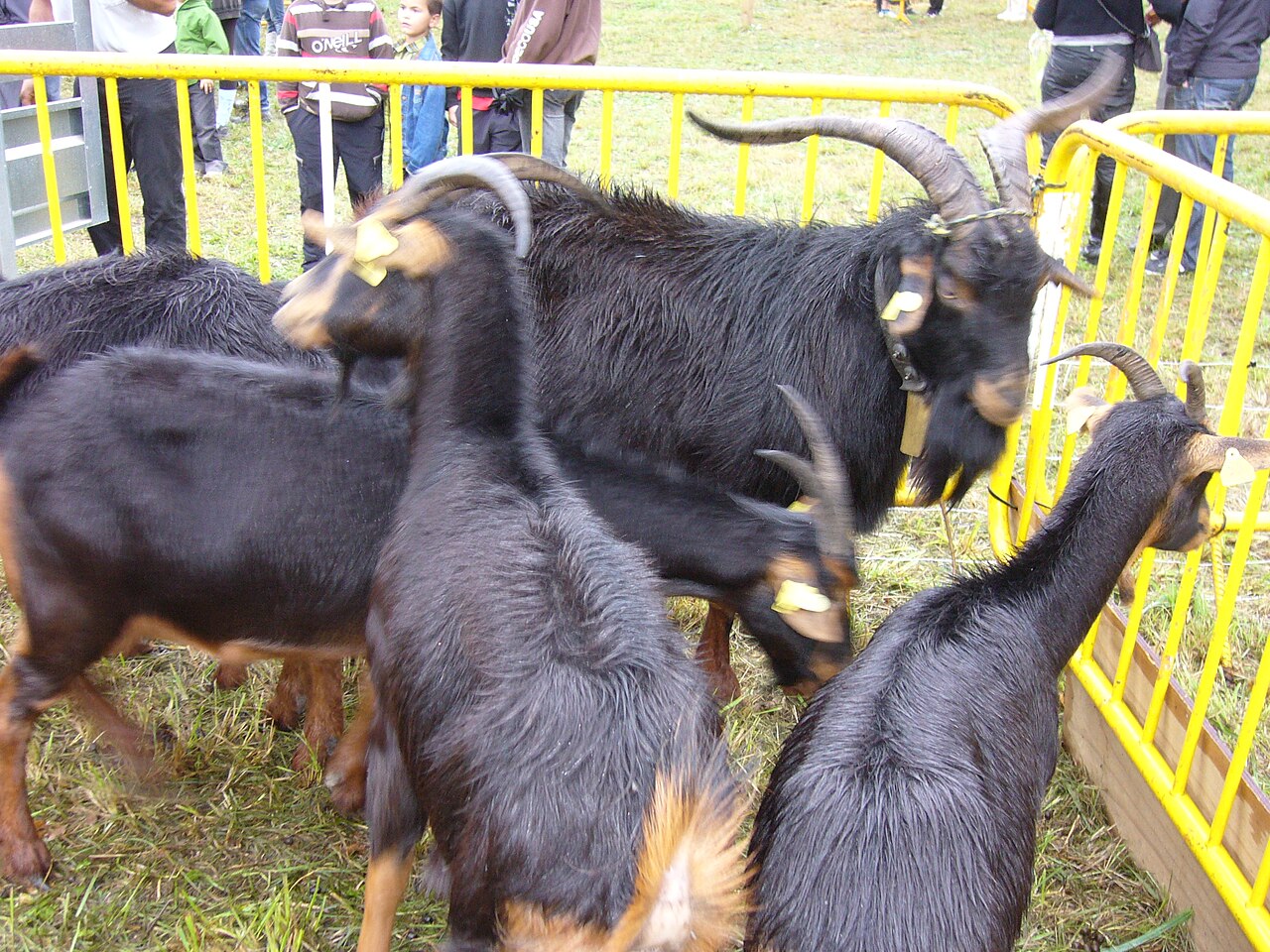
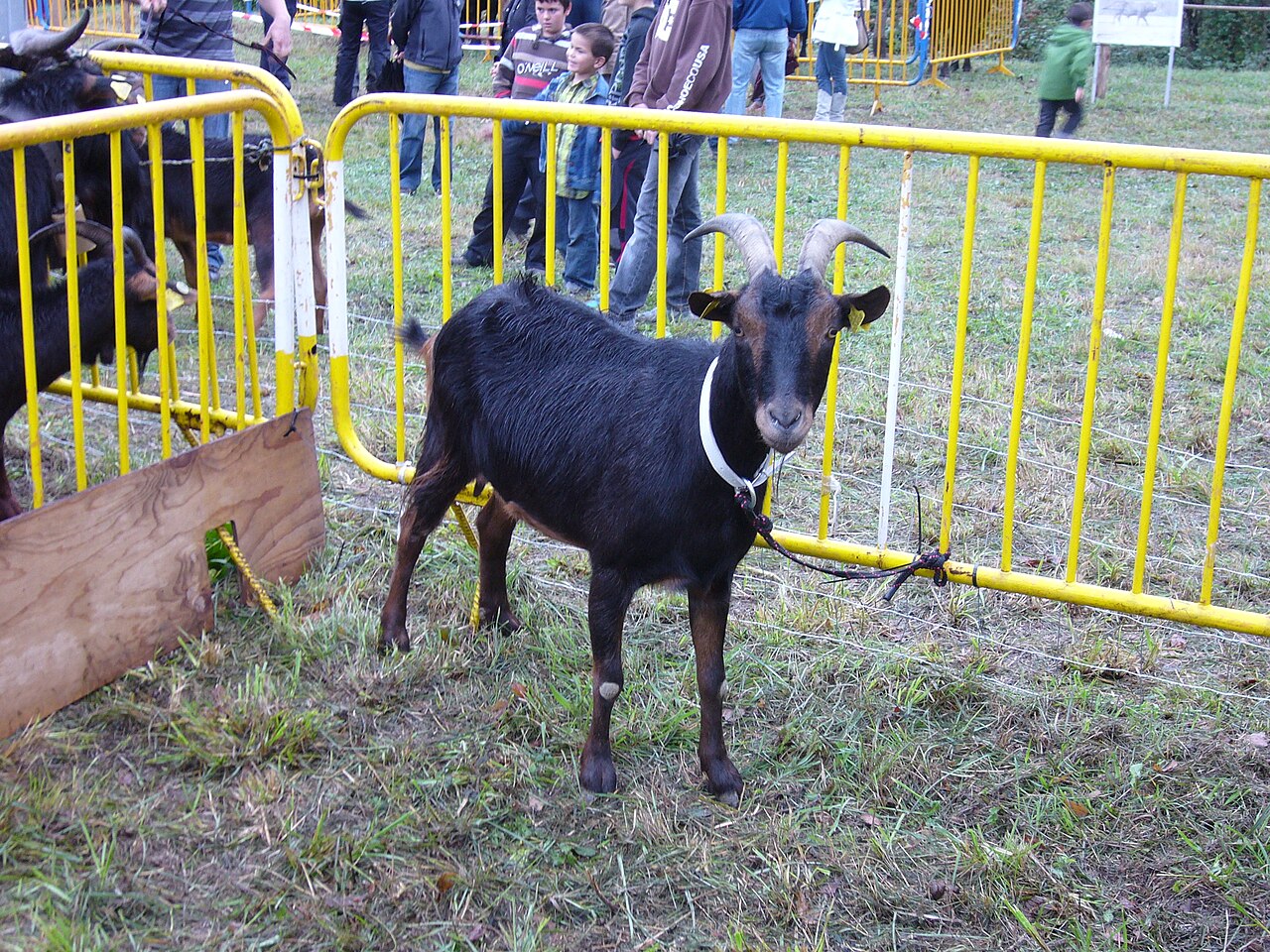
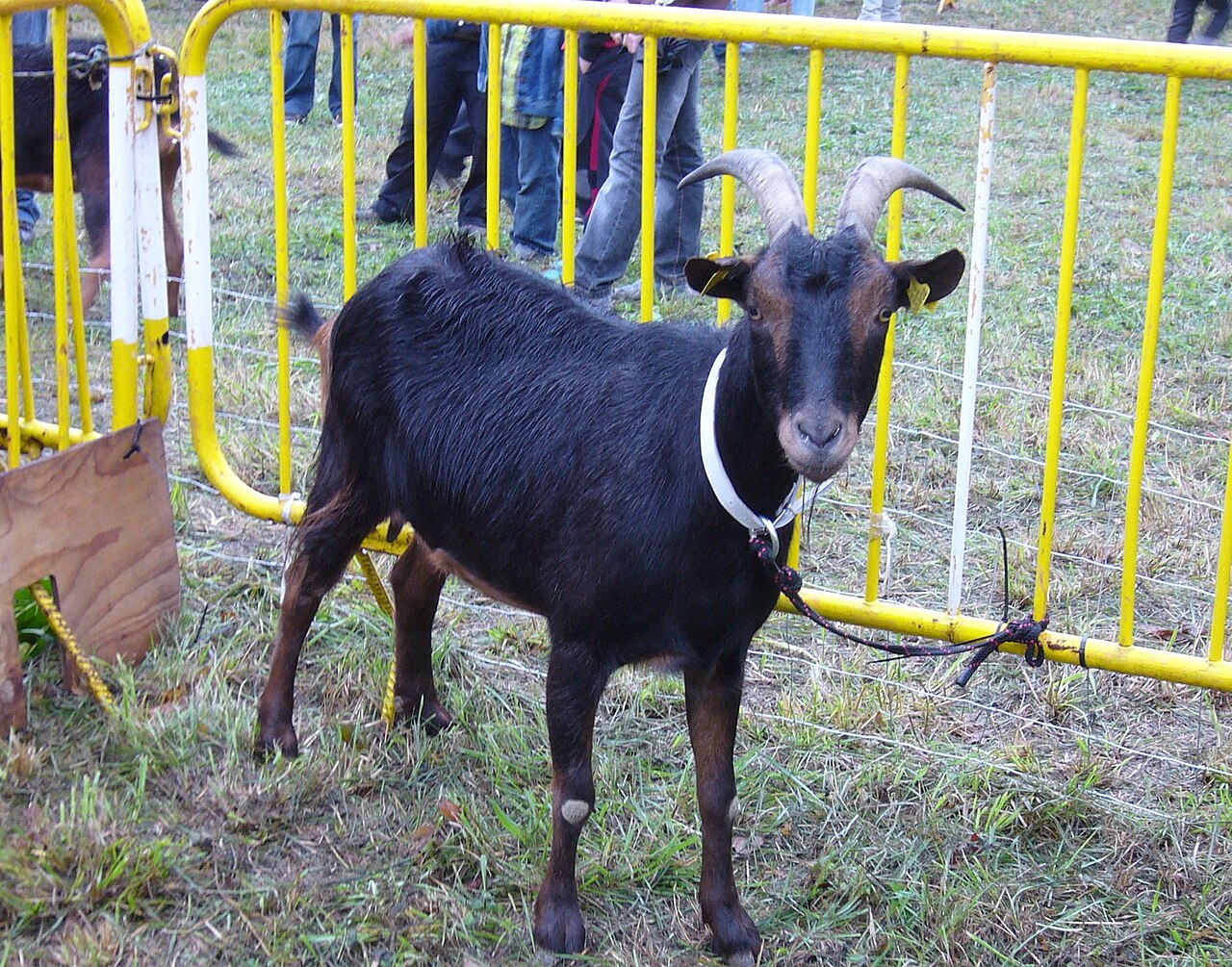
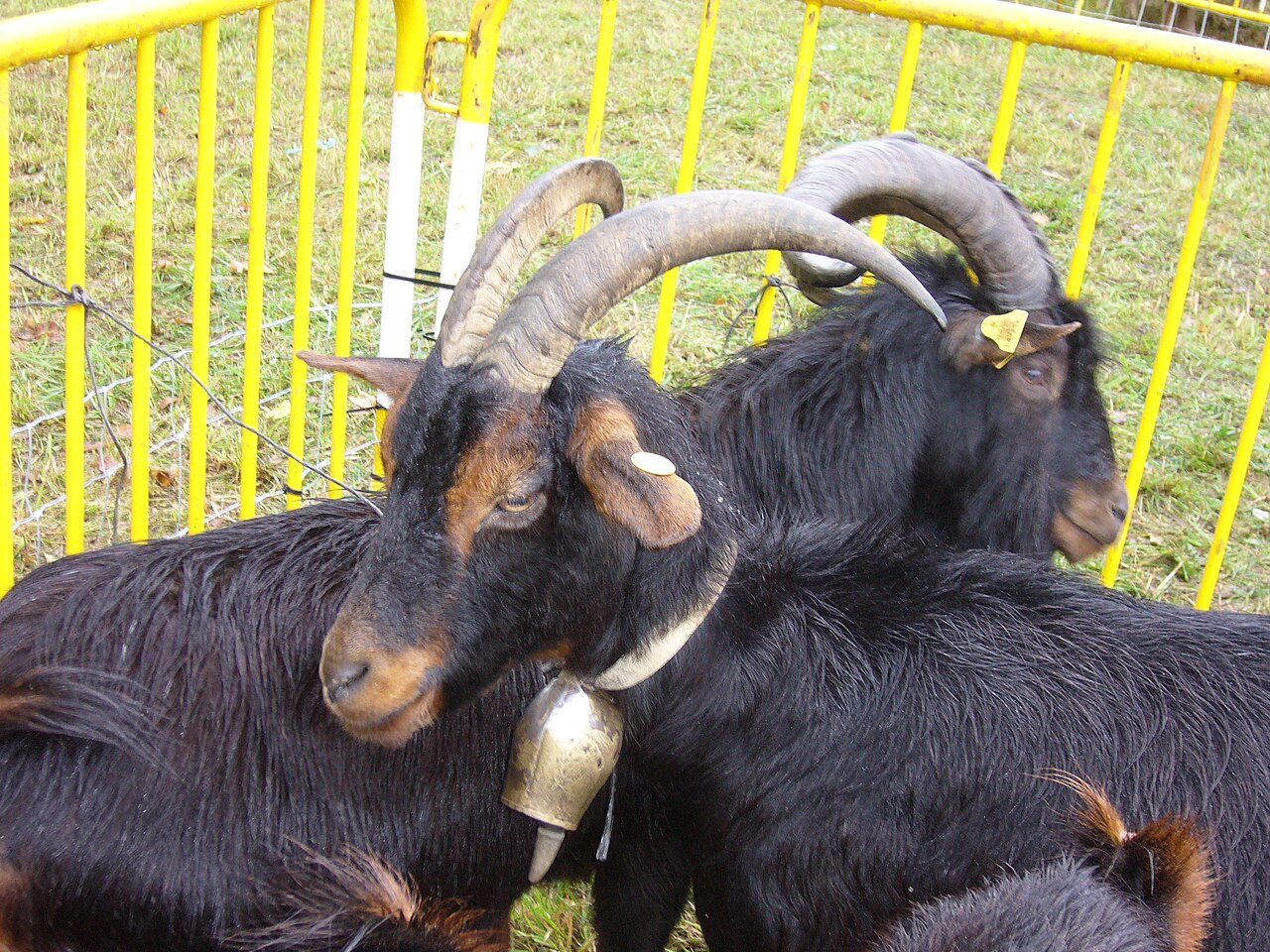
The Azpi Gorri is a medium-sized goat with a short, glossy black coat. Chestnut-red markings appear on the belly, the underside of the tail, the legs, and the face—the Basque name means “with reddish lower parts.” It has a straight facial profile and ears that are held more or less horizontally. Nannies have arched horns, while billies have more corkscrew-shaped horns; both sexes may occasionally have tassels.
Quick Facts
- Country
- Spain
- Distribution
- Euskal Herria
- Use
- goat's meatmapa3
- Maleweight
- 63 kgmapa4
- Femaleweight
- 43 kgmapa4
Facts from the source article.
Lore & Background
The Azpi Gorri is a medium-sized goat with a short, lustrous black coat and chestnut-red markings on the underbelly, underside of the tail, legs, and face. The Basque words 'azpi gorri' mean approximately 'with reddish lower parts'. Its facial profile is straight, ears are held more or less horizontally, and horns are arched in nannies and more corkscrew-shaped in billies; both sexes occasionally have tassels.
By the late twentieth century the breed had become gravely endangered, with an estimated breeding population of 100. In 1997 it was added to the Catálogo Oficial de Razas de Ganado de España, the national register of livestock breeds, and in 2001 it was included in the official list of Basque breeds of the País Vasco. A breed society, the Euskal Herriko Azpi Gorri Elkartea, was formed in 1999 and has kept the herd-book since 2007.
In 2007 the Azpi Gorri was added to the Ark of Taste of the Slow Food Foundation. The Ark of Taste also lists the Azpi Zuri, a colour variant with white lower parts rather than the characteristic red of the standard breed.
Reader's Guide
The Azpi Gorri holds significance as the only recognised goat breed of the historical Basque Country, representing a unique genetic and cultural heritage. Its near-extinction in the late twentieth century, with only about 100 breeding animals, prompted formal recognition and conservation efforts. Inclusion in Spain's national livestock register in 1997 and the Basque official breed list in 2001 provided legal protection and support. The formation of a dedicated breed society in 1999 and the establishment of a herd-book in 2007 helped systematize breeding and monitoring. The breed's addition to the Slow Food Foundation's Ark of Taste in 2007 further raised awareness of its culinary and cultural value. The existence of the Azpi Zuri colour variant highlights the breed's diversity. Conservation of the Azpi Gorri helps preserve traditional Basque pastoral practices and biodiversity, serving as a model for endangered livestock breed recovery. Its continued presence in Álava, Bizkaia, and Navarre maintains a living link to the region's agricultural history.
Origins & Geographic Heartland
The Azpi Gorri is a traditional domestic goat breed that originates in the historical Basque Country. It holds a unique position in Spanish animal husbandry as the sole goat breed officially recognised from that region. The breed's distribution is geographically concentrated: it is found primarily in the northern part of the province of Álava and in southern Bizkaia, with a smaller number of herds kept in the autonomous community of Navarre. This restricted range underscores how closely the breed is tied to a particular corner of the Basque world. As a traditional animal of that region, the Azpi Gorri represents a distinct line of domestication that developed within the cultural and geographic boundaries of the Basque Country, setting it apart from goat populations elsewhere in Spain. Its status as the only recognised breed from the area makes it an irreplaceable element of the region's livestock heritage.
From the Brink to Formal Recognition
By the late twentieth century, the Azpi Gorri had slipped into a state of grave endangerment, with its estimated breeding population reduced to roughly one hundred animals. The subsequent decades saw a steady accumulation of formal protections. In 1997, the breed was entered into the Catálogo Oficial de Razas de Ganado de España, the national livestock register maintained by the Spanish Ministry of Agriculture, Fisheries and Food. Two years later, in 1999, a dedicated breed society called the Euskal Herriko Azpi Gorri Elkartea was established to coordinate conservation efforts. In 2001 the Azpi Gorri was formally included in the official list of Basque breeds maintained by the País Vasco authorities. The society has been responsible for maintaining the herd-book since 2007, providing a structured record of the breed's lineage and ensuring that future generations of animals can be traced with confidence.
Appearance & the Meaning Behind the Name
The Azpi Gorri is a medium-sized goat with a distinctive and easily identifiable coat. Its base colour is a short, lustrous black, overlaid with chestnut-red markings on specific areas: the underbelly, the underside of the tail, the legs, and the face. This very pattern is what gives the breed its name; the Basque words azpi gorri translate roughly to 'with reddish lower parts.' The facial profile is straight, and the ears are carried more or less horizontally. Horns differ between the sexes: in nannies they tend to arch outward, while in billies they take on a more pronounced corkscrew shape. Both sexes may occasionally display small tassels. A colour variant known as the Azpi Zuri also exists, in which the lower parts are white rather than the standard red, though it is listed separately in conservation records.
Cultural Stewardship & Living Heritage
The Azpi Gorri's journey from near-extinction to a position of cultural prominence reflects a broader commitment to preserving regional biodiversity. In 2007, the Slow Food Foundation added the breed to its Ark of Taste, an international catalogue that highlights traditional foodstuffs and animal breeds at risk of disappearing. That same year, the Euskal Herriko Azpi Gorri Elkartea assumed responsibility for the breed's herd-book, institutionalising the recording of pedigrees and supporting responsible breeding. The Ark of Taste listing also acknowledges the Azpi Zuri, the white-lowered variant, ensuring that both colour forms receive recognition. Together, these designations position the Azpi Gorri not merely as a farm animal but as a living cultural artifact of the Basque Country. As the only recognised goat breed from the region, it carries a symbolic weight that extends well beyond the pasture, anchoring the identity of Basque pastoral tradition in a single, distinctive animal.
Gallery
Frequently Asked Questions
What is the Azpi Gorri?
The Azpi Gorri is a traditional domestic goat breed native to the Basque Country and the only goat breed officially recognised there. Its name points to the distinctive reddish coloration on the lower parts of the animal.
Where do Azpi Gorri goats live?
Their historical range covers northern Álava and southern Bizkaia, with a small number of herds also kept in Navarre.
How close did the Azpi Gorri come to going extinct?
By the late 1990s only around one hundred breeding animals remained, putting the breed on the verge of disappearance. It was entered on Spain's national livestock catalogue in 1997 and on the Basque Country's local-breed list in 2001, which helped anchor its recovery.
Who looks after the Azpi Gorri breed today?
The Euskal Herriko Azpi Gorri Elkartea, a breed society founded in 1999, has been responsible for maintaining the official herd-book since 2007.
Is the Azpi Gorri listed on any international conservation register?
Yes — in 2007 the breed was included in the Ark of Taste, an international catalogue that spotlights rare and endangered food-heritage products.
More in Basque domestic animal breeds 1-20
Spotted an error? Know more?
Reader corrections go straight into our review queue. Suggest an edit · How this site is sourced