SCOBY
A symbiotic culture of bacteria and yeast used in fermented foods.

A symbiotic culture of bacteria and yeast (SCOBY) is a culinary symbiotic fermentation starter consisting of lactic acid bacteria (LAB), acetic acid bacteria (AAB), and yeast. It arises in the preparation of sour foods and beverages such as kombucha, and the term most accurately refers to the culture suspended in the fermentation media, though it is also commonly used to refer to the gelatinous biofilm or microbial mat found at the air–liquid interface. SCOBY is notable for its role in producing fermented products and for the bacterial cellulose pellicle it forms, which has applications in biomedical research and bio-textiles.
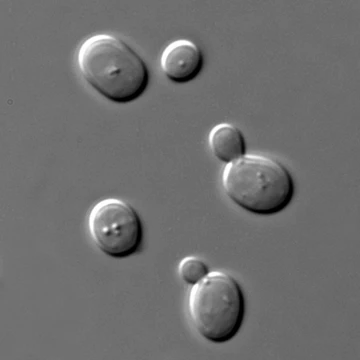
- Yeast involved in kombucha
- Zygosaccharomyces is reported in 84.1% of kombucha SCOBY fermentation processes
- Bacteria populous in kombucha
- Gluconaceobacter resides in 86–99% of both liquid and biofilm cultures
- Optimal fermentation time
- 10 days (per certain studies)
- Typical temperature range
- 20–30 °C (68–86 °F)
- Typical ph range
- 4–4.5
- Average pellicle thickness
- two to five millimeters
Lore & Background
SCOBYs are co-cultures that typically include aerobic, gram-negative AAB species such as Acetobacter, Gluconobacter, and Komagataeibacter; aerobic, gram-positive LAB such as Lactobacillus; and yeasts such as Saccharomyces and Zygosaccharomyces. For kombucha, the first step is yeast fermentation of sugars into ethanol and carbon dioxide, followed by bacterial conversion of ethanol into organic acids such as acetic acid, with possible byproduct cellulose forming the biofilm. The species chosen and culture conditions directly affect both the liquid product and the SCOBY pellicle's composition and morphology.
The cellulose pellicle forms when bacteria such as Acetobacter pull glucose molecules together via β(1-4) linkages to create fibrils, which join into microfibrils, forming a matrix that serves as a natural defense mechanism against extreme conditions like temperature and UV radiation. The thickness of a kombucha SCOBY is contingent on brewing conditions, with one study reporting an average of two to five millimeters. SCOBYs can be divided to start multiple cultures or dehydrated to create a jerky-like food, and once removed, the culture regenerates a new pellicle known informally as a 'baby SCOBY.'
Reader's Guide
The significance of SCOBY lies in its dual role as both a fermentation starter and a source of bacterial cellulose with unique properties. In food production, SCOBY is essential for kombucha and is also used in ginger beer, jun, kefir, sourdough bread, tibicos, vinegar (via mother of vinegar), and lambic. The nanocellulose composing the pellicle demonstrates great strength, stability, hydrophilicity, and biocompatibility, making it a target in biomedical research for tissue scaffolds, cardiovascular components, bone grafts, and connective tissue replacements. Additionally, the nanocellulose fibrils can be extracted via acid hydrolysis for use in food packaging, clothing, and wastewater treatment. Queensland University of Technology and the State Library of Queensland have used kombucha SCOBY to produce a workable bio-textile considered vegan leather, and a small international team has tested its use for producing electronic circuit boards. The culture's ability to be reused and divided, along with its sensitivity to conditions, requires adequate monitoring for consistent product quality.
Did You Know?
- SCOBY most accurately refers to the culture of bacteria and yeast suspended in the fermentation media, but it is also commonly used for the gelatinous biofilm at the air–liquid interface.
- Zygosaccharomyces is reported to be involved in 84.1% of all kombucha SCOBY fermentation processes due to its stability in high sugar and halophilic conditions.
- Gluconaceobacter resides in 86–99% of both liquid and biofilm cultures in kombucha SCOBYs.
- The nanocellulose fibrils from SCOBY can be extracted via acid hydrolysis and used in food packaging, clothing, and wastewater treatment.
More in Yeasts, Part 2 1-24
Spotted an error? Know more?
Reader corrections go straight into our review queue. Suggest an edit · How this site is sourced