Kriegeria
A monotypic sedge pathogen with a yeast state.

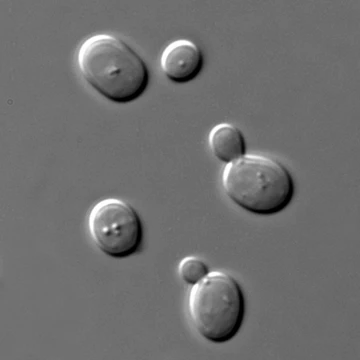
Kriegeria is a monotypic genus of fungi in the subdivision Pucciniomycotina, containing the single species Kriegeria eriophori. It is notable as a plant pathogen parasitic on sedges, producing auricularioid (laterally septate) basidia and a yeast state upon spore germination.
- Species
- Kriegeria eriophori
- Described by
- Giacomo Bresadola
- Year described
- 1891
- Basidiospore size
- 18-30 x 7-11 μm
- Basidiospore characteristics
- smooth, hyaline, fusoid-cylindrical
- Host plants
- Eriophorum angustifolium, Scirpus sylvaticus, Scirpus atrovirens
- Distribution
- Europe (Germany, Czech Republic) and North America (Canada, USA)
Lore & Background
The genus and species were described in 1891 by Italian mycologist Giacomo Bresadola, based on a specimen collected in Saxony by German mycologist Karl Wilhelm Krieger. Rabenhorst had previously proposed the name Kriegeria for an ascomycetous fungus, but that name was invalidly published, making Bresadola's Kriegeria legitimate. The later replacement name Xenogloea is an illegitimate synonym. The anamorphic yeast state was named Zymoxenogloea eriophori, but changes to the International Code of Nomenclature for algae, fungi, and plants discontinued the practice of separate names for teleomorph and anamorph forms, making Zymoxenogloea a synonym of Kriegeria. Molecular research based on cladistic analysis of DNA sequences has shown that Kriegeria is a monophyletic genus.
Reader's Guide
Kriegeria's significance lies in its taxonomic history and its role as a plant pathogen. The genus illustrates the complexities of fungal nomenclature, particularly the invalidity of Rabenhorst's earlier use of the name Kriegeria and the subsequent illegitimate synonym Xenogloea. The abandonment of separate names for teleomorph and anamorph forms under the International Code of Nomenclature for algae, fungi, and plants rendered Zymoxenogloea a synonym, simplifying the classification. Molecular research has confirmed Kriegeria as a monophyletic genus, supporting its natural grouping. As a pathogen of sedges, it contributes to the ecological dynamics of its host plants, though it appears to be rare or rarely recorded. Its auricularioid basidia and yeast state are characteristic features within Pucciniomycotina.
Did You Know?
- The anamorphic yeast state was formerly named Zymoxenogloea eriophori.
- The fungus produces basidia that emerge through the leaf's stoma in a gelatinous matrix.
- Molecular research has shown Kriegeria to be a monophyletic genus.
More in Yeasts, Part 2 1-24
Spotted an error? Know more?
Reader corrections go straight into our review queue. Suggest an edit · How this site is sourced