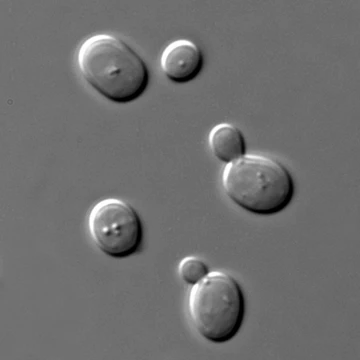
Malassezia arunalokei
Yeast-like fungus from human skin, identified in 2016.

Malassezia arunalokei is a yeast-like fungus first described as a new species in 2016. It has been found on the skin of both people with seborrheic dermatitis and healthy individuals in India. Several physical traits set it apart from other members of the genus Malassezia: how its colonies look on nutrient agar, a lack of catalase enzyme activity, the ability to grow at 37 °C (99 °F), and the formation of a precipitate when exposed to Tween 20 or Cremophor EL. The type strain, NCCPF 127130, was taken from the scalp of a seborrheic dermatitis patient in Chandigarh, India, and is kept at the National Culture Collection of Pathogenic Fungi in New Delhi. Its closest relative is Malassezia restricta, but the two species differ by 6.4% in their internal transcribed spacer DNA sequences, a gap that meets standard criteria for separate species. The name *arunalokei* honors Indian mycologist Arunaloke Chakrabarti for his contributions to medical mycology in India and Asia. Later research developed ways to detect this species using MALDI-TOF mass spectrometry and polymerase chain reaction sequencing directly from clinical samples. The latter method led to the first identification of the fungus in a person from Iran.
- Year identified
- 2016
- Type strain
- NCCPF 127130
- Type strain location
- National Culture Collection of Pathogenic Fungi in New Delhi
- Type strain origin
- scalp of an individual with seborrheic dermatitis in Chandigarh, India
- Closest relative
- M. restricta
- Its sequence difference
- 6.4%
- Species epithet honors
- Arunaloke Chakrabarti
Lore & Background
Malassezia arunalokei was described as a new species in 2016, based on isolates from the skin of seborrheic dermatitis patients and healthy individuals in India. The type strain, NCCPF 127130, was isolated from the scalp of a seborrheic dermatitis patient in Chandigarh, India. The species is distinguished from other Malassezia species by a combination of phenotypic characteristics: colony morphology on nutrient agar, absence of catalase activity, growth at 37 °C, and precipitation when grown with Tween 20 or Cremophor EL. Its most closely related fungus is M. restricta, but the two internal transcribed spacer DNA sequences differ by 6.4%, meeting the generally accepted criteria for genetic distinctiveness. The species epithet arunalokei honors Indian mycologist Arunaloke Chakrabarti for his contributions to medical mycology in India and Asia.
Reader's Guide
The significance of Malassezia arunalokei lies in its identification as a distinct species within a genus of yeasts commonly associated with human skin conditions. Its isolation from both seborrheic dermatitis patients and healthy individuals suggests it may be part of the normal skin microbiota, yet its role in disease remains to be fully understood. The species was initially characterized using phenotypic traits, but later studies introduced methods for its detection using MALDI-TOF mass spectroscopy and polymerase chain reaction sequencing directly from clinical samples. Using the latter technique, the fungus was identified for the first time from an individual in Iran, indicating a broader geographic distribution than initially known. The genetic distinction from M. restricta, based on a 6.4% difference in ITS sequences, provides a molecular basis for species identification. The legacy of this species includes its contribution to the understanding of Malassezia diversity and the development of diagnostic tools for its detection in clinical settings.
Did You Know?
- It lacks catalase enzyme activity, a key distinguishing feature.
- Its closest relative is M. restricta, with a 6.4% difference in ITS DNA sequences.
- It was later detected in an individual from Iran using PCR sequencing.
More in Yeasts, Part 2 1-24
Spotted an error? Know more?
Reader corrections go straight into our review queue. Suggest an edit · How this site is sourced