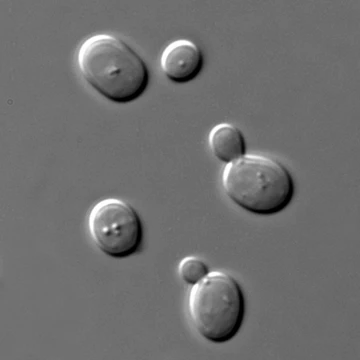
Malassezia restricta
A yeast species linked to dandruff and gut inflammation.

Malassezia restricta is a species of yeast belonging to the genus Malassezia, which is part of the division Basidiomycota. It is notable for its involvement in human skin disorders, particularly dandruff and seborrhoeic dermatitis, where it is often found alongside the more common causative species M. globosa. This yeast is lipid-dependent and requires fatty acids for growth, making it prevalent on sebaceous areas of the skin.
- Species authority
- E.Guého, J.Guillot & Midgley
- Associated conditions
- dandruff, seborrhoeic dermatitis, Crohn's disease, inflammatory bowel disease
- Genetic link
- N12 CARD9 allele (provokes stronger inflammatory response)
- Growth characteristic
- challenging to cultivate; requires complex culture media
- Discovery context
- identified by scientists at the Pasteur Institute in Paris, France, in the mid-1990s
Lore & Background
Malassezia restricta was discovered in the mid-1990s by scientists at the Pasteur Institute in Paris, France, as part of a broader effort to identify additional species within the genus. It is one of several Malassezia species that require specific growth media and can grow slowly in laboratory culture, making it challenging to study. The species is lipid-dependent, needing long-chain fatty acids for proliferation, and is most commonly found on human skin, particularly in areas rich in sebaceous glands.
In terms of morphology, Malassezia restricta cells are yeast-like, measuring between 1.5–4.5 μm by 3–7 μm, with a characteristic round end and a blunt termination where broad-based bud-like structures emerge. These structures can be visualized using safranin staining under oil immersion, and Calcofluor-white staining enhances clarity of the cell wall. The species typically lacks hyphal elements, though rudimentary forms may occasionally be present.
M. restricta is notably involved in human disease, particularly dandruff and seborrhoeic dermatitis, where it acts alongside M. globosa. More recently, it has been linked to disorders such as Crohn's disease and inflammatory bowel disease when found in the gut, especially in individuals carrying the N12 CARD9 allele, which provokes a stronger inflammatory response.
Reader's Guide
Malassezia restricta holds significance primarily as a causative agent of common skin conditions such as dandruff and seborrhoeic dermatitis, where it is second only to M. globosa in prevalence. Its role in these disorders underscores the importance of Malassezia species in dermatology, and its identification has been aided by molecular and DNA-based techniques. The species is also notable for its association with systemic inflammatory conditions: when present in the gut, M. restricta is linked to Crohn's disease and inflammatory bowel disease, particularly in individuals with the N12 CARD9 allele, which amplifies the inflammatory response. This connection highlights a potential pathway from skin commensal to gut pathogen, though the article does not specify mechanisms beyond the genetic predisposition.
From a clinical perspective, M. restricta is challenging to cultivate, requiring complex culture media for growth, which complicates research and diagnosis. Its lipid dependence and slow growth in standard conditions necessitate specialized techniques, such as using lipid infusion catheters for blood collection and lysis-centrifugation for recovery. The species is part of a genus that has undergone taxonomic revisions, with Malassezia being the sole genus in the family Malasseziaceae, order Malasseziales, and class Malasseziomycetes. The legacy of M. restricta lies in its dual role as a common skin pathogen and a potential contributor to gut inflammation, reflecting the broader ecological and pathogenic versatility of the Malassezia genus.
Did You Know?
- M. restricta is challenging to cultivate and requires complex culture media for growth.
- It is involved in dandruff and seborrhoeic dermatitis, though M. globosa is the most common cause.
More in Yeasts, Part 2 1-24
Spotted an error? Know more?
Reader corrections go straight into our review queue. Suggest an edit · How this site is sourced