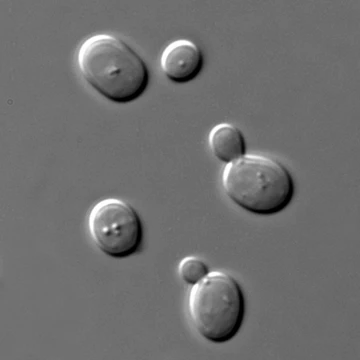
Pichia
A yeast genus with hat-shaped ascospores and biotechnological relevance.

Pichia is a genus of yeasts in the family Pichiaceae, characterized by spherical, elliptical, or oblong acuminate cells. It is notable as a teleomorph that forms hat-shaped, hemispherical, or round ascospores during sexual reproduction, with asexual reproduction occurring by multilateral budding. The genus includes more than 100 known species, though many have been reassigned to other genera, and it has significance in winemaking, dairy products, and biotechnology.
Quick Facts
- Taxon
- Pichia
Facts from the source article.
Lore & Background
The genus name Pichia honors Pico Pichi (1862–1933), an Italian botanist and professor of natural history and plant pathology at a viticulture school in Conegliano, Italy. The genus was circumscribed by Emil Christian Hansen in 1904. Pichia species do not ferment or assimilate lactose; behavior with other carbohydrates varies by species, but nitrate is always assimilated. A number of species have been moved to other genera, including Wickerhamomyces, Starmera, Cyberlindnera, and Ogataea. Some Pichia species interfere with alcohol fermentation and can cause faults in wine. Most are found in decaying plants, and some live in symbiosis with insects that inhabit decaying plants. Certain former members, such as P. anomala (now Wickerhamomyces anomalus), occur in raw milk and cheese, and have been shown to inhibit the mold Aspergillus flavus on crops like pistachios. Another former member, P. pastoris (now Komagataella phaffii), is widely used as an expression system in molecular biology. Some Pichia species, such as P. ohmeri (now Kodamaea ohmeri), are opportunistic pathogens in immunocompromised humans.
Reader's Guide
Pichia holds significance across multiple fields. In winemaking, some species can create faults, while in dairy, species like P. membranifaciens are important in smeared-surface ripened cheese and form a characteristic pellicle. The former member Wickerhamomyces anomalus has agricultural relevance, as it inhibits Aspergillus flavus growth on tree nuts and corn, reducing aflatoxin contamination. In biotechnology, Komagataella phaffii (formerly P. pastoris) is a major expression system, and Ogataea polymorpha (formerly P. angusta) serves as a model organism for peroxisome research. The genus also includes opportunistic pathogens, such as Kodamaea ohmeri (formerly P. ohmeri), which can infect immunocompromised humans. The taxonomic reassignment of many Pichia species to other genera reflects ongoing refinement of yeast classification, with Species Fungorum currently accepting only 32 species, while GBIF lists 155. This history underscores the genus's broad ecological and applied importance, from food production to molecular biology and clinical mycology.
Did You Know?
- Pichia species always assimilate nitrate but never ferment or assimilate lactose.
- Former member Wickerhamomyces anomalus (P. anomala) inhibits Aspergillus flavus growth on pistachio trees by up to 97%.
More in Yeasts, Part 2 1-24
Spotted an error? Know more?
Reader corrections go straight into our review queue. Suggest an edit · How this site is sourced