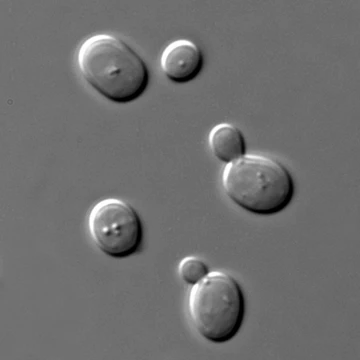
Pichia kudriavzevii
A yeast used in chocolate and a resistant nosocomial pathogen.

Pichia kudriavzevii, previously called Candida krusei, is a budding yeast that plays a role in making chocolate. It is also an up-and-coming fungal infection in hospitals, mainly affecting people with weakened immune systems or blood cancers. This yeast is naturally resistant to fluconazole, a common antifungal drug. It is frequently seen in patients who have already been treated with fluconazole, leading to disagreement among experts about whether the drug should be used as a preventive measure. Bloodstream infections from P. kudriavzevii have a much higher death rate than those from the more common Candida albicans. Other Candida species with similar traits include C. parapsilosis, C. glabrata, C. tropicalis, C. guillermondii, and C. rugosa. Effective treatments include voriconazole, amphotericin B, and echinocandins such as micafungin, caspofungin, and anidulafungin.
In chocolate production, cacao beans must be fermented to remove bitterness and break them down. This process involves two fungi: P. kudriavzevii and Geotrichum. These fungi are usually already present on cacao pods and seeds, but modern chocolate makers use specific strains. Each company selects its own strains to give the chocolate the best flavor and aroma. The yeasts produce enzymes that break down the pulp around the beans and generate acetic acid, which kills the cacao embryo inside the seed, develops a chocolatey smell, and removes the bitterness.
For growth, P. kudriavzevii does best at temperatures between 43 and 45 °C (109–113 °F). Unlike other Candida species, which often need biotin or other vitamins to grow, this yeast can thrive in vitamin-free media. On Sabouraud’s dextrose agar, it forms spreading colonies with a matte or rough whitish-yellow surface, while other Candida species produce convex colonies. This feature, along with its “long grain rice” appearance under a microscope, helps identify the species definitively.
Quick Facts
- Genus
- Pichia
- Species
- kudriavzevii
Facts from the source article.
Lore & Background
Pichia kudriavzevii plays a dual role: it is essential in chocolate production and is also an emerging pathogen. In chocolate making, cacao beans are fermented to remove bitterness and develop flavor, a process involving P. kudriavzevii and Geotrichum. These fungi are often naturally present on cacao seed pods and seeds, but specific strains are selected by chocolate companies for optimal flavor and aroma. The yeasts produce enzymes that break down the pulp on the outside of the beans and generate acetic acid, which kills the cacao embryo, develops a chocolatey aroma, and eliminates bitterness.
As a pathogen, P. kudriavzevii is most often found in patients who have had prior fluconazole exposure, sparking debate and conflicting evidence about whether fluconazole should be used prophylactically. Mortality due to P. kudriavzevii fungemia is much higher than that of the more common Candida albicans. Other Candida species that fit a similar profile include C. parapsilosis, C. glabrata, C. tropicalis, C. guillermondii, and C. rugosa.
Identification of P. kudriavzevii is aided by its growth characteristics: it grows on Sabouraud's dextrose agar as spreading colonies with a matte or rough whitish-yellow surface, in contrast to the convex colonies of Candida spp. This, together with its 'long grain rice' appearance on microscopy, helps definitive identification. Unlike other Candida species that generally require biotin for growth, P. kudriavzevii can grow in vitamin-free media.
Reader's Guide
Pichia kudriavzevii holds significance in two distinct fields: food production and clinical medicine. In chocolate production, it is indispensable for fermenting cacao beans, a process that removes bitterness and develops the characteristic chocolate aroma. The yeast's ability to produce enzymes that break down pulp and generate acetic acid is critical to this transformation. Each chocolate company uses proprietary strains selected for optimal flavor, underscoring its economic and cultural importance.
Clinically, P. kudriavzevii is an emerging nosocomial pathogen with natural resistance to fluconazole, a standard antifungal. This resistance, combined with its prevalence in immunocompromised patients and those with hematological malignancies, makes it a serious concern. The debate over prophylactic fluconazole use—given that prior exposure is common in infected patients—remains unresolved. Mortality from P. kudriavzevii fungemia is notably higher than from Candida albicans, highlighting its virulence. Effective treatments include voriconazole, amphotericin B, and echinocandins (micafungin, caspofungin, and anidulafungin). Its distinct growth characteristics on agar and microscopy aid in diagnosis, differentiating it from other Candida species that require biotin for growth.
Did You Know?
- Pichia kudriavzevii was formerly known as Candida krusei.
- It has natural resistance to fluconazole, a standard antifungal agent.
- It grows best at a temperature of 43–45 °C (109–113 °F).
- It can grow in vitamin-free media, unlike many other Candida species.
More in Yeasts, Part 2 1-24
Spotted an error? Know more?
Reader corrections go straight into our review queue. Suggest an edit · How this site is sourced