Phaeotremella foliacea
A gelatinous, parasitic fungus on conifer-inhabiting Stereum.

Phaeotremella foliacea, once called Tremella foliacea, is a fungus in the family Phaeotremellaceae. In the UK, it goes by the recommended English name leafy brain, and is also known as jelly leaf or brown witch's butter. Its fruit bodies are brownish, leafy, and jelly-like, and it lives as a parasite on the mycelium of Stereum sanguinolentum, a fungus that grows on dead or recently fallen conifer branches. It is found across north temperate regions.
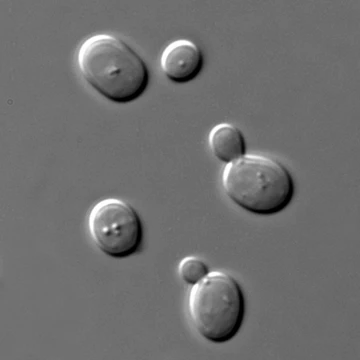
The species was first described in 1800 by Christiaan Hendrik Persoon, a mycologist born in South Africa. It stayed in the genus Tremella until DNA-based studies showed it was not closely related to that group's type species, so it was moved to Phaeotremella. Around 2017, similar-looking fungi on broad-leaved trees were separated into Phaeotremella frondosa and P. fimbriata, leaving P. foliacea as the name for the conifer-dwelling species. The name "foliacea" means "leafy," referring to the shape of the fruit bodies. In 1962, Herman Phaff and L. do Carmo Sousa described the yeast Cryptococcus skinneri from the frass of the beetle Scolytus tsugae feeding on western hemlock; DNA sequencing later revealed this yeast is the yeast state of Phaeotremella foliacea.
The fruit bodies are gelatinous, brown to dark brown, up to 5 cm across, and look like seaweed with branched, wavy fronds. Under the microscope, the hyphae have clamp connections and sit in a dense jelly-like matrix. Haustorial cells grow from the hyphae, producing filaments that attach to and penetrate the host's hyphae. The basidia are tremelloid—globose to ellipsoid with oblique or vertical septa—measuring 12 to 18 by 10 to 14 μm, and are usually unstalked. Basidiospores are mostly ellipsoid, smooth, 5.5 to 9.5 by 4.5 to 8.5 μm, and germinate either by hyphal tube or by forming yeast cells.
Similar species include Phaeotremella frondosa, which parasitizes Stereum species on broadleaf trees and often has larger, paler fruit bodies. Phaeotremella fimbriata is a European species on broadleaf trees, parasitizing Stereum rugosum, with small, dark brown to black fruit bodies. Phaeotremella eugeniae is a temperate Asian counterpart.
Phaeotremella foliacea parasitizes Stereum sanguinolentum, growing on the host's hyphae inside the wood, not on its fruit bodies. Following its host, the fruit bodies appear on dead, attached, or recently fallen conifer branches.
Quick Facts
- Taxon
- Phaeotremella foliacea
Facts from the source article.
Lore & Background
The species was first published in 1800 by South African-born mycologist Christiaan Hendrik Persoon under the name Tremella foliacea. The epithet 'foliacea' means 'leafy', referring to the shape of the fruit bodies. Molecular research based on cladistic analysis of DNA sequences showed that Tremella foliacea was not closely related to the type species of Tremella, leading to its reclassification into the genus Phaeotremella. Similar-looking species that grow on broad-leaved trees were distinguished around 2017 as Phaeotremella frondosa and P. fimbriata, restricting the name P. foliacea to the fungus that grows on conifers.
In 1962, Herman Phaff and L. do Carmo Sousa described the yeast Cryptococcus skinneri from the frass of the beetle Scolytus tsugae feeding on Western Hemlock. DNA sequencing has shown that this is the yeast state of Phaeotremella foliacea. The fruit bodies are gelatinous, brown to dark brown, up to 5 cm across, and seaweed-like with branched, undulating fronds. Microscopically, the hyphae are clamped and occur in a dense gelatinous matrix, with haustorial cells that produce filaments attaching to and penetrating the host's hyphae. The basidia are tremelloid, 12 to 18 by 10 to 14 μm, and basidiospores are mostly ellipsoid, 5.5 to 9.5 by 4.5 to 8.5 μm, germinating by hyphal tube or yeast cells.
Reader's Guide
Phaeotremella foliacea is significant as a parasitic fungus that specifically targets the mycelium of Stereum sanguinolentum on conifers, and its fruit bodies are found on dead attached or recently fallen branches. Its distinction from similar species on broadleaf trees—Phaeotremella frondosa and P. fimbriata—was resolved through molecular phylogenetics, clarifying a long-standing taxonomic confusion. The discovery that the yeast Cryptococcus skinneri, originally described from beetle frass on Western Hemlock, is the yeast state of P. foliacea highlights the complex life cycles of these fungi and the importance of DNA sequencing in linking sexual and asexual forms. The species is widespread in north temperate regions, including North America, Europe, and northern Asia. Although considered non-toxic, it is flavorless and mostly water, limiting its culinary value. Its legacy lies in its role as a model for understanding host-parasite relationships among wood-decay fungi and the integration of yeast and filamentous stages in fungal taxonomy.
Did You Know?
- Phaeotremella foliacea was first published in 1800 by Christiaan Hendrik Persoon as Tremella foliacea.
- Its yeast state, Cryptococcus skinneri, was described in 1962 from the frass of the beetle Scolytus tsugae feeding on Western Hemlock.
- The species is restricted to conifers, while similar-looking species on broadleaf trees were distinguished as Phaeotremella frondosa and P. fimbriata around 2017.
- The fruit bodies are gelatinous, brown to dark brown, and up to 5 cm across, resembling seaweed.
More in Yeasts, Part 2 1-24
Spotted an error? Know more?
Reader corrections go straight into our review queue. Suggest an edit · How this site is sourced