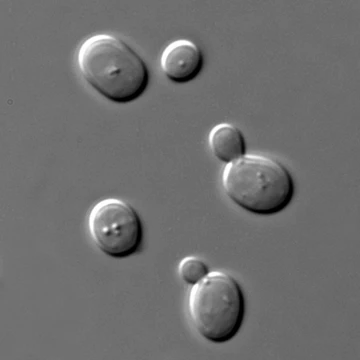
Nutritional yeast
Deactivated yeast used as a vegan cheese substitute.

Nutritional yeast, often called nooch, is a deactivated (dead) yeast, typically a strain of *Saccharomyces cerevisiae*, sold as a food product. It comes in yellow flakes, granules, or powder and is commonly found in the bulk section of natural food stores. In vegan and vegetarian cooking, it serves as an ingredient or condiment, with a strong, nutty, or cheesy flavor that makes it a popular cheese substitute. It can be used in dishes like mashed potatoes, tofu, or popcorn.
The yeast provides some B-complex vitamins and trace amounts of other vitamins and minerals, and it is frequently fortified with vitamin B12. Unlike yeast extract, which is made by centrifuging inactive yeast to concentrate water-soluble proteins rich in glutamic acid, nucleotides, and peptides (responsible for umami), nutritional yeast is a whole-cell product containing both soluble and insoluble parts.
Commercially, nutritional yeast is produced by culturing yeast in a nutrient medium, primarily glucose from sugarcane or beet molasses, for several days. The yeast is then killed with heat, harvested, washed, dried, and packaged. The species used is often a strain of *Saccharomyces cerevisiae*, but these strains are selected for desirable characteristics and typically have a different phenotype from those used in baking or brewing.
In a 15-gram (0.53 oz) reference serving of one fortified brand, it contains 33% carbohydrates, 53% protein, and 3% fat, providing 60 calories. The levels of B vitamins in that serving are multiples of the Daily Value. Nutritional yeast has low amounts of dietary minerals unless fortified. Since yeast cannot produce vitamin B12—which is naturally made only by some bacteria—any B12 in fortified nutritional yeast (commonly cyanocobalamin) is produced separately and then added.
- Calories per 15g
- 60
- Carbohydrates per 15g
- 33%
- Protein per 15g
- 53%
- Fat per 15g
- 3%
- Form
- yellow flakes, granules, or powder
- Species
- Saccharomyces cerevisiae
Lore & Background
Nutritional yeast is produced by culturing yeast in a nutrient medium for several days, with glucose from sugarcane or beet molasses as the primary ingredient. When the yeast is ready, it is killed with heat, then harvested, washed, dried, and packaged. The strains used are often a strain of Saccharomyces cerevisiae, cultured and selected for desirable characteristics, and often exhibit a different phenotype from strains used in baking and brewing.
Nutritional yeast is a whole-cell inactive yeast containing both soluble and insoluble parts, distinguishing it from yeast extract. Yeast extract is made by centrifuging inactive nutritional yeast and concentrating water-soluble yeast cell proteins rich in glutamic acid, nucleotides, and peptides, which are responsible for umami taste.
There may be confusion about the source of vitamin B12 in nutritional yeast, as yeast cannot produce B12, which is naturally produced only by some bacteria. When fortified, the vitamin B12 (commonly cyanocobalamin) is produced separately and then added to the yeast.
Reader's Guide
Nutritional yeast holds significance as a versatile food product in vegan and vegetarian diets, serving as a cheese substitute due to its nutty or cheesy flavor. It is used in recipes such as mashed potatoes, tofu, or popcorn, and is sold in the bulk aisle of natural food stores. The article notes that in a reference amount of 15 g of one manufactured, fortified brand, it provides 60 calories, with 33% carbohydrates, 53% protein, and 3% fat, and levels of B vitamins are multiples of the Daily Value. It contains low amounts of dietary minerals unless fortified. Its legacy includes being a source of some B-complex vitamins and trace amounts of other vitamins and minerals, often fortified with vitamin B12. The distinction between nutritional yeast and yeast extract is important, as the latter is a concentrated flavoring agent. The article also references related products such as torula, Marmite, vegan cheese, and Vegemite, placing nutritional yeast within a broader context of savory yeast-based foods.
Did You Know?
- Nutritional yeast is a deactivated (dead) yeast, often a strain of Saccharomyces cerevisiae.
- It is sold in the form of yellow flakes, granules, or powder.
- Yeast cannot produce vitamin B12; when fortified, the B12 is produced separately and added.
- Nutritional yeast is a whole-cell inactive yeast, different from yeast extract which is concentrated from water-soluble proteins.
More in Yeasts, Part 2 1-24
Spotted an error? Know more?
Reader corrections go straight into our review queue. Suggest an edit · How this site is sourced