Malassezia vespertilionis
A yeast-like fungus growing on bat skin, described in 2018.

Malassezia vespertilionis is a yeast-like fungus that lives on bat skin. First identified as a distinct species in 2018, its defining specimen came from a swab taken from the wing of a hibernating northern long-eared bat in Wisconsin. The species name comes from the Latin *vespertilio*, meaning "bat," referencing its host.
Additional samples have been found on several other bat species across the United States, including the California myotis, fringed myotis, Indiana bat, little brown bat, gray bat, and silver-haired bat. The fungus appears widespread among American bats, turning up in 28% of 264 individuals tested.
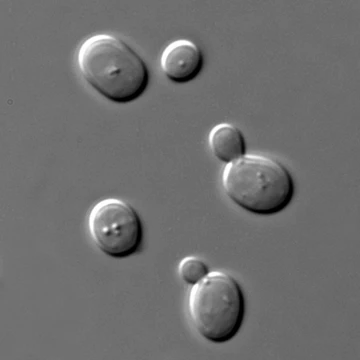
On Leeming and Notman agar, colonies reach about 0.5–1.0 mm in diameter after ten days at 24 °C, growing to 2–5 mm after forty days. It can grow across a temperature range of 7 to 40 °C, with optimal growth at 24 °C. The cells are usually ellipsoid or ovoid (rarely spherical), typically measuring 2 by 3 μm, though they can range from 2–3 by 2–4 μm.
- Year described
- 2018
- Holotype source
- swab of wing skin of a hibernating northern long-eared bat (Myotis septentrionalis) in Wisconsin
- Colony size 10 days
- 0.5–1.0 mm
- Colony size 40 days
- 2–5 mm
- Optimal growth temperature
- 24 °C
- Temperature range
- 7 to 40 °C
- Prevalence
- 28% of 264 individuals sampled
Lore & Background
The species epithet vespertilionis uses the Latin vespertilio (bat) to refer to the host. Additional isolates were collected from various bat species in several locations in the United States – Alabama, California, Kentucky, Missouri, New York, Pennsylvania, and Wisconsin. Other bat species that harbor the fungus include the California myotis, fringed myotis, Indiana bat, little brown bat, gray bat, and silver-haired bat. The fungus appears to be fairly common on bats found in the United States, occurring in 28% of 264 individuals sampled.
When grown on Leeming and Notman agar (LNA), colonies are about 0.5–1.0 mm in diameter after 10 days at 24 °C, increasing to about 2–5 mm after 40 days. The fungus grows at temperatures from 7 to 40 °C, but grows best at 24 °C. Cells are ellipsoid or ovoid (rarely spherical), ranging from 2–3 by 2–4 μm, with 2 by 3 μm being the usual size.
Reader's Guide
Malassezia vespertilionis is notable as a yeast-like fungus specifically associated with bat skin, described as a new species in 2018. Its discovery highlights the diversity of Malassezia species on mammalian hosts, particularly on bats in the United States. The holotype was collected from a hibernating northern long-eared bat in Wisconsin, and additional isolates were found across multiple states and bat species, including the Indiana bat and little brown bat. The fungus was present in 28% of 264 sampled individuals, indicating it is fairly common among bats in the United States. Its ability to grow across a wide temperature range (7–40 °C) and its optimal growth at 24 °C suggest adaptation to the skin environment of hibernating and active bats. The species name, derived from Latin for bat, directly references its host. This species contributes to the understanding of fungal ecology on bat populations, though the article does not discuss any pathogenic or beneficial effects.
Did You Know?
- The holotype was obtained from a swab of wing skin of a hibernating northern long-eared bat in Wisconsin.
- The species epithet vespertilionis uses the Latin word for bat (vespertilio).
- The fungus was found in 28% of 264 sampled bats across the United States.
- Colonies reach 2–5 mm after 40 days on Leeming and Notman agar at 24 °C.
More in Yeasts, Part 2 1-24
Spotted an error? Know more?
Reader corrections go straight into our review queue. Suggest an edit · How this site is sourced