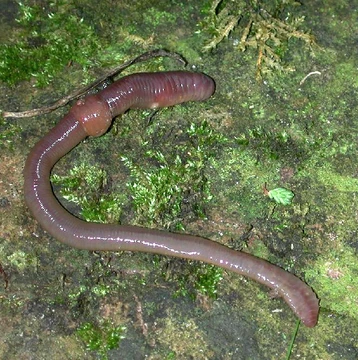
Tubifex
Genus of segmented worms used as fish food and found in sewers.

Tubifex is a widespread genus of tubificid segmented worms (annelids) that inhabits the sediments of lakes, rivers, and occasionally sewer lines. They are globally distributed, with at least 13 identified species, though the exact number is uncertain because the species are not easily distinguishable from each other. These worms are significant as a live food source for aquarium fish and have been commercially cultured for that purpose, but they also appear in sewer systems and have gained notoriety in viral videos.
Quick Facts
- Taxon
- Tubifex
- Type Species
- Lumbricus tubifex
- Type Species Authority
- Müller, 1774
Facts from the source article.
Lore & Background
Tubifex worms are hermaphroditic, each individual possessing both male and female reproductive organs attached to the ventral side of the body wall. Self-fertilization is avoided because the male and female organs mature at different times, encouraging cross-fertilization. During copulation, two mature worms join ventral and anterior surfaces with their anterior ends pointing opposite directions, and sperm is passed into the spermathecae of the other worm. After separation, a cocoon is formed around the clitellum, into which ova and sperm are deposited, and the worm withdraws by backward wriggling.
Tubifex are raised commercially, mainly for fish food, particularly the reddish Tubifex tubifex. They can be cultured on a mass scale in containers with pond mud, decaying vegetable matter, bran, and bread, with a continuous mild water flow. Within 15 days of inoculation, clusters develop and can be removed. When worms come to the surface due to lack of oxygen, they are collected and washed to remove residual mud.
In 2009, a large blobby mass of Tubifex colonies was found in the sewers of Raleigh, North Carolina, revealed by a snake camera inspection under the Cameron Village shopping center. Videos of the 'creature' went viral on YouTube as the 'Carolina poop monster'. In 2013, an episode of the television series Bar Rescue featured a colony of Tubifex worms living in a basement with a natural underground spring that had turned to black sludge.
Reader's Guide
Tubifex worms hold a dual significance: as a commercially important live food for aquarium fish, especially tropical species, and as a notable inhabitant of sewer systems that has captured public attention. Their use as live food dates back nearly to the inception of the aquarium trade, with worms historically gathered from open sewers. Today, most are obtained from fish hatchery effluent or professional worm farms. However, using Tubifex as live food carries risks: they may be infected with diseases when harvested from sewers or hatcheries, and can be vectors for whirling disease affecting salmonids. Even after voiding their digestive systems under running water, they remain a risk. Additionally, some fish, such as Rift Valley cichlids, may obsessively consume them until sick. The worms are fattening and poor in certain amino acids, leading to rapid growth but potentially less healthy, less colorful fish. In poorly cleaned aquaria, Tubifex can become a pest, carpeting the bottom unsightly. Their appearance in sewer systems has led to viral fame, highlighting their resilience in polluted environments. The genus includes at least 13 species, with Tubifex tubifex being the most commonly cultured.
Did You Know?
- Tubifex worms are hermaphroditic but avoid self-fertilization because male and female organs mature at different times.
- In 2009, a colony of Tubifex in Raleigh, North Carolina sewers became known as the 'Carolina poop monster' after viral YouTube videos.
More in Worms And Worm-Like Invertebrates 1-23
Spotted an error? Know more?
Reader corrections go straight into our review queue. Suggest an edit · How this site is sourced