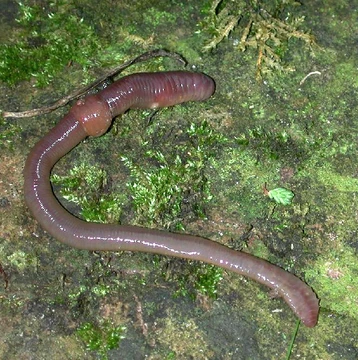
Nemertea
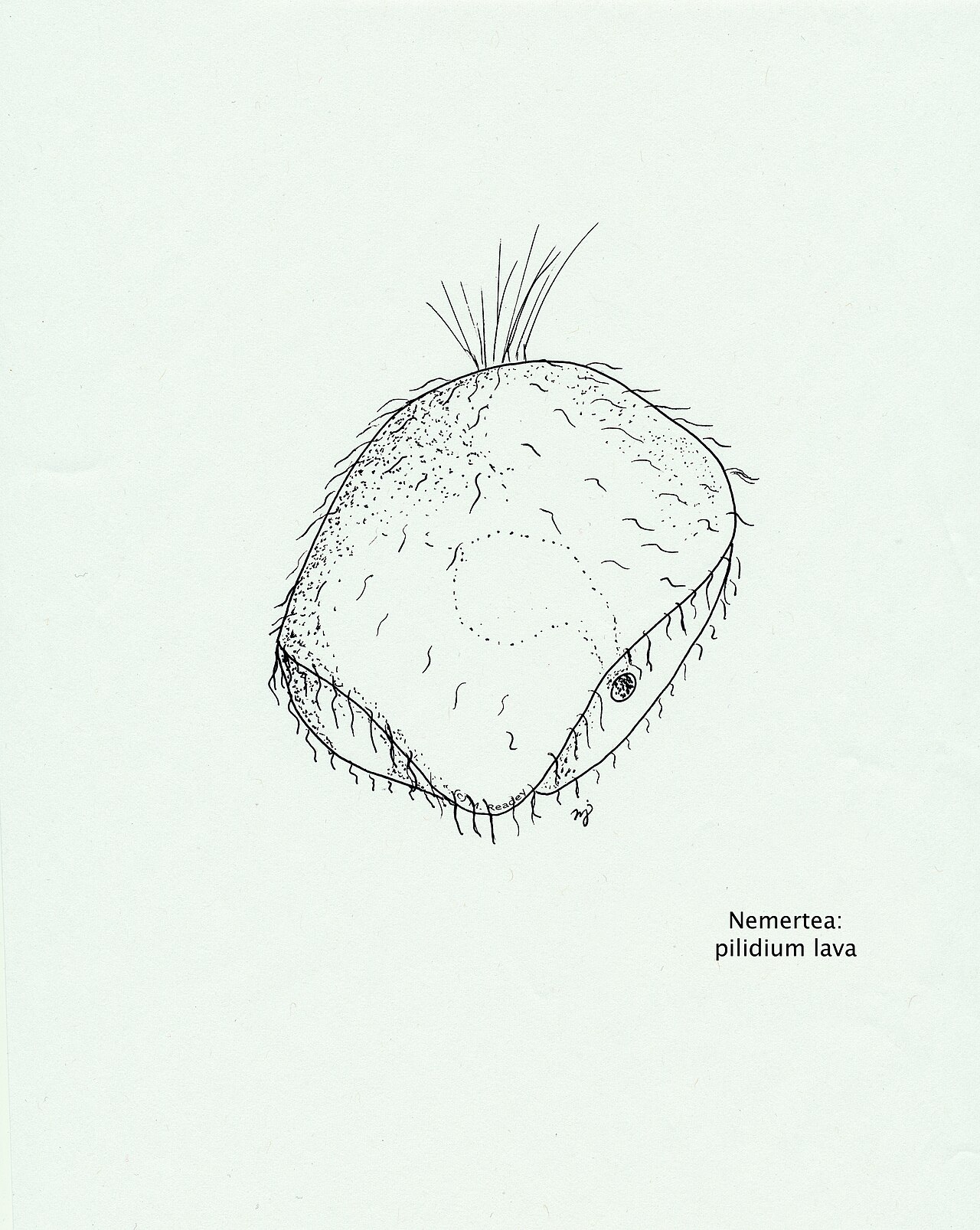
Ribbon worms use a venomous proboscis to capture prey.

M. Readey · CC BY-SA 3.0
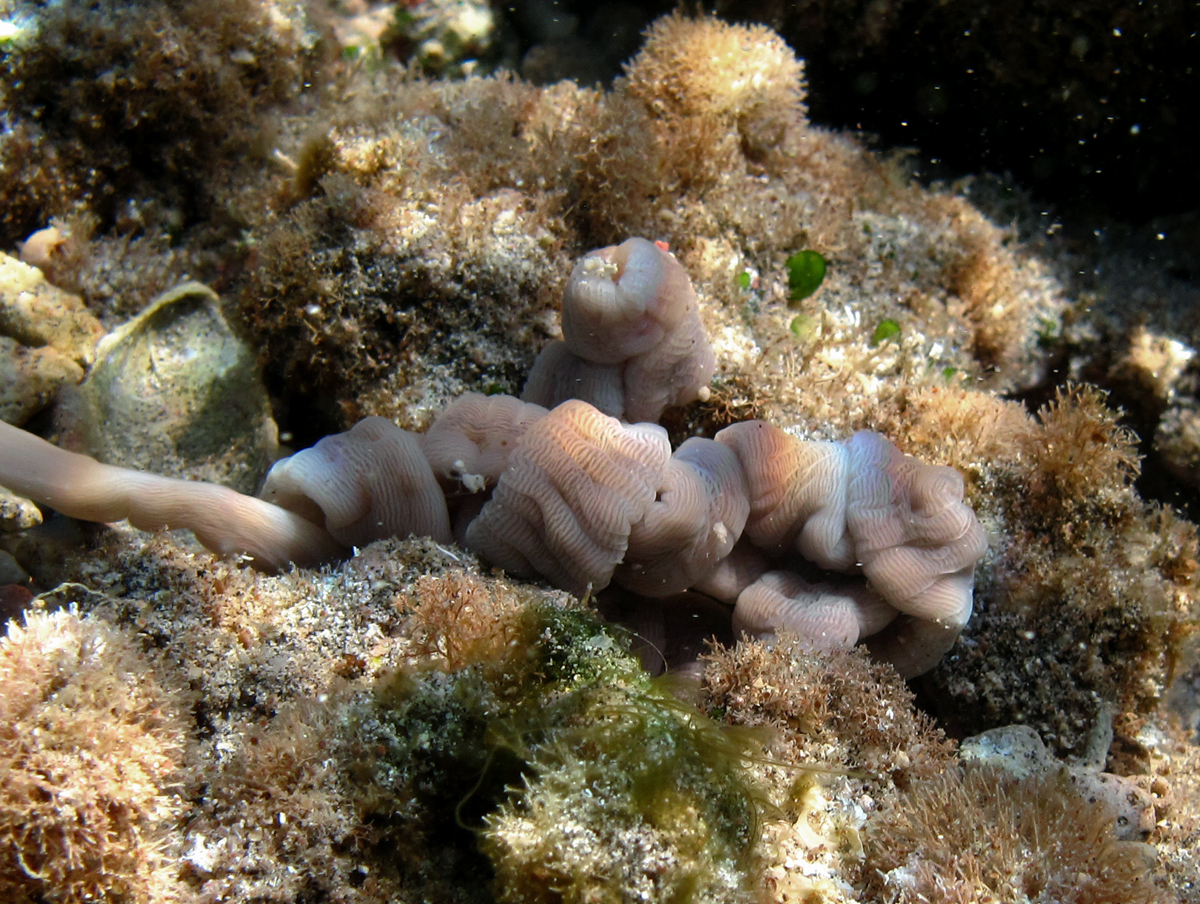
Nemertea, also known as ribbon worms or proboscis worms, is a phylum of about 1300 known species. They are characterized by an eversible proboscis used for capturing prey and a unique cavity called the rhynchocoel. Most are marine, but a few species inhabit freshwater or land, and they range from a few millimeters to over 50 meters in length.
Quick Facts
- Taxon
- Nemertea
Facts from the source article.
Lore & Background
Nemerteans have a slender, unsegmented body with a ciliated skin. The mouth is under the front, and the anus at the tail tip. Above the gut lies the rhynchocoel, a fluid-filled cavity housing the proboscis. When attacking, the proboscis everts to emerge above the mouth, delivering venom. A retractor muscle pulls it back. Most are carnivores, feeding on annelids, clams, and crustaceans, though a few filter-feed or are scavengers.
Reader's Guide
The phylum Nemertea is significant for its unique proboscis apparatus and rhynchocoel, which are considered synapomorphies of the group. Traditional taxonomy divided them into Anopla and Enopla, but Anopla is now recognized as paraphyletic. Nemerteans are placed within the Lophotrochozoa, a large clade including molluscs and annelids. Their development includes spiral cleavage and determinate growth, with some species forming a pilidium larva. The longest known animal, Lineus longissimus, may reach 54 meters, though it is only a few millimeters wide. Their ability to stretch and regenerate from fragments is notable.
Did You Know?
- The longest recorded specimen of Lineus longissimus was 54 meters long, longer than a blue whale.
- Nemerteans have no heart; fluid flow depends on muscle contractions in vessels and body wall.
- Some species have a proboscis that can stretch up to 30 times its inactive length.
- The phylum is named after the Greek sea-nymph Nemertes.
A Place Among the 'Worms'
Nemertea occupies a position within the broad, informal category of animals colloquially called worms, a grouping that also encompasses annelids, nematodes, flatworms, chaetognaths, priapulids, and even insect larvae such as grubs and maggots. All of these are distantly related bilateral animals that share a general body architecture: a long, cylindrical, tube-like form, typically without limbs and usually without eyes. In formal taxonomy, nemerteans once fell under the obsolete class Vermes, a catch-all bin created by Carolus Linnaeus in 1758 and later expanded by Jean-Baptiste Lamarck to include every non-arthropod invertebrate. That grouping is now recognized as paraphyletic, meaning it lumps together lineages that do not share a single exclusive common ancestor. The very word worm traces back to the Old English wyrm, a term that originally carried connotations of serpents and mythical dragons. For nemerteans, this linguistic heritage underscores how a single everyday word can bind together creatures as diverse as a microscopic threadworm and a sixty-metre bootlace worm.
The Bootlace Worm and the Length Record
Among all the animals casually labelled worms, the marine nemertean Lineus longissimus stands apart as the extreme outlier in size. While many worm species range from microscopic to just over a metre, and even the African giant earthworm Microchaetus rappi reaches a remarkable 6.7 metres, the bootlace worm dwarfs them all at a reported 58 metres, nearly 190 feet. This staggering length places Lineus longissimus in a league of its own among invertebrate animals and makes it the longest worm referenced in the available records. The species is marine, living in saltwater environments rather than freshwater or terrestrial habitats. Its extraordinary elongation is a dramatic illustration of how the general worm body plan, a long cylindrical limbless tube, can be pushed to its most extreme expression. In a world where most invertebrates measure in centimetres or at most a few metres, a creature approaching sixty metres of continuous body is genuinely extraordinary and has cemented the nemertean group's place in popular imagination as the ultimate worm.
Free-Living in Water and Sediment
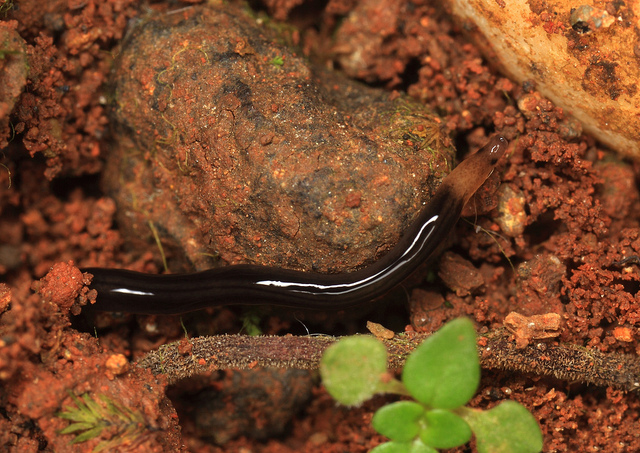
Unlike the parasitic worms that occupy niches inside the bodies of other animals, nemerteans are free-living organisms. They do not reside on land in the way a garden earthworm might; instead, they inhabit marine or freshwater environments, or they burrow underground. This lifestyle is consistent with the general worm body plan: a long, cylindrical, tube-like form without limbs and typically without eyes, suited to navigating through water or sediment rather than traversing open terrain. The absence of limbs means locomotion and foraging rely on the body's elongated shape and muscular contractions. Because nemerteans are free-living rather than parasitic, they do not fall under the medical term helminth, which is reserved primarily for parasitic roundworms and tapewords. Their ecological role is that of an independent organism in aquatic or subterranean food webs, a sharp contrast to the intimate, often harmful relationships that parasitic worms maintain with their hosts.
From Linnaeus to Modern Taxonomy
The taxonomic journey of nemerteans mirrors the broader upheaval in how biologists organize animal life. When Carolus Linnaeus published his Systema Naturae in 1758, he placed all non-arthropod invertebrates, including what we now call nemerteans, into a single class, Vermes, alongside insects, fish, amphibians, birds, and mammals. Jean-Baptiste Lamarck, working in 1793, called Vermes une espèce de chaos and began dismantling it, splitting the group into worms, echinoderms, and polyps. By 1809, in his Philosophie Zoologique, Lamarck had carved out nine phyla apart from vertebrates and molluscs. Today, the old Vermes is recognized as paraphyletic, a hodgepodge that does not represent a true evolutionary lineage. Nemerteans, annelids, nematodes, flatworms, and others were all once lumped together under that single label. The modern understanding separates them into distinct phyla, acknowledging that the shared worm body plan is a product of convergent evolution rather than close kinship.
Gallery
More in Worms And Worm-Like Invertebrates 1-23
Spotted an error? Know more?
Reader corrections go straight into our review queue. Suggest an edit · How this site is sourced