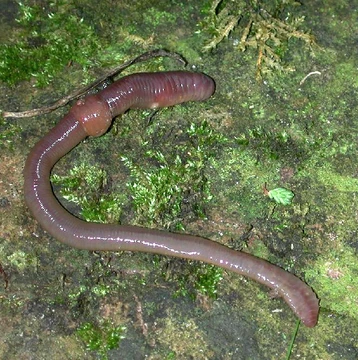
Phoronid
Small marine worms that filter-feed with a lophophore.

Temereva · CC BY 4.0
Phoronids, also known as horseshoe worms, are a small phylum of marine animals. They filter food from the water using a lophophore—a crown of tentacles—and live inside upright, protective tubes made of chitin, the same material found in arthropod shells. These creatures are found in most of the world’s oceans and seas, from the Arctic Ocean down to about 400 meters deep, including the Antarctic Ocean. Most adults measure about 2 cm long and 1.5 mm wide, though the largest species can reach 20–30 cm. The group’s name comes from its type genus, *Phoronis*.
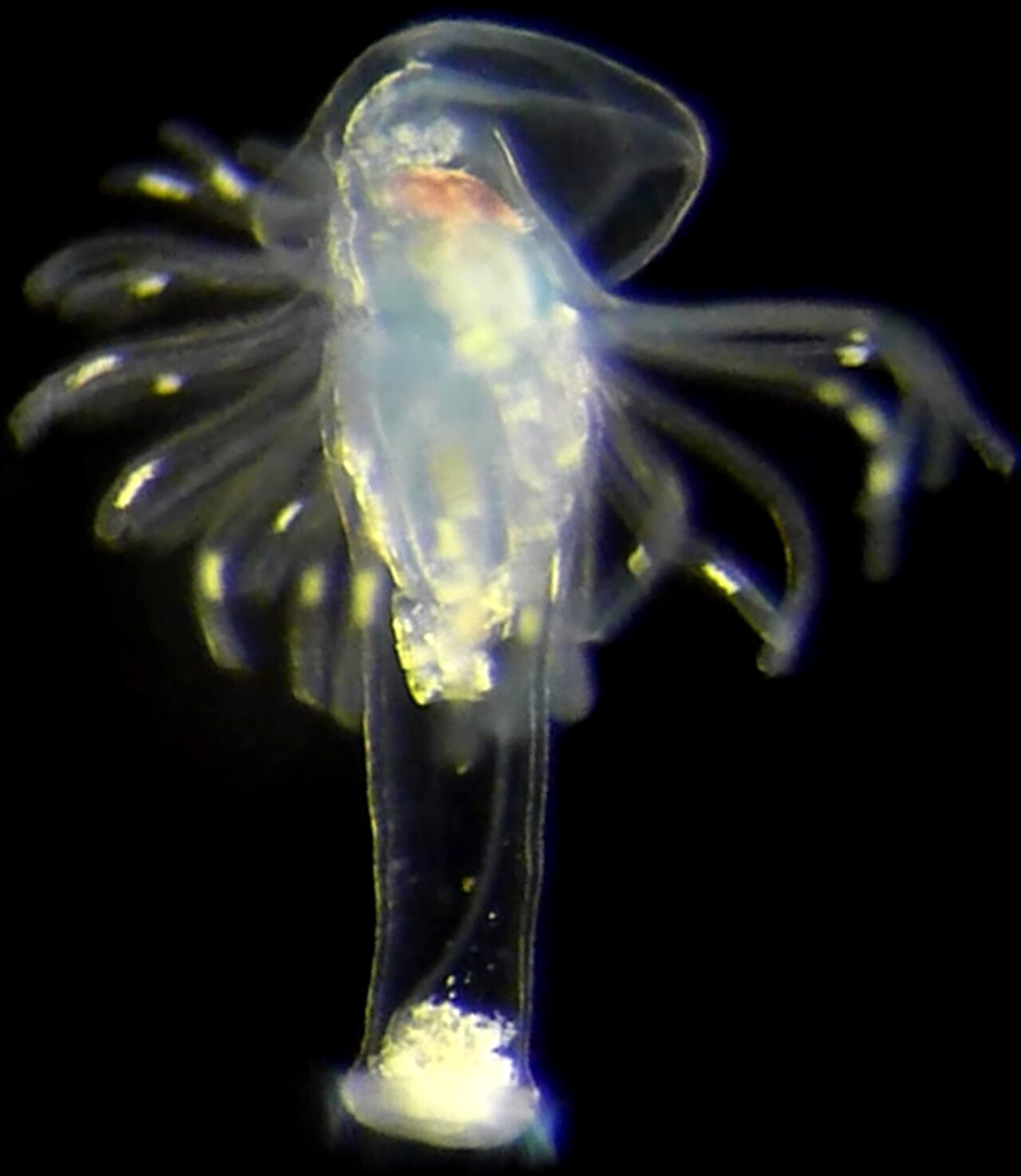
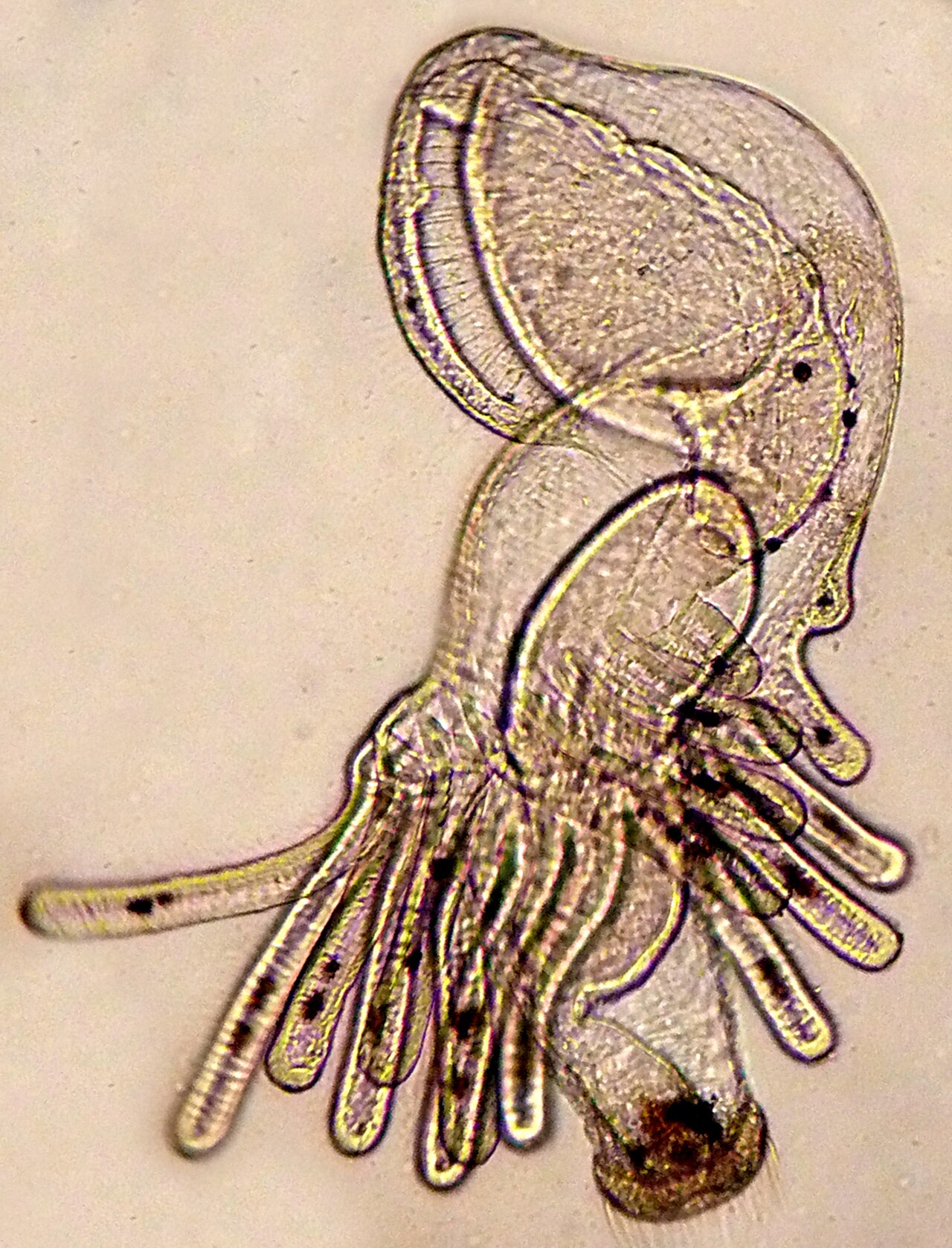
At the base of the body, a flask-like swelling called an ampulla anchors the animal in its tube and allows it to snap back to just 20 percent of its full length when threatened. When extended, the lophophore’s tentacles use tiny hairs, or cilia, to draw food toward the mouth, which sits just inside and to one side of the lophophore’s base. Unwanted particles can be blocked by a lid above the mouth or reversed by the tentacles’ cilia. Food travels down to the stomach, located in the ampulla, while solid waste moves up the intestine and exits through an anus positioned just below and outside the lophophore.
A blood vessel runs from the stomach up the body’s center to a circular vessel at the lophophore’s base, with a single blind vessel extending into each tentacle. Two vessels near the body wall carry blood back down from the lophophore ring to the stomach and to blind branches throughout the body. A contractile blood vessel acts as a heart, contracting in waves to move the blood. Phoronids do not pump oxygenated water through their trunks but rely on the lophophore for respiration. Their blood contains hemoglobin, an unusual feature for such small animals, which helps them survive in low-oxygen environments. Two metanephridia filter the body fluid, recycling useful materials and expelling soluble waste through pores beside the anus.
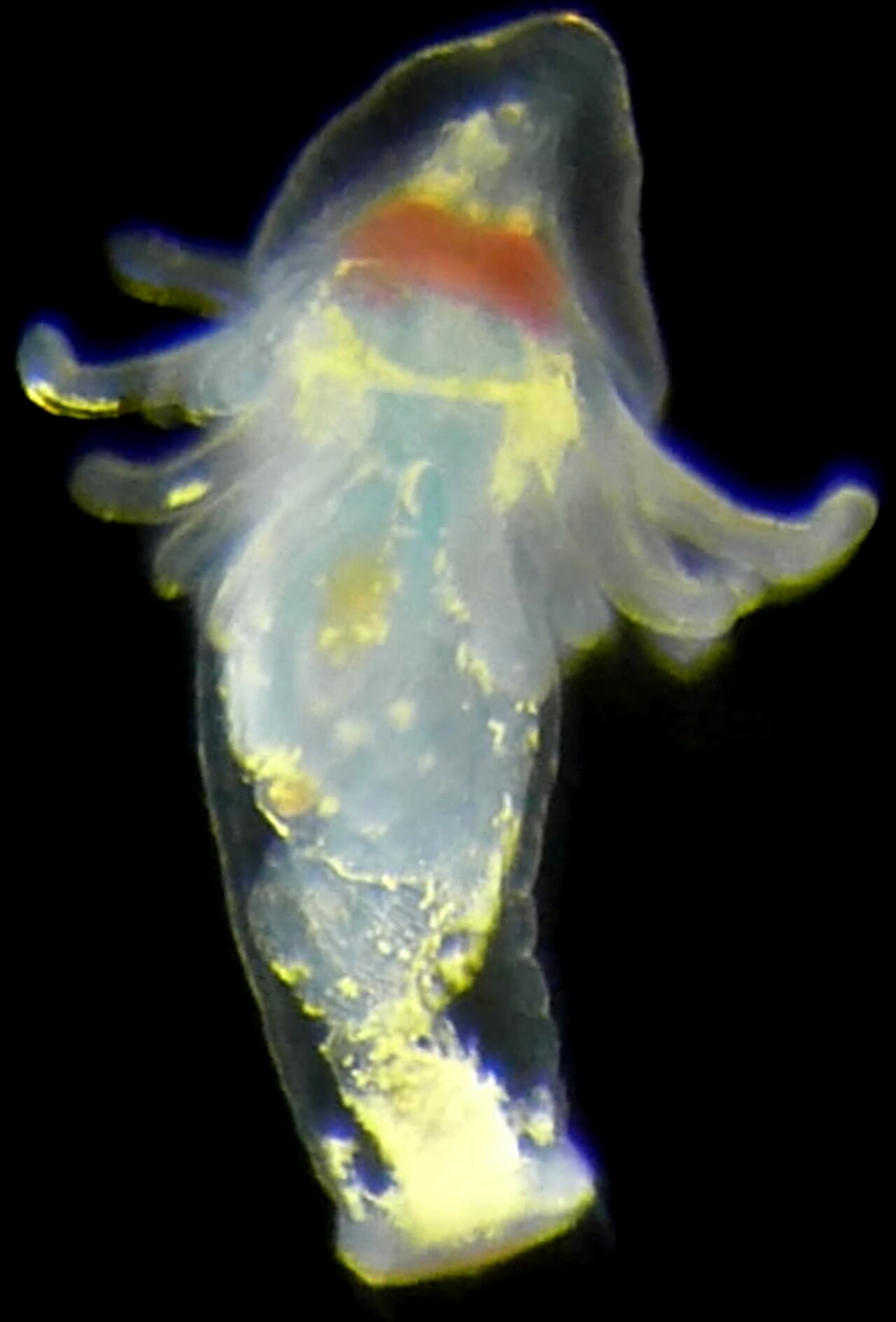
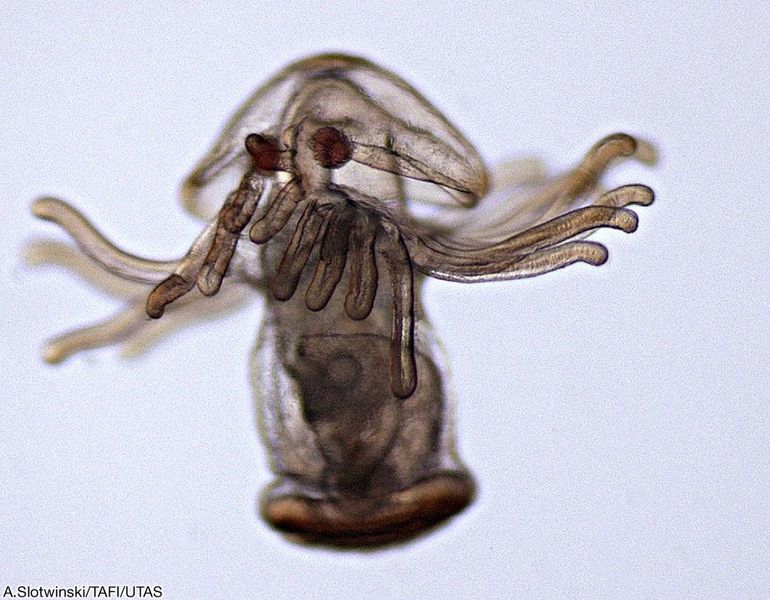
Most phoronids reproduce sexually from spring to autumn, releasing eggs that develop into free-swimming actinotroch larvae, which feed on plankton.
Quick Facts
- Taxon
- Phoronida
Facts from the source article.
Lore & Background
Phoronids are marine animals that build and live within rigid chitin tubes, never leaving them. The bottom end of the body is an ampulla, a flask-like swelling that anchors the animal and allows rapid retraction when threatened. When the lophophore is extended, cilia on the tentacles draw food particles to the mouth, which is inside and slightly to one side of the base of the lophophore. Unwanted material can be excluded by closing a lid above the mouth or rejected by the tentacles. Food moves to the stomach in the ampulla, and solid wastes exit through the anus outside and slightly below the lophophore.
Phoronids have a blood vessel leading up the middle of the body from the stomach to a circular vessel at the base of the lophophore, with a blind vessel in each tentacle. Two vessels near the body wall return blood to the stomach and other body parts. A contractile blood vessel acts as a heart, contracting in waves to move the blood. Their blood contains hemoglobin, an unusual feature for such small animals, which helps them survive in low-oxygen environments.
Reader's Guide
Phoronids are significant as a small phylum that illustrates key features of lophophorate animals, which also include brachiopods and bryozoans. Their use of a lophophore for feeding and respiration, combined with a chitinous tube and hemoglobin-rich blood, represents a distinct evolutionary solution for life in soft sediments. The actinotroch larvae are familiar among plankton and sometimes account for a significant proportion of zooplankton biomass. Phoronids have been placed among the protostome super-phylum Lophotrochozoa by most researchers, though some analyses regard them as sister-groups to brachiopods or as a sub-group within brachiopoda. As of 2010 there are no indisputable body fossils, but trace fossils from the Silurian through Cretaceous periods suggest a long evolutionary history. Their ecological roles include forming dense populations—tens of thousands per square meter—and being prey for fish, gastropods, and nematodes. One species is unpalatable to many epibenthic predators. The International Union for Conservation of Nature has not listed any phoronid species as endangered.
Did You Know?
- Phoronids have no heart; major vessels contract in waves to move blood.
- The blood of Phoronis architecta carries twice as much oxygen as a human of the same weight.
- One species builds colonies by budding or by splitting into top and bottom sections.
- Phoronids live for about one year.
The Sessile Architecture of a Phoronid
Phoronids belong to the phylum Phoronida, a group whose members are commonly known as horseshoe worms. They are classified as tubeworms, a category defined by a very particular way of life in the underwater world. A tubeworm is a worm-like, sessile invertebrate, meaning it does not move from place to place through active locomotion. Instead, it anchors its tail end to an underwater surface, establishing a fixed position. Around its body, the animal secretes a mineral tube, constructing a rigid architectural shell. This tube is not merely decorative; it serves as a protective retreat into which the phoronid can withdraw its entire body when threatened or when conditions demand shelter. This combination of sessility, mineral secretion, and full-body withdrawal defines the phoronid's ecological niche and distinguishes it from free-swimming or free-crawling invertebrates.
Horseshoe Worms in the Taxonomic Landscape
The phylum Phoronida occupies a distinct position within the broader taxonomy of tubeworms. While the term tubeworm might suggest a single evolutionary lineage, the reality is far more scattered. Tubeworms appear across multiple phyla, classes, orders, and families. Phoronida stands as a phylum-level grouping containing the horseshoe worms, and it is listed alongside annelid groups such as Polychaetea (bristle worms), Canalipalpata (bristle-footed or fan-head worms), and families like Siboglinidae (beard worms), Sabellidae (feather duster worms), and Serpulidae (sabellids with a specialized operculum). There are also species-level representatives like Riftia pachyptila (giant tube worms) and the genus Lamellibrachia, as well as the extinct order Microconchida and even a bivalve mollusk, Kuphus polythalamia, whose common name is giant tube worm. This taxonomic spread underscores that the tubeworm body plan has been adopted across very different branches of the animal kingdom.
The Mineral Tube as a Defining Feature
What unites a phoronid with a feather duster worm, a beard worm, or even a giant tube worm is the construction of a mineral tube. This is the single most defining characteristic of the tubeworm lifestyle. The animal, anchored by its tail to an underwater surface, actively secretes mineral material around its own body, building a rigid tube that encases it. The tube is not a passive structure; it is a functional organ of protection. The phoronid can withdraw its entire body into this mineral casing, effectively disappearing from the external environment. This capacity for full retraction transforms the tube from a simple shelter into a dynamic defensive structure. The mineral nature of the tube, distinguished from soft or organic coverings, gives these animals a permanent architectural presence on the seafloor even when the animal itself is fully retracted. In this way, the tube becomes both the phoronid's home and its armor.
Sessility and the Underwater Surface
The life of a phoronid is fundamentally tied to a fixed position on an underwater surface. As a sessile invertebrate, the horseshoe worm does not roam, swim, or crawl in search of new locations. Its tail is anchored to the substrate, and from that point of attachment the entire organism builds its existence. This sessile strategy is shared across the diverse array of tubeworms, from the polychaete bristle worms of the order Canalipalpata to the extinct Microconchida, from the bivalve Kuphus polythalamia to the annelid families Sabellidae and Serpulidae. Each of these groups, despite belonging to different phyla, classes, or families, converges on the same fundamental arrangement: a tail-anchored body, a secreted mineral tube, and the ability to withdraw completely into that tube. The underwater surface is not merely a backdrop for phoronids; it is the structural foundation upon which their entire biology is organized, making them builders of their own mineralized microhabitats.
Gallery
More in Worms And Worm-Like Invertebrates 1-23
Spotted an error? Know more?
Reader corrections go straight into our review queue. Suggest an edit · How this site is sourced