Orthonectida
Microscopic parasites among the simplest multicellular organisms.

SiliconProphet · CC BY-SA 4.0
Orthonectida is a minor phylum of marine parasites that rank among the simplest multicellular life forms. Its members are called orthonectids. In their adult, sexual stage, they are microscopic and worm-like, built from a single outer layer of ciliated cells wrapped around a core of sex cells. They move freely inside their hosts, which include flatworms, polychaete worms, bivalve molluscs, echinoderms, ribbon worms, acoels, and Xenoturbellida. Most species have separate males and females, though a few are hermaphroditic.
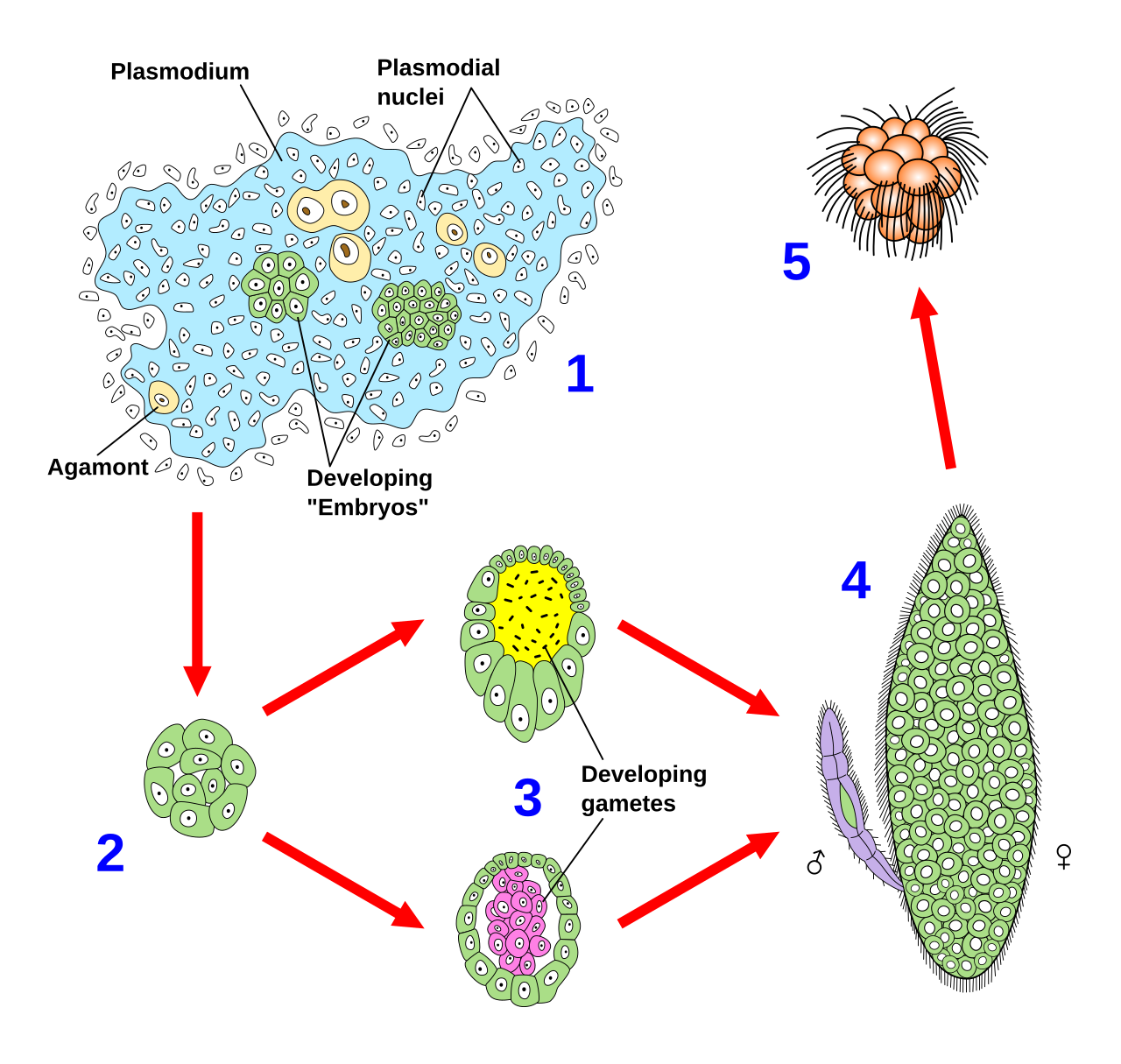
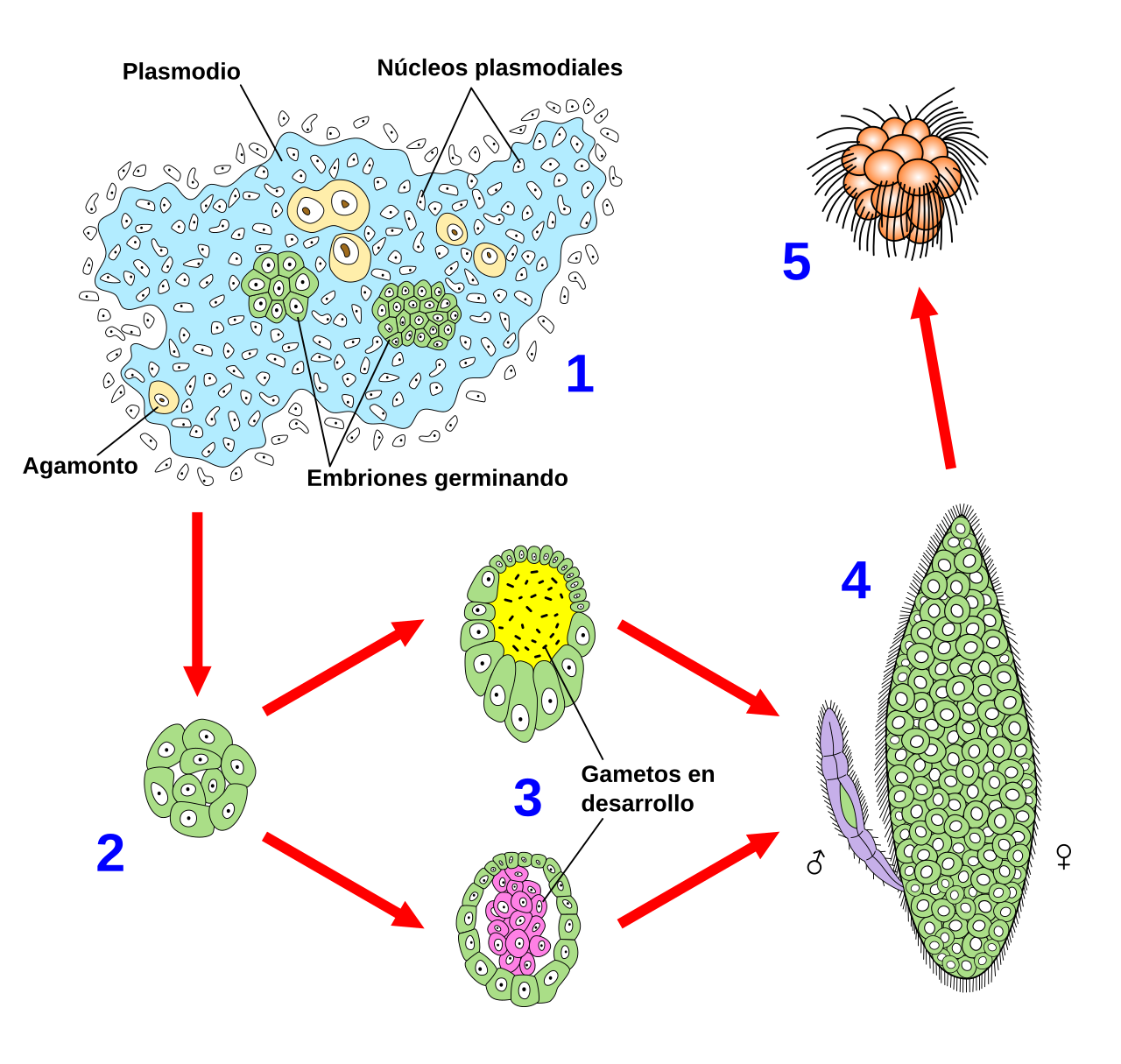
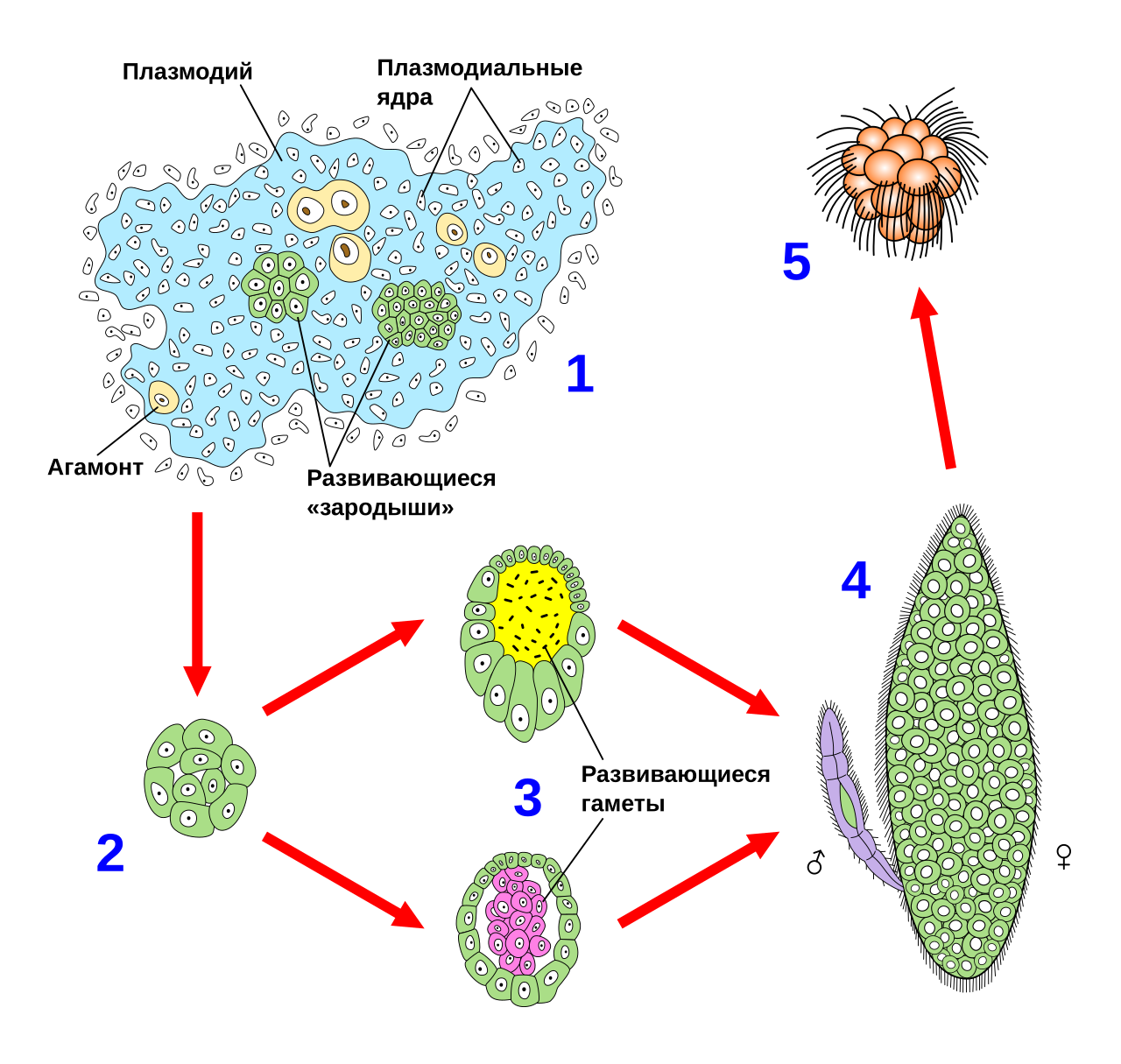
When ready to reproduce, adults leave the host. Males release sperm that penetrates females, achieving internal fertilization. The resulting zygote becomes a ciliated larva that escapes the mother to find a new host. Once inside, the larva sheds its cilia and becomes a syncytial plasmodium, which then splits into many individual cells called agametes. These agametes grow into the next generation of adults.
The phylum contains about 20 known species, with *Rhopalura ophiocomae* being the most familiar. It is not divided into classes or orders, only two families. Originally described as a class by Édouard van Beneden in 1876 and later placed as an order within Mesozoa, a 1996 study suggested orthonectids differ significantly from rhombozoans, the other Mesozoa group. The genome of *Intoshia linei* has been sequenced, revealing these animals are simplified spiralians—a finding that matches earlier morphological evidence linking them to Spiralia. Their exact position in the spiralian tree is still uncertain. Some research connects them to Annelida, particularly Clitellata. However, a 2022 study that accounted for long-branch attraction revived the traditional grouping of Orthonectida with rhombozoans in a monophyletic Mesozoa, placed near Platyhelminthes or Gnathifera. This supports an earlier study that also found orthonectids and rhombozoans forming a clade with Rouphozoa (platyhelminths and gastrotrichs).
Quick Facts
- Taxon
- Orthonectida
Facts from the source article.
Lore & Background
Orthonectids are microscopic, wormlike parasites that live within the bodies of various marine invertebrates. Their adult stage consists of a single layer of ciliated outer cells surrounding sex cells, and they swim freely inside their hosts. Most species have separate males and females, though a few are hermaphroditic. When ready to reproduce, adults leave the host, and sperm from males penetrate females for internal fertilization. The resulting zygote develops into a ciliated larva that escapes to seek new hosts. Once inside a host, the larva loses its cilia and becomes a syncytial plasmodium, which then breaks into individual cells called agametes that grow into the next generation of adults.
Reader's Guide
The phylum Orthonectida comprises about 20 known species, with Rhopalura ophiocomae being the best-known. Originally described in 1877 as a class and later characterized as an order of Mesozoa, a 1996 study suggested orthonectids are quite different from the other mesozoan group, the rhombozoans. Genome sequencing of Intoshia linei has shown these animals are simplified spiralians, confirming earlier morphological evidence. Their exact position in the spiralian phylogenetic tree remains undetermined: some work relates them to Annelida (specifically Clitellata), while a 2022 study compensating for long-branch attraction recovered the traditional grouping with rhombozoans in a monophyletic Mesozoa placed close to Platyhelminthes or Gnathifera. This supports a previous study finding orthonectids and rhombozoans as a clade with Rouphozoa. The phylum is not divided into classes or orders and contains just two families: Rhopaluridae and Pelmatosphaeridae.
Did You Know?
- Orthonectids are among the simplest multi-cellular organisms.
- A 2022 study recovered a monophyletic Mesozoa grouping orthonectids with rhombozoans.
Gallery
More in Worms And Worm-Like Invertebrates 1-23
Spotted an error? Know more?
Reader corrections go straight into our review queue. Suggest an edit · How this site is sourced