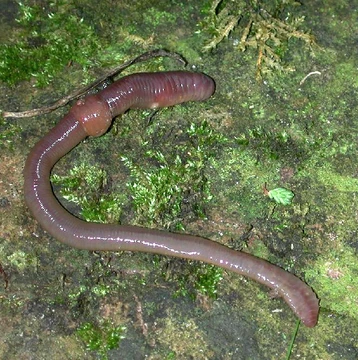
Polychaete
Diverse marine annelids with bristle-bearing parapodia.

Cosmic73 · CC BY-SA 4.0
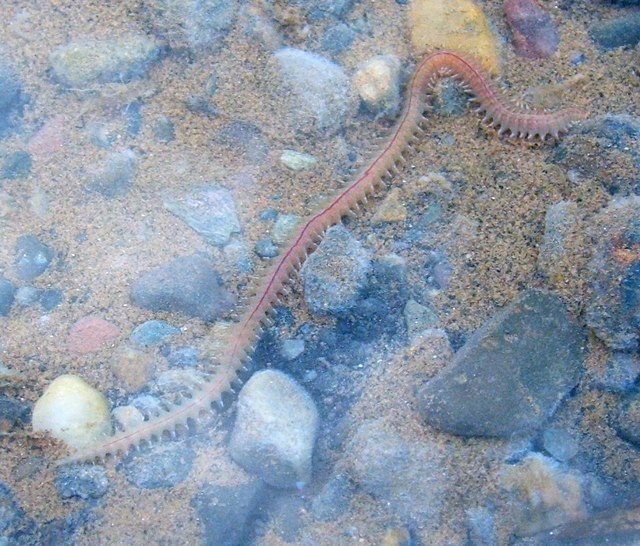
Polychaetes, also known as bristle worms, are a paraphyletic group of mostly marine annelid worms. Their name comes from the fleshy, paddle-like appendages (parapodia) on each body segment, which are covered in chitinous bristles called chaetae. Over 10,000 species have been described, and they are found in every ocean on Earth, at every depth—from planktonic forms near the surface to a tiny, unnamed species spotted by a remotely operated vehicle in the Challenger Deep, the deepest part of the ocean. They also live on abyssal plains, coral reefs, and a few in freshwater, with some species being parasitic.
Common examples include lugworms, bloodworms, and species of *Alitta* like clam worms and ragworms, which are often used as fishing bait in shallow subtropical and temperate coastal waters. More unusual species include stinging fireworms, the large predatory bobbit worm, the culturally significant palolo worm, bone-eating worms, and giant tube worms—extremophiles that thrive near hydrothermal vents in near-boiling water.
Most polychaetes are under 10 cm (4 in) long, but they range from just 1 mm (0.04 in) to 3 m (10 ft) in *Eunice aphroditois*. They can be brightly colored, iridescent, or even luminescent. The parapodia are highly vascularized and often serve as the primary respiratory surfaces, while the chaetae project from them. However, body plans vary widely. The most generalized forms crawl along the seafloor, but others have adapted to burrowing, swimming, building tubes, boring into substrates, or living as commensals or parasites, which requires significant divergence from the ancestral body plan.
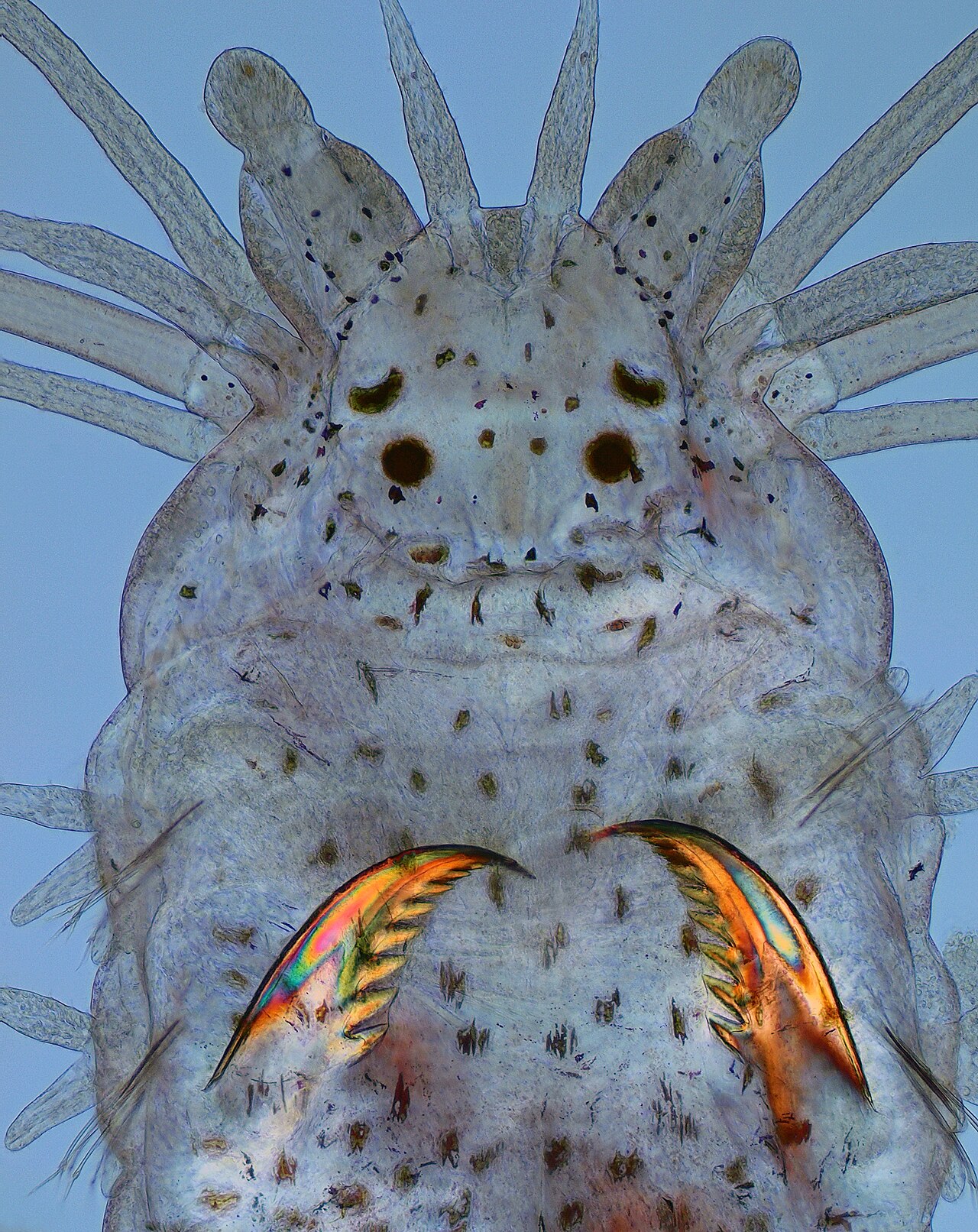
The head (prostomium) is well-developed and projects forward over the mouth on the next segment (peristomium). Mouthparts vary by diet—the group includes predators, herbivores, filter feeders, scavengers, and parasites. Most have a pair of jaws and a rapidly evertible pharynx to grab food; in some, the pharynx is modified into a long proboscis. The jaws are made of sclerotized collagen. The digestive tract is a simple tube, often with a stomach. The head may have two to four pairs of eyes, though some species are eyeless. Eyes are usually simple, detecting only light and dark, but some (like those of Alciopidae) have lenses and are as complex as those of cephalopods or vertebrates.
- Field
- Marine biology, annelid taxonomy
- Known for
- Segmented worms with parapodia and chaetae; diverse ecological roles including extremophiles at hydrothermal vents and deep-sea environments
- Species described
- More than 10,000
- Size range
- 1 mm to 3 m (Eunice aphroditois)
- Habitat
- All world oceans, all depths; a few freshwater and semiterrestrial species
Lore & Background
Polychaetes are segmented worms, generally less than 10 cm in length, though ranging from 1 mm to 3 m in Eunice aphroditois. They can be brightly colored, iridescent, or luminescent. Each segment bears a pair of paddle-like, highly vascularized parapodia used for movement and often as primary respiratory surfaces. The head, or prostomium, is relatively well developed, with a pair of jaws and an eversible pharynx. Their jaws are formed from sclerotised collagen. The digestive tract is a simple tube, usually with a stomach partway along. The head may include two to four pairs of eyes, antennae, tentacle-like palps, and nuchal organs that are chemoreceptors.
Reader's Guide
Polychaetes are significant as one of the most diverse and widespread groups of marine annelids, with over 10,000 described species occupying virtually every marine habitat, from the surface to the deepest ocean trenches. Their varied body plans and lifestyles—including burrowing, tube-dwelling, pelagic swimming, commensalism, and parasitism—make them key components of benthic and pelagic ecosystems. Notable representatives include the Pompeii worm (Alvinella pompejana), one of the most heat-tolerant complex animals, living near hydrothermal vents; Osedax, which decomposes vertebrate bones; and the giant tube worm Lamellibrachia luymesi, which may live over 250 years. Polychaetes also include species used as fishing bait, such as lugworms and bloodworms, and culturally important species like the palolo worm. Their physiological adaptations, including bioluminescence, varied respiratory pigments, and the ability to tolerate extreme environments, provide insights into evolutionary biology and ecology. The group's paraphyletic nature underscores ongoing taxonomic refinement.
Did You Know?
- A small undescribed polychaete species was observed through an ROV at Challenger Deep, the deepest region in Earth's oceans.
- The Pompeii worm (Alvinella pompejana) is among the most heat-tolerant complex animals known, endemic to hydrothermal vents.
- Lamellibrachia luymesi may be the most long-lived annelid, able to live to over 250 years old.
- Dimorphilus gyrociliatus has the smallest known genome of any annelid and shows extreme sexual dimorphism.
Diversity and Global Distribution
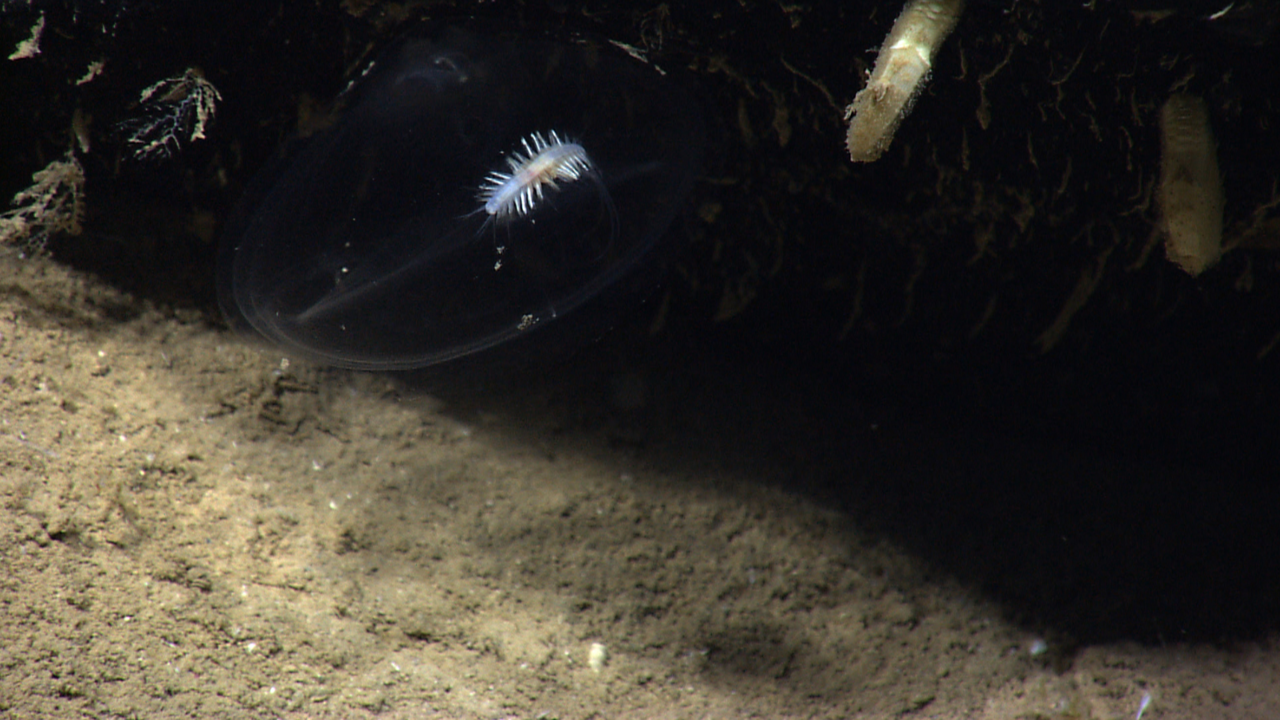
Polychaeta represents one of the most species-rich groupings within the annelid worms, with over ten thousand described species spanning every ocean on Earth. Their vertical range is truly extraordinary: some members drift as free-living plankton near the surface, while others have been glimpsed through remotely operated vehicles at the floor of Challenger Deep, the deepest known point in the global ocean. Between those extremes, polychaetes colonize abyssal plains, coral reef structures, and even a small number of freshwater habitats. Many additionally adopt parasitic or commensal lifestyles attached to other marine animals. This breadth of occurrence underscores how successfully the group has radiated into virtually every aquatic niche available to a segmented worm, from sunlit coastal shallows to lightless hadal trenches, making it one of the most cosmopolitan invertebrate assemblages known to science.
Anatomy and Body-Plan Variation
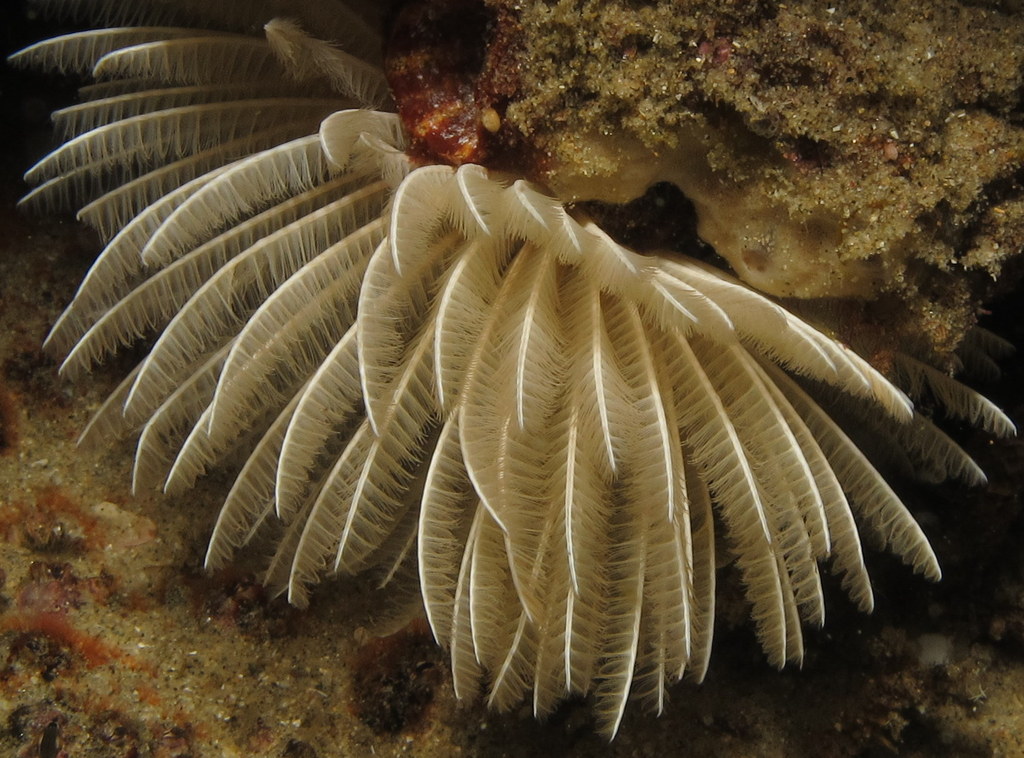
The defining feature of a polychaete is the pair of fleshy, paddle-shaped parapodia on each body segment, from which bundles of chitinous bristles called chaetae project outward. These structures serve dual purposes: they power locomotion and, in many species, function as the primary respiratory surface. The head, or prostomium, is notably well-developed relative to other annelids, projecting forward over the mouth region. Mouthparts vary enormously depending on diet—predators, herbivores, filter feeders, scavengers, and parasites all exist within the class—yet most species share a pair of jaws made from sclerotized collagen and a rapidly evertible pharynx for seizing food. The body wall itself is layered: a thin cuticle of cross-linked collagen sits atop circular and longitudinal muscle sheets, with a peritoneum enclosing the coelom. Despite this generalized blueprint, actual body forms diverge widely; some polychaetes crawl, others swim pelagically, burrow, inhabit self-built tubes, or bore into substrate, each adaptation demanding substantial modification from the ancestral plan.
Physiology and Internal Organization
Internally, polychaetes possess a simple yet effective circulatory arrangement. Two principal vessels—one dorsal, one ventral—distribute blood to the parapodia and gut, and because these vessels are themselves contractile, most species do not require a dedicated heart. A few, however, have evolved muscular pumps in various locations, while others have largely abandoned a circulatory system altogether, relying instead on oxygen dissolved in the coelomic fluid. Respiratory pigments vary: haemoglobin is most common, but some lineages use haemerythrin or the green chlorocruorin. Gas exchange occurs through the body surface in tiny or burrowing species, while most others develop external gills, frequently attached to the parapodia. The nervous system centers on a ventral nerve cord with segmental ganglia and a comparatively large brain in the head, to which an endocrine gland linked to reproductive activity is attached. Sensory equipment includes simple eyes or, in exceptional families like Alciopidae, complex lensed eyes rivaling those of cephalopods, alongside antennae, palps, and ciliated nuchal organs that detect chemical cues in the water.
Ecological Roles and Notable Species
Polychaetes occupy an astonishing array of ecological roles. In shallow coastal waters of temperate and subtropical regions, lugworms, bloodworms, and species of Alitta—such as the clam worm and ragworm—are routinely collected as fishing bait. At the other end of the spectrum, giant tube worms thrive as extremophiles near hydrothermal vents, tolerating water temperatures approaching the boiling point. The predatory bobbit worm, with its large body, ambushes prey from a burrow, while stinging fireworms deliver painful venom to unwary swimmers. The palolo worm holds cultural significance in certain Pacific Island communities, where it is harvested as a delicacy. Bone-eating worms represent yet another specialized niche. This diversity of strategies—from filter feeding to parasitism, from commensalism to extreme thermotolerance—illustrates how a single annelid lineage has carved out nearly every conceivable marine role, making polychaetes indispensable components of ocean ecosystems from the intertidal zone to the deepest trenches.
Gallery
More in Worms And Worm-Like Invertebrates 1-23
Spotted an error? Know more?
Reader corrections go straight into our review queue. Suggest an edit · How this site is sourced