Riftia
Giant tubeworm that thrives on chemosynthesis at hydrothermal vents.

null · CC BY 4.0
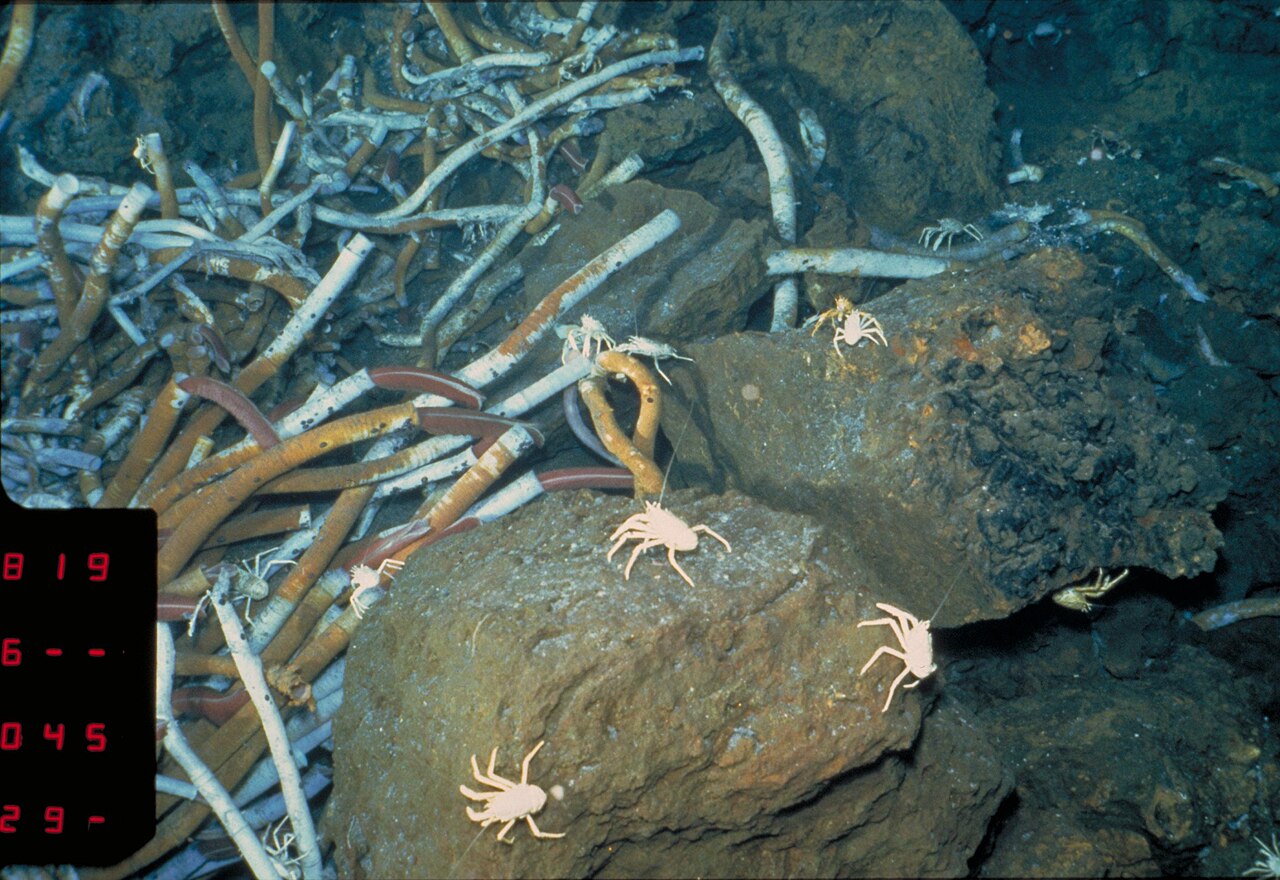
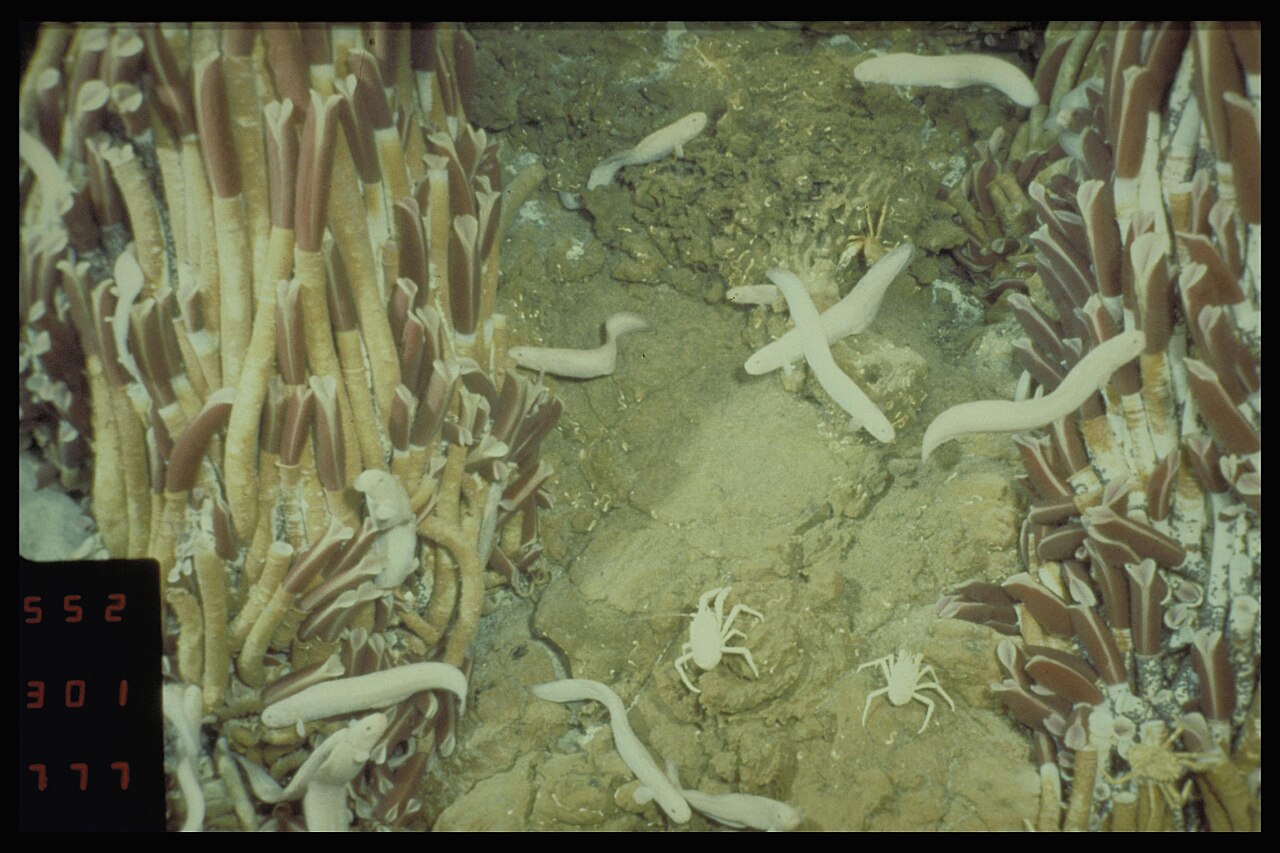
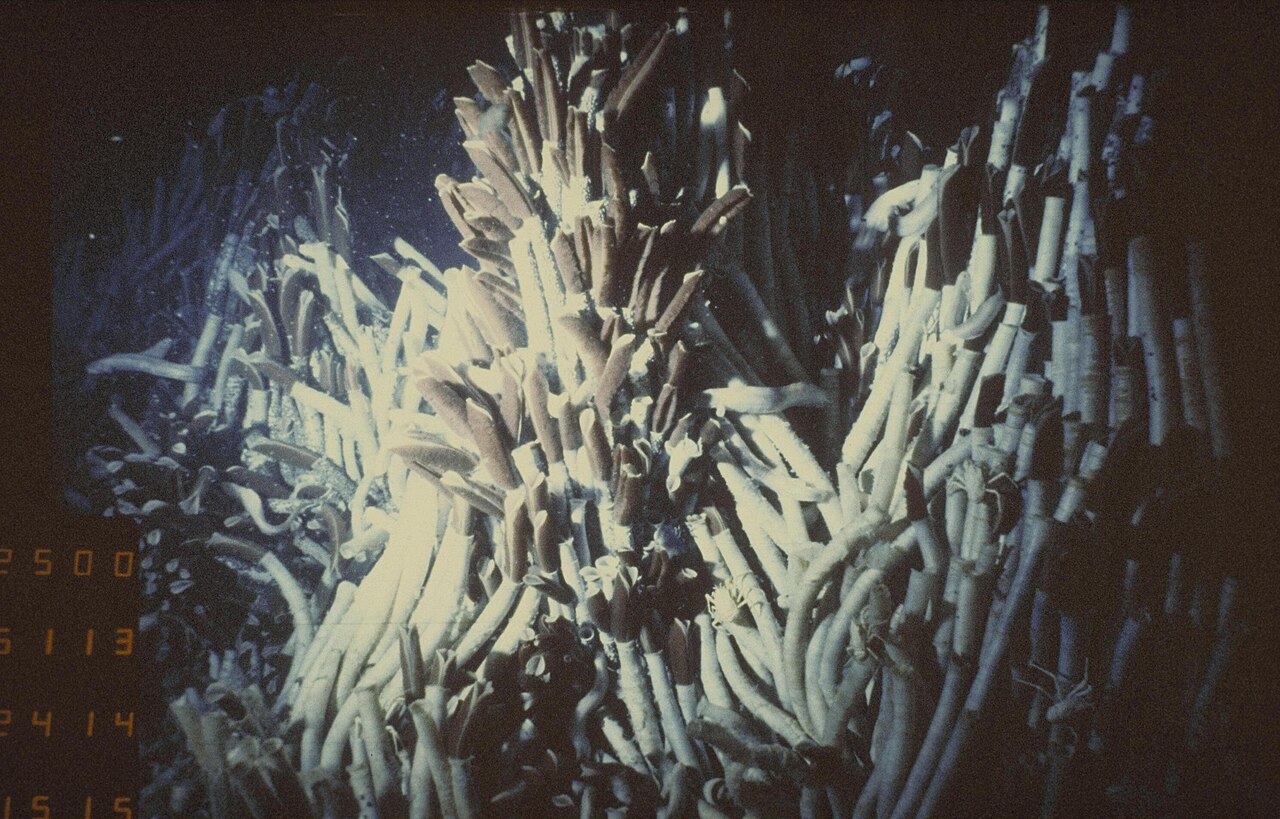
Riftia is a genus of polychaete annelid worms in the family Siboglinidae, with only one species: *Riftia pachyptila*, often called the giant tubeworm or giant beardworm. These worms are sessile and live in large clusters around deep-sea hydrothermal vents on the East Pacific Rise and the Galapagos Rift. A patch of these worms can stretch tens of meters across, and individual worms can grow up to 3 meters long. They hold the record for the fastest growth rate among marine invertebrates, capable of colonizing a new site, reaching sexual maturity, and growing to 1.5 meters in less than two years.
Adult *Riftia* worms have no digestive system. They get their energy from a symbiotic relationship with chemotrophic, sulfur-oxidizing bacteria. Their habitat—hydrothermal vents—offers temperatures between 2 and 30 degrees Celsius and releases large amounts of chemicals like hydrogen sulfide, which the worms use for bacterial chemosynthesis.
The species was first discovered in 1977 during an expedition to hydrothermal vents on the floor of the Galapagos Rift. It is the only species in its genus. The genus name *Riftia* refers to the rift that formed the geothermal vents where it lives; *pachyptila* combines "pachy" (thick) and "ptilon" (feather), describing the worm's anterior plume. The holotype, USNM 59951, is kept at the National Museum of Natural History. *Riftia* was once placed in the now-obsolete phylum Pogonophora, but it is now classified as an annelid in the family Siboglinidae, with close relatives including other deep-sea tubeworms like *Escarpia* and *Lamellibrachia*.
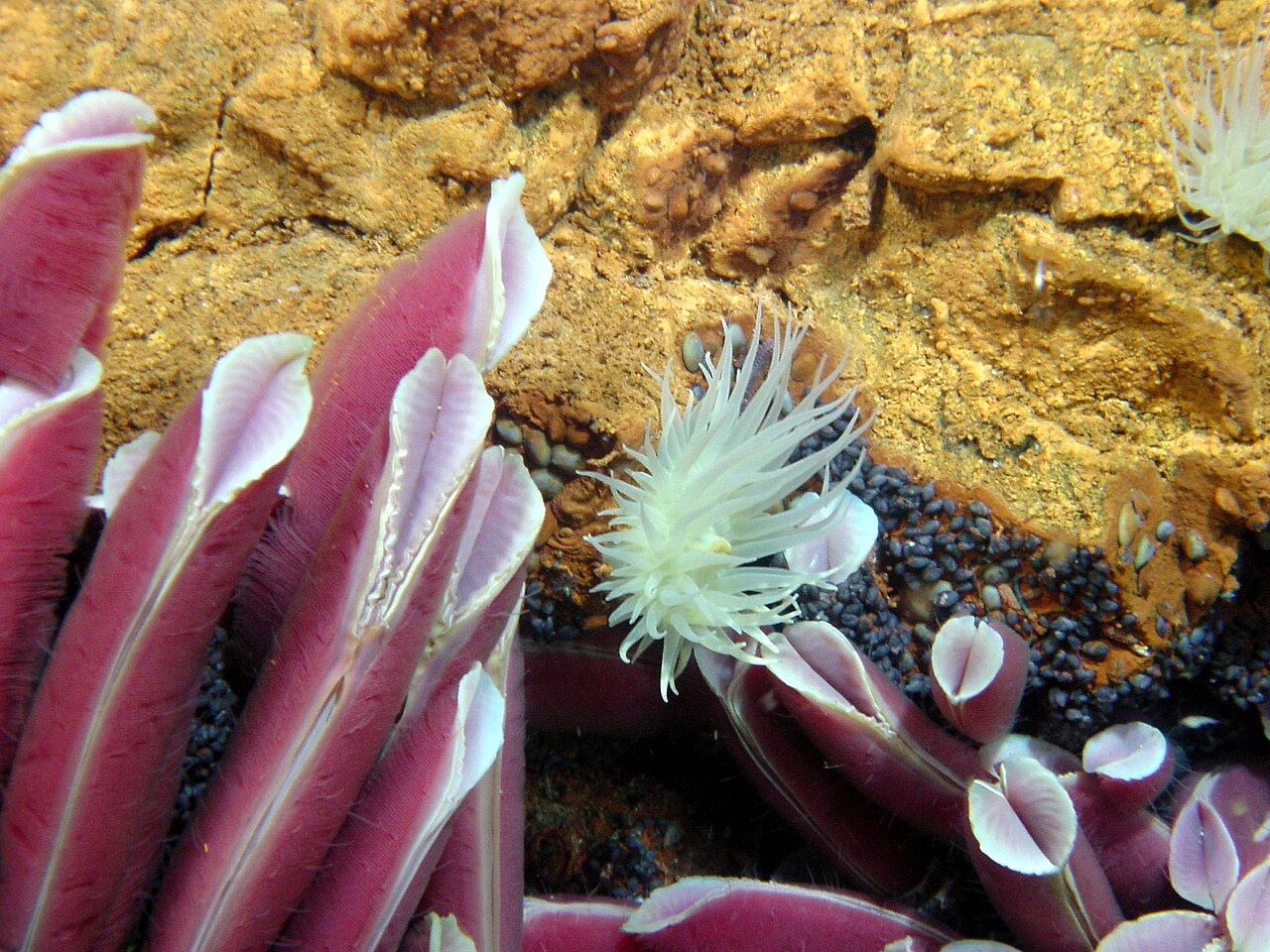
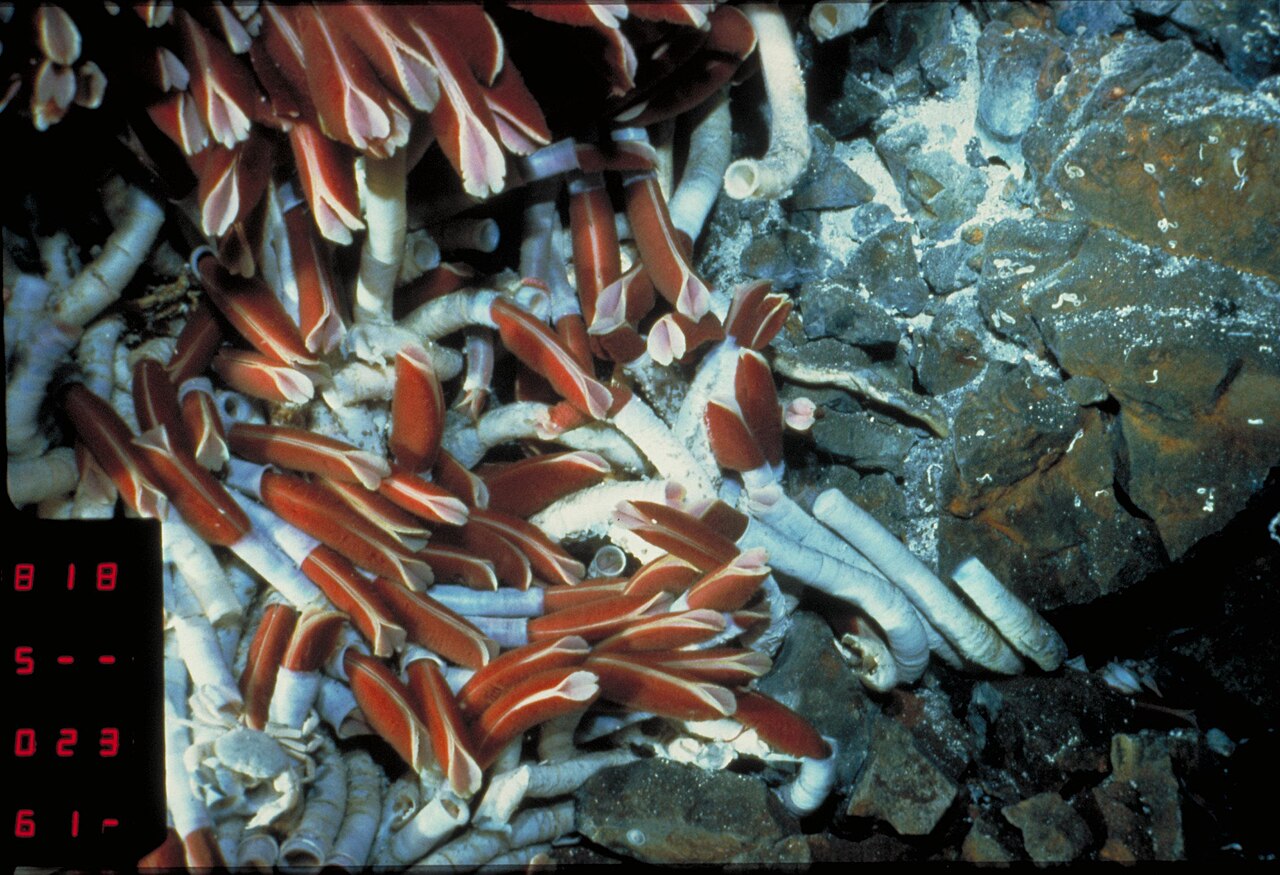
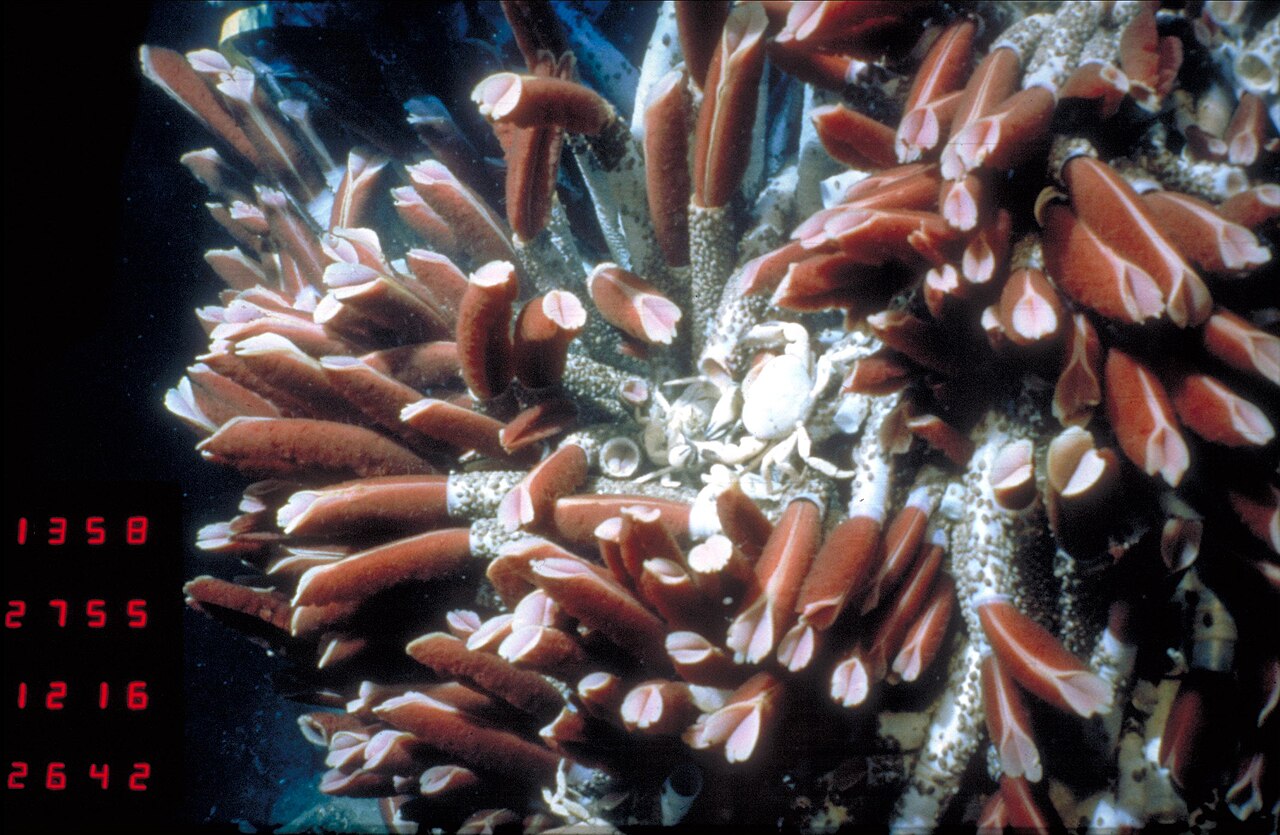
Like other siboglinid tubeworms, *R. pachyptila* has a worm-like body that secretes a chitinous tube for protection and support. The worm can reach 3 meters in length, and its body is about 4 centimeters in diameter. At the front end is a red, feather-like branchial plume used to gather chemicals for chemosynthesis. This plume is rich in blood vessels, and its red color comes from hemoglobin. Its structure maximizes surface area for absorbing chemicals from the water. The red respiratory lamellae grow out of the obturaculum, a rigid, collagen-based support structure that splits and flares at the tip. If the worm senses a threat or is touched, it pulls the plume back into its tube and seals the opening with the tip of the obturaculum, which acts like an operculum.
Quick Facts
- Genus
- Riftia
- Species
- pachyptila
Facts from the source article.
Lore & Background
Riftia pachyptila was first encountered in 1977 during an expedition to the hydrothermal vents on the floor of the Galápagos Rift. The generic name alludes to the rift that formed the geothermal vents where the species inhabits, while pachyptila (pachy; thick + ptilon; feather) refers to the anterior plume of the worm. The holotype, USNM 59951, is held by the National Museum of Natural History (USNM). Historically placed within the obsolete phyla Pogonophora, Riftia is now understood to be an annelid in the family Siboglinidae, with closest relatives including Escarpia and Lamellibrachia.
Adult Riftia worms lack a digestive system and rely on symbiotic sulfur-oxidising bacteria living in their trophosome for nutrition. The red branchial plume at the anterior end is highly vascularised and uses hemoglobin to bind oxygen and hydrogen sulfide, which are transported to the bacteria. The worms can reach 3 m in length, with bodies 4 cm in diameter, and secrete chitinous tubes that can grow 10 to 85 cm per year. Riftia has the fastest growth rate of any known marine invertebrate, colonizing new sites and reaching 1.5 m in less than two years.
Reader's Guide
Riftia pachyptila is significant as a model organism for understanding chemosynthetic symbiosis in extreme environments. Its lack of a digestive system and reliance on endosymbiotic bacteria that oxidize sulfur to produce carbohydrates represents a unique adaptation to the harsh conditions of hydrothermal vents, where temperatures range from 2–30 °C and hydrogen sulfide is abundant. The worm's ability to concentrate nitrate in its blood to 100 times the surrounding seawater, and its atypical hemoglobin that carries oxygen in the presence of sulfide without inhibition, highlight remarkable physiological adaptations. Riftia's rapid growth and colonization of new vent sites demonstrate its ecological role as a pioneer species in these transient habitats. The species also illustrates niche partitioning, coexisting with Calyptogena magnifica and Bathymodiolus thermophilus by preferring areas of high water flow, temperature, and sulfide concentrations. Its discovery in 1977 reshaped understanding of life in the deep sea, showing that complex ecosystems can thrive without sunlight.
Did You Know?
- Adult Riftia worms lack a mouth, digestive system, and anus, relying entirely on symbiotic bacteria for nutrition.
- The red color of the branchial plume is due to the presence of hemoglobin.
- Riftia tubes are composed of chitin and can take years to decompose due to resistance to enzymatic attack.
Discovery and Taxonomic Reckoning
In 1977, a research expedition descended to the floor of the Galápagos Rift and encountered an organism no scientist had ever catalogued before. That encounter gave the world Riftia pachyptila, a name that marries the geological setting—the rift that birthed the geothermal vents—with a Greek descriptor for the worm's thick, feather-like anterior plume. The holotype specimen, designated USNM 59951, now rests in the collections of the National Museum of Natural History. For years after its description, taxonomists placed the genus within the now-obsolete phylum Pogonophora. Modern understanding has reclassified it as a polychaete annelid, nesting it in the family Siboglinidae alongside other deep-sea tube worms such as Escarpia and Lamellibrachia. Despite decades of deep-sea surveying, no second species has been found in the genus, making Riftia strictly monotypic. The discovery reshaped how biologists viewed the deep ocean, proving that complex animal life could thrive in lightless, chemically extreme environments far from any photosynthetic base.
A Body Built Without a Mouth
The adult Riftia is a worm that has essentially abandoned eating. It possesses no mouth, no gut, and no anus; instead, its entire nutritional strategy rests on a spongy internal organ called the trophosome, packed with sulfur-oxidising bacteria. The body is divided into functional zones. At the anterior end, a vivid red branchial plume unfurls from a rigid collagenous collar called the obturaculum. This plume is densely threaded with capillaries and owes its colour to hemoglobin, and its feathery architecture maximises surface area for drawing chemicals from the water. If the worm senses danger, it snaps the plume back inside its tube and seals the opening with the obturaculum tip, which acts like a biological door. Below the plume lies the vestimentum, a muscular band housing the heart, brain, and paired genital pores. The midsection carries the coelomic cavity, gonads, and the trophosome itself, while the posterior opisthosome anchors the animal to its tube and serves as a waste repository. The whole worm can stretch to three metres in length with a body diameter of roughly four centimetres, encased in a thick chitinous tube that may reach two metres and resists bacterial decomposition for years.
The Symbiotic Engine
Because the adult worm cannot ingest food, every calorie it needs flows through a partnership with chemotrophic bacteria housed inside specialised cells called bacteriocytes within the trophosome. The process begins at the plume, where hemoglobin molecules simultaneously grab oxygen and hydrogen sulfide from the vent water. These two substances are then shuttled through the plume's capillary network down into the trophosome, where the endosymbiotic bacteria use them to drive chemosynthesis. The bacteria, in turn, convert nitrate into ammonium ions that the worm assimilates into amino acids. Remarkably, Riftia concentrates nitrate in its blood to roughly a hundred times the level found in surrounding seawater, a feat whose underlying mechanism remains unexplained. The vent environment also poses a toxicity problem: under the low-oxygen conditions typical of these sites, sulfur-storing tissues begin releasing hydrogen sulfide after about twenty-four hours. This compound inhibits cytochrome c oxidase and would cripple normal respiration. Riftia circumvents the danger by binding sulfide directly to its hemoglobin and venting it back into the water, and its hemoglobins are unusual in that they continue to carry oxygen even while sulfide is present.
Colony Life at the Vents
Riftia is a sessile animal, meaning it never moves from the tube it builds, yet its colonies are anything but static. On the East Pacific Rise and the Galápagos Rift, patches of tube worms can blanket areas tens of metres across, each individual locked in a tight, competitive neighbourhood. The worms settle, grow, and reproduce in a remarkably compressed timeline: a new colony can reach sexual maturity and a length of one and a half metres in under two years, the fastest growth rate recorded for any marine invertebrate. Their chitinous tubes, which grow between ten and eighty-five centimetres per year, are remarkably thick and resist enzymatic breakdown, persisting for years after the occupant dies. Crucially, the worm can adjust both the top and the base of its tube, a flexibility that lets it reposition itself as neighbours crowd in and the geometry of vent fluid flow shifts. The ambient water at these sites ranges from two to thirty degrees Celsius and is rich in hydrogen sulfide, the very fuel that powers the bacterial chemosynthesis inside each worm. In this chemically hostile, lightless world, the tubeworm has turned a toxic byproduct of geology into the foundation of an entire food web.
Gallery
More in Worms And Worm-Like Invertebrates 1-23
Spotted an error? Know more?
Reader corrections go straight into our review queue. Suggest an edit · How this site is sourced