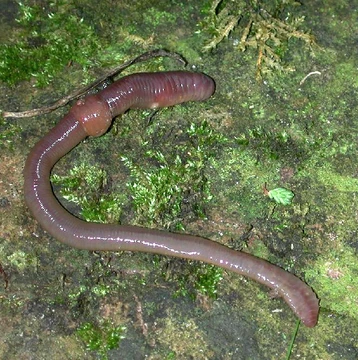
Giant Gippsland earthworm
A giant Australian earthworm living in deep burrows.

The giant Gippsland earthworm (Megascolides australis) is one of Australia's 1,000 native earthworm species. It is notable for its large size, typically reaching 1 meter in length and 2–3 centimeters in diameter, with the largest reliably recorded specimens measuring around 2.5–2.7 meters. The species is endemic to the Gippsland region of Victoria, Australia, where it lives in deep burrow systems in clay soils.
Quick Facts
- Taxon
- Megascolides australis
Facts from the source article.
Lore & Background
The giant Gippsland earthworm lives in the subsoil of blue, grey, or red clay soils along stream banks and some south- or west-facing hills in its remaining habitat in Gippsland, Victoria. It requires water in its environment to respire and spends almost all its time in burrows that can extend up to 1.5 meters or more in depth, depositing its castings there. It can generally only be flushed out by heavy rain. The worm is usually very sluggish but can move rapidly through its burrows, causing an audible gurgling or sucking sound that allows detection.
Reader's Guide
The giant Gippsland earthworm is significant as a unique and vulnerable Australian invertebrate. Its colonies are small and isolated, and its low reproductive rate and slow maturation make those small populations vulnerable. While it can survive beneath pastures, cultivation, heavy cattle grazing, and effluent run-off are adversarial to the species. It requires moist, loamy soil to thrive; dense tree planting negatively affects soil humidity, which in turn negatively affects its habitat. No successful breeding has yet been achieved in captivity. The species has been exploited by the local tourist industry, with an annual Karmai Festival in Korumburra. In the Boonwurrung language, it is said to have been called karmai. Until it closed in 2012 amid animal welfare concerns, Wildlife Wonderland Park near Bass, Victoria, was home to the Giant Earthworm Museum, where visitors could crawl through a magnified replica of a worm burrow and a simulated worm's stomach.
Did You Know?
- The giant Gippsland earthworm can reach up to 2.7 meters (8.9 feet) in length.
- It has a dark purple head and a blue-grey body with 300 to 400 body segments.
- It takes 2–3 years to reach maturity and produces egg capsules that hatch after 12–14 months.
More in Worms And Worm-Like Invertebrates 1-23
Spotted an error? Know more?
Reader corrections go straight into our review queue. Suggest an edit · How this site is sourced