Vyborg Castle
Swedish medieval fortress and eastern outpost against Russia.

Vyborg Castle, located in the Russian city of Vyborg, is a medieval fortress built by the Swedes. The town of Vyborg grew up around it. It served as the Swedish realm's main stronghold in the Karelian region and, for centuries, stood as the kingdom's first line of defense against Russian forces. During the late Middle Ages, its military and strategic importance was surpassed only by the fortified capital of Stockholm. Today, the castle houses the Vyborg Regional Museum.
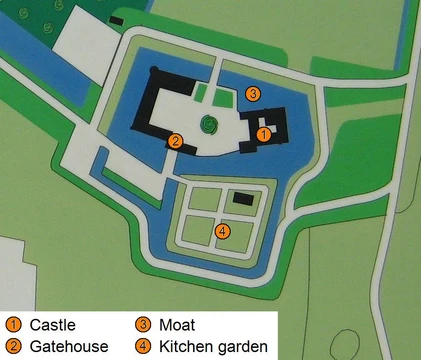
The fortress was one of Finland's three major castles, alongside those in Turku and Hämeenlinna. It was built as the easternmost outpost of the medieval Kingdom of Sweden, situated on a small islet in a narrow strait connecting Zashchitnaya Bay to Vyborg Bay, at the innermost corner of the Gulf of Finland. Construction began in the 1290s on the site of an earlier Karelian fortress, following the Third Swedish Crusade into Finland. The original town was located within the castle's outer fortifications on the island, but due to lack of space, it was later moved to its present location on the mainland.
Excavations in the 1980s revealed that a Karelian fortress existed on the site before the Swedes built their castle in 1293. The oldest occupation layers were found in what is called the Smith's Courtyard, including a man-made sand breastwork with timber posts and charred building remains, some linked to the breastwork. Researcher Tjulenev suggested the Karelian fort had a wooden tower, and among his finds was a bent sword dated to between 1130 and 1200.
The next phase of construction began in 1293 under orders from Torkel Knutsson, the Lord High Constable of Sweden, who led a crusade against Karelia as part of the ongoing Swedish–Novgorodian Wars. Knutsson chose the location to control Vyborg Bay, an area bordered by long-used trading sites. From the bay, a navigable river passage leads inland, connecting to several districts and lakes, and indirectly, via portage, to rivers flowing into Lake Ladoga.
In 1364, King Albert III of Mecklenburg began dividing the large castle fiefs in Finland into smaller provinces, following the German model. Some of these new provinces received separate bailiffs' residences that have since disappeared, such as the Linnavuori castle mound in Porvoo and the castle of Korsholm near modern-day Vaasa.
Quick Facts
- Location
- Vyborg, Leningrad Oblast, Russia
- Built
- 1293
- Built For
- Torkel Knutsson
- Current Use
- Museum
Facts from the source article.
Lore & Background
Vyborg Castle was one of the three major castles of Finland, alongside Turku and Hämeenlinna. It was built as the easternmost outpost of the medieval Kingdom of Sweden, located on the Karelian Isthmus on a little islet in the innermost corner of the Gulf of Finland. Construction began in 1293 by orders of Torkel Knutsson during the Third Swedish Crusade, part of the ongoing Swedish–Novgorodian Wars. The site had previously held a Karelian fortress, as excavations in the 1980s revealed a man-made breastwork of sand with timber posts and charred building remains, including a bent sword dated between 1130 and 1200.
In the late Middle Ages, the castle and its surrounding fief became a virtually autonomous principality, with governors from the most powerful families of the kingdom enjoying large administrative powers at a significant distance from the capital. Prominent governors included Bo Jonsson (Grip), Karl Knutsson Bonde (the future king), and Eric Axelsson Tott. The first mention of firearms in Finland relates to Viborg castle in 1429. During the Russo-Swedish War (1495–97), the castle was besieged by Russians and saved by the mysterious 'Viborg blast' on 30 November 1495, which scared the Russians away.
In the 16th century, much was renovated and additions were made, but in the 17th century the castle was allowed to decay as the Russian danger lessened. Viborg was taken by the Russians in 1710, passed back to Finnish hands in 1812, and was used by the Russian Empire military until 1918. It belonged to independent Finland between 1917–40 and 1941–44, then was annexed by the Soviet Union in 1944. The castle owes its present appearance to extensive restorations undertaken in the 1890s.
Reader's Guide
Vyborg Castle stands as a key monument to medieval Swedish expansion and the long-standing conflict between Sweden and Russia. Its strategic importance, second only to Stockholm in the late Middle Ages, made it a linchpin of Swedish defense in the Karelian region. The castle's history reflects the shifting borders and powers of Northern Europe, from Swedish crusades and autonomous margraviates to Russian conquest and Finnish sovereignty. The castle's architecture, dominated by the tower of St. Olav, and its outer defensive works following the islet's coastlines, illustrate medieval military design. Today, as the site of Vyborg Regional Museum, it serves as a cultural and historical repository, preserving the layers of Karelian, Swedish, Finnish, and Russian heritage. Its story encapsulates the broader narrative of Nordic and Baltic power struggles, making it a significant reference point for understanding the region's medieval and modern history.
Did You Know?
- Excavations in the 1980s revealed a Karelian fortress pre-dating the Swedish castle, with a bent sword dated between 1130 and 1200.
- The castle was saved from Russian siege in 1495 by a mysterious explosion known as the 'Viborg blast' on St. Andrew's Day.
More in Water castles 1-24
Spotted an error? Know more?
Reader corrections go straight into our review queue. Suggest an edit · How this site is sourced