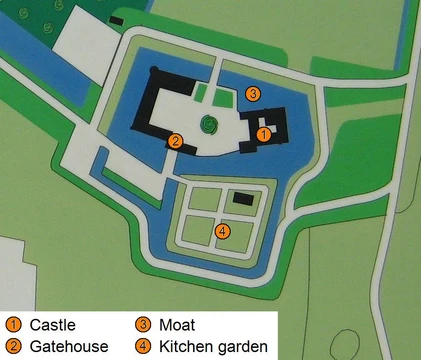
Bourtzi Castle
Venetian castle in Nafplio harbour, later a hotel.

Giles Laurent · CC BY-SA 4.0
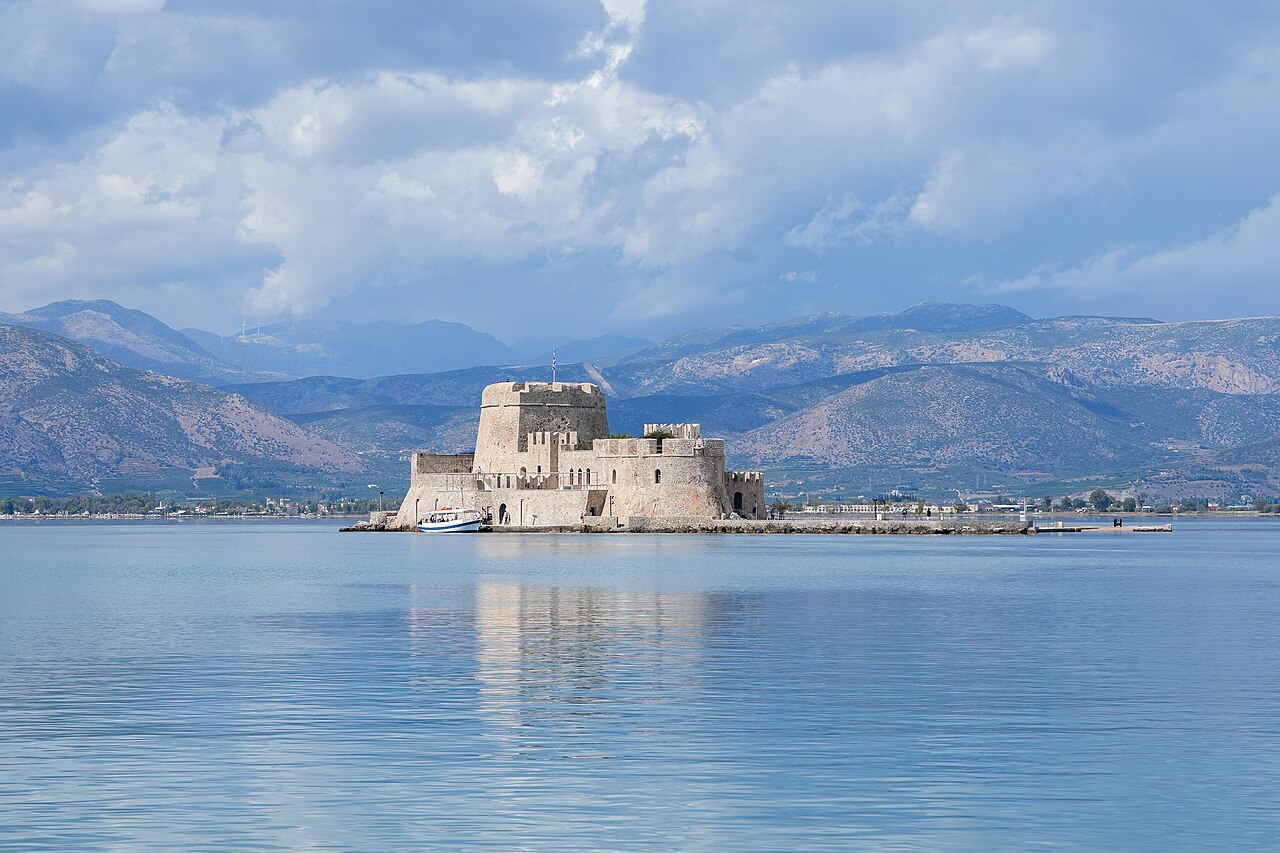
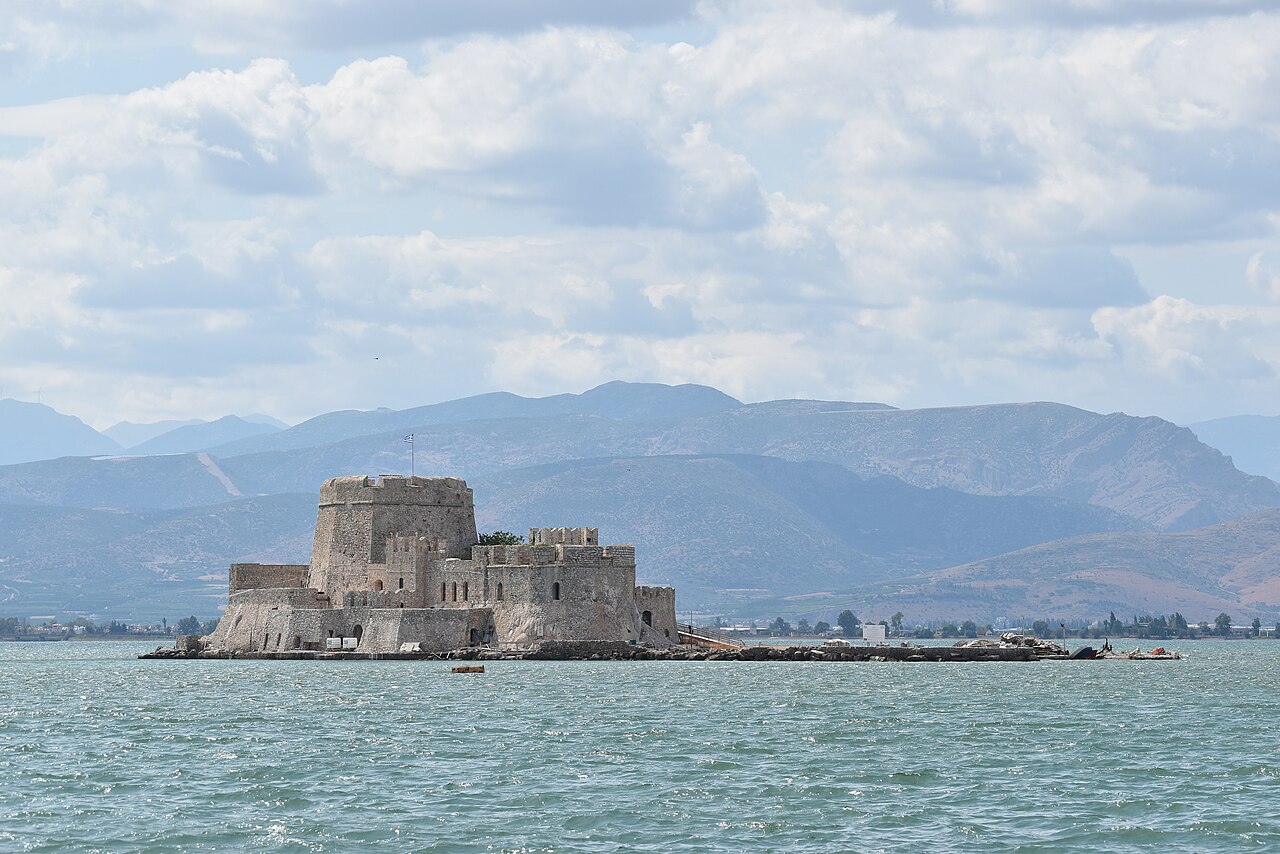
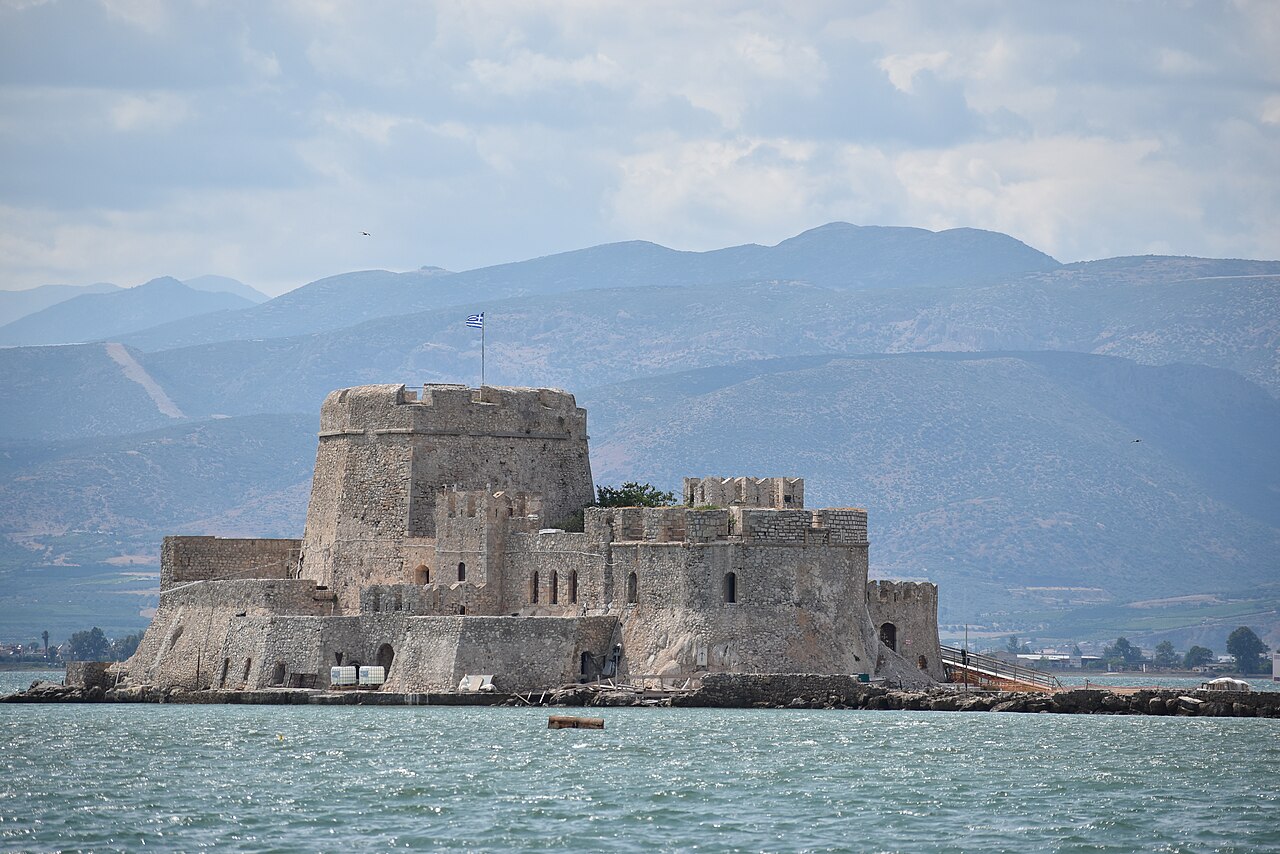
Bourtzi Castle is a Venetian fortress located in the middle of the harbour of Nafplio, Greece. Built in the late 15th century, it served as a defensive stronghold, later became a prison and execution site, and was eventually transformed into a tourist attraction.
Quick Facts
- Part Of
- Fortifications of Nafplio
- Location
- Nafplio, Peloponnese, Greece
- Built
- 1473
- Materials
- hewn stone (ashlar)
- Condition
- Intact
- Owner
- Greek Ministry of Culture
- Controlled By
- Republic of Venice / 1473–1540 · Ottoman Empire / 1540–1685 · Republic of Venice / 1685–1715 · Ottoman Empire / 1715-1821
- Open To Public
- Yes
Facts from the source article.
Lore & Background
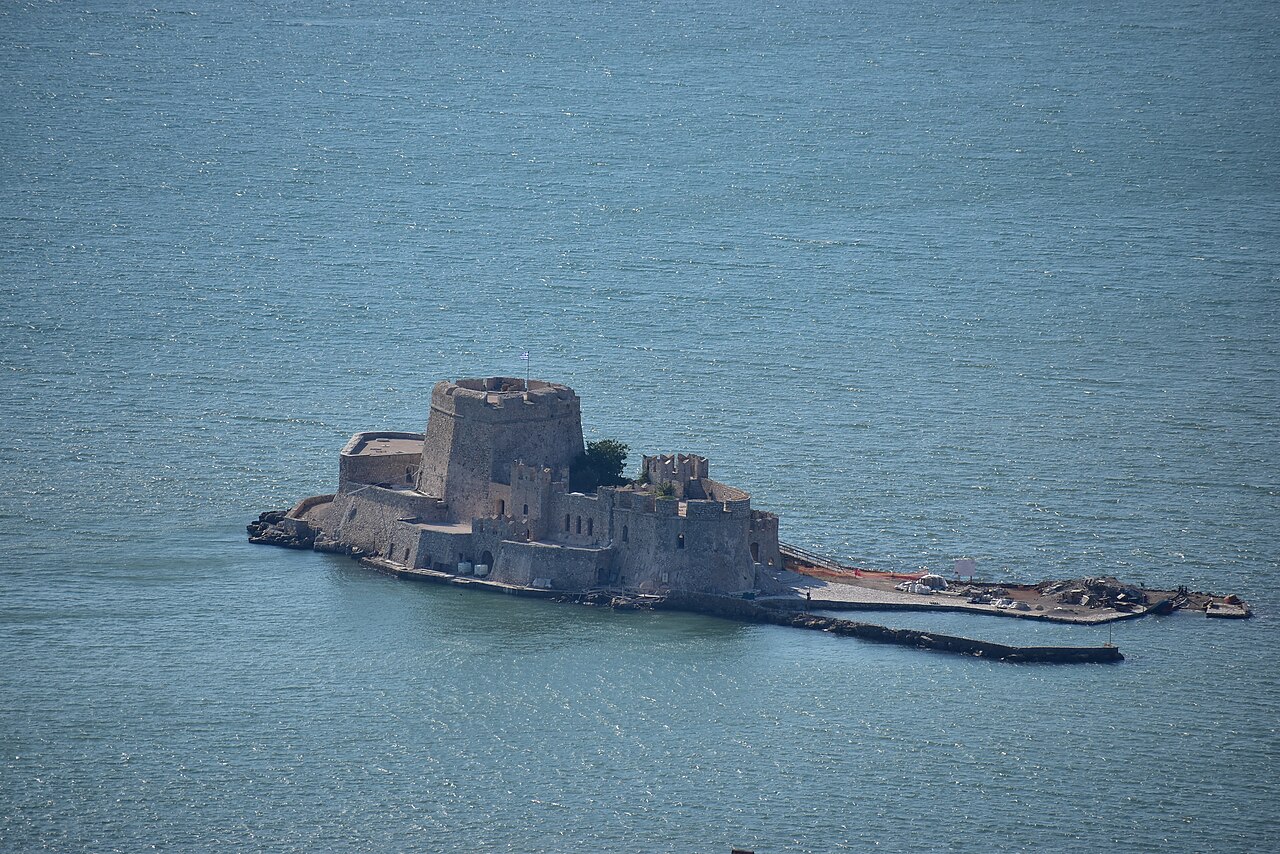
The water castle of Bourtzi was built by Antonio Gambello, an Italian architect from Bergamo, in 1473, with construction completed by engineer Brancaleone. The Venetians constructed it after the departure of Mahmut Pasha in 1473 and equipped it with cannons. In 1502, they changed the fortifications on the southwest side into an independent rampart and erected an artificial mound of boulders attached to a chain, which connected to the city to prevent hostile ships from entering the harbour. After recapturing Nafplio in 1686, the Venetians erected a sturdy tower and bastions with cannons on the islet, creating the fortress that dominates the entrance to the port today.
During the Greek revolution of 1821, the castle was surrendered to Greek forces in 1822 after the fall of Nafplio and used to bombard the city, thwarting the resupply of besieged Turks from an English ship. During the Greek civil wars (1823–1825 and 1827), the Greek government twice took refuge in the castle: on May 25, 1824, and July 2, 1827. By order of King George I, the castle was disarmed in 1865 and became the residence of the city's executioner and the location for executing prisoners via guillotine.
In the 1930s, the castle was restored by the Greek National Tourism Organisation and transformed into one of the first tourist centers in Greece, housing a hotel with 12 rooms and a restaurant mentioned in contemporary international travel guides. It operated continuously until the Greek junta took power and closed the hotel and restaurant. Footage from its time as a hotel appears in the 1958 film The Man on the Train directed by Dinos Dimopoulos. The castle has since been restored as a tourist attraction for Nafplio.
Reader's Guide
Bourtzi Castle is significant as a well-preserved example of Venetian military architecture in Greece, strategically located at the entrance of Nafplio's harbour. Its history reflects the region's shifting powers: built by Venetians after Ottoman withdrawal, it later played a role in the Greek War of Independence and the subsequent civil war. The castle's transformation from a fortress to an execution site and then to a hotel and restaurant illustrates changing uses over centuries. Its restoration in the 1930s as a tourist center marked an early effort in Greek heritage tourism. The castle's legacy is tied to its unique position in the harbour, its role in controlling maritime access, and its later incarnation as a cultural landmark. Today, it remains a key attraction in Nafplio, symbolizing the layered history of the Peloponnese.
Did You Know?
- The castle was built by Venetian architect Antonio Gambello from Bergamo in 1473, with construction completed by engineer Brancaleone.
- In 1502, the Venetians attached a chain from an artificial mound of boulders to the city to prevent hostile ships from entering the harbour.
- During the Greek civil wars of the 1820s, the Greek government took refuge in the castle on May 25, 1824, and July 2, 1827.
- The castle housed a hotel with 12 rooms and a restaurant from the 1930s until the Greek junta closed it.
Venetian Origins and Architectural Evolution
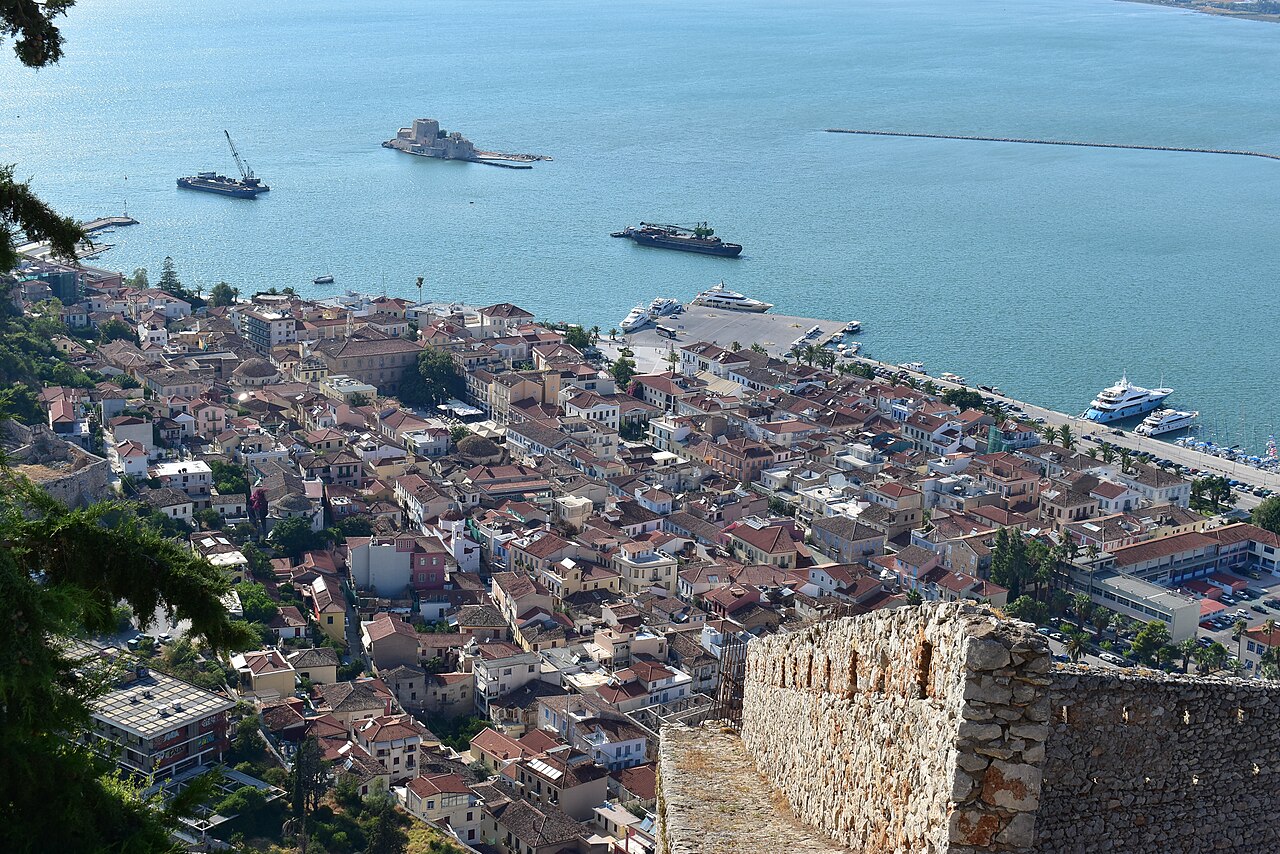
The water castle of Bourtzi sits in the middle of Nafplio's harbour, a position that made it a strategic prize for centuries. Its construction began in 1471 under Antonio Gambello, an Italian architect hailing from Bergamo, though the project was ultimately finished by the engineer Brancaleone. The Venetians raised this fortress after Mahmut Pasha departed in 1473, arming it with cannons to command the harbour entrance. A significant upgrade came in 1502, when the Venetians converted the southwest fortifications into a standalone rampart and built an artificial mound of boulders. To this mound they anchored a heavy chain that stretched across to the city, creating a physical barrier against hostile vessels. The most dramatic architectural transformation followed the Treaty of Karlowitz in 1699, when the Venetians added a sturdy tower and cannon-armed bastions to the islet, producing the recognizable silhouette that still guards Nafplio's port today.
A Fortress in the Greek Struggle for Freedom
When the Greek revolution erupted in 1821, Bourtzi became a focal point of the conflict. Two hundred armed soldiers seized the castle, and from its walls they directed bombardment onto Nafplion itself. The garrison also played a critical defensive role by preventing a besieged Turkish force from receiving resupply via an English ship, effectively cutting off a lifeline that could have altered the siege's outcome. The castle's importance did not end with independence. During the turbulent Greek civil war spanning 1823 to 1833, the Greek government found itself in such dire straits that it twice retreated to the relative safety of Bourtzi's walls—first on May 25, 1824, and again on July 2, 1827. In both instances, the small islet fortress served as a last refuge for a government under existential threat, underscoring how a structure originally designed to guard a harbour entrance became a symbol of national survival.
From Execution Ground to Hospitality
The castle's role shifted dramatically after Greek unification. By royal decree of the newly arrived King George I, Bourtzi was disarmed in 1865. Stripped of its military purpose, the fortress took on a grim new function: it became the residence of the city's executioner and the site where prisoners were put to death by guillotine. This dark chapter lasted until the 1930s, when the newly established Greek National Tourism Organisation undertook a restoration of the castle. The project transformed Bourtzi into one of Greece's earliest tourist centers, complete with a twelve-room hotel and a restaurant that earned mentions in contemporary international travel guides. The venue operated continuously from the 1930s until the Greek military junta seized power and shut down both the hotel and the restaurant. Today, the castle has been restored once more and stands as a popular tourist attraction for the city of Nafplio.
Names, Cinema, and Enduring Presence
The very name Bourtzi carries layers of cultural history. It derives from the Ottoman Turkish word burc, meaning tower, reflecting the period of Ottoman influence over the region. Before settling on this name, the fortress was known by other designations, including Kastelli and Passaz, each marking a different era of its long occupation. The castle's cultural footprint extends well beyond its physical walls. Footage capturing its heyday as a hotel and restaurant appears in the 1958 Greek film The Man on the Train, directed by Dinos Dimopoulos, offering a rare glimpse into the lively hospitality era before the junta's closure. The structure's position in the middle of Nafplio's harbour has made it an unmistakable landmark, visible from the waterfront and serving as a visual anchor for the city's identity. From Venetian military engineering to Greek revolutionary stronghold to execution site to tourist destination, the castle's layered history is inscribed in its very stones and its many names.
Gallery
Frequently Asked Questions
What is Bourtzi Castle?
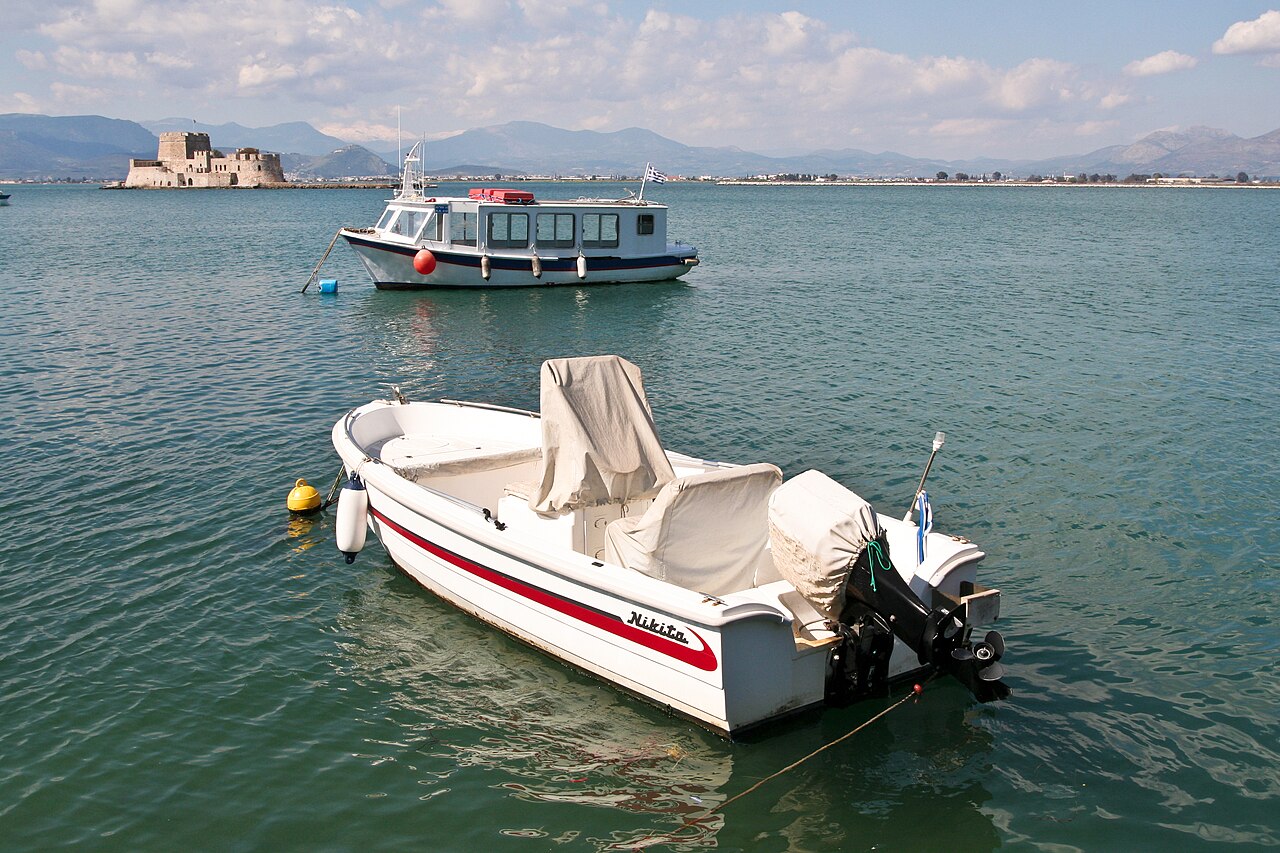
Bourtzi Castle is a small Venetian-era fortress perched on a rocky islet right in the center of Nafplio's harbour in Greece. It is one of the most recognizable water castles in the Mediterranean, easily spotted from the waterfront promenade.
When was Bourtzi Castle built?
Construction of the fortress dates back to 1473, during the period when Venice controlled parts of the Greek mainland. It was designed from the start as a maritime defensive outpost guarding the harbour entrance.
What role did Bourtzi Castle play over the centuries?
Originally a military stronghold for controlling sea access to Nafplio, it was later repurposed as a prison and even a site for executions under subsequent rulers. In modern times it has been converted into a hotel and a popular tourist destination.
Why is Bourtzi Castle important to water-castle history?
Its position in the middle of a working harbour makes it a textbook example of how medieval powers used small island fortifications to dominate coastal trade and military movement. It remains one of the best-preserved Venetian harbour defenses still standing in Greece.
More in Water castles 1-24
Spotted an error? Know more?
Reader corrections go straight into our review queue. Suggest an edit · How this site is sourced