Ammersoyen Castle
A fixed-plan medieval castle with a moat and turbulent history.

Friesburg · CC BY-SA 3.0 nl
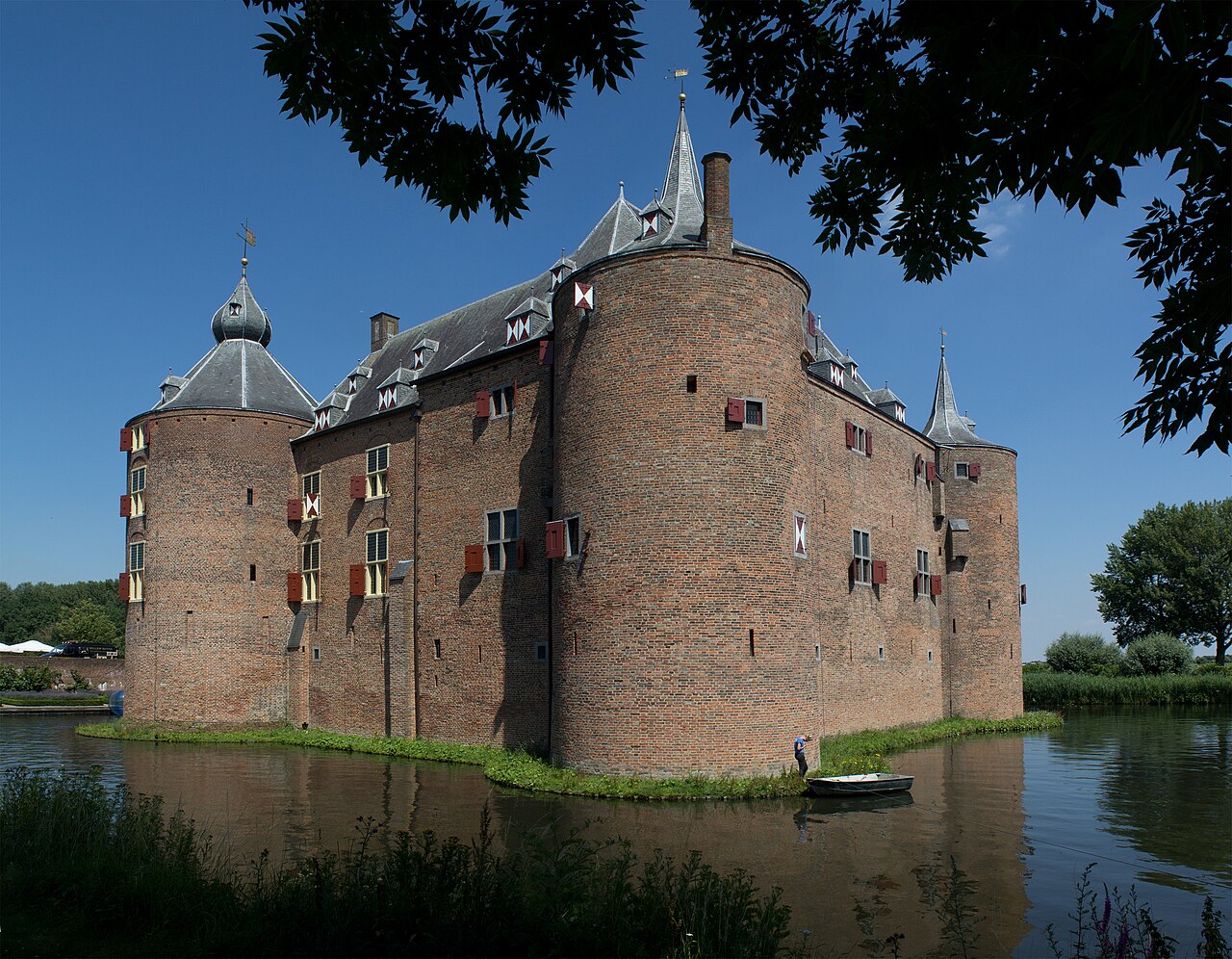
Ammersoyen Castle (Dutch: Kasteel Ammersoyen) is a medieval fortress located in Ammerzoden in the Bommelerwaard region of Gelderland, the Netherlands. Built in the 1350s by the Van Herlaer family, it is a notable example of a fixed-plan castle, constructed as a single, unified design rather than in phases. Its history includes sieges, occupations, and a transformation into a convent in the 19th century.
- Location
- Ammerzoden, Gelderland, Netherlands
- Built
- 1350s
- Builder
- Van Herlaer family (Dirk Van Herlaer)
- Type
- Defensive fortress with moat
- Notable owners
- Van Herlaer, Van Arkel, Woelmont families
- Current use
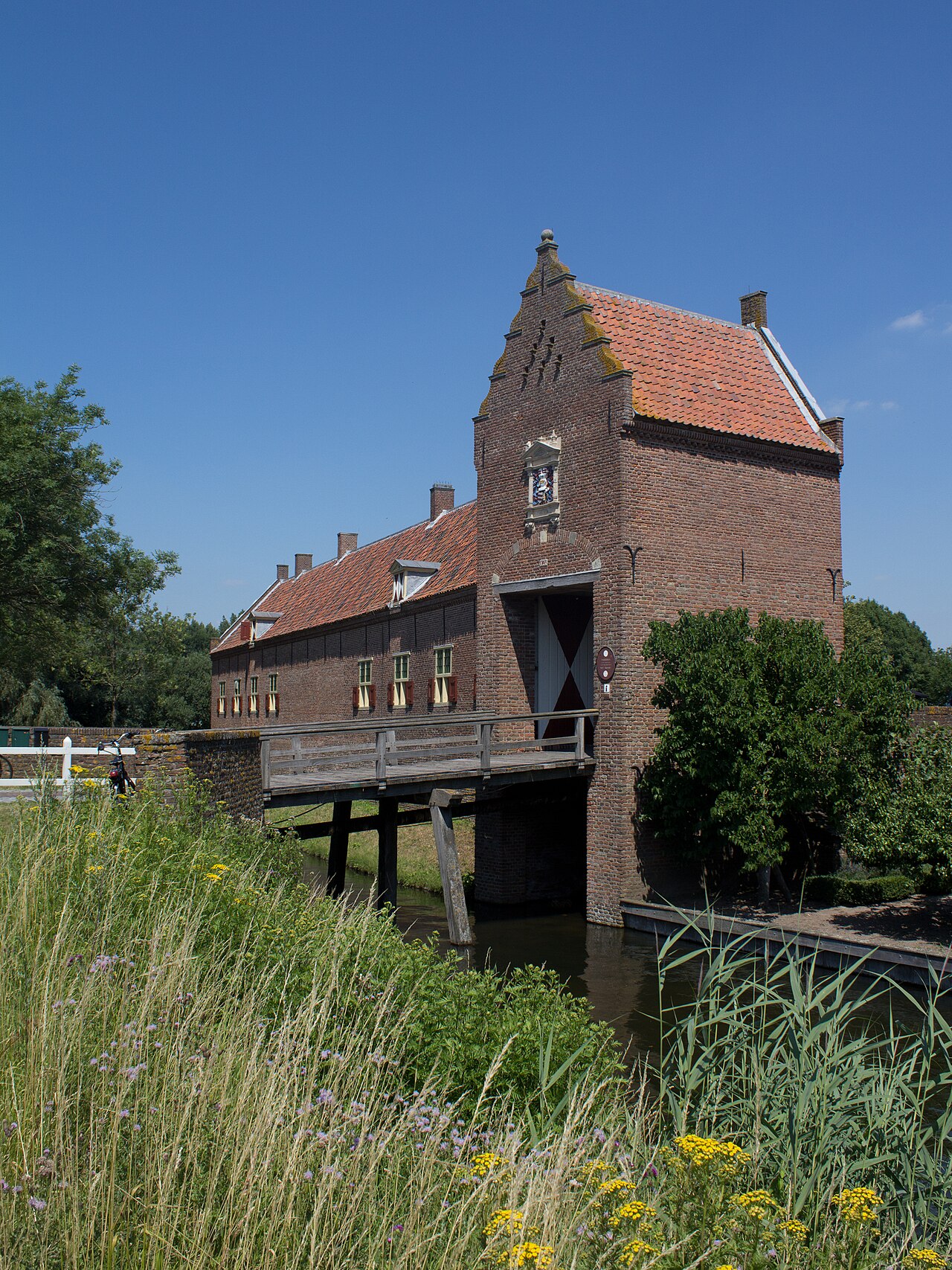
- Former convent (Poor Clares, from 1876)
Lore & Background
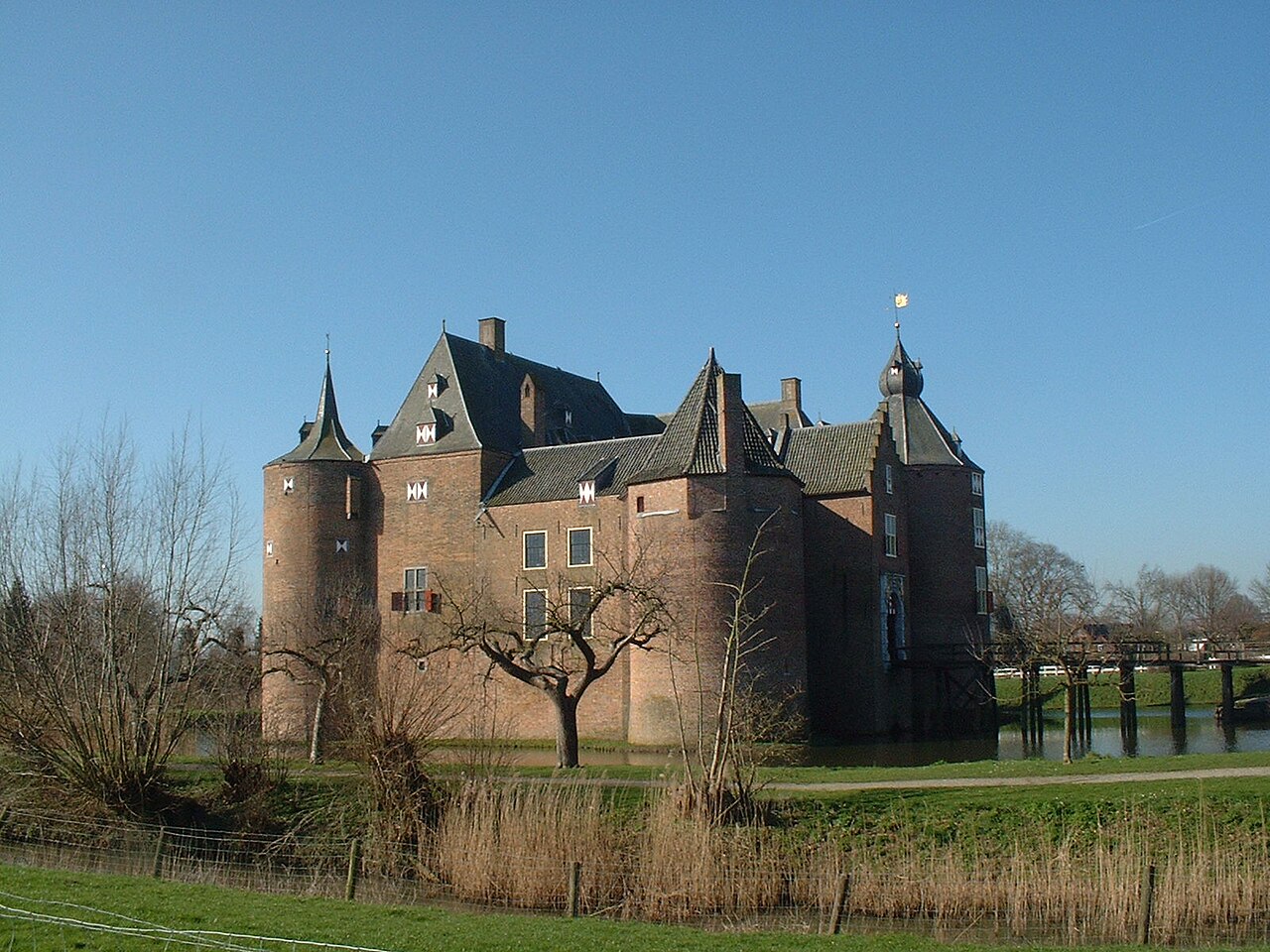
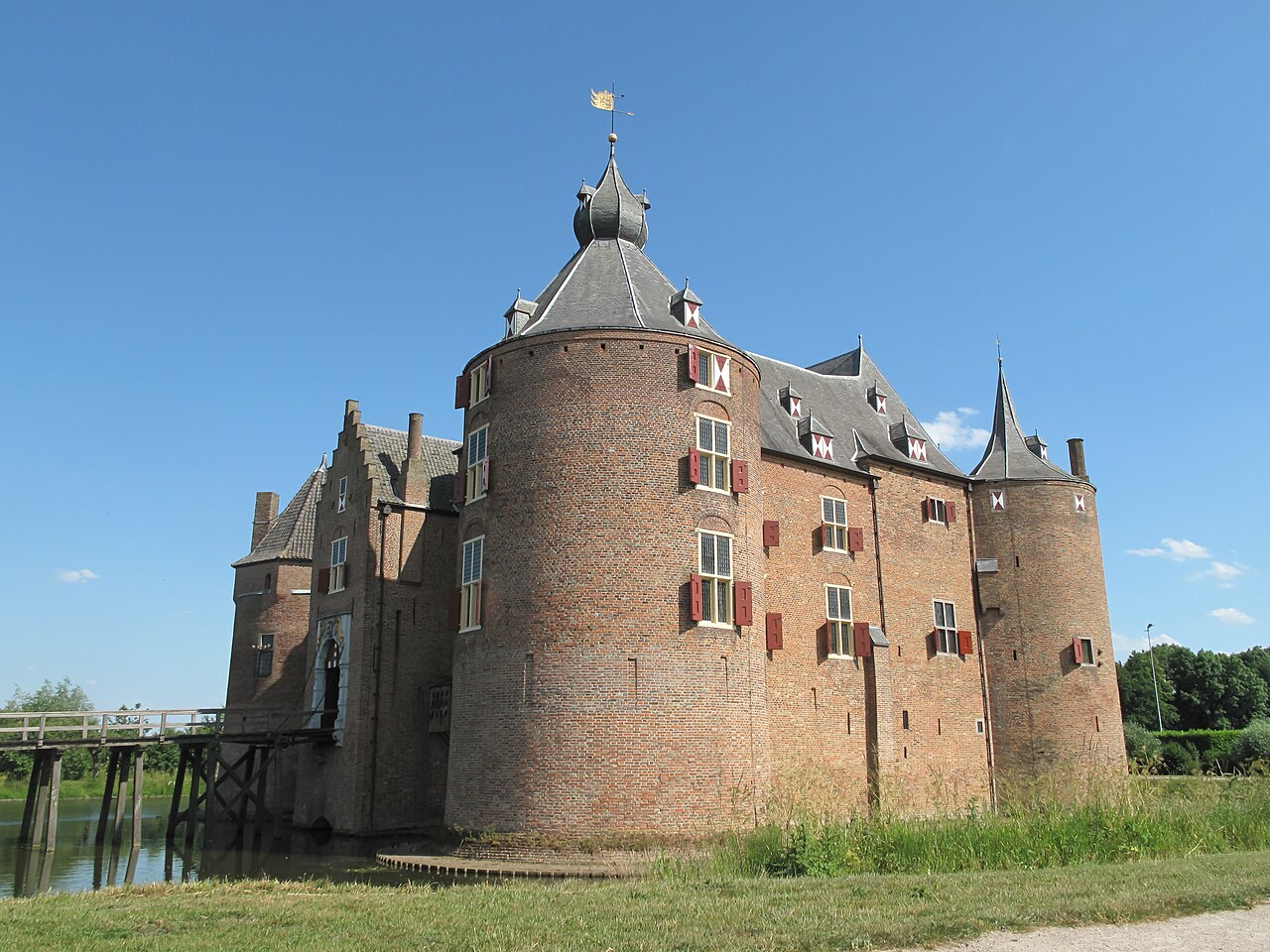
The castle was completed in the 1350s by Dirk Van Herlaer along a branch of the river Maas, which was soon rerouted, leaving the castle surrounded by a moat. Its design featured a central courtyard with four corner towers and heavy wings, built for defense. After Dirk's death in 1354, the castle passed through family members until Arent Hoeman lost it to Duke William of Gelder in 1386 after siding with the Duchess of Brabant during a war. The castle then changed hands by marriage for 400 years, coming under the Van Arkel family in 1496.
Reader's Guide
Ammersoyen Castle is significant as a rare example of a fixed-plan medieval castle, built entirely at once rather than in stages. Its history reflects regional power struggles, including occupations by Habsburg, Burgundian, and Spanish troops in the 16th century, and a destructive fire in 1590. The Van Arkel family restored the castle in the 17th century, modernizing the interior while preserving the medieval exterior. In 1672, during the Franco-Dutch War, the castle was spared destruction when Thomas Van Arkel paid 7000 guilders to French soldiers. After passing through several families, it was sold to the Roman Catholic Church in 1873 and became a convent for the Poor Clares in 1876, with the moat filled in and a chapel built. The castle's layered history—from fortress to noble residence to convent—illustrates the adaptability of medieval structures.
Did You Know?
- The castle was built using a fixed plan, which was uncommon for medieval castles.
- In 1386, Duke William of Gelder captured the castle after Arent Hoeman sided with the Duchess of Brabant.
- The Van Arkel family controlled the castle for only about three generations after 1496.
- In 1672, Johan van Arkel paid 7000 guilders to French soldiers to prevent the castle's destruction.
Origins & Construction
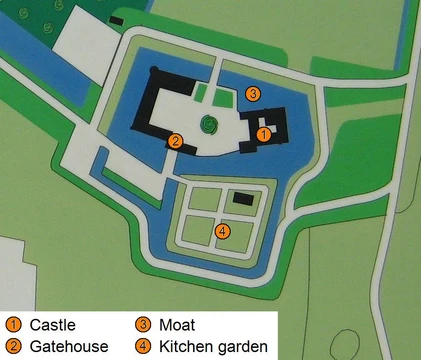
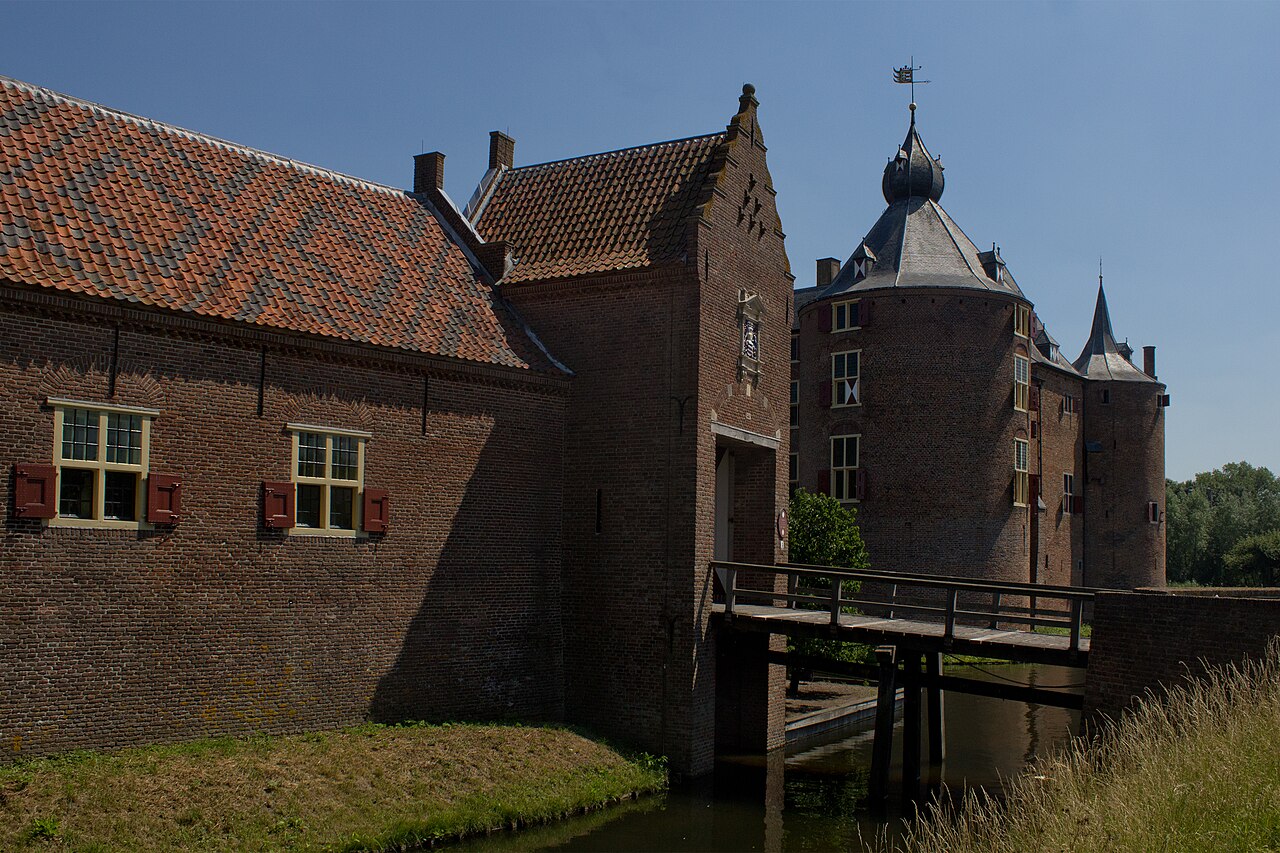
Ammersoyen Castle stands in the village of Ammerzoden, nestled in the Bommelerwaard region of Gelderland, Netherlands. While some older sources trace its origins back to the 12th century, most historians agree that the Van Herlaer family completed the fortress in the 1350s under the direction of Dirk Van Herlaer. What makes the construction remarkable is that it was executed as a single, fixed plan rather than in the phased additions typical of medieval fortification. The design followed the defensive tradition popularized by Count Floris V of Holland: a central courtyard ringed by four massive corner towers, linked by four heavy wings, one per side. Although the castle was initially built alongside a branch of the River Maas, the river was rerouted shortly after completion, leaving the structure encircled by a moat instead. This water barrier, combined with the fortified walls on all four sides, meant that any assault could realistically be launched only from the front. Except for a brief interruption in the early 1900s, the moat has remained a constant feature of the castle's surroundings ever since.
Political Turmoil & the Van Arkel Era
The castle's early ownership was marked by rapid succession within the Van Herlaer family. After Dirk's death in 1354, the fortress passed to his eldest son Gerhard, then to Gerhard's brother Arent, and finally to Arent's son Arent Hoeman. It was under Arent Hoeman that the family's grip on Ammersoyen shattered permanently. A close confidant of Duke William of Gelder and Julich, Arent Hoeman made the fateful decision to side with the Duchess of Brabant during a 1386 land dispute war. William regarded this as a personal betrayal and swiftly invaded Ammerzoden, seizing both his former friend and the castle. After the conflict ended, William granted the fortress to his illegitimate son in 1405, though that heir sold it to Johan Van Broeckhuysen of Waardenburg just nineteen years later. From 1424 onward, the castle changed hands exclusively through marriage. In 1496, Johan's marriage to Otto Van Arkel brought the wealthy Van Arkel family into possession, and they would hold the castle across five successive generations for roughly four centuries.
Sieges, Occupation & the Devastating Fire
Ammersoyen's later centuries were punctuated by repeated military threats. During the Guelderian Wars of 1513, Habsburg forces attempted to seize the castle from across the River Maas and briefly occupied it. In the mid-16th century, Burgundian troops under Count Henrick Van Nassau took control, causing moderate structural damage and the loss of considerable personal property. Fortunately, the Van Arkels still possessed enough wealth to fund repairs. The Spanish invasion of 1572 brought another occupation, but Prince Willem Van Oranje and his troops quickly drove the Spanish out, limiting the damage inflicted. By 1590 the castle had been fully restored—only to be nearly destroyed again by a devastating fire. The lord at the time, Joris Van Arkel, died from injuries sustained during the blaze. The fire struck during the Eighty Years' War and left the family in severe financial distress. They lacked the funds to rebuild, and the castle remained in a state of disrepair until the war's conclusion in the mid-17th century finally allowed large-scale renovations to begin.
Rebuilding & the Medieval-Modern Duality
When the Van Arkels finally regained sufficient wealth to restore Ammersoyen in the latter half of the 17th century, the architectural landscape had shifted dramatically since the fortress's 14th-century origins. Thomas Walraven Van Arkel, the lord at the time, made a striking choice: he preserved the exterior in its traditional medieval style, maintaining the familiar silhouette of towers and heavy walls that had defined the castle for centuries. Inside, however, the transformation was radical. The original design featured vast rooms with soaring ceilings, including a grand knights hall, all hallmarks of medieval fortification. These spaces, while impressive, were far from comfortable for daily living. The 17th-century renovation reconfigured the interior into a much more livable and refined domestic environment, reflecting the evolved tastes and expectations of the era. The result was a castle that presented a medieval face to the outside world while offering its inhabitants the warmth and practicality of a modern residence—a deliberate and thoughtful blend of heritage and progress.
Gallery
Frequently Asked Questions
What is Ammersoyen Castle and where is it located?
Ammersoyen Castle is a medieval water fortress situated in the village of Ammerzoden, in the Bommelerwaard area of Gelderland, Netherlands. Its surrounding moat is what places it firmly in the water-castle category.
What makes Ammersoyen Castle architecturally unique among medieval fortresses?
It is a rare fixed-plan castle, meaning the entire structure was conceived and erected as a single unified design in the 1350s rather than being added to in stages over generations. That makes it a particularly clean example of 14th-century Dutch defensive architecture.
Who built Ammersoyen Castle and which families held it over the centuries?
Dirk Van Herlaer and his family commissioned the fortress in the 1350s. Ownership later passed through the Van Arkel and Woelmont families as the castle changed hands across the medieval and early-modern periods.
What happened to Ammersoyen Castle during its turbulent history?
The fortress endured multiple sieges and military occupations over the centuries. By the 19th century its martial role was over, and in 1876 it was converted into a convent for the Poor Clares.
Why do water-castle enthusiasts consider Ammersoyen Castle noteworthy?
Its intact fixed-plan layout and moated design serve as a textbook reference for 14th-century Dutch defensive construction. Paired with a layered history of warfare followed by peaceful monastic reuse, it offers a complete narrative arc rarely found in a single fortress.
More in Water castles 1-24
Spotted an error? Know more?
Reader corrections go straight into our review queue. Suggest an edit · How this site is sourced