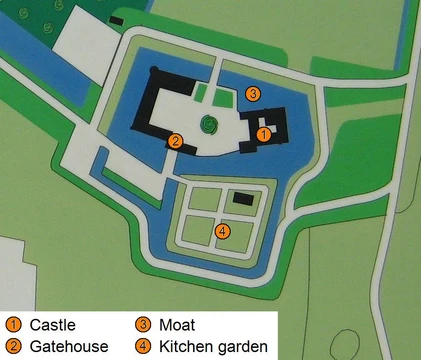
Beersel Castle
Medieval water castle in Beersel, Belgium, built of brick.

Loudumo · CC BY-SA 4.0
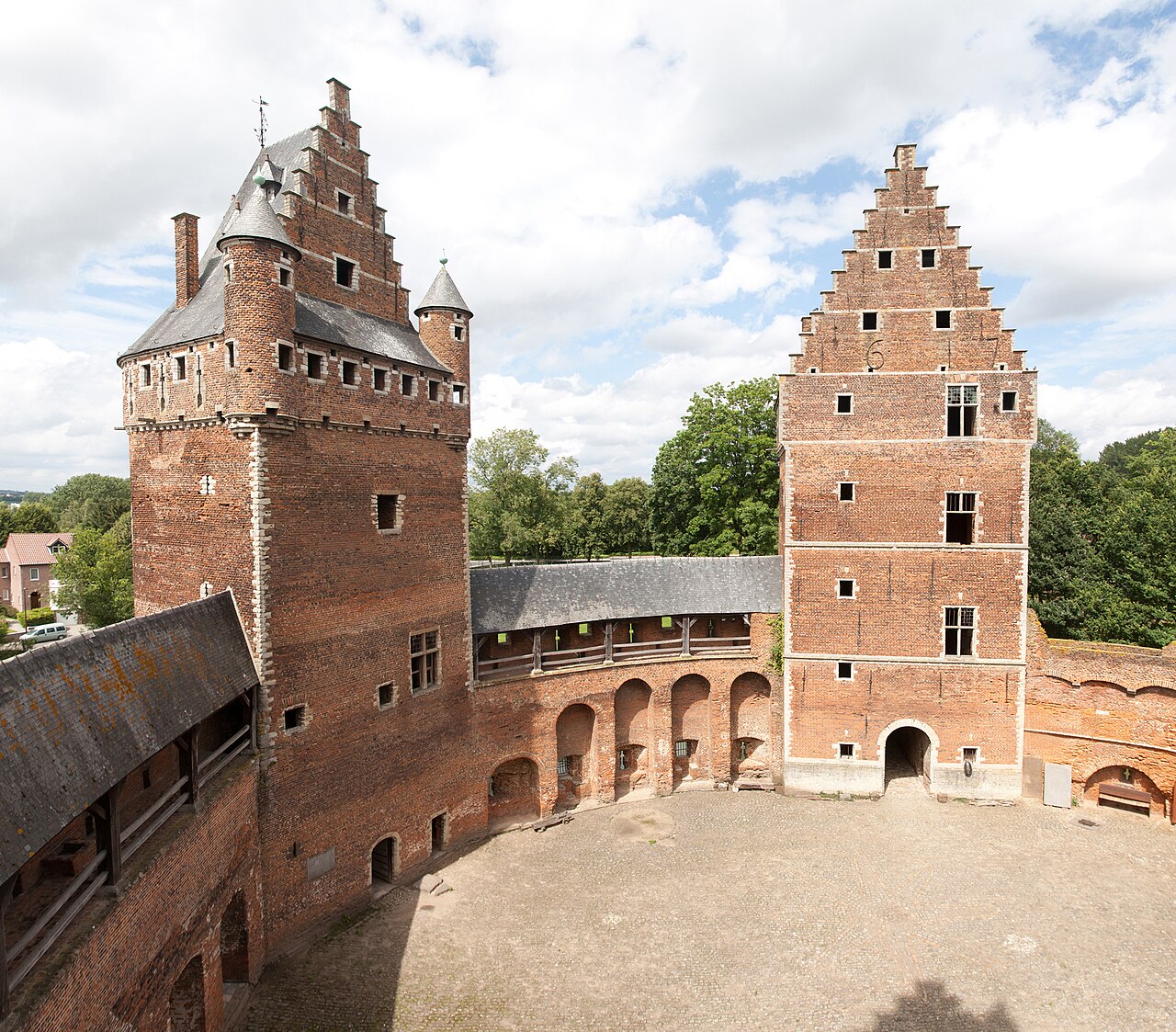
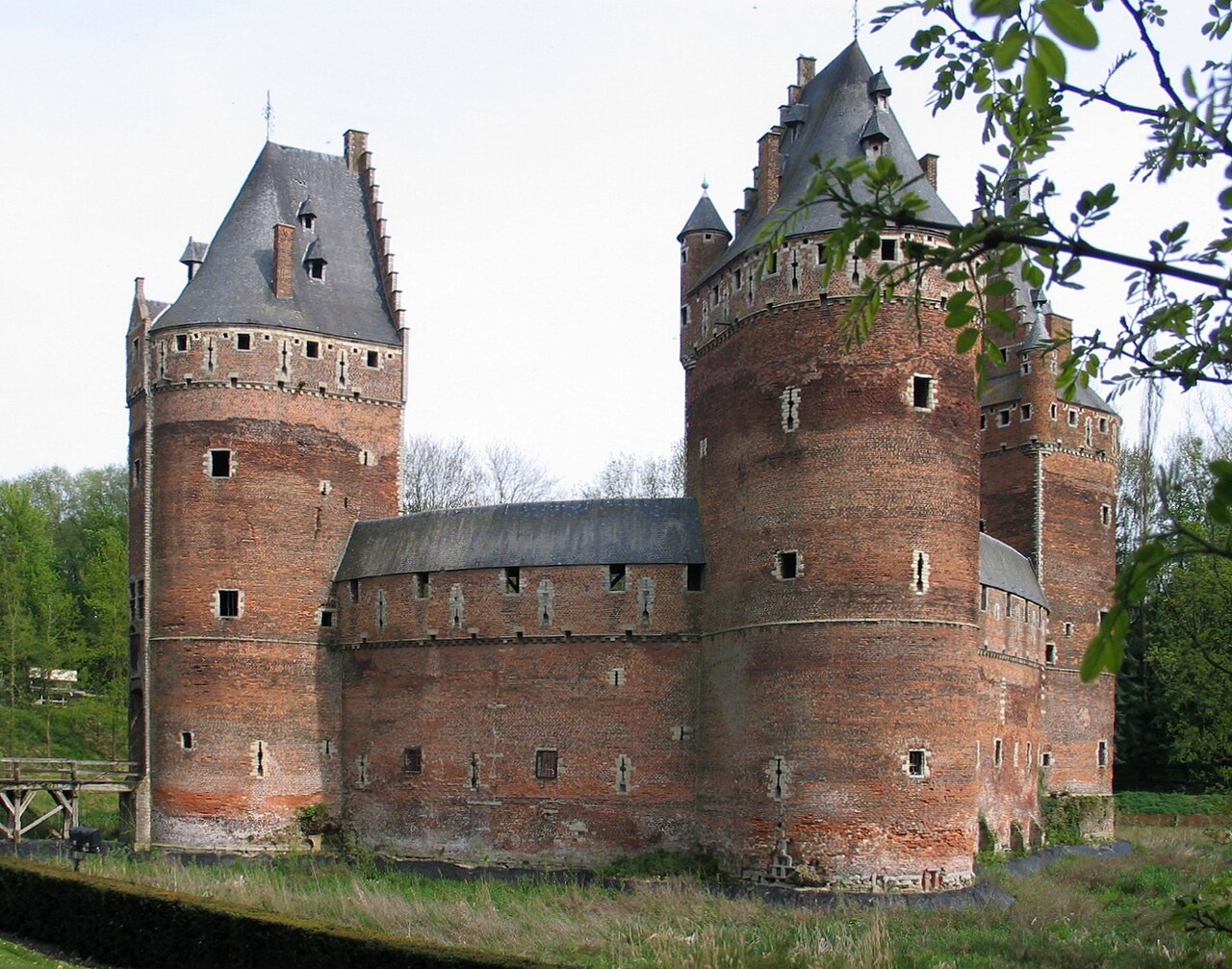
Beersel Castle (known in Dutch as Kasteel van Beersel and in French as Château de Beersel) is a medieval water castle in Beersel, Flemish Brabant, Belgium. Its origins go back to 1300, when it was built under the Duchy of Brabant, though the castle took its current form in 1357. The structure is mostly brick—an unusual choice for fortifications at the time—and is arranged around a circular enceinte, with three large towers as its most prominent feature. Today, it is open to visitors and widely regarded as one of the best-preserved castles in Belgium.
The castle originally stood on the frontier of the Duchy of Brabant, southwest of Brussels near Halle. A fortified residence was recorded at the site as early as 1292. In 1300, Godefroid of Hellebeke, the first known Lord of Beersel, got permission from Duke Jean II of Brabant to build a fortification on the present spot, close to his home. It became one of several Brabantine strongholds in the area, alongside Gaasbeek Castle. During the War of the Brabant Succession in 1356, soldiers from the County of Flanders, led by Louis of Male, besieged and sacked the original castle.
Rebuilding began in 1357, producing the circular enceinte with three large towers and one small one. Over the 14th century, ownership passed to the Lords of Wittem. Henry III of Wittem backed Holy Roman Emperor Maximilian I during the revolts of 1483–1492, putting him against Brussels, which supported the rebellion. Brussels militias besieged Beersel Castle in 1488–1489, a single prolonged campaign during the Flemish revolts. During the siege, cannons supplied by Louis XI of France were used against the castle; it fell after several days, with heavy damage, especially on its southern side.
After Brussels was defeated, the castle was returned to the Lord of Wittem. Maximilian ordered Brussels to pay for repairs, which began in 1491 and adapted the three main towers for cannons. By the 16th century, castles had become militarily outdated, and Beersel turned into a private residence. From 1581 to 1606, the Fathers of Zevenborren lived there, and a 1617 restoration added tiled roofs to the towers and ramparts.
The castle fell empty in 1796 and started to decay. In 1818, a cotton factory was set up on the site. Over the following years, it passed through several Belgian noble families and fell into ruin.
Quick Facts
- Native Name
- nl · Kasteel van Beersel / fr · Château de Beersel
- Location
- Beersel, Flemish Brabant
- Built
- Original castle: 1300–1310 / Modern castle: 1357 / Restored: 1491–1508, 1617, 1928–39
- Materials
- Brick
- Condition
- Restored
- Owner
- Royal Association of Historic Residences and Gardens in Belgium
Facts from the source article.
Lore & Background
In the 16th century, the castle became a private residence. From 1581–1606, the Fathers of Zevenborren resided there, and restoration in 1617 added tiled roofs. The castle fell into disuse after 1796, was used as a cotton factory in 1818, and passed through noble families, falling into ruin. In 1928, the derelict castle was donated to the League of Friends of Beersel Castle, and a major restoration from 1928 to 1939 restored the three towers and some ramparts to their post-1617 appearance. The residential building and eastern face were not restored; only foundations remain.
Reader's Guide
Beersel Castle is significant as a well-preserved example of a medieval brick water castle, a rare material for such buildings at the time. Its history reflects the military and political conflicts of the Duchy of Brabant, including the War of the Brabant Succession and the revolts against Maximilian I. The castle's adaptation to cannon warfare in the 1491 restoration and its later conversion to a private residence illustrate the evolution of fortifications. Its preservation, including the 1928–39 restoration and a government-supported project from 2008 to 2012, has made it a notable historical monument. The castle has appeared in popular culture, including a Victor Hugo poem and the comic book 'De schat van Beersel' by Willy Vandersteen. It is located near the E19 motorway and adjacent to the Line 26 railway.
Origins and Architectural Distinctiveness
Perched at the western frontier of the Duchy of Brabant, near the town of Halle and not far from Brussels, the site of Beersel Castle has hosted a fortified residence since at least 1292. In 1300, Godefroid of Hellebeke, the first documented lord of Beersel, secured permission from Duke Jean II of Brabant to erect a fortification on the grounds beside his existing dwelling. The structure quickly became part of a network of Brabantine strongholds in the region, alongside neighbours such as Gaasbeek Castle. The castle's present layout took shape in 1357, when it was rebuilt around a distinctive circular enceinte, forming a water castle crowned by three imposing towers and a smaller fourth. What makes the building particularly remarkable is its construction: rather than the stone typical of medieval fortifications, Beersel was raised almost entirely from brick, a material choice that was unusual for defensive architecture of that era and gives the structure a character that sets it apart from its stone-built counterparts across Flanders.
Sieges and Military Transformation
Beersel Castle's history is marked by repeated violence. In 1356, during the War of the Brabant Succession, troops from the County of Flanders under Louis of Male laid siege to the original structure, capturing and sacking it. The castle was rebuilt the following year, but its turbulent military role was far from over. In the 1480s, Henry III of Wittem, then lord of the castle, backed Holy Roman Emperor Maximilian I against the Brussels-based rebels. In retaliation, Brussels militias besieged Beersel twice in quick succession, in 1488 and 1489. The second assault proved devastating: the attackers employed cannons supplied by France's Louis XI, and after several days of bombardment the castle fell, suffering heavy damage particularly along its southern face. Maximilian, now victorious, compelled the city of Brussels to fund a restoration beginning in 1491. That work converted the three principal towers to house artillery, transforming them into gun platforms. Yet the broader shift toward gunpowder warfare rendered such fortifications increasingly obsolete, and by the sixteenth century Beersel had shed its military purpose entirely, becoming a private residence.
Decline and the Great Restoration
Between the sixteenth and nineteenth centuries, Beersel Castle drifted through a long period of neglect. The Fathers of Zevenborren occupied the site from 1581 to 1606, and a 1617 restoration added tiled roofs to the towers and ramparts, but the castle's fortunes never fully recovered. By 1796 it stood empty and was already crumbling; a cotton factory was even established on the grounds in 1818. The property passed through several Belgian noble families before falling into outright ruin. The poet Victor Hugo visited the derelict structure in 1877 and immortalised it in verse. The turning point came in 1928, when the House of Merode donated the castle to the newly formed League of Friends of Beersel Castle. A decade-long restoration campaign, running from 1928 to 1939, returned the three towers and portions of the ramparts to their post-1617 appearance. However, the residential building and the eastern face had deteriorated beyond repair, and only their foundations survive today. In 1934 the castle was inscribed on the register of protected historical monuments, and from 1948 it has been held by the Royal Association of Historic Residences and Gardens, which leases it to the municipal authorities of Beersel.
Cultural Legacy and Public Life
Today, Beersel Castle stands as one of Belgium's best-preserved medieval fortifications, open to visitors and actively maintained. A government-supported restoration project carried out between 2008 and 2012 further secured the structure, which sits near the E19 motorway and beside the raised embankment of the Line 26 railway that passes along its southern and eastern sides. The castle's cultural footprint extends well beyond its walls. Victor Hugo's 1877 poem gave it a literary dimension, while in 1954 the Belgian comic artist Willy Vandersteen wove the castle into De schat van Beersel, a story in his beloved Spike and Suzy (Suske en Wiske) series that introduced the site to generations of young readers. More recently, the castle's distinctive brick-and-tower form inspired the unique Burgundian castle architecture in the video game Age of Empires II: Definitive Edition, bringing its silhouette to a wide gaming audience. Beersel Castle also appeared on a Belgian postage stamp in 1951, further anchoring it in the national visual heritage.
Gallery
Frequently Asked Questions
What is Beersel Castle?
Beersel Castle is a medieval water castle situated in Beersel, in the Flemish Brabant province of Belgium. It was first raised around 1300 under the Duchy of Brabant and settled into the layout we recognize today by 1357.
What makes Beersel Castle architecturally unusual for its era?
Rather than the stone typical of medieval fortifications, the castle is built predominantly of brick. Its plan revolves around a circular enclosure punctuated by three large towers, a combination that sets it apart from most of its contemporaries.
When was Beersel Castle built and when did it reach its current form?
Initial construction dates to roughly 1300, and the castle acquired the configuration familiar to visitors in 1357. Major restoration campaigns followed in 1491, 1617, and a lengthy project spanning 1928 to 1939.
Is Beersel Castle still standing and open to the public?
Yes, the castle remains in use as a visitor site and is frequently cited as one of the best-preserved medieval castles in Belgium. It received official protection as a listed historical monument in 1934.
Why do water-castle fans consider Beersel Castle a key reference?
It is a rare surviving example of a brick-built fortified water castle in the Low Countries, a material choice that was atypical for defensive architecture of the period. Its circular enceinte and triple-tower silhouette make it a go-to benchmark when discussing the evolution of Flemish castle design.
More in Water castles 1-24
Spotted an error? Know more?
Reader corrections go straight into our review queue. Suggest an edit · How this site is sourced